



In the middle of the sea, shanghai, there is an oceanic house in the zone, full of green eyes outside the big windows of the old black iron frame. This is the café "study south." the university's pleasure was a regular in the store, and she had no idea that yunnan's coffee beans would bring her such a wonderful consumption experience. First you smell the beans, then you choose. The shop is full of yunnan local beans, a cup of hand for coffee, which makes it impossible to take pictures。
"it's like mountain fields moved into the city!" wrote in a social media post。
Shanghai, a city in the smell of coffee. Street alleys, large and small cafés, where coffee beans from all over the world collided, and picky taste buds created huge consumer markets. Today, there are more and more shops that use yunnan beans as a brand feature, such as “coffee”. Yunnan, thousands of miles away, between mountains, has produced the best batch of coffee fruits in china, thanks to the unique elevation and soil conditions. The world knows chinese coffee, and that's where it starts。
Over the past 30 years, the two “coffee cities” have been closely linked together by collaboration. To explore the industry's win-win path while exporting advanced ideas of financial equipment, exhibition channels, brand operations, while activating the ecological resources and cropping base of yunnan's home country, to refine the processing of hardware, market interfaces, brand incubation and complete access to coffee beans, from mountain branches to city cups。
Standing at the beginning of the thirtieth anniversary of the collaboration, a fragrance of coffee from cloudy land will continue to cross the mountains and write a new chapter of win-winness in both directions。
Industrial infrastructure
It's been growing up
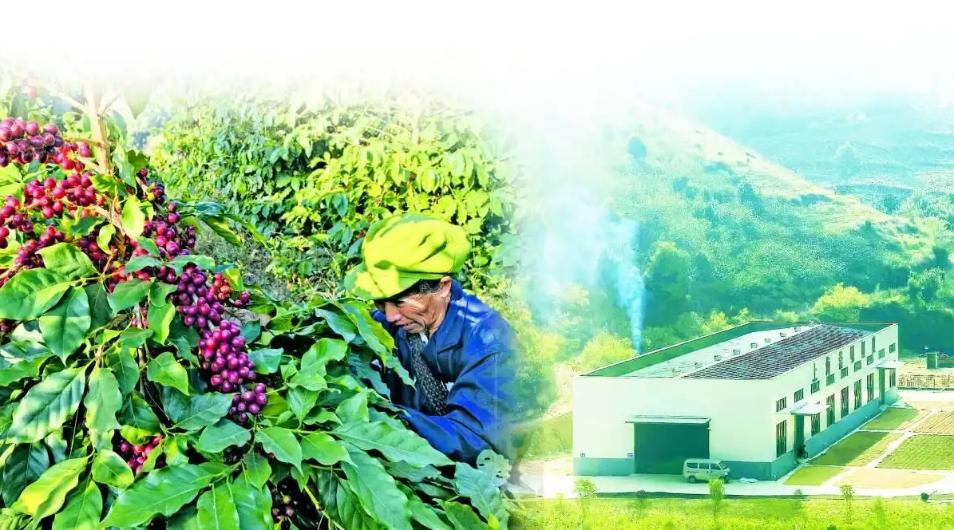
Yusheng village qaun is collecting coffee; yusheng village standardized primary processing plant house, built with financial assistance
"when i was a kid, i knew the coffee tree was sweet." chen ji-hu, the head of the professional coffee-growing cooperative in yongsheng village, yun county, at the end of the day, clearly remembered that a number of coffee trees had been brought home by the grandmother when she was young to study coffee cultivation in pum chau valley. Every time he saw a coffee tree during his work outside, he felt friendly。
In 2010, chen ji-wu officially entered the coffee industry and started his real career with coffee. He no longer sees coffee as a nostalgic memory, but rather as a business that needs to be cultivated. From seedlings to the delivery of field management to more than 20 farmers, from fresh fruit harvests to be sold to pummi, he did so in person. The difficult beginning, though it was, provided a solid foundation for his future establishment of a cooperative that would lead to the mutual enrichment of neighbouring farmers。
For more than a decade, the price of coffee beans has gradually risen, and the number of villagers who grow coffee in yongsheng village is increasing, with some 400 farmers joining by 2021. Production's up. How's the coffee beans? In 2023, chen ge-wu sent a katimmi for coffee beansYunnan coffeeIt's the soybean contest. "i'm so happy that our beans are so good!" even more surprising is chen ji-wu, a champion who has given yunzhou coffee beans the preference of shanghai support funds。
"it's too soon." chen ji xu said that coffee beans are usually harvested in three years, and in 2024 the coffee in the village of young-sung will be harvested in large quantities, and without shanghai's help money to expand the factory, “i really don't know what to do with your beans.”
Soon, $6 million of collaborative funds, such as “timely rain”, arrived precisely in yongsing villageCoffee industryAt the most critical point, standardized primary processing plants, modern fully automated processing equipment, and specialized centres of excellence were completed, creating an integrated processing system for 5,000 tons of coffee fresh fruit annually。
Shanghai's money came to yun county and yun county's coffee beans went into shanghai." under a collaborative bridge, we have made processed coffee beans in cooperatives, and have participated in exhibitions such as the shanghai rainbow bridge, chong ming, etc., under the brand of "coffee holding" and successfully received local coffee processing plants.” now that the coffee has entered markets in shanghai, beijing and elsewhere, “this is another form of seamount connection, which we hope will be even closer”
In 2026, the number of farmers growing coffee in youngsheng village increased to 1,000, and the production of fresh beans reached 5,000 tons. Coffee and tea enterprises such as raysing, kudi, starbucks and nestlé visited the village, where the coffee beans were moving towards a wider market, and cooperatives established new collection standards to ensure the purity and quality of raw materials from sources。
From the initial sporadic cultivation to today's scale and standardization, the coffee industry in wingsing village has not only made a quantum leap but has also made a qualitative leap. Today's young-shin village, with a busy and orderly pick-up everywhere, has seen the sounds of modern processing work, and small coffee beans have become the “rich beans” of villagers, carrying with them a desire for a better life, along the ties of collaboration, and the fragrance of the world。
Talent makes blood
Vananvain changes life
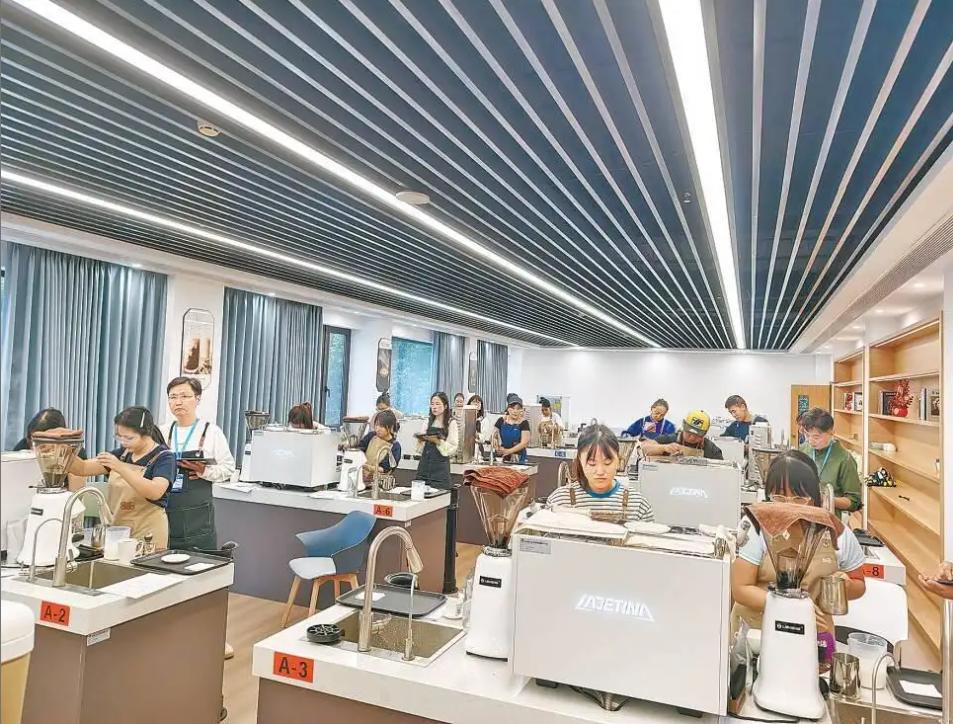
The east-west collaborative skillsTalent development
In the classroom in shanghai, 25-year-old jianjiang, li ji ying, began systematically learning coffee skills. Before she came to shanghai, she had bought herself a magic kettle, which she wanted to practice to make bubbles, and it was only when she learned that it was for coffee。
Previously, she had been making coffee for sale and drinking twice a day in yunnan, more than three hours away from shanghai, but what would she do with coffee, which she had always “not known”. Changed, a message from relatives from the twitter community: to learn coffee in shanghai. This is an in-depth practice of east-west collaboration in the area of skills development. A training course on “cafés and complex personnel for the maintenance of coffee equipment in ruhejiang state” was launched and was taken over by the shanghai school for the training of seafood, a unit of the deputy director of the coffee professional committee of the shanghai association of technicians。
Li has little hesitation: “this is a rare opportunity to learn one more skill and one more path in the future.”
When she actually walked into class, she found that coffee was far more than i thought. For a single latte, six pieces of rags for each of their duties — the one that wipes the bowls without rubbing the mouths and the one that wipes the glasses with no dust. This is particularly the case for hand-stamped coffee: water temperature, rough grinding, water injection, each with a doorway. "it's about a few grams of powder and more water, just about." she said, "i didn't think a cup of coffee would be so detailed."
There were a lot of participants from the distance with li ji-young, almost all of them being “zero basis”. The training is geared to the whole-industry demand for coffee. The curriculum covers italian extraction, blistering, raffling, shrubs and door-to-door operations, as well as the installation of decomposition maintenance and failure diagnostics of equipment such as beans mills, coffee machines, and so forth。
She suffered most from the faulty pipes, boilers and pumps inside the coffee machine. "this piece of machinery is difficult for me. She prefers to pull flowers. But looking at a simple "blank heart," it doesn't work. "it's hard to get out at first. It's fun to be in shape." she took a photo and she sent a circle of friends who said, "why don't you sell coffee and do it instead?"
The yunnan coffee is now “sale-free”, with non-core bottlenecks in its distribution, but the level of industry-wide chain skills, from seeds to cups, still needs to be upgraded. Since its establishment in 2018, the shanghai association of technicians has been deeply involved in the revision of the national standards for cafés, which aims to align the market standards of shanghai with the industrial resources of yunnan. The students of the angry river have come to this country as a vivid example of the “integration and orientation” model。
At the end of the training, the participants received a coffeemaker's certificate from shanghai. The training is free of tuition fees and full accommodation. "to be simple, it actually took a round-trip ticket." li said. The project also established a mechanism for return visits for job creation for more than six months, with a two-way interface between the two jobs and resources. It is known that this year the ninth shanghai coffee masters will also open the door to yunnan's contestants, and those with outstanding results will have the opportunity to obtain a technician degree certificate. – the skills export channel is being extended from “training-testing” to “competing-up”。
When he returned home, li ji-young had been selling coffee for two days, but the more he thought he should try it. As a result, she went to a coffee bar at a viewing station for an interview and became a real café. Today, her daily job is to flush and pull flowers; she has taken back to her bar with the fineness of her services at the shanghai coffee shop。
Facility replenishment
Helping yunnan to get out of the mountains
At the foot of mount gaoligon, on the edge of the raging canyon, more than 13,000 acres of coffee forest in the village of xinjiang town, in the luyang district of paoshan city, were laid along the slopes. This village, where almost all households grow coffee, is known as the first village of chinese coffee. But in the memory of wang garvey, the general secretary of the xinjiang village party, who had returned to the village for a few years, he saw another picture。
“we used to sell ordinary beans, and the coffee grown by the people was not only not making money, but also putting money.” wang garvey said. Coffee cultivation in the village began in the 1950s, but long-term “workshop” production, with beans known as “thousand beans”. There is no pricing power without control of goods, and around 2012, coffee prices continued to decline, and wang garvey returned to the village and found that many people were moving towards the idea of cutting trees, “the whole coffee field of the dam was almost destroyed”。
To preserve the coffee, the village party organization led the establishment of seven cooperatives. Co-operatives have acquired, processed and sold together at prices that are somewhat higher than market prices, and by the end of the year they will have received dividends. “at least a portion of the money will be made available to the farmers of the village.” at the same time, enterprises have been actively introduced to build coffee plantations。
The first batch of coffee beans to be picked, dried and processed in the village was handed over to the coffee estate. “the purchase price is $60 per kilogram, and wang garvey remembers clearly that it was only $5,6 per kilogram in the market at the time, “over a dozen times more immediately”. This is more than a dozen times the concept of the entire village, and it is only by being well managed and well planted that it will be possible to make money on the path of excellence. However, the quality path of coffee is still far from being sufficient, lacking in technology, funding and standardization。
In 2022, with the help of a collaborative effort, a standardized water-cleaning plant was established in the village of shinkai by applying for funds to help their counterparts in shanghai. In 2023, a fine-processed bakery was built and introduced into the operation of the lead enterprise, which annually generates more than 700,000 yuan in revenue for the village collective economy. At the same time, $2. 94 million of co-financing came to the village to build a natural water supply project, which addressed the irrigation problem of nearly 10,000 acres of coffee。
Today, the price of refined coffee beans can range from $75 to $1,500 per kilogram. In 2012, villagers had a disposable income of $3150; by 2024 the figure was $43,800. More than 13,000 acres of coffee are produced throughout the village, with a total annual production of more than 4300 tons。
The changes brought about by collaboration are not confined to fields. With a steady quality, the village of shinkai has published articles along with coffee. A coffee plantation no. 1 was built on the site of the old village council; it was subsequently established in a coffee park no. 2 in 10,000 acres, which soon became a well-known net-to-carrying land, with specialty products, meals and residential accommodation being set on fire. Today, there are six coffee estates in operation throughout the village, with coffee library art halls, coffee culture festivals, estate marathons, and a rich cultural tour in the mountains, attracting a large number of coffee lovers and tourists to play cards. “many visitors from shanghai have been attracted to coffee and viewing in our new village, sharing their experiences with me and offering many good ideas for our cultural tour, several of whom are also eager to participate in the coffee plantation project behind us.” in wang garvey's eyes, there are many possibilities for this first village of chinese coffee。
“in the end, we have to make our own standards and decide our own.” wang gawi said that the village had registered a brand of “book coffee” and had to lead the villagers to form a company in which each village would become a shareholder. From ordinary to refined beans, this mountain coffee forest is on its way to a wider market along the path of collaboration。
Brand bridge
We're going out of goliath
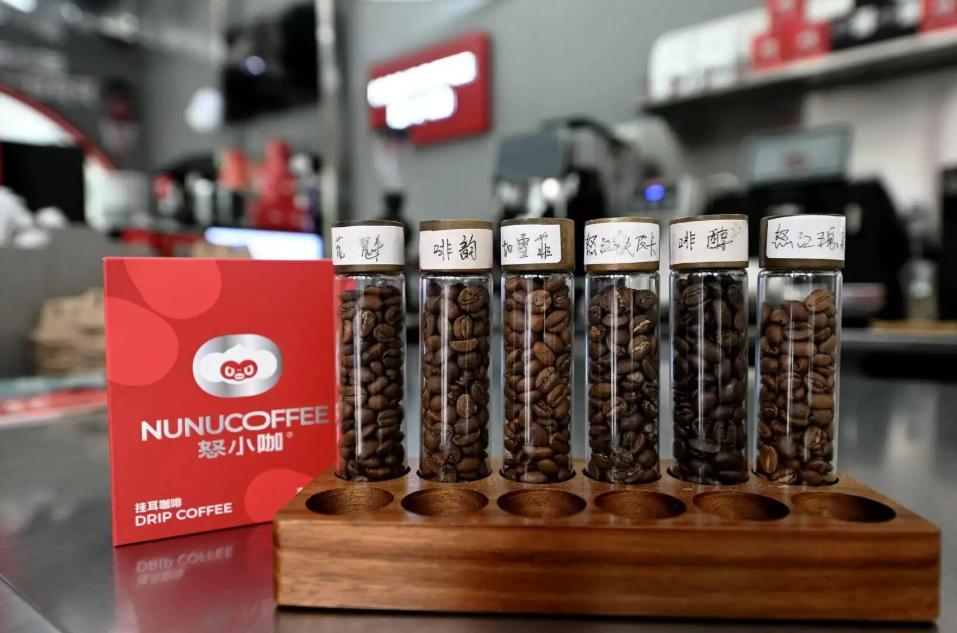
Shanghai, the frontier city of coffee consumption, which brings together all kinds of coffee beans from around the world, also carries the most pickles. For the native brand of the yunnan angry river, it is a rare opportunity and a great test to stand firm here. As an incubated regional public brand of rusty river state, it is driven by the power of twin synergies。
A red container-like flash shop, which is the first shop in shanghai, is visible in the town of shanghai. "this coffee is of good quality, good taste, and not expensive." the customer, mr. Liu, bought a soe iron pick-up coffee for the press. In the past year, the "grumpy" have had a lot of regular visitors and a good reputation. Staff say that today four stores are located in the gold sector and 120 square metres of flagship stores are preparing to meet with shanghai consumers。
“the shanghai coffee market is highly competitive and consumers are used to overseas coffee beans, and what worries us most is that we don't know, or even know, the raging rivers of fine coffee.” the chief manager of the coffee industry, yunnan, inc., yang's purple arts, in his interview, said openly that he had first arrived in shanghai and that the team was in trouble。
This cup of coffee, which came out of mount goligon, had the birth quality of volcanic ash soil, high-altitude temperature differentials, and over 85 points were measured in the sca cup for years. As early as 2005, a small grain of coffee from the angry river was awarded the industry gold prize, hidden in the deep mountains and lacking a stage for more people to see。
Co-operation is like a solid bridge that breaks through multiple barriers to branding. A series of solid support has enabled the “gangs” to open five shops in shanghai in 2025 to bring coffee fragrances from the raging canyon into a line of urban businesses。
The door shop is not just a place to sell coffee, but a window to show the anger. The grounding space, the fabric of the ethnic elements, the staff wearing the national costumes, and the special choreography of the rheumatism, made by the olives of the fury, the buddha's hand, etc., have been put into a cup of coffee. As consumers taste coffee, they read the story of “from seeds to cups” under mount goligon, and they rediscover the fine coffee from yunnan。
Feedback from the shanghai market, in turn, is driving the upgrading of the brand. Consumers suggested that information on the varieties of coffee beans should be printed on overpacks, and the team quickly repackaged the products; and that, in combination with local tastes, the baking curves should be calibrated repeatedly to enhance the sweetness of the beans themselves. The collaboration has not only sent raging coffee to the shanghai market, but has also generated real demand for a front-line consumer market, forcing brands to be re-chained, fixed, long chains to grow more solidly over time。
Building on the “corporate + farmer” model, brands are being used to secure a base purchase to take advantage of the farmers' income while training them in planting techniques to give them hope and comfort. Every order in the market is steadily flowing back to the coffee field in mount gaoligon, and the fruits of the booming industry eventually fall on the curry's increasingly piling bag。
On the occasion of the thirtieth anniversary of the collaboration, the story of the angry curry continues. Yang's purple arts indicate that the value added of the brand will continue to be sharpened in shanghai and across the country so that the good beans hidden in the canyon canyons can grow into a loud yunnan coffee business card so that the results of the collaboration can be seen in a cup of coffee。
Expert voice
Zhou fong: coffee is the result of a collaborative effort

In 1996, the central deployment of east-west collaboration made a pair between shanghai and yunnan. Shanghai is the largest city in the world, with more people drinking coffee and more people knowing coffee; yunnan has grown more than 98 per cent of the country's coffee, and good beans are hidden in the mountains. The advantages of both are complementary, and this is the starting point for coffee collaboration。
When i got to pummi in 2016, the local curry told me that the beans were not going to sell, and that it would be better to cut corn. At that time, yunnan coffee was almost the only place where beans were taken for export at a low price by international giants, baked and sold back to china, priced in the hands of others, and the barbers were left to eat. I've been remembering this。
In 2018, the shanghai association of technicians established the coffee professional committee, which is one of its functions. Our first coffee master's game was assigned to the yunnan beans, and we invited the curry to shanghai to talk to the company in person. Once the game was over, manner and others went to yunnan for beans. Until this year's ninth coffee master's game, we were using yunnan beans。
Over the years, the association has focused on one thing, matching the market demand in shanghai with yunnan production. Gradually, yunnan beans went from “not selling” to “not selling”. Today, a growing number of front-line coffee businesses are buying yunnan beans in large quantities, and the kundi, ri xian, sunda and others have established yunnan branches。
The training of talent has not fallen, and every year we send coffee technicians from shanghai to train free of charge in ruijiang and paoshan. We are involved in the revision of the national standards of vocational skills for cafÉs, which are divided into five levels, from junior to senior technicians. There were now 36 coffee shops along 219 roads, including one of our own. We're also working with the domestic head bakers to figure out a kind of chinese-sweet, chinese-sweety-drinked, bitter-sweety-drinking, chinese-sweet, chinese-sweet, chinese-sweety-drink award for iac's international coffee award。
Turning back to these 30 years, coffee is a visible and drinkable result of the collaboration. Collaboration is not the heat. Yunnan has brought increasingly good beans to shanghai, and more and more brands are now willing to mark yunnan's production, and yunnan's coffee has become a high-quality proxy. In addition, shanghai consumers like to drink and what standards they want, which in turn pushes their produce to make beans better. In the west, in the east, both sides of the market have achieved each other。
Next, we want to make the system of talent development and quality management more solid, so that yunnan coffee can truly stand up internationally。









