It's a herringTechnical protocols
As lycÉes, which have been home to herbs for many years, with plumes, leaves rich in vitamin c, dietary fibres and various sulphides, with edible values and medicinal efficacy, are widely cultivated throughout the north and south of the country. In order to achieve the objective of high-quality, high-yielding and efficient cultivation of beryllium, to regulate the process of planting, and to improve the commodity and safety of products, this technical protocol will be developed to include:Varieties selection♪ land ready, ♪Planting seedlingsI don't knowField managementThe main technical points of the whole chain are: green control of pests and pests and collection and storage。
I. Typology selection and seed processing
The choice of species isBeef growingThe basis for success needs to be a combination of local climatic conditions, soil characteristics, market demand and planting patterns (field/facilities) to ensure the adaptability, resilience and commerciality of varieties。
(i) principles of diversity selection
Climate-resilient screening: in cold areas of the north, preference is given to cold-resistant and short-lived varieties, such as pyramid 4, zinyi 8, in high-temperature and wet areas of the south, such as “791 gills”, and facilities need to be cultivated (houses, greenhouses) in a manner that combines weak light-resistant and fast-growing characteristics with special varieties, such as “scaffolding”, typhoids。
2. Screening by commodity demand: if the market is oriented towards fresh food, the varieties of leaves that are thick, coloured and green, and few fibres are selected, and if used for processing (e. G., salting, dehydration), preference is given to the varieties of leaves that are straight, watery and resistant to storage。
(ii) seed quality requirements
The selection of high-quality seeds for the current or subsequent years requires that the seeds be full, coloured and bright (black or brown), non-stereogenic, insect-free, 98 per cent pure, 85 per cent budding and 95 per cent pure, in line with the national vegetable seed quality standards (gb 16715. 5-2010) for onion as vegetable seeds。
(iii) pre-treatment of seeds
Seed treatment before seeding can increase the incidence, shorten the gestation cycle and reduce the risk of disease during the seeding season, as follows:
1. Screeching: two to three days before seed planting, four to six hours of drying of seed stalls (to avoid direct sunlight), two to three flips per day, breaking down seeds and increasing enzyme activity。
2. Leaching: putting dried seeds into water at 50-55°c (water 3-4 times the size of the seed) for 15-20 minutes, continuing to impregnate for 8-12 hours at 30°c, during which time the water is exchanged 1-2 times, and removing seed surface slime。
3. Sterilization: after leaching, seeds are leached, immersed in 10% of the sodium phosphate solution or 0. 1% of the potassium permanganate solution for 20-30 minutes, when extracted, washed with water, and the virus and fungi carried with the seeds are eliminated。
4. Drumbs: the sterilised seeds are wrapped in wet gauze, in a constant temperature environment of 20-25°c, wash with water once a day, and keep the yarn wet until more than 70% of the seeds can be sowed when they are white (embreeds break the skin)。
Land block selection and whole area fertilization
The root roots of the beryllium are stylium, which is relatively shallow (mostly concentrated in the 20-30 cm earth layer), fertile, lax and easy-to-drink soils, which are often associated with an imbalance in soil nutrients and an increase in pests and diseases, and which require a strict selection of the control plots and the application of the whole area。
(i) land selection
1. Soil conditions: choosing the soil or sandy soil of deep soil, 2% organic content, ph 6. 0-7. 5 to avoid planting in adhesive soils, saline soils or low-lying areas。
2. Environmental conditions: land parcels need to be removed from industrial sources of pollution (e. G. Factories, sewers), air quality meets level 2 of the environmental air quality standards (gb 3095-2012) and irrigation water sources meet the agricultural irrigated water quality standards (gb 5084-2021) to ensure a safe planting environment。
3. Rotation requirements: 3-5 years of rotation with non-onion crops (e. G. Wheat, maize, beans, melons) and, if associated, soil disinfection (e. G. Application of lime, fumigation) to reduce the risk of earth-borne diseases (e. G. Mackerel, atrophy)。
(ii) whole fertilization
1. Deep-burning: after the harvest of the former crop, the soil has been cleared of its residues and weeds in a timely manner, with deep tillage of 25-30 cm, drying up for 10-15 days, using sunlight to kill parts of the soil bacteria and eggs and to improve soil aerobics。
2. Base fertilisation: beryllium is a good diet and requires a long cycle, and base fertilizers are dominated by decomposed organic fertilizers with appropriate quantitative fertilizers to ensure soil nutrient balance. Per acre application of manure (e. G., goat dung, chicken dung, composting) of 5000-6000 kg, calcium perphosphate 50-60kg, potassium sulphate 20-25kg, urea 15-20kg. Fertilizers need to be distributed evenly to the surface of the earth, and combined with deep tillage, into the soil, so that they are fully mixed with the soil。
3. Scrambling: based on the cultivation model, open field cultivation is generally carried out using flats, with a width of 1. 2-1. 5 m and 8-10 m, with 30-40 cm wide drains left between the plumes; the facility (houses) is designed to use highs, 15-20 cm highs, 60-70 cm wide and 30 cm wide, which allows for membranes and drainage. It is then required to flatten the surface, compact the soil and avoid the watering of the congested surface。
Iii. Sowning and nursery techniques
This can be done in the form of live broadcasts and seedlings, which are simple but difficult to manage during the period, and seedlings, which can foster growth, increase the rate of survival and be suitable for scalable cultivation。
(i) live broadcast technology
1. Seeding time: live field broadcasting can take place in the spring (in late march-early april, temperatures are stable at more than 10°c) or in the autumn (in late august-early september, avoiding hot and rainy seasons); facilities may be flexiblely adapted to listing times, usually in late january-early february (the greenhouse) or late february-early march (the shed)。
Seeding methods: the seeding process is carried out by means of a strip or sowing, which opens a ditch on the side, deep at 2-3 cm and 20-25 cm, so that the seed of the sprouts is spread evenly into the gutter, covering 1-1. 5 cm thick soil; the sowing is carried out by pouring water, so that it is spread evenly and then covered with fine soil. Crops of 1. 5-2kg per acre or 2-2. 5kg per acre。
3. Post-plant management: seeding requires soil moist, covering membranes or straw, to protect temperature and moisture. If the membrane is covered, it is to be removed in time for 70 per cent of the seedlings to be released, avoiding high temperature burning of the seedlings; if the straw is covered, it needs to be gradually removed after the seedlings are released。
(ii) plantation technology
1. Slept bed preparation: selection of high-lying, soil-rich plots as slender beds with a ratio of 1:8 to 10. Slender beds are ploughed 20-25 cm deep, with 3000 - 4000 kg per acre applied to fertilized farmers, 30 - 40 kg per phosphate, 15 - 20 kg potassium sulphate, and thallium, 1 - 1. 2 m wide and 10 - 15 m long。
2. Cultivation of seedlings: the planting time is the same as the live broadcast, the planting mode is mainly broadcast, with 4-5kg seeding per acre bed. It covers 1 cm of fine soil, pours water, covers the membranes or sunnets (sowning in the summer) and is released in time to remove the cover。
3. Shrimp management:
- saplings: the first saplings are carried out when two to three saplings are produced, the seedlings are uprooted and the seedlings are maintained at a distance of 3 to 4 cm; the second saplings (saplings) at a distance of 8 to 10 cm are carried out when four to five saplings are produced, ensuring sufficient space for the seedlings to grow。
- fertilizer management: soil is to be moist during the period of seedlings and water is to be watered in a timely manner in times of drought in order to avoid heavy flooding; urea 5-8kg per acre is to be applied to seedlings as they grow 3-4 leafs; water is to be stopped from 7 to 10 days before planting; seedlings are to be refined to make them more resilient。
- weed protection: weeds grow in good time, need to be removed manually and avoid competition for nutrients between weeds and seedlings, and pre-plant herbicides (e. G. 33 per cent dialepine cream) can be sprayed prior to seeding, with 100-150 ml per acre and sprayed equally to 50 kg of water。
4. Plantation:
- timing of seedlings: 50 to 60 days, 15 to 20 cm tall, ready for planting when they have 5 to 6 leafs, in the spring (late april to early may) or in the autumn (mid-september to early october), and in the first half of march to late march。
- cultivation density: the density is determined on the basis of the characteristics of the species and the number of years of cultivation, usually 25-30 cm in rows and 15-20 cm in dens, with 2-3 seedlings per den and 25,000-30,000 per acre。
- the method of planting: one day before planting, the seedling bed is filled with water, so that the seedling is ready, so that it is as complete as possible and so that the damage is avoided. The seedlings are laid in a gutter, 10-12 cm deep, and are placed in a gutter, stretching the roots, covering the soil, crushing it, pouring down the water and ensuring close contact between the roots and the soil。
Iv. Field management techniques
Field management is at the heart of the beryllium growth cycle, and management measures such as water fertilizer, chinese farming and earthbreeding need to be adapted to the different stages of growth (long-term nutrition, harvest period) to ensure continued high quality of beryllium production。
(i) fertilizer management
1. Long-term nutrition (after planting until first harvest):
- watering: within 1-2 weeks of planting, the soil needs to be kept moist and water must be poured every three to five days to promote slow seedlings; it should reduce the frequency of watering, water should be poured every 7 to 10 days, soil should be kept dry and wet, and soil water should be avoided。
- fertilizers: 100-1500 kg or 10-12 kg of urea per acre of fertilized farm fats are followed by slow seedlings (20-25 days after planting) to promote plant growth; percre of potassium sulphate compound fertilizer (15:15:15:15) to increase plant resistance。
2. Pick-up period:
- watering: 7 to 10 days prior to each harvest, a permeation of water to promote the growth of leaf blades and increase yields; and, within 2 to 3 days of harvesting, to avoid watering, prevent the infection of the wounds, then water and keep the soil wet。
- fertilizers: the timely pursuit of fattening after harvesting, the replenishment of nutrient consumption, the pursuit of 20-25 kg per acre of corroded farmers ' fattening 1500-2000kg or potassium sulphate compound fattening, the avoidance of direct exposure to wounds by fertilizers during fertilization, the use of ditch or cave application, the application of fertilizing water, and the promotion of the dissolved absorption of fertilizers. In the field, 3-4 harvests are made per year, 5-6 harvests are made at the facilities, with a 25-30-day interval between each harvest and the next harvest, so as to avoid the premature decay of the plant as a result of over-harvesting。
(ii) cultivated land
1. Weeding in chinese: during the growth of cabbage, there is a need for regular mid-cropping, soil laxation, improved soil aerobics and root growth. They tend to be ploughed at depths of 3-5 cm after water or rain to avoid damage to the root system, and combine with the uprooting of weeds, preventing weeds from competing with herbs for nutrients and reducing disease and pest breeding environments。
Paste: the aluminum has a “jumping root” character (the roots grow year by year and the new roots are formed at the top of the roots), and if it is not produced in time, the roots are easily exposed to the surface, affecting nutrient absorption and plant growth. Each spring (late march-early april) and autumn (early september-late september) each year, each year, the soil is cultivated at a height of three to five cm thick, with a fertile soil or a corroded farm competitor to ensure that the plant is robust。
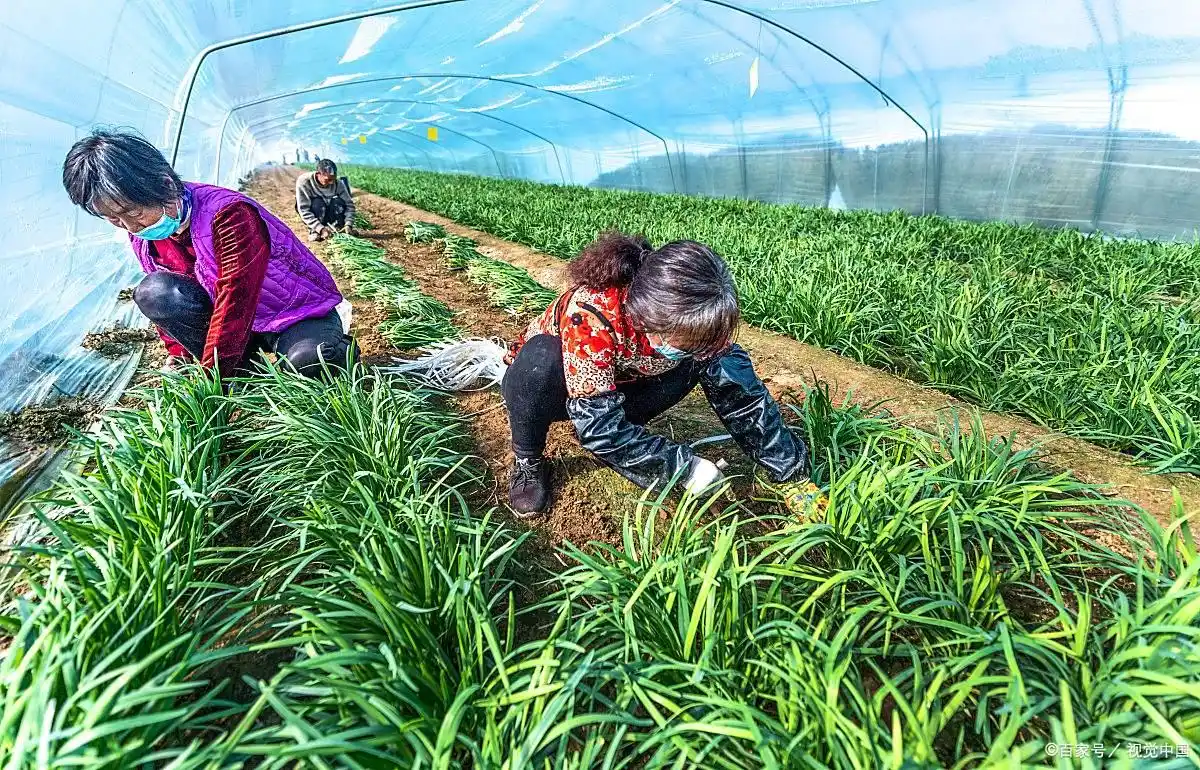
(iii) environmental regulation of facility cultivation
Temperature regulation: cabbage grows at suitable temperatures of 15-25°c, during the day at 20-25°c, and at night at 10-15°c; winter facilities need to grow at temperatures below 5°c to cover straw curtains or temperature protection, to ensure that temperatures are not below 0°c and to avoid freezing of plants; at high summer temperatures, plant growth can be prevented by reducing temperatures through ventilation, sunscreening, etc。
2. Light-light regulation: cabbage is a long-sun-lighted crop, but is more resistant to weak light, and facilities are cultivated with a guarantee of 8 to 10 hours of light per day, which can lead to yellowing and thinning of leaves if the light is insufficient; winter light is short and can increase production and quality by increasing light time by means of lighting devices such as leds。
3. Humidity control: selenium is growing at a rate of 60-70 per cent for air and 70-80 per cent for soil. When the facility is cultivated, it needs to be ventilated and humid in a timely manner in order to avoid the occurrence of diseases (e. G., grey disease) caused by the high humidity of the air; and to be ventilated in a timely manner, to reduce the humidity of the shed and to maintain air flow。