


Reporter, liu
In july, maize grown in chongqing low-altitude areas was in the process of being harvested on the market in large quantities, while maize seedlings had just been planted at a corn plantation of about 1,400 metres above the top of the mausoleum in the town of jinshan, namkawa. “there is a natural time difference between the time of farming in our high mountain areas and the low altitude areas, a natural time lag in the production of vegetables, a staggered market in the supply of products, avoiding competition and a unique development advantage.” wang xin just told reporters about the good-looking corn seed。
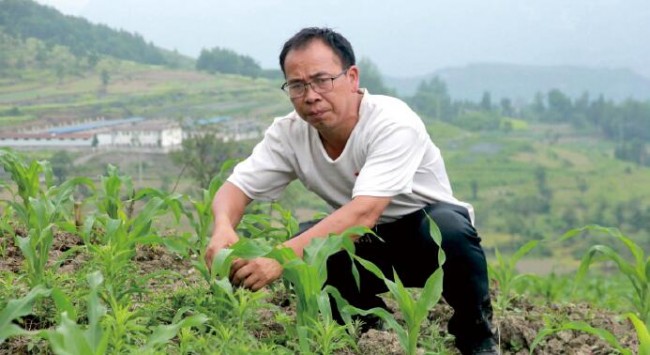
Wang xin was just checking on the growth of corn
At present, yuquan village has established a joint venture led by the kaigong vegetables cooperative in namkawaHigh mountain vegetablesThe production base of more than 2,000 acres and the total production of food commodities of more than 1,500 tons constitute a source of good quality vegetables for the autumn supply in chongqing city, and has played a positive role in addressing the problem of the “autumn fade” supply of vegetables. To further increase and improve the supply of vegetables in the autumn, wang kai, head of the cooperative in the beginning of the entrepreneurship process, efforts were made to play three cards: ecological, technological and scale。
First card: ecology
In the eyes of namchuan, the town of kim shan is in fact the name of the mountain, while the village of yuquan is the most remote village in the town of kim shan, with an average altitude of more than 1,100 metres above sea level, poor land, poor farming conditions and hard work to feed itself. Wang kai was born here. Wang xin just now remembers that former adults and teachers have always told the children to work hard to get over the mud. In fact, i want the children to leave the village and not work in agriculture. At that time, the fathers, who looked down on their faces, wanted to leave the countryside as soon as possible and never to grow, but no one thought that the land of the queen's order and the land of their homeland would be left behind and fell in love with it。
In 1993, wang xin had just taken the competitive examination and had the dream of going to the agricultural university, which ended up in sunshan, where the dream was shattered. Like most poor farmers' children, queen rei of the high test failed. The only way out was to go out to work and dream of going out to see the world. After a short period of work, wang xian had to return to his home, as his father had sustained injuries while ploughing. When he returned home, wang xing had just been ported, laid a mine and formed a band, but had always wanted to start his own business as a boss, and the first time he had started to grow a food fungus ended in a tragic failure。
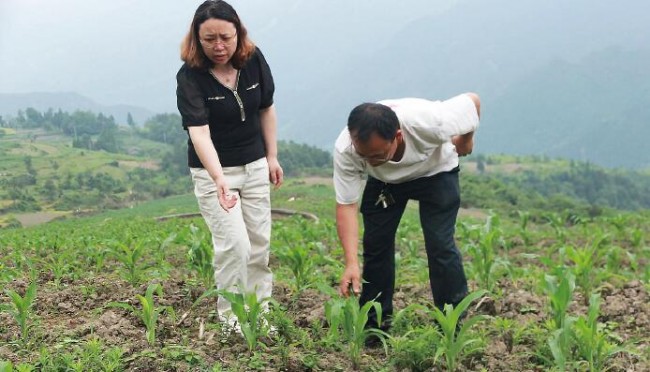
On-site mentoring of narc staff at the base
During his leisure time, wang has continued to read agricultural books and newspapers, and has for many years subscribed to magazines such as agricultural science and technology at his own expense, accepted new scientific techniques and ideas for planting and applied them in practice. Wang kai's determination to start a business for the first time has not wavered, although he has not done so well. The wang xin has just re-examined the land below its feet, where the village is situated at high altitude, where the summer weather is cool, with average temperatures ranging from 20 to 25°c, with high temperature differentials during the day and night, where severe winter temperatures and snow cover can effectively prevent endemic diseases, and where facilities such as huts are not needed to regulate the growth environment, where the production environment and products have a high quality advantage compared to the low-altitude warm season vegetable production areas and the northern facilities vegetable production areas, and where ecological characteristics are clear and well suited to the development of high mountain vegetables。
In 2010, more than 800 acres of wasteland in the village of yucheng were re-started by wang xin, who secretly resolved to rekindle the land through the development of niche industries. But at the time, wang xin was still in a bad mood, mostly not knowing what to grow and how to grow. At that time, when he was informed of his situation, the nanchon agricultural rural commission and the district agricultural university were able to help him overcome his problems in a timely manner, and he was recommended for training in new types of vocational farmers in chongqing city and namchuan district, while wang xian had just travelled to the advanced regions of takayama where she was growing vegetables. What does this land grow? What does it do? The answers to these questions are becoming clearer in the king's mind, although they have yet to be tested. During the first three years, wang xian just planted corn, roasted cigarettes and vegetables, which, because of their high altitude, were not produced as well as of good quality, but were well suited for the counter-season planting of vegetables such as corn, cedars, cabbage and vegetables. Because of the high altitude of the base, the high light and the high temperature of day and night, the fragrance of vegetables, the brilliance and sweetness of vegetables, which are better than the taste of low mountain areas, the market is popular, especially with regard to the high volume of autumn corn, which is sold and harvested quickly and suitable for large areas of cultivation. Wang xin has just tried to extend the planting time and the supply time. With a view to gradually expanding the area under cultivation, wang xian has just led the establishment of the société de enseignement des vegetables, which brings together villagers to grow high-mountain corn. The cooperative is now growing more than 350 acres of corn per year. More than 300 villagers in yuen springs village are encouraged to grow corn, with an area of over 2,000 acres and a value of nearly 4 million yuan, through the introduction of marketing routes and the provision of agricultural resources。
On-site mentoring of narc staff at the base
Card 2: technology
In order to ensure the continued growth and growth of the maize industry, wang xian has just continuously screened the best varieties for market demand, and the current varieties grown from the base are “kyoko 928” which is popular in the market。
“we will annually introduce multiple varieties for comparative testing, with the best results; the second is to increase inputs of organic fertilizers, increase soil fertility, introduce traditional membrane cover techniques, reduce the cost of weeding and reduce the hazards of herbicides, increase resilience to drought, pests and improve the quality and production of products.” wang xin has just told journalists that only scientific cultivation can maximize benefits。
Within the planting grounds, there are four large huts covering 1,000 square metres of land, 20 30 square metres of seedling ponds, with seeded seedlings floating in them, each containing 120 floating seedlings with 200 holes. It's a bold innovation by wang xing, using baked seedlings to experiment with advanced floating seedlings, which has had a good effect on the large-scale sapling. The growth of maize fields is slow, weak and low. “small corn seeds are small and dry, internal stocks of starch, etc., have fewer nutrients to use for germinate growth, have weak roots, have poor top soil capacity and are broadcast live in daejeon, and are prone to scarcity, weakness and unevenness.” wang xin has just told reporters that “the introduction of floating seedlings has several advantages: first, it is normative, simple, efficient, manageable and easy to manage; second, it is base-based decomposition, air ventilated, and corn is fast and well-smoking; and third, it is a whole plant with a base that is able to quickly enter the growth phase and achieve high rates of survival. The greatest benefits are the growth of the ladder, the planting of the ladder and the complete human control of its harvest.”
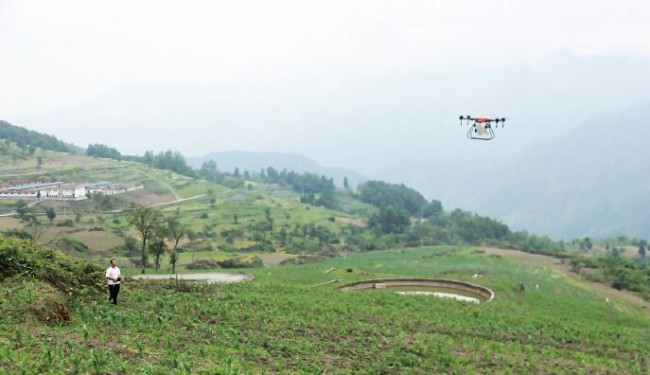
In order to address the problem of labour shortages, reduce the use of pesticides, reduce labour intensity and save labour expenditures, and increase labour productivity, wang xin has just been actively using modern technology to purchase plant protection drones for spraying and fertilization。
Wang kai had just operated a drone on the scene for journalists, and in less than two minutes, a acres had been sprayed. “manual spraying of 4 acres per day and of at least 80 acres per day by a drone; drone spraying is more than 20 times more efficient than artificial spraying, and drone spraying is small, concentrated, less wasteful and reduces the use and effectiveness of approximately 1/3 of pesticides.”
Wang xin has just spoken about the hard work and losses he has suffered in more than 10 years of crop exploration, which is still fresh: in order to keep the corn on the market, the harvest was lost several times; in order to protect the boars, it was necessary to stay at the base for more than two months each year, even though it continued to suffer significant losses. Open-air agriculture depends on the weather, climate change is erratic, birds, animals, pests are exacerbated and market prices are volatile, which determine the benefits of cultivation. Wang xin has just improved the capacity of vegetable crops to withstand pests and diseases by continuously learning advanced planting techniques and using modern agricultural facilities to ensure higher quality products。
Card 3: size
High mountain vegetables are recognized for their intrinsic quality and have natural brand effects because of their healthy growth environment and the low use of medicines in their production processes, but have to have a certain scale of cultivation and price advantage to develop competitive brands. At the same time, in today's vegetable consumption, which places greater emphasis on quality safety and health functions, the demand for green, nutritional and healthy vegetables is increasing year by year, and the king's inspiration has barely grasped these consumption characteristics, tightened production, gained the trust of its clients by adhering to the principle of “quality-based, good-faith business” and now engages with more than 50 direct-selling customers, as well as supplying supplies to two major indigenous agricultural producers, the mok-eung mok-eung village, which is now a large supply gap。
The key to a big industry is to keep people. In order to ensure efficiency, the cooperative, which currently has three production technicians and one professional accountant, has managed to employ 20 people. Wang xian has just begun to reward employees with a virtual share, using a percentage of the profits as a bonus for end-of-year appraisals, increasing the motivation and initiative of the workers and ensuring the regularization of the cooperative's production operations。
Wang xin has just indicated that future cooperatives will expand the value-added space of their products, steadily scale up and resonate with brands, starting with product packaging, branding, fresh storage, marketing channels, on-site pick-up activities and a replicable production model。
To this end, wang xian has just begun to build a supplier-ordered platform to advance sales online, improve product packaging and brand reputation through online sales。
This expansion is one of the most difficult links in the current development of high-mountain vegetables, as it requires land, labour and increased management difficulties. In response, wang xin has just put in place a bold design to improve land farming conditions through cooperative policies such as land rehabilitation, farming and road construction, guaranteed by well-established production techniques and management experience, such as product packaging, brand sales, storage, etc., and by the consolidation of land transfer through cooperatives (most of which have been abandoned), and the subsequent sub-contracting of labour-capable farmers to zero at reasonable prices. Cooperative specialists are responsible for the integrated provision of production resources, the integration of planting arrangements, the harmonization of technical guidance, the harmonization of pricing and recycling, and the guarantee of reliable returns for farmers, so that they can be scaled up in a piecemeal manner。
Agricultural science and technology (2021 no. 08)









