


The phoenix weekly, 28th of 2010
Summary: chinese civil society has a large number of illegally planted poppy plantations. They are scattered widely, sporadically, in mountainous areas, forest areas and places where human presence is rare. Gansu, inner mongolia, xinjiang, yunnan, sichuan 5 provinces are the largest and most complex in chinaOpium poppy cultivationLand. Over the years, joint teams of local governments, public security, towns and villages have carried out on-site monitoring and on-site inspection of suspected drug users in key drug-related villages and villages. According to the head of the local police station, it's more effective to check through propaganda and pedal searchesIllicit cultivationDrug offences。
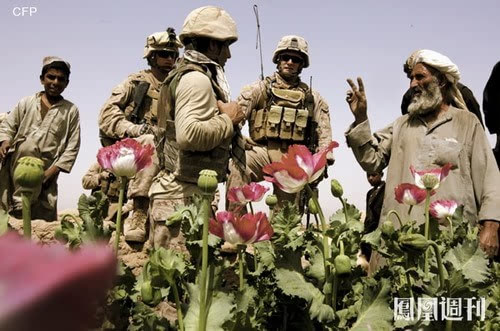
In addition to the gansu group, there is a large amount of clandestine opium poppy cultivation in china. Although china's national anti-drug commission claims that opium poppy cultivation and heroin processing are virtually non-existent in china and that the sources of heroin poisoning in china are mainly outside the country, they are in fact scattered widely in mountainous areas, forest areas and areas where human presence is rare。
In may this year, a large area of opium poppy was seen in a small hill village in the town of qingshan bridge, ning commune, hunan province, where a suspected plant was identified as opium poppy by the local police station. Soon, more than 3,600 opium poppy plants were eradicated. It is alleged that the owner of the opium poppy was a 70-year-old woman, who did not know that the private cultivation of opium poppy was illegal。
Shortly thereafter, the local hunan media revealed that the head of the anti-fouling department of the district prosecutor's office, ray, had a line of inquiry and had discovered that a large area of opium poppy had been planted in a crop by the roadside. Upon being informed, the civilian police officers of the local police station arrived at the scene for eradication。
The opium poppy cultivation areas that have been exposed by the media have not only emerged in hunan, but also in a farm in winching city, zhejiang province, where many poppy plants have been seized and, in an attempt to cover their eyes and ears, farmers have also sought to cover up many of the clouds and grass between the opium poppy. In the course of a district visit, the police officers of the security border police station at nueva kai river in manchuria, in inner mongolia, discovered that an outside resident had planted large areas of opium poppy in his five vegetable sheds and had prepared his own opium. In recent times, a number of farmers in lake anhui have had a sense of luck, especially when some elderly people are working in fields where poppy cultivation takes place。
In may and june of each year, when the opium poppy matures, the police are on the slopes to inspect opium poppy cultivation, although widespread opium poppy cultivation has largely been eliminated and sporadic cultivation still exists。
It's back to life
The 2009 world drug report disclosed opium poppy cultivation in major opium poppy-growing countries, including afghanistan and myanmar, but made no mention of china。
China's national anti-narcotics commission has always remained indifferent to poppy cultivation, which is widely spread among the civilian population. The director of the anti-narcotics department of the ministry of public security, yang feng shwe, has previously indicated that china has only a small amount of opium poppy cultivation in isolated mountainous areas, forest areas and so on, such as the heilongjiang yang-lang region, the lotus mountain region of gansu and the ninde region of fujian. However, immediately after the discovery, public security agents organized the eradication and prevented the creation of poison sites。
Most people have the impression that opium poppy cultivation occurs in the “gold triangle”, “gold crescent” and that most people know little about opium poppy cultivation in their territories. However, large areas of opium poppy cultivation do exist in china, one of which is legal and the other is illegal。
According to the china drug abuse survey published in 2006, while the western region of china had only 28 per cent of its population, it accounted for 52 per cent of china's drug abuse, and gansu, inner mongolia, xinjiang, yunnan and sichuan 5 provinces were the largest and most complex opium poppy cultivation areas in china。
The illicit cultivation of narcotic plants such as opium poppy and cannabis in gansu, inner mongolia, xinjiang, yunnan, sichuan and shanxi provinces is significant. It was alleged that the area under illicit cultivation in mongolia had reached as high as 5,000 acres during peak periods. Fourteen counties and municipalities in gansu province were found to have illicitly cultivated opium poppy。
Opium poppy is grown in mountain forests at an altitude of 4,000 metres in the ganan mountains. The china drug abuse survey revealed that “these opium poppy cultivation sites are secret, no one knows who planted them except the locals, and if said, whether they are informers or outsiders, their physical safety is endangered”
It is reported that opium poppy cultivation is common in the town of ningwu in shanxi province, where it is known as the “smoking village”. Poppy cultivation is also prevalent in the far-seated west-magmy, rocky-homeland, which is referred to as “pornage”. These are not yet places where the cultivation of illicit drugs is severe, with nearby areas such as guacamole, silos, shrines, baudeh, river chorus, estuaries and pre-eminence, and where the shanxi police have discovered new opium poppy cultivation sites through aerial surveys in areas of tension, dei district, etc. The chinese survey of drug abuse describes it as follows: “the opium poppy is scattered all over the country, one by one.”
In previous years, illicit cultivation of opium poppy had also appeared in the mountains near the three isthmus, namely, chongqing county, wushan county and bongji district, and had attracted high-level attention at the central level。
A survey by phuong dynasty reported that since the 1990s, opium poppy cultivation in chongqing bong dynasty and vakayama, despite the impact of the attacks, had expanded year by year, and that only phuong dynasty district had grown in 2004 in an area of nearly 1,000 acres with a value of hundreds of millions of yuan. It is alleged that opium poppy is grown in 81 communes in phuong dynasty county, and even spread to areas close to the county towns, showing an outbreak。
In phuong dynasty, poppy cultivation was initially concentrated in sparsely populated forests or forested areas. In recent years, there has been an expansion of the site from a forest farm to a good field, from sporadic to a hundred acres. In the 14 towns known to the china drug abuse survey, all opium poppy cultivation was carried out, and only those townships were organized to eliminate an area totalling almost 800 acres。
The survey reported that, since the 1990s, opium poppy cultivation in the mountainous areas of the great lakes region had largely been “large and sporadic”. In some cases, illicit cultivation is carried out for commercial purposes as well as for medical care and treatment. In some remote mountainous regions, in particular, because of economic poverty, lack of access to medicines and the blind belief of some farmers that opium can cure disease and pain, the crops are planted sporadically and secretly. There are also farmers who grow opium poppy to drink alcohol. There are also mountain people who do not even grow food and whose families live on opium poppy cultivation, thereby lifting some of the growing families out of poverty。
Science and technology
At the beginning of june 2010, a drone slid off over the shilin gorge in the ping valley region of beijing, where the first-ever drug-tapping operation by the beijing police this year was committed to drones and, in cooperation with the use of police helicopters, aerial patrols were conducted in the mountainous areas of pingya, higashiyama, yanqing, gyon, miyun, huairou, chang equi district。
At present, poppy cultivation is moving quietly towards beijing. Zhao wenzhong, chief of the anti-narcotics division of the beijing public security bureau, stated that the northern sub-county city of henjiang, bordering the regions of miyun, huairou and yanqing, was a priority area for the ministry of public security to inspect the cultivation of narcotic crops。
When the drones were airborne, the probes installed below the abdomen began work and a large area of ground was scanned. Dr. Wang shuu, china institute of surveying and mapping sciences, described drones as having a range of approximately 200 kilometres and flying up to 6,000 metres. The drones take one photograph per 500 metres of pixels for two hours each, each covering 3 square kilometres。
“the greatest advantage of drones is that they can move away from airports, be as close as possible to target objects, and be fully mobile and flexible in detecting illicit cultivation of narcotic plants, such as opium poppy, from the source.” according to wang。
But now, drones are not widely used to locate and destroy areas under illicit opium poppy cultivation. Wang indicated that cities such as beijing and shanghai still had the capacity to maintain the operating costs of drones, while the cost of operating around $1 million at a time was too high in the vast western region。
For the time being, unodc and the anti-narcotics department of the ministry of public security have been conducting eradication operations using satellite remote sensing to ensure that the illicit cultivation of opium poppy and the processing of heroin on earth are unclimate. Some countries have also developed a gps-based image mapping technique, which has significantly improved the accuracy, safety and effectiveness of poppy eradication operations。
According to liu zhuang, china's centre for mapping and promotion, video analysis experts usually identify potential opium poppy cultivation areas based on the spectrum and environmental conditions reflected in satellite imagery. In multispectral images, opium poppy can be identified by spectral signals. The analysis will also look at the surrounding environmental conditions and determine their suitability for poppy growth. They looked closely at the different areas on the map and determined the range of targets that needed further detection. When suspected opium poppy cultivation areas are initially located on satellite imagery, their geographical coordinates will be provided to the crew。
~ as these places are hidden in the valleys, staff members usually make on-site observations over helicopter arrivals to determine their precise location。
On each flight, the working group was equipped with two key equipment: an advanced digital camera and a high-precision gps receiver with an external antenna. Before taking off, a photograph of the gps display screen was taken, recording the time and place of commencement of the work, so that the two devices could run simultaneously during the subsequent work。
According to the gps program, after taking the first picture, it automatically records the current geographical location every ten seconds, and aggregates it into the trajectory of the entire flight。
Upon the return of the task force, they downloaded digital images and gps tracking logs from their respective devices to laptop computers for analysis using positioning-image docking software. Using the time shown on the gps screen in the first photo as the start of the mission, the professional processing software establishes a connection between each digital photograph and the corresponding location, and then attaches the geographical coordinates, date and time of the photograph. As a result, suspected opium poppy cultivation areas were simultaneously provided with extensive live images and precise gps positioning。
Operation planet
In the event of the discovery of a poppy plant, the local police will then send a police helicopter carrying the relevant experts to the area for detailed investigation, which will be cut off, destroyed and finally tested。
Since 2005, the national office for drugs and crime (onuci) has been implementing operation astronomical, which strictly enforces the prohibition of drug eradication in 28 priority districts. It is understood that operation astronomical-10 is a unified nationwide operation organized by unodc to detect priority areas for drug cultivation through satellite remote sensing techniques。
These areas of illicit opium poppy cultivation are commonly referred to by the police as “target areas”. Wang was involved in the eradication of drugs in the ganan region, the mountains of the ganan mountains are heavily forested, and in recent years, as a result of the sealing of the forest, its designation as a national natural forest reserve and a closed area for logging and logging, it has been rare and difficult to reach, and the cultivation of illicit drug plants is highly hidden, undetectable and an area with high levels of illicit drug cultivation。
“this makes it difficult to detect, monitor and eradicate drug control.” in these mountainous areas, where no satellite remote sensing techniques exist, wang has counted the “three difficulties” and the local population has been mobilized to investigate them in the countryside and villages, and then the police officers have gone over the hill to find them。
In the past, however, artificial detection of illicit opium poppy cultivation was difficult and costly and dangerous. In recent years, through operation astronomical, “the application of remote sensing techniques for the monitoring of narcotic plants can help us achieve the 100-percent precision eradication of poison”. He said that the current monitoring success rate of the satellite remote sensing monitoring technology system was 80-90 per cent. The illicit cultivation of opium poppy cannot escape the monitoring of “the sky”, “the eyes of the human being” anywhere in the mountains。
Since 26 june this year, a joint operation has been under way in the provinces of gansu province and kananzhou, and sichuan province, in the quigu county of kyushu province, to ban the eradication of poison in the five communes of the three provinces. In the past few days, wenzhou has organized a group of over 360 cadres from political law, public security, the white water river forestry authority, the towns and villages concerned。
It is alleged that the group was divided into three different directions, reaching out to drug-affected towns, such as tian ji, nakhai and the rock chicken dam, and carrying out a net-to-penetration survey into drug-prone areas. At the same time, aircraft navigational surveys combined with remote sensing from the astronomical-10 satellite, using high-tech means to detect a toxic hazard in a timely manner。
Staff members participating in the operation, on their backs, carried instruments such as shoulder-carrying binoculars, climbing cliffs, walking through deep mountain forests, working for more than 10 hours a day and travelling over 500 kilometres per month。
In the form of “separation, mountain division, division and batching”, they carried out a net-searching of the blind districts of the towns of yongdao, grassland and guo yuangang, which involve the towns of sino-chai, pokang dam and boguang commune in ganan county, and the townships of kyugu. Carpets and net searches were carried out, particularly in forest areas and forested areas where opium poppy had been grown in the past, in order to eradicate the root causes of the virus in order to ensure that illicit cultivation did not occur in the areas visited。
During the screening, the action team also conducted anti-drug sensitization campaigns for forest rangers, mountain pickers and drug growers. The towns and villages have also used anti-drug slogans at the entrance to the mountains and have issued counter-narcotics leaflets, and have signed statements of responsibility with the towns and the forest plantations。
Over the years, joint teams of local governments, public security, towns and villages have carried out on-site monitoring and on-site inspection of suspected drug users in key drug-related villages and villages. The head of the local public security bureau stated that the criminal activities of illicit drug cultivation had been effectively curbed through information campaigns and a search of the mountains. To date, the widespread cultivation of opium poppy has largely been eliminated, but it is not excluded that sporadic cultivation still exists in some areas。
The rich are the cure
The golden triangle, which borders large parts of yunnan, has produced drugs such as opium and has been the world's main drug producer. This land, where opium is grown, is now full of sugar cane, surrounded by the taste of silk cane juice。
In july, at a time when the sugar plant was in a rush, vehicles carrying sugar cane along the yunnan border corridor occasionally scrambled through the mountains and rolled up the dust。
“alternative cultivation is now an important internationally recognized means of addressing the root causes of the drug problem and is one of china's three main ideas for international cooperation in drug control.” a public security officer from the hokkai district of western bizona state said that the province of yunnan had been successful in its alternative cultivation of opium poppy abroad in recent years。
According to publicly available information from the department of commerce of the province, between 2005 and 2008, the yunnan province organized 198 replacement enterprises, with cumulative investments of over rmb 1. 3 billion, implemented 231 alternative projects abroad and accumulated additional offshore cultivation of 2. 19 million acres. Undcp information also indicates that opium poppy cultivation in the traditional “gold triangle” fell from 157,900 ha in 1998 to 24160 ha in 2007, representing an 85 per cent decrease, influenced by a number of factors, including alternative cultivation。
In addition to developing nearly 300,000 acres of cash crops such as rubber and cassava in former opium poppy-growing areas north of laos, force bioproducts in yunnan province, the company invested rmb 210 million in the construction of a solar sugar mill in the fourth district of eastern shan state, myanmar, where 2,500 tons of sugar cane were processed on a daily basis, with an area of 51,000 acres of sugar cane under cultivation and some 15,000 original smokers involved in sugar cane cultivation。
In the 2010 squeeze season, the highest amount of cane was paid in 15 years in the lao cane sector. According to statistics, sugar cane cultivation brings the average income from lao cane farming to 6,800 yuan and per capita income to 1,700 yuan. Today, opium poppy has been replaced by a swarm of cane forests, with former smokers turning into cane farmers and growing sugar cane creating a path to prosperity。
“the current eradication of opium poppy cultivation is merely a cure for the symptoms.” according to an anti-drug worker in yunnan province, poppy cultivation is only one link in the chain of the “poppy economy” industry, where the supply of seeds from the upstream industry, the sale of opium poppy from the downstream industry and the processing of drugs are bound to rebound if they are not completely cut off. In his view, the eradication of the opium poppy could not be expected at the present time from a campaign-like approach, but should be based on rural grass-roots construction and steady income growth for farmers。
The use of poppy drugs is now becoming an optimistic plan to combat the illicit drug trade. The project plans to buy mature opium poppy from farmers and then turn into a drug such as painkillers to meet the needs of third world countries。
The plan is being implemented in afghanistan at the initiative of international organizers. There, each village will have a factory to process and refine opium poppy, but then processed morphine will be transferred to kabul for re-testing, including capsules and packaging painkillers in accordance with international standards. They will then be shipped to emerging countries for sale。
“this project sounds optimistic and very popular. Researchers have found that it now needs more theoretical research and practical and practical measures. Editor; haralong









