


Hello, i'm ting lan, who brings you up to date every day
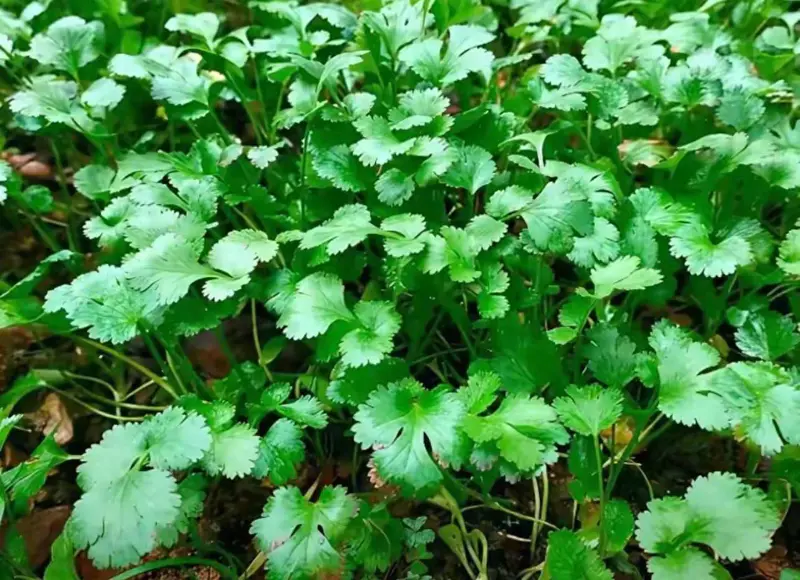
After the national day holiday, the temperature in most parts of the country fell sharply, with the temperature rising day and night, the heat completely faded, and the soil moisture and temperature reached the golden state of vegetable growing throughout the year. A lot of people think it's cooling in the fall, and the vegetables are growing slow, and they don't growCold-resistant vegetablesThe worst fear is heat and heat, drought, which is best suited to the cool and warm end of the autumn。
Especially after the fourth of july, these 10 days before the fall of the frost, are the best window period for cooking in autumn and winter. Vegetables planted during this period will not be sunburned by autumn tigers and will not breed many pests. As the weather cools, they will grow stronger and become more resistant to the cold. They will be able to survive the early winters and the late winters, from november until the early spring of next year, to free the autumn winters。
A lotHome gardeningOne mistake is always made by friends: they grow their food in the summer, and the high-temperature vegetables not only have low rates of survival, but are also prone to long insects, bad leaves, bad mouths and a half-day confiscation. Autumn and winter season vegetables are rare, infestation is rare, water is simple for fertilisation, vegetables are grown sweet, tasteless and healthy in nature。
Today, we are going to prepare seven more colder and more traditional vegetables for the autumn and winter season, suitable for most of the country's north and south, with a balconies plant and a small courtyard, a very low planting threshold, and a new guy who can grow them once and for all。
I. Yellow-heart uta: autumn and winter `handing hands', and frost is sweeter
Yellow-circle uta is recognized as a winter-long all-powerful vegetable and the preferred species for growing in rural gardens and in the family balcony in the autumn, with the greatest characteristic being extreme cold tolerance and colder and better。
Normal green leaves will freeze and die at zero degrees, while yellow heart utta can withstand temperatures of 10°c to 15°c below zero, open-air cultivation in the north, and small snow and frost will continue to grow normally after fall, even if snow covers the plant, it will still be fresh after snowing. Moreover, it has an exclusive feature, which, following the autumn frost and winter frost wash, is converted into sugar in the plant, the bitterness of which is completely gone, and the sweetness of the leaves is several times higher than the taste of the summer planting。
Best planting time
The period between the national day and the end of october was a golden planting period, which could be cultivated in both the north and the south. There is no stress in the south, which can last until the end of the winter, and in the cold areas, which simply cover the membranes and are able to survive the winter without wiping。
Plantation conservation techniques
1. Sowing methods: either directly or by stripping, without the need for seedlings, and without difficulty. When the soil is levelled, the seeds are spread evenly, covering a thin layer of soil (0. 5 cm sufficient) to avoid the thickness of the soil resulting in no seeding。
2. Fertilizer management: keeping the soil micro-humid after seeding, slow evaporation in the autumn and winter, free from frequent watering and prone to rooting. After the seedlings grow to four real leaves, a small amount of slow-stamped organic fattening results in fast-floating leaves。
3. Growing seedlings: they are too dense and time-consuming, they remove small, small and small, they retain strong plants, they provide ventilation and they avoid overcrowding。
Collection cycle
Small seedlings can be harvested about 30 days after seeding, 45-60 days in large strains, which can be picked in batches or in whole, from november to february of the following year。
Ii. Pedestrian spinach: cold and cold, red roots for the autumn and winter
Common straight spinach on the market is weak, cold-resistant, yellow leaves are easy in autumn and winter, while puny spinach is the exclusive quality of the autumn and winter, and is the main medium of winter in the north, and has been favored by vegetable growers in recent years。
The biggest difference between this spinach and ordinary spinach is that the plants are growing on the ground, with thick leaves, thick leaves, oily leaves, full of red roots, deep roots and extremely strong cold resistance. The normal frost, the cold air is completely unaffected, the temperatures below 10°c are still alive, the cooler the weather, the thicker the leaves, the softer their mouths, and the proper cuisine, soup, and fray。
The greatest advantages of planting spinach in the autumn and winter are the near absence of pests and pests, the gradual disappearance of fall-high-temperature residual pests, the development of clean and hygienic plants in a cool environment, free from deworming, and pure natural green vegetables。
Best planting time
Nationwide, the best seeding took place in mid-october, with early harvests taking place early, before the fall of the frost and after the winter it flourished。
Plantation conservation techniques
1. Rapid seeding: spinach seed shell hard and slow to dry. The seed is soaked with warm water for four hours before seeding, leaching, static sprouts for 1-2 days, and then seeding after white, with a clean and 100% seedling。
2. Soil requirements: the preference for a loosely ventilated soil, the planting of pine soil on the ground, the planting of an ordinary trophic soil and the planting of water on the ground。
3. Day-to-day management: drought-resilient, less water in autumn and winter and less soil. Long-term fertilization is not required, with sufficient bottom fertilizers slowly growing, and before winter it is not too much to catch fat to avoid long-growing and declining cold resistance。
Collection cycle
After 40 days of planting, small seedlings can be harvested, winter spinach can grow in winter, and after spring next year it will grow rapidly, with the best taste。
Iii. No pea seedlings: four seasons of green, low temperatures and prolonged heat
Many people know only that they eat peas, but they don't know that pea seedlings are the most expensive vegetables in the autumn and winter, that they eat green leaves, that they don't entangle, that they don't have to fight, that they are clean and clean, and that the colder the weather, the younger the buds。
Peas seedlings are extremely cold-resistant and can withstand temperatures of 5°c below zero. They are not aging, fibrogenic in the low-temperature conditions of autumn and winter, and they always have a soft taste. Its nutritional value is high, it is rich in plant proteins and many trace elements, it contains its own light peas, and it is a perfect match for soup, frying, firecrackers, and it is a refreshing vegetable on the autumn and winter table。
The most practical thing is that pea seedlings are extremely resilient, not a one-time harvest, and when they are suffocated, water fattens up, and in three to five days they will germinate again, so that they can harvest five or six times and plant a whole winter。
Best planting time
The whole of october can be grown in autumn, winter and winter, and throughout the year in the south, with the northern interior balcony and closed balcony growing in the northern winter, with a continuous season。
Plantation conservation techniques
1. Intensive planting of high yield: peas seedlings are suitable for dense planting, with no deliberate space, and the seeds are spread evenly, and they contribute to the growth and production of young buds。
2. Avoidance of light: when seedlings are seeded, they are properly reduced by direct light, they are maintained by dispersing light, they are grown with green and green leaves, they are softer and do not grow old。
3. Recovery of fat: after each strangulation, a small amount of thin organic fertilized water is applied, the nutrients are rapidly replenished, the side-breeding is promoted and the recycling is achieved。
Collection cycle
The first harvest is 25-30 days after seeding, followed by recycling and continued harvest in autumn and winter and winter。
Iv. Cold-resistant cabbage: fast-growing and zero-threshold new vegetables
While cabbage is home-grown, many people only know how to grow in spring and summer, and do not know that it is of the best quality at the beginning of autumn and winter。
Vegetables grown on the occasion of the national day's cooling avoided high-temperature virus disease, green insects and aphids, and grew in a clean environment, green leaves and sweet tastes. It has a good cold tolerance, is resistant to temperatures around 0°c, is not affected by frosted weather, and is growing steadily after cooling, is a fast vegetable and does not have to wait long。
In comparison to summer cabbage, which is prone to rotting roots, yellow leaves and scavenging problems, fall and winter cabbage is stable, has a high rate of survival, is largely unmanageable and is the preferred vegetable for new hands。
Best planting time
Between early october and the beginning of november, sowing was available throughout the country, with an open winter in the south, normal harvest in the north and full harvest before low temperatures。
Plantation conservation techniques
1. Subsistence wetting: small cabbage seeds, which must be thin, 0. 3-0. 5 cm, and too thick to sow. The seeding is followed by watering, soil humid, and two to three days of seedling。
2. Reasonable interstellar seedlings: after the seedlings grow, and at the time, they retain a distance of 3-5 cm between the seedlings and 8 cm between the seedlings, ensuring that the plant has sufficient growth space to avoid congestion and thinness。
Water protection: the air is very wet in the autumn and winter, water is poured in accordance with the “dry and wet” principle, and water is cut off from the soil, the earth and the earth, otherwise the roots and leaves are prone to problems。
Collection cycle
Growing at an extreme rate, 25 to 35 days of ripe harvest, so that fresh vegetables can be eaten daily in batches。
V. Autumn broadcasts: cold and strong, hard meat is not empty
It is a classic vegetable for the autumn and winter table, with leaves and truncheons, and cooling, frying and pickling. It is inherently chilly and hot, it is easy to grow in high-temperature weather, empty, woody, and very bad taste, while the cool and low-temperature environment after the national day is the best climate for growth。
In low-temperature conditions, staves are thick, strewn, small, non-empty, non-coarse fibre, and leaves are thin and thick. Its cold tolerance is excellent, its seedlings are subject to mild frosting, its capacity to withstand temperatures of 3°c is low, it grows steadily throughout the autumn and winter, and it matures early and spring after winter, with output and quality well beyond summer and autumn。
Best planting time
In mid- to mid-october, planting was done in mid- and late-term and adapted to most parts of the country. This time was missed, with low temperatures at a later stage, which could easily affect expansion。
Plantation conservation techniques
1. Cultivation: it is recommended that seedlings be grown and planted when they reach the four-to-five leaf, with the highest rate of survival and more evenly growing。
2. Water fertilisation focus: pre-period long leaves are the main source of fertilisation and indigence; stowing periods with appropriate increases in potassium phosphate fat, promotion of stowing and effective prevention of hollowness and weakness。
3. Temperature control: simple membrane temperature protection after cooling in the north, avoiding freezing injuries and ensuring the continued growth of plants。
Collection cycle
In autumn, 60 to 70 days after planting, green leaves are collected, and the first spring after winter and spring harvests the straw with the best quality。
Vi. York actives: slicing and cuisine in autumn and winter
Artemisin is typical of cold and cold vegetables, most afraid of high temperatures and heat, and in the summer it is prone to aging, flowering and bitterness, while in the low-temperature conditions of the autumn and winter it is only long-leaved, not flowering, and the best taste is in the autumn and winter。
Equinoxes are stronger and more resilient to cold than equinoxin, and can withstand temperatures of 4°c below zero. The cooler the weather, the tenderer the leaves and the more fragrance. Artemisin carries a special fragrance, with very few pests and pests, which are almost unmanageable, and which can be harvested repeatedly and harvested repeatedly, with new branches cut, the more the branches cut, the higher the yield。
The daily eating of artesin is warm and dry, especially during the autumn and winter dry season, and families grow clean and non-pesticide-free foods。
Best planting time
The whole of october is available for planting, mainly in the autumn, which continues to grow early in the winter and can be grown in the north and south。
Plantation conservation techniques
1. Sowing methods: it can be broadcasted, broadcast by strip, seedlings are produced at a fast pace and seedlings grow more intensively。
2. Light management: the preference for a light-dispersed and cool environment is that the light is the best fit in the autumn and winter, and can grow quickly without the need to hide the shade and with sufficient light。
Harvest techniques: 3-4 centimetres in the base when plant is about 20 cm cuts the upper tubular leaves, does not paste the roots, maintains the roots and the underlying leaves, and water fattens up, i. E. Sustainable regeneration。
Collection cycle
For the first time in about 30 days, the harvest lasts for more than three months, until late winter and early spring。
Vii. Winter garlic: autumn and winter, and the next year's high productivity
As the saying goes, “the white onions, the cold onions, the garlic”, after the national day, until the end of october, is a golden period for the cultivation of garlic and a core farming experience from the old generations。
Garlic is extremely cold-tolerant, and the seedlings can go through the winter in the open, and they will not freeze to death at 10 degrees below. Autumn garlic is aired in cold winters and springs, and springs and springs will soon rise, and the garlic will be full, high-yielding and tight. If seeds are planted too late, the young are weak, the winter is prone to freezing, and production will be reduced significantly in the coming year。
Garlic, which is grown in the autumn and winter, not only harvests garlic and garlic for the coming year, but also quenchs garlic at any time during the autumn and winter season, with a high price for money。
Best planting time
The planting of seeds in mid-october of the national unity could be delayed in the south until the end of october, when the north could try to complete the planting by mid-october to nurture the growing seedlings。
Plantation conservation techniques
1. Selective treatment: selection of full, non-facile, non-stereogenic garlic, elimination of dry, weak garlic, stronger and evenly grown seedlings。
2. Cultivation density: 8-10 cm in length and about 15 cm in length, with the tip of the garlic petals being inserted up into the soil, and 2 cm in the ground, which should not be too shallow。
3. Winterization management: a permutation of water after seeding and a slight pine corset after seeding. A winterization before the onset of winter can significantly improve the ability to withstand the cold and survive the winter。
Collection cycle
Garlic seedlings are readily available in the autumn and winter, while garlic is collected in april and may of the following year, with one planting and three harvests。
Core autumn and winter vegetation strengths and universal conservation techniques
After looking at these seven types of vegetables, it is not difficult to see that autumn and winter vegetables are much less expensive than spring and summer and are also the most likely season of success for the family. Summarizing, there are three main core advantages to growing in autumn and winter: first, very few pests and pests, low temperature inhibiting the growth of insect eggs, little use of medicines, green green health of vegetables; secondly, the accumulation of large amounts of temperate nutrients and the sweetness of vegetables, far beyond summer vegetables; and thirdly, most vegetables are cold-resistant, recyclable, monocultured, and harvests continue in autumn and winter。
In the meantime, we share several common techniques for the planting of vegetables in the autumn and winter, suitable for all cold-resistant vegetables, which are used directly by beginners:
Drinking water is not wet: low temperatures, slow evaporation, slow dry and wet soil cycle, frequent watering is prone to dry and dry roots, strict observance of the dry and wet principle and low-temperature snow and snow weather ceases to water。
2. Fertilizers: slower growth of vegetables in the autumn and winter, reduced fertilization, prohibition of strong and fertile fats, pre-cubation periods dominated by temperature and organic fat, and long-term production of small supplements。
3. In due course, protection against cold: before the northern frost, cold air comes, small seedlings can be covered with swirlless, membranes to keep warm, and are cold-resistant and needless to protect, and natural winter is sufficient。
4. Battered harvests: no one-time planting of fast-growing green leaves at intervals of 7 to 10 days to achieve sustained harvests and avoid concentration of mature foods。
Concluding remarks
Don't miss the golden season after the fourth of july. The seven above-mentioned vegetables, all of which are suitable for low-temperature conditions in the autumn and winter, have become more and more cold, growing simple, managed and coarse, with long harvest periods, whether in rural areas, or in urban areas。
While the temperature is now right and the soil is warm, planting is time-consuming, fresh vegetables are picked at any time throughout the autumn and winter, and health is less expensive and less expensive。
What's everyone's favorite vegetable growing in autumn and winter? Do you even know what cold-fed autumn vegetables are? We welcome the sharing of comments in the comment area and the sharing of experiences in growing vegetables。









