


Winter and spring festivals are characterized by multiple ends of climate change, low temperatures, oligarchy, high day and night temperatures and frequent fluctuations in humidity. Such an environment is consistent with the growth habits of mushrooms at low temperatures and poses a number of challenges. The growth of fungs, the emergence of mushrooms and the deterioration of quality have caused growing families to suffer from headaches. Scientific management techniques have become critical in order to stabilize the gains during this special season. Capturing the key points of blubber management, environmental regulation, mushroom-producing details, green control of pests and pests, and harvesting treatment will enable mushrooms to produce beautiful “flowers” at winter and spring festivals。
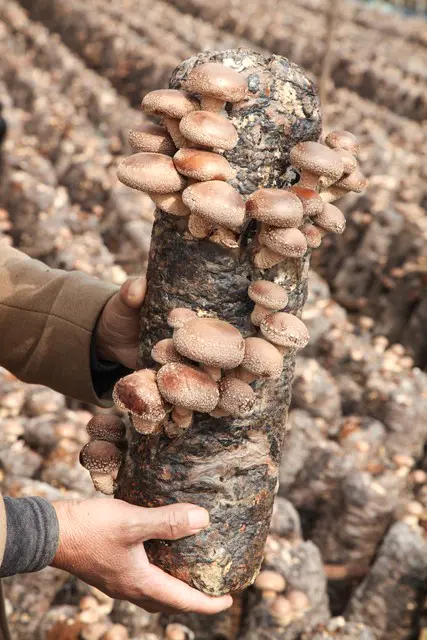
Pre-treatment of bacterium rods and management of the bacterium period are the first steps. The fungus is the “nutrient vector” of mushrooms, and its state is directly related to the success or failure of the mushrooms. High-quality fungus must be full, fung-free and intact. The screening depends on whether the mycelium is evenly white and colourless, striking the rod makes a silt sound and avoids hollows or cracks. Storage of the rods is to be placed 7-10 days in a warm, ventilated shed “smoothella” to adapt the fungus to the environment. When mycelium is not mature, it is administered 10-15 days in a warm environment of 18-22°c, during which it is maintained with ventilation, with a daily ventilation of 1-2 times, when the mycelium is covered with a stick and a small amount of brown skin is present on the surface to prepare for mushrooms. Spraying or swirling with alcohol prior to venturing to kill surface fungi and reduce the risk of disease。
Environmental regulation during fertilisation is the “key” for the breeding of bacteria. In winter and spring, temperatures are low and are kept at 15-22°c, with a minimum of no less than 8°c, by measures such as tectonic membranes and temperature protection. At temperatures of less than 10°c, myctic silk will stagnate and affect growth. Temperature above 25°c requires timely ventilation. The humidity is maintained at 60-70 per cent, wet over the high-premature fungus, and too low affects mycelosis. Humidity can be regulated by drying agents or ventilation. The light has to be weak in the form of a bacteria, avoiding a direct, high light, which is the most suitable for dispersing light between 500 and 1,000 lx. The light is too strong to inhibit the vibrator。
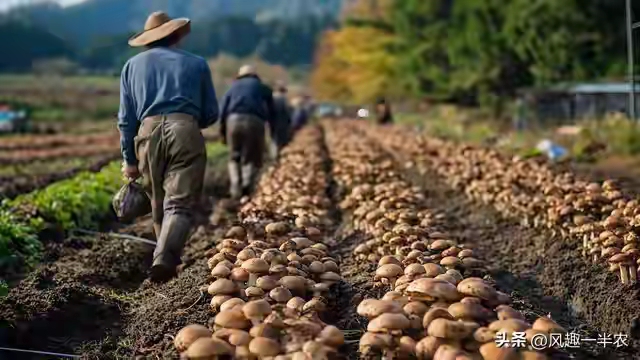
Environmental regulation during mushrooming is even more important. Temperatures, humidity, light and ventilation are carefully controlled, simulate the natural environment, promote the smoothing of mushroom buds and ensure healthy sub-entity growth. The temperature of mushroom buds is 12-18°c and the temperature of night and day is 5-8°c. The temperature difference is used to stimulate filamentation. The long-term temperature of the sub-entity is controlled at 10-16°c and is too high, which results in a thinning of the mushroom cover and a long handle, affecting the quality of the commodity. In terms of humidity, mushroom buds remain at 85-90 per cent and sub-entity 80-85 per cent. Spray water or ventilation to avoid high or too low humidity. The light is controlled at 1000-2000lx for 8-10 hours per day to avoid strong light burns. Ventilation frequency 2-3 times a day for 30-60 minutes each to regulate air flow within the shed to reduce co2 concentrations。
The fine management of the mushroom season is directly related to production and quality. After the onset of the mushroom buds, small, deformed and redundant mushrooms are eliminated in a timely manner to ensure that the nutrients are concentrated on high-quality mushrooms. Dismissal is carried out in accordance with the principle of “de-empowerment, de-encumberment” with the light lifting of the disinfection and the cleaning of residuals. Compensation is also key, with exclusive liquid or organic fertilizer sprayed or inbred for three to five days after harvesting, supplementing nutrients and extending the mushroom cycle. The transchromes are controlled at 15-20°c and the humidity is 70-80%, contributing to the aging of the fungus. Inequitable or abnormal changes in the environment are made in a timely manner to ensure natural and even changes in the rods。
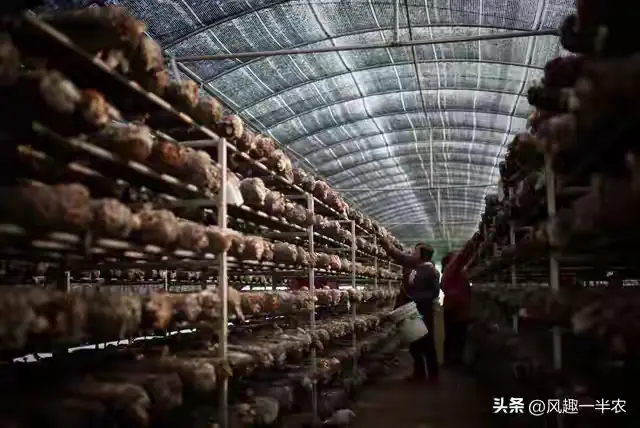
In winter and spring, fungi and pest control cannot be taken lightly. Bacillus, such as green, black, chain, etc., need to be prevented from the source, completely cleaned up, sterilised with lime and operated with alcohol or polybacterium. The fungus are detected in time to isolate, scrape, spray and prevent proliferation. With regard to pests, the installation of anti-verbicide nets, stickers, pest-killing lamps, the use of natural insects or biopesticides to control pests, reduce the use of chemical agents and ensure green safety。
The harvest chain also needs to be addressed. The symbol of mushroom maturity is mushroom lids 3-5 cm in diameter, edged inner collages, curvatures, and meat. At the time of the harvest, the hand handles are rotated lightly or cut with blades to avoid pulling the rod and keep it intact. After harvesting, it is classified, mushrooms are placed in a conservatory bag, frozen for 3-5 days, or frozen for 3-6 months. The mushrooms, on the other hand, are dryed in a timely manner and the temperature is gradually increased to ensure that the moisture is less than 12 per cent, that it is stored in seals, and that the scent and quality are maintained。
The management of winter and spring mushroom cultivation is a system project. From pre-treatment to environmental regulation, from mushroom managementPest controlEach link is carefully controlled, and the production and quality of mushrooms are steadily increasing. Scientific management techniques not only address the climate challenges of winter and spring but also achieve high quality production of mushrooms. Let's work together to do better in the mushroom industry. What do you think about winter mushroom management? You are welcome to share your experiences and views。









