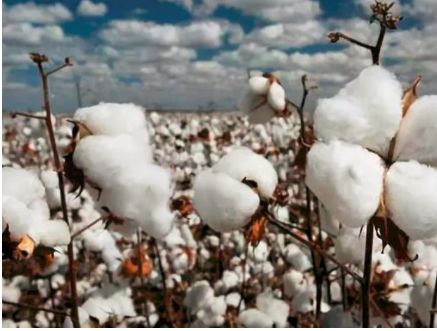
The vast majority of people who believe that we are wearing, using land and so on, are mostly made of cotton as the original material of the item. Although “cotton” is not foodable, the market is still in high demand, and so is the area where cotton is planted in our country. It is also important to remember that cotton is grown mainly in our home country, and because of this demand, cotton is grown in large quantities every year。
But when it comes to the market price of cotton, the price of cotton has always been particularly volatile, always high and low, and, of course, without looking at the size of the area produced every year, it is a rather time-consuming thing to plant cotton, because it seems to be a simple step from cotton production and water to harvesting, but it takes almost a year. Today we come to understand that the application of fertilizers is the key to growing cotton if production is to increase。
First of all, we should look at the best time in the application of fertilizer, and we suggest that it is best to use fertilizer when it is applied in conditions where the humidity and temperature are not too high. If it had to be done, it would not have been possible to use it when there was rain on a cotton tree and it had not evaporated. It was also in order to avoid the dew taking part of the nutrients, so it would have been better to use fertilizer in the middle of the day, not to use it all the time, but to avoid the need to avoid the stronger sunlight, which would have to be avoided. In the case of the application of leaf flour, however, it is recommended to keep in mind local weather conditions。
The second application of fertilizers should not be too high, depending on the type of cotton that is planted, but also on the appropriate fertilizer and the quantity required. This is also because, if the fertilizer is applied at too high concentrations, the roots of the cotton, its nutrient-transmitting catheter, will be blocked because of the high concentrations, and if it is serious, it will cause the whole of the cotton to burn to death and the normal light co-operation of the cotton to a certain extent。
Naturally, some of the substances will be reduced significantly, and the cotton ball will grow more slowly and improve overall quality. It is therefore recommended that, when applying fertilizers to cotton, it is best to know the fertilizer to be applied and the concentration to be used to match it, but if too much is not carefully allocated, appropriate dilution is possible。
Of course, when applying fertilizers to cotton, it is necessary to distinguish between locally planted soil, which, if the soil is not good or if cotton is exposed to any disaster, loses much of its fertility, preventing its roots from growing well. In the face of this situation, we have to give nutrients, apply fertilizer in a timely manner, and assess the overall growth of cotton itself to determine the types of fertilizer to be applied, as well as concentrations and measurements。
In addition, it is important to understand the manner in which fertilizers are applied, which is essentially the same when leaf-faced or bottom-based fertilizers are applied, but there are some details that suggest more attention. The choice of a relatively new leaf application, mostly on the back of the leaf, is also due to the fact that the leaf itself is fragile, that a little too much action can hurt the leaf, and that it should not take too long, and it is suggested that it needs to be applied to the optimal effect。
Finally, we must note that cotton has to apply different fertilizers at every time, as long as it is grown, as long as it is known, that cotton is very fond of fertilizers and must be applied according to its stage of growth, and that the demand for fertilizers is greatest when it grows strong or when reproduction takes place. In terms of normal planting times, most of them between june and august of each year, increasing fertilizer use at that time would also ensure that cotton had sufficient nutrients and harvests。
In conclusion, we can see that it is crucial to improve cotton production effectively, and it is not difficult to do so if we look at the details before, after and after the application. During this period, of course, more attention must be paid to the prevention and treatment of the disease, and more attention must be paid to the clean environment in the field to avoid the growth of bacteria and diseases, which can also reduce yields。