


The growing of radish is not only time-efficient but also relatively high production, which makes it appropriate for the field to produce in the autumn, especially with regard to the production of more popular fruit radish varieties, and is important to boost harvests. In order to boost the productivity of the main producers of radial radish in the city of beijing, which is now starting to grow in the cold mountains of beijing, and in the plain areas before and after the autumn, the following suggestions are made for the management of production at the agricultural extension station in beijing。
Varieties selection
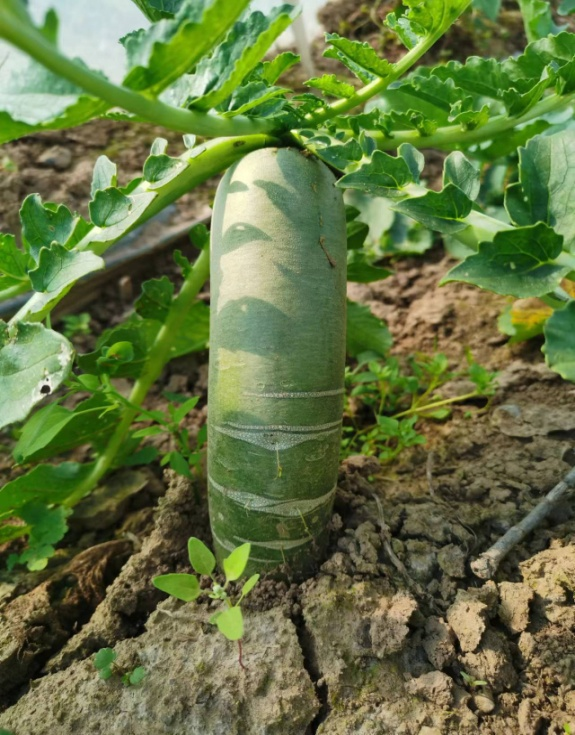
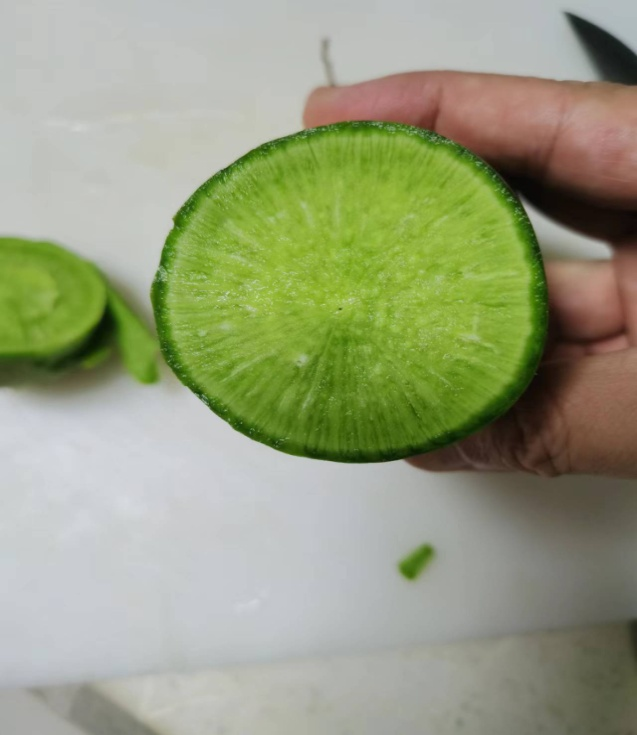
In the autumn, radish is produced in the form of white skins, green rods or round carrots that are not easily smoked, productive, disease-resistant, fast-growing, such as ice cream carrots, violet euphoria, radishs, tai-mi 1410, 7 stars, inner beauty, red tans, jade summer 2。
Land selection
Land blocks of sandy or bordered soil, which are deep, lax, fertile, well-drinked and drained and have organic content of more than 1 per cent, are not suitable for cultivation in hard, hard and fertile earthy areas. At the same time, the choice of the previous year and previous years was not a plot of radish or cross-flower vegetables, with the best plots of watermelon, beans and tomatoes。
Cleaning fields
Clean-up of residues, rotten leaves and weeds (including weeds around plots) in a timely manner after pre-harvesting and concentrate off the ground for harmless treatment such as high-temperature compost or ozone disinfection. At the same time, the earth's rocks and membranes were removed from the ground。
Use of fertilizers
Organic fertilizers: more than 4,000 kg of high-quality, sufficiently decomposed, shredded organic fertilizer per acre or 3,000 kg of biological organic fertilizer are applied, two thirds of the organic fertilizers are distributed in front of the cropland, and the remaining one third are applied during the precipice so that the radish can be supplied with nutrients in a timely manner。
Bio-based fattening: 20 kg of solid fungus fattening of acres with a “peaceful blessing” micro-organism, with attention to spreading on the face of the platinum before doing it, has a role to play in improving soil physicochemicality, easing heavy barriers and promoting growth and quality。
And sowing
The planting is scheduled to take place in the autumn, with the appropriate early planting of the plots for the citizens, and in the kyoto suburbs from 8 to 10 august, the plots sold after the cellars are broadcast at the appropriate late hours, and in the kyoto suburbs on 12 and 15 august, the high-altitude mountains, such as yanqing, miyun and huairou, should be seeded 5 to 7 days in advance。
(b) ground-to-ground dosage: the soil is flattened by a single-single, small-to-high-to-sap planting, and the soil is flattened at a distance of 50 to 55 centimetres for drainage purposes, with a broad face of about 30 centimetres, a gutter of about 20 centimetres wide, and a face of about 20 centimetres above the ground. It is 10 to 15 metres long and leaves a slope of about three parts per thousand according to the direction of irrigation and drainage. Clean up the land and the surrounding drains to prevent flooding. This can be done using the old tradition of finely ploughing, where fertilizers are spread evenly, soared, soared, soaked, soothed, and so forth, and so forth. Seeding: a line of one line of 20 centimetres per acre of seeding in the form of open dens or gutter spots. Two seeds per cave, 1 to 1. 5 centimetres thick and approximately 400 grams per acre。
Weeding in china: the radish larvae period is a high temperature and rainy season requiring repeated pine and weed cultivation. The principle of deep and shallowness and proximity to the roots shall prevail until such time as it is sealed off. To cut down the radish fork. When weeding, weeds must be removed not only from the inside, but also from the surroundings, and they must be placed in plots far from the radish, so as to reduce the harm caused to the seedlings by pests such as cricket and grasshoppers。
Saplings: when a seedling is a leaf, it must remove the excess seedlings in time from 3 to 4 centimetres, stick-like radish, earth-down radish varieties should be fixed in time, the embryos should be kept straight and the crowding should be prevented. When the plant grows to four to five real leaves, it is seeded from 18 to 20 cm. Saplings and saplings should take place in the middle of the sun。
Scientific watering: the requirements of radish for soil moisture over a long period of time vary。
The seeding process is designed to prevent the drying and slabing of the soil, to create a good budding environment to promote seedlings, to reduce the temperature, promote growth and prevent the occurrence of viral diseases by pouring small water into the ditch。
After 70 per cent of the seedlings are produced, another water is poured to ensure that the seedlings are strong。
Sapling periods: a seedling can be ploughed with a small amount of water if the weather is dry, the soil surface is ploughed with pine soil and then ploughs for 10 to 15 days, until the seedling is “breathed” (with a crack in the root), representing it is about to enter the root of the flesh for a long period of time and start watering。
(b) foliage booms: the expansion of the area of the leaves, the expansion of the assimilated products and the increase in the water intake in the root systems have to be managed in such a way that the amount of water is not excessive and then combined with weeding for medium farming to prevent the growth of the upper part of the farm。
(b) the period of expansion of the body's roots: the fastest-growing period, the slow growth of the above-ground segment and the acceleration of nutrient accumulation in the underground, so that the water is not lacking during this period and the soil is maintained at 70 to 80 per cent of the water content. The water is to be stopped seven days before the harvest in case the roots break。
Fertilizers: roky fertilizer is applied in sufficient quantities and generally does not need to be followed, if not in sufficient quantities, by the “breathbreak” of the body and by the initial expansion. Each time followed by water, organic fertilization ranged from 5 to 8 kg/acre, with a conditioned plot of 100 kg/acre of grass-grain before water is poured。
Other algal acid and corrodic acid-based foliage can also be used as an option for the application of 500 times the fluid or 0. 3% concentration of potassium phosphate to taiwan farmers in the later stages of growth. Fertilizers should be sprayed as far as possible on the back of the leaves in order to facilitate crop absorption, avoiding dry open mornings and sunlight。
The application of safe-favourable liquid biocobacterium fertilizers three times during root expansion and 0. 5 litres per water application; the application of 500 times more fluids in root is appropriate。
Phased harvest
The radish is harvested 75 to 90 days after seeding (some 100 days for individual varieties), and the harvest period begins in late october and must be collected before the external temperature is below 0°c in order to prevent exposure to freezing. After harvesting, the radish cherry is torn down, covered with it and stored in the cellar when temperature is appropriate。
Storage methods
The cellars with a width of 1. 2 to 1. 5 metres and depth of 1 to 1. 5 metres are dug ahead of schedule, depending on the length of the storage, in the east-west direction. In mid-november, the cellar began, with head-to-head and head-to-head and code-by-code, each layer of radish spreading a layer of 5 centimetre- thick tidal soil. Soil moisture in the cellar is appropriate, typically 12-15 per cent, and is pre-dry and decomposition. The top layer covers the soil by layer according to external temperature, and the last layer is about 30 centimetres thick, with two to three layers of grass curtains or straw on it, stored at suitable temperatures of 1 to 3°c to prevent freezing. The storage supply period runs from november to the end of march of the following year。
Pest control
Blue night moths and other wing pests: biopesticides used at night or in the morning when dew is not dry. Pyrethroids 1,000 times liquid or 25 per cent pvp 600 times liquid spray control。
Carrot aphids, which can be sprayed with biological pesticides such as clean source, grass i, impostin and alkaline. (contribution: beijing beautiful country network)
The growing of radish is not only time-efficient but also relatively high production, which makes it appropriate for the field to produce in the autumn, especially with regard to the production of more popular fruit radish varieties, and is important to boost harvests. In order to boost the productivity of the main producers of radial radish in the city of beijing, which is now starting to grow in the cold mountains of beijing, and in the plain areas before and after the autumn, the following suggestions are made for the management of production at the agricultural extension station in beijing。
Varieties selection
In the autumn, radish is produced in the form of white skins, green rods or round carrots that are not easily smoked, productive, disease-resistant, fast-growing, such as ice cream carrots, violet euphoria, radishs, tai-mi 1410, 7 stars, inner beauty, red tans, jade summer 2。
Land selection
Land blocks of sandy or bordered soil, which are deep, lax, fertile, well-drinked and drained and have organic content of more than 1 per cent, are not suitable for cultivation in hard, hard and fertile earthy areas. At the same time, the choice of the previous year and previous years was not a plot of radish or cross-flower vegetables, with the best plots of watermelon, beans and tomatoes。
Cleaning fields
Clean-up of residues, rotten leaves and weeds (including weeds around plots) in a timely manner after pre-harvesting and concentrate off the ground for harmless treatment such as high-temperature compost or ozone disinfection. At the same time, the earth's rocks and membranes were removed from the ground。
Use of fertilizers
Organic fertilizers: more than 4,000 kg of high-quality, sufficiently decomposed, shredded organic fertilizer per acre or 3,000 kg of biological organic fertilizer are applied, two thirds of the organic fertilizers are distributed in front of the cropland, and the remaining one third are applied during the precipice so that the radish can be supplied with nutrients in a timely manner。
Bio-based fattening: 20 kg of solid fungus fattening of acres with a “peaceful blessing” micro-organism, with attention to spreading on the face of the platinum before doing it, has a role to play in improving soil physicochemicality, easing heavy barriers and promoting growth and quality。
And sowing
The planting is scheduled to take place in the autumn, with the appropriate early planting of the plots for the citizens, and in the kyoto suburbs from 8 to 10 august, the plots sold after the cellars are broadcast at the appropriate late hours, and in the kyoto suburbs on 12 and 15 august, the high-altitude mountains, such as yanqing, miyun and huairou, should be seeded 5 to 7 days in advance。
(b) ground-to-ground dosage: the soil is flattened by a single-single, small-to-high-to-sap planting, and the soil is flattened at a distance of 50 to 55 centimetres for drainage purposes, with a broad face of about 30 centimetres, a gutter of about 20 centimetres wide, and a face of about 20 centimetres above the ground. It is 10 to 15 metres long and leaves a slope of about three parts per thousand according to the direction of irrigation and drainage. Clean up the land and the surrounding drains to prevent flooding. This can be done using the old tradition of finely ploughing, where fertilizers are spread evenly, soared, soared, soaked, soothed, and so forth, and so forth. Seeding: a line of one line of 20 centimetres per acre of seeding in the form of open dens or gutter spots. Two seeds per cave, 1 to 1. 5 centimetres thick and approximately 400 grams per acre。
Field management
Weeding in china: the radish larvae period is a high temperature and rainy season requiring repeated pine and weed cultivation. The principle of deep and shallowness and proximity to the roots shall prevail until such time as it is sealed off. To cut down the radish fork. When weeding, weeds must be removed not only from the inside, but also from the surroundings, and they must be placed in plots far from the radish, so as to reduce the harm caused to the seedlings by pests such as cricket and grasshoppers。
Saplings: when a seedling is a leaf, it must remove the excess seedlings in time from 3 to 4 centimetres, stick-like radish, earth-down radish varieties should be fixed in time, the embryos should be kept straight and the crowding should be prevented. When the plant grows to four to five real leaves, it is seeded from 18 to 20 cm. Saplings and saplings should take place in the middle of the sun。
Scientific watering: the requirements of radish for soil moisture over a long period of time vary。
The seeding process is designed to prevent the drying and slabing of the soil, to create a good budding environment to promote seedlings, to reduce the temperature, promote growth and prevent the occurrence of viral diseases by pouring small water into the ditch。
After 70 per cent of the seedlings are produced, another water is poured to ensure that the seedlings are strong。
Sapling periods: a seedling can be ploughed with a small amount of water if the weather is dry, the soil surface is ploughed with pine soil and then ploughs for 10 to 15 days, until the seedling is “breathed” (with a crack in the root), representing it is about to enter the root of the flesh for a long period of time and start watering。
(b) foliage booms: the expansion of the area of the leaves, the expansion of the assimilated products and the increase in the water intake in the root systems have to be managed in such a way that the amount of water is not excessive and then combined with weeding for medium farming to prevent the growth of the upper part of the farm。
(b) the period of expansion of the body's roots: the fastest-growing period, the slow growth of the above-ground segment and the acceleration of nutrient accumulation in the underground, so that the water is not lacking during this period and the soil is maintained at 70 to 80 per cent of the water content. The water is to be stopped seven days before the harvest in case the roots break。
Fertilizers: roky fertilizer is applied in sufficient quantities and generally does not need to be followed, if not in sufficient quantities, by the “breathbreak” of the body and by the initial expansion. Each time followed by water, organic fertilization ranged from 5 to 8 kg/acre, with a conditioned plot of 100 kg/acre of grass-grain before water is poured。
Other algal acid and corrodic acid-based foliage can also be used as an option for the application of 500 times the fluid or 0. 3% concentration of potassium phosphate to taiwan farmers in the later stages of growth. Fertilizers should be sprayed as far as possible on the back of the leaves in order to facilitate crop absorption, avoiding dry open mornings and sunlight。
The application of safe-favourable liquid biocobacterium fertilizers three times during root expansion and 0. 5 litres per water application; the application of 500 times more fluids in root is appropriate。
Phased harvest
The radish is harvested 75 to 90 days after seeding (some 100 days for individual varieties), and the harvest period begins in late october and must be collected before the external temperature is below 0°c in order to prevent exposure to freezing. After harvesting, the radish cherry is torn down, covered with it and stored in the cellar when temperature is appropriate。
Storage methods
The cellars with a width of 1. 2 to 1. 5 metres and depth of 1 to 1. 5 metres are dug ahead of schedule, depending on the length of the storage, in the east-west direction. In mid-november, the cellar began, with head-to-head and head-to-head and code-by-code, each layer of radish spreading a layer of 5 centimetre- thick tidal soil. Soil moisture in the cellar is appropriate, typically 12-15 per cent, and is pre-dry and decomposition. The top layer covers the soil by layer according to external temperature, and the last layer is about 30 centimetres thick, with two to three layers of grass curtains or straw on it, stored at suitable temperatures of 1 to 3°c to prevent freezing. The storage supply period runs from november to the end of march of the following year。
Pest control
Blue night moths and other wing pests: biopesticides used at night or in the morning when dew is not dry. Pyrethroids 1,000 times liquid or 25 per cent pvp 600 times liquid spray control。
Carrot aphids, which can be sprayed with biological pesticides such as clean source, grass i, impostin and alkaline. (contribution: beijing beautiful country network)









