


Well, i'm a chat room, and i'm bringing you up to date every day
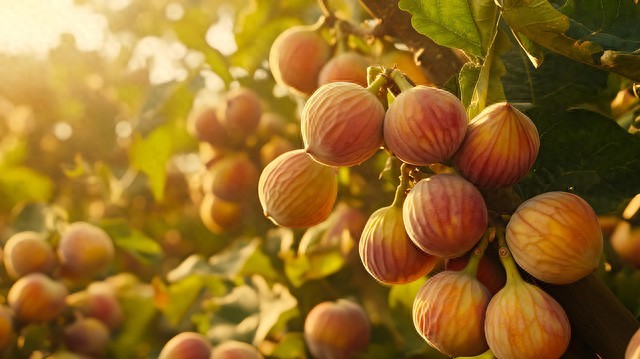
In most people's perception, fruit trees have fixed seasons. Spring flowers, summer and autumn results, winter leaves are dormant and harvest only once a year, and fresh fruit can only wait for a certain time. All those who have planted fruit trees in their homes know that peach trees, pear trees, orange trees and apple trees are harvests every year, and that the rest of the time they can only watch the branches grow and have no fruits to pick。
But in fruit products, there is an extremely special fruit tree that breaks the pattern of traditional fruit trees. In an appropriate growth environment, it can truly produce uninterruptible flowering throughout the year, lasting 365 days. The trees will be filled with flowers, flowers, young and young, semi-matured fruit and fully mature fruit, and a new set of matures will soon emerge, cyclically and year-round。
This is not an exaggeration, but a real growth characteristic validated by agricultural cultivation. An ordinary family yard and balcony plant a single plant that is completely free of fresh fruit, produces enough to eat at home, and gives its extra fruit to relatives and friends. Unfortunately, many ordinary farmers and family horticulturalists are unaware of the advantages of this fruit tree, which in vain misss high-quality planting options for high-yielding, four-season outcomes, namely, four-season fragrance lemon。
Unlike common lemons with seasonal results on the market, four-season fragrance lemons are an improved variety of high-quality products and are recognized in the agricultural sector as dual fruit trees. The vast majority of fruit trees in the market have strict seasonal limits for the separation of buds, and only fixed months are allowed to produce flowers. The growth properties of the four seasons of fragrance lemons are very different, and so long as temperature, light and water fattening conditions are met, new hairs can be synchronized with buds and bouquets, without seasonal limits。
And that's why it's become an economic fruit tree in the country, which is a small, climate-friendly, year-round fruitFamily cultivationThe four seasons with the highest value for money result in fruit。
One, four-season fragrance lemons. Real year-round results
A lot of people have heard of the four-season fruit trees, but there are mostly cognitive errors. Part of the fruit, known as the four-season results, is only longer-term, or multiple series of results, and is not really full-year-round, and the cold, season-renewal phases are completely cut off。
However, the growth logic of the four-season perfume lemons is quite different, and the cultivation data of the hainan agricultural rural hall clearly show that the perfume lemons are warm, adaptable and resistant to disease and have no fixed hibernation. In a frosting-free and temperature-stabilized environment, the year-round has been characterized by sustained sprinting, flowering, and results, with production periods concentrated between 6 and october, with the remaining months remaining stable with no breakout window periods。
Simply put, it does not grow "rest time". In the spring, the new sprouts and flowers, the fruits of summer are full of branches, the fruits of the fall continue to bloom, and the warmth of winter is still normal. One tree is always green and four seasons of fruit fragrance, an advantage that ordinary fruit trees simply do not have。
Common lemons and lemons, which we see daily, produce only one or two times a year, are thick, sour, smelly and thin, mostly condiments, and rarely eat directly. And not only does the four seasoned fragrance lemons result in the ability to crush ordinary varieties, but the quality of the fruit is also extremely high。
Its skin is smooth, its meat is juicy and its greatest feature is its own fragrance, without the bitter taste of ordinary lemons. Whether it's sipping water, making tea, cooking and making honey, taste and scent are much better than ordinary lemons. A ripe fruit can be kept on a tree for one or two months and be taken at any time to ensure that every fruit is fresh。
Ii. The core advantages of family farming and the ease with which new players can feed themselves
Many are afraid to plant fruit trees at home, and the core concern is fear of survival, lack of results, pests and diseases and conservation problems. However, the four seasoned fragrance lemons are typical of “landnut fruit trees”, which are managed in such a way that they are productive year after year and suitable for the vast majority of households。
1. Cultivation is flexible and can be planted in the balcony yard
Four seasoned fragrances of lemon strains can be controlled and planted in small, productive trees that can grow to about two metres in size and can be reduced by cutting, controlled by about one metre and fully adapted to the various scenarios of the balcony, the balcony, the yard, the roof, etc。
Urban households do not have a courtyard and grow with a flower pot and foam box of more than 30 centimetres in diameter to produce normal flowers; rural households grow in the open areas behind their homes and on the corner of their gardens at random, without deliberate management, to sustain high yields。
2. Highly resistant, with few pests and diseases and survival rates high
Compared to the problems of peach trees and orange trees, which are prone to insects, rotten fruit and yellow leaves, the resistance of the four-season perfume lemons is extremely high. Official planting data indicate that the species is highly resistant to pests and diseases, and that daily conservation is rarely accompanied by anthrax and infestation。
It is resistant to high temperatures and to constant temperatures, with a high temperature of 30 or 40 degrees in the summer, and does not tan the leaves and do not stop the results; in warm areas, there is no stress in the open winter, no frequent sprays, no fine shades, and new hands can grow and grow well。
3. Production is impressive, one to meet the needs of the family
After a year of small seedling production, the conservation can be reduced to a small amount in the current year, with stable results in the second year of cultivation, and fruit in the third year. An adult-rich four-season fragrance lemon, a single tree can produce hundreds of them a year。
The average household makes daily water, cooks, drinks, consumes a limited number of lemons a year, produces a single fruit tree that is fully sufficient for use by the whole family and cannot eat the extra fruit at all. Moreover, it results in no age difference and does not lead to a year of abundance, a year of harvest, year of steady production and years of fruit。
4. The use of everythingPractical valueFar beyond normal fruit trees
Many of the family fruit trees eat only fruit and meat, which is of a single practical nature. The four seasoned fragrances of lemons are all useful, and fruit, leaves and flowers are valuable。
Fresh fruit can make daily water, make lemonade, lemon tea in lieu of commercially available drinks, and be healthy without adding to it. When cooking fish, seafood, a few lemons can be added to the aroma。
Green leaves bring their own fragrances, soup, and fish, and they throw two, which is very good. The flowers, which are fragrance and lasting, cleanse the garden, the balcony air, with food and value, are rare flowers and fruit trees。
Iii. Web-wide best practice: a guide to the territorial suitability of four seasons of perfume and lemon
It is a very misperception that many people have heard of its four-season results and have mistakenly assumed that all parts of the country can grow. The growth of any fruit tree cannot be sustained by the temperature environment, and the year-round adjoining properties of the four-season fragrance lemons are based on the appropriate temperature, with wide variations in planting effects from one region to another, with reference to one's own region。
1. South china: all-year open-air results, cultivation preferred
The southern and southern parts of china, including guangdong, guangxi, fujian, hainan and yunnan, are gold-growing areas of four seasons of perfumed lemon. These areas have had a long period of frost throughout the year, and the winter temperature is barely below 5°c and is fully compatible with its growth needs。
The plants and plants can produce flowers throughout the year, without any hibernation, and the spring, summer, autumn and winter continue to have the highest yield, the most fragrance and the best quality of fruit, in areas where 365 days of fresh fruit is actually achieved。
China, east china: spring, summer, autumn, winter and winter
In the china-china and east china regions of hunan, hubei, jiangxi, zhejiang, jiangsu and anhui, the three seasons of spring, summer and autumn are suitable, and the fruit tree has produced wildly high yields。
Winter temperatures are low and occasionally frost and cold weather, and open-air cultivation slows short-lived growth and decreases the number of hanging fruit but does not die. In order to continue with the nuts during the winter, the plant can move into the balcony, stay indoors warm to the sun and stay above 5°c, thus achieving year-round sustainability。
3. Northern region: indoor pelvis, four-season results
In the northern regions of shandong, hebei, henan, north-east and north-west, the winter is cold and cold outside the house, and the open air is not allowed to go through the winter and cannot be planted。
However, families in the north are well able to plant their plants, and spring and summer and autumn are kept on an outdoor balcony, with sufficient light, a strong presence and a high number of results; after winter and autumn temperatures, they move into the balcony in time to ensure sufficient light and suitable temperature, and they can still grow flowers and produce four seasons。
Here is a common error across the web: the four-season fragrance lemons are not cold, they're just cold, they sleep in the open, and if they are warm, the northern indoor pellets can also achieve year-round hysteres, but they need to adapt to climate。
Iv. Zero failure conservation techniques for newcomers, avoiding year-round production
Many people grow perfumed lemons without flowers, with little or no pickles, with severe fallews, not species, and with faults in conservation. To organize the simplest and most suitable conservation methods for family farming, without the use of specialized technology, results can be sustained。
1. Light: the more light the light, the more results
The four-season fragrance lemon is the tree of light and light is central to the flowering results. It is important to maintain it in a day-to-day environment, with direct sunlight for four to six hours per day。
The problems of long yellow leaves, long leaves and sporadic fallout are the core reason why most people are unable to keep lemon trees。
2. Watering: dry and wet, water-grubling roots
It is wet but afraid to accumulate water, and water can be poured in accordance with the principle of “dry-dry-watering”. Natural rainfall, which is planted in the courtyard, is essentially sufficient to satisfy the water requirements, and prolonged rainy weather is expected to absorb drainage in a timely manner and avoid the accumulation of water at its roots。
The balconies are of limited ventilation and water is not too frequent, the soil surface of the pelvis is white and the soil is dried up before water is watered; the high temperature of the summer water evaporates with an appropriate increase in the frequency of the water; the low temperature of the winter water is reduced, the soil is dry and the winter fruit is better protected。
Fertilizers: bounty and hard work and flowers
The four-season fruit tree, which consumes much more nutrients than ordinary fruit trees, cannot produce sustainably on soil nutrients alone, and rational fertilization is key to the year-round。
Long-term and flowering results, with a monthly application of general compound fertilizer, supplementing the potassium nitrogen phosphorus nutrients to promote the growth of the leaves and the gravitation of the flowers; increased phosphate fertilizer during the flower period can be effective in increasing the sit-in rate and reducing the incidence of fallout and fallout。
Household farming does not require the purchase of expensive and specialized fertilizers, and ordinary farming can satisfy the demand by combining and decomposing it, insisting on hard and hard labour, discouraging a strong application and avoiding the burning of trees。
Cutting: trimming side branches, cutting results
The swigs of perfumed lemons are mainly fresh, and the swigs are largely fruitless. Regular trimping is the key to promoting multiple results, with many unable to do so, leading to disorder, poor ventilation and a significant reduction in volume。
The daily timely cutting of weak branches, cross branches, dry branches, long branches, and the promotion of new and growing branches; each time the fruit is harvested, the simple cutting of the branches stimulates new growth, and the fresh flowering results will soon be repeated, creating a state of circular abundance。
5. Porning: no manual intervention for family cultivation
Many of the pellets require artificial pollination, otherwise the rate is extremely low. The four seasoned fragrances of lemons are self-fabricated, shared by females and males, and do not require artificial pollination, open-air cultivation can be pollinated by wind, small insects, and indoor pelvis can normally be pollinated by natural sources, with very low maintenance thresholds。
V. The perfumed lemon is the best choice for the family compared to the four seasoned fruit trees
A number of fruit trees, known as the four seasons, can be found on the internet, but the advantages of the four seasons of fragrance lemons are irreplaceable in terms of their utility, conservation difficulties and household suitability。
Despite four seasons of fruit production, citrus is a multi-species relay that continues to produce year-to-year results and cannot be attached to single-tree trees; four seasons of meadows require specialized technology to regulate flower seasons, and family plantings are difficult to achieve throughout the year, and mango trees are large in size and not suitable for an anesthesia; four seasons require a greenhouse environment to be productive throughout the year and open-air cultivation is only the result of the autumn; and four seasons of soft seed pomegranates and noriegos are not suitable for daily family cultivation。
With only four seasons of fragrance lemon, single trees can naturally be year-round pine fruit, small-sized stands, simple conservation, north-south seedability, and extremely practical. They are fruit-eating and leaf-watching, both rural courtyards and urban balconyes, the four-season fruit tree with the highest value。
For ordinary households, fruit trees are not produced on a scale, but are fresh and easy to eat. Peach trees and pear trees wait a year for short periods of time to rot if they are ready to eat; vegetables require frequent sowing. A four-season fragrance lemon, free of care, continues to produce fresh fruit in four seasons of the year, making daily water, cooking and eating, as necessary and useful。
There are empty flower basins, vacant balcony spaces and small courtyards, which can be tried. It is only a few years before the small saplings are able to produce a tree and leave the day when the supermarket buys lemons, with fresh health and savings。
Interactive topics
Have you ever planted fruit trees in your balcony? Has there ever been a case of a long leaf with no results and only one result a year? Do you think four seasoned fragrance lemons are suitable for home planting? Messages are welcome in the comment area to discuss the importance of the use of dry-planting and the continuous sharing of small techniques in home gardening and fruit and vegetables。









