


The honeymoon and the actual period are important for traditional distributors. With the landing of the new deal at the national level (parallel homogenization of components, open technology), the loss rate of customers from traditional distributors is increasing and post-sales profits are affected accordingly. The primary problem facing distributors is the loss of customers, especially those on the verge of becoming insured. The prevailing pattern of customer thinking is small bumps to the repair plant and major technical problems or accidents4sI don't know。
Extension of the honeymoon period
How, then, can the link between sale and sale be effectively addressed? How to zoom in on the honeymoonClient experienceAnd? The answer is to solve the problem of insurance operations, particularly renewal。
The meaning and value of good insurance practices are as follows: first, at the management level, it is to ensure the integrity and integrity of brand servicesValue chainThe second is different from social insurance and customer identification; the third is the strategic requirement for the completion of the mainframe factory。
At the operational level, there are significant direct gains: new insurance, renewal of insurance agency fees, benefits from accident vehicle maintenance, in particular by increasing the insurance company's base of repairs, thereby increasing the initiative and ownership of negotiations with insurance companies, and a well-run 4s shop with a blow-out operation close to 40 to 45 per cent of the gross value of the sale; indirect benefits: maintenance and general maintenance as a result of the return to the factory of the accident can increase the value of the post-sale product; and long-term benefits: the cultivation of a lifetime customer, leading to the creation of a major business, such as a new car, a transfer, a change of purchase and a second-hand car, while boosting other business revenues, such as the product, a return point of insurance and a return of a loan fee。
Thus, the success or failure of post-sale level value chain operations depends first and foremost on insurance operations and, in particular, on renewal. In countries with advanced post-car markets, such as the united states, distributors rank six levels of value chain business: renewal, membership, car finance, used cars, car retrofitting and fine-fitting. Renewed operations are at the top of the list, thus demonstrating their importance。
The strategic position of the renewal was due to the crucial role of insurance in managing the clients of 4s. The 4s store can obtain the direct proceeds of the car through a new car and fine goods, but without insurance, the client is like an unwired kite, and is free to go back to 4s, but if the customer's insurance is purchased in 4s, for objective reasons such as agency compensation, the client's return rate will increase considerably and loyalty will increase. So how does 4s run a good insurance business
Key points for 4s in its insurance operations
First of all, we look at the current status of the insurance operation at 4s, which brings together the following eight main issues, taking into account the experience of his years of on-site counselling:
1. The loose management of insurance personnel
(b) part-time work by other departments in the form of renewal lists, telephone invitations and reception
3. A random follow-up process, inconsistent timing and low implementation rate of activities
4. Lack of insurance knowledge and telephone communication skills
5. Managers do not have a standard plan and appraisal policy and assign insurance tasks at will
6. Fragmentation of internal controls, which tends to result in lynching of salespersons
7. Poor, conservative and low priority insurance marketing, resulting in weak product competitiveness
8. The absence of normal communication, summary and improvement of insurance operations and the inability to identify problems have led to a decline in operations。
How can these problems be addressed? We are discussing this with you at four levels: first, management must give due attention to upgrading insurance operations to the strategic level and must form dedicated insurance teams and even insurance operations centres. The strategy determines and follows the strategy. There is a dedicated person for the new insurance component of the sale of new vehicles and a dedicated person for the renewal of insurance after sale。
This is based on two main considerations: on the one hand, the exceptional external competition faced by the insurance business, the current low number of loyal customers in the 4s store and the need for proactive, early and repeated follow-up by the sales staff in the renewal business; on the other hand, this can be achieved only if there is an exclusive renewal; and, on the other hand, on the other hand, the ease of internal flight orders and the fact that only the exclusive renewal of the 4s store can effectively integrate its resources and avoid a “internal drain” on the customer's resources。
Second, the continuation of the business is well carried out, and it is important to see whether there is an advantage in the continuation of the strategic resource, the compensation policy. Strategic partnerships with large insurance companies and the need for a good compensation policy, such as an accident-free site survey of up to $5,000, are very beneficial to clients. Thus, in selecting a cooperative insurance company, 4s would need to pay attention to the balance of its premium resources, while concentrating its strengths, increasing its bargaining chip to work with the insurance company and winning a better settlement policy. In addition, in selecting insurance companies, 4s has to take into account the following:
1. Transparency in information management and delivery resources for 4s clients
2. Whether preferential compensation services are provided
3. Timely and accurate back-to-work maintenance guarantees
Time limits and regularization of operating processes
The timeliness of payment of compensation
6. The availability of commissioners to assist and communicate。
Thirdly, the promotion policy for renewal is designed to encourage clients to buy three months ahead, two months in advance and one month in advance, in principle. For example, an 80 per cent discount was given to clients who had purchased insurance three months earlier, with a value of $1,000; 85 per cent was given two months earlier, with a value of $500; and 85 per cent was paid for one month earlier. The reason for this was that the insurance company had intervened three months earlier in its electricity sales。
Fourth, the incentive policy of the renewal team ensures, in principle, that the income of the renewal commissioner reaches and even exceeds the average income of the after-sale service consultant. Renewed performance is suggested to take into account the difficulty of sales and target achievement rates, to set kpi on the basis of different renewal target customers, to achieve 100 per cent coverage of the new coverage (in the shop area), to reach about 65 per cent of the new conversion target, to reach about 80 per cent of the renewal target and to reach around 10 per cent of the renewed target. Second, the creation of a stylistic incentive policy based on the rate of achievement of the target, with the final consideration of the insurance difficulty factor, is more difficult to maintain than the new one, so the continuation incentive is greater than the new one。
Finally, the issue of media communication is addressed by the large number of items insured by 4s stores, such as posters in customer rest areas, cashiers and sa receptions, where they are easily accessible to clients. Even the cover of a client's envelope can create knowledge of insurance operations。
Above, limited to length, related to insurance operationsMarketing strategyShare this with you. There is also a critical part of after-sale value chain marketing, i. E. Membership marketing strategies, which are then shared in detail。
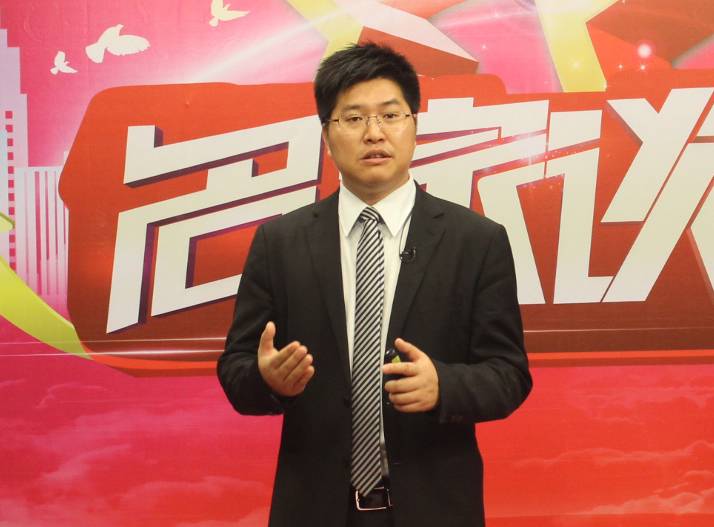
The author of this paper, mr. Ye yun chul, is the managing director of the shanghai advisory group, a distinguished lecturer in car marketing, and an expert in value chain marketing for car dealers, who has worked at a large mainframe, has over a decade of experience in the marketing management of the automobile industry, has focused on the improvement of value chain performance in the area of car circulation, and has a long-standing commitment to research on car dealer marketing models and customer relationship management。
Autohaus chinaza car transport









