"now, who dares eat the big shed? It's hormonal. It's big and fast. My family only eats veggies, and it's expensive."
After reading my blood pressure came straight up。
It's not because he's right, it's because he's straight and he's a bunch of people。
I doAgricultural scienceAll these years, the worst thing to fear is this rumour of “sounding reasonable”. It captures peopleFood securityThe anxiety, with a simple label — “hormonal vegetables” — killed a stick in the whole gardening industry。
Today, i'm going to tear this whole thing apart。
Are there any hormones in the groceries? Why do they grow fast? Why don't they taste
The truth may surprise you, or it may upset you a little — it's about the money you spend in those years。
Truth one: there's no need for hormonal
Let's start with the central question: are there any hormones in the canteen
The answer is: the vast majority do not fight, nor do they have to fight。
Why
Because the shed itself is a cheater。
Growing food in the open and eating in the open. Growing in the spring will take time until the temperature rises and the sun rises. It's freezing。
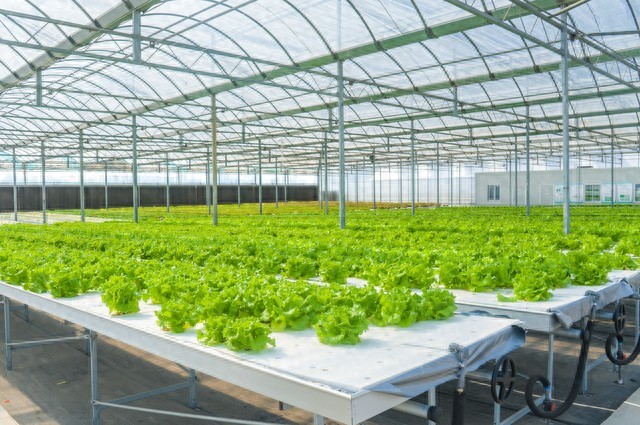
But the sheds are different. The membrane covers the temperature, humidity and light, all under human control. It's 10 degrees outside, 20 degrees in the shed. There's a storm out there, and there's no wind in the shed。
Plants grow fast in comfortable environments。
And thou hast given it the most fitting conditions of growth, and it has sprung up. It's like you turn on heat in winter, air conditioning in summer, you're comfortable, you're in good health -- one thing。
Growing fast is because the environment is good, not because of hormones。
What's the real need for hormones? It is in counter-seasonal cultivation that certain crops need to be supported by plant growth regulators because of insufficient temperature and light and difficulties in splitting buds. Note that it is a “plant growth regulator”, not a “hormonal”。
Truth ii: plant growth regulator
It is important to clarify a concept that is seriously confused。
The word hormonal, in botany and medicine, is completely different。
Animal hormones (e. G. Estrogens, hormonals) are chemicals that are present in animals and have a direct impact on the human body. Plant growth regulators, which are synthetic, simulated plant internal hormones, work only for plants and have no receptors or food for human cells。
For example, you feed fish, they grow fast. But does fish eat work for people? It doesn't work. Because the digestive systems and metabolic mechanisms of humans and fish are completely different。
The same applies to plant growth regulators. It regulates the growth of plants, the flowering, the results, and has nothing to do with the human body。
Moreover, the use of plant growth regulators is strictly regulated by the state. There are criteria for what is usable, how much is used, when used and how much is left. Formal growers are not afraid to do anything, because once the standard is exceeded, the whole batch is detected as unsold。
Thus, equating “plant growth regulators” with “hormonals” and thus with “harmful” is a typical concept of theft。
Truth three: no food, no hormonal pot
So somebody's going to ask, "well, even without hormones, there's no such thing as old-fashioned cuisine?"
That's a good question. But the answer has nothing to do with hormones。
There are three main reasons for this:
First, the orientation of varieties has changed。
Vegetables are now grown with the primary goal of high productivity, disease resistance and transport resistance. Why? It is the daily consumption of millions of people in cities. You grow a “childhood smell”, which is low-yield, easy to rot, bad for the city, poor for the farmers and no for the citizens。
Therefore, the preference for breeders is: fast-growing, high-yielding, skin-heavy and fall-resistant varieties. Favorite, after these。
Second, the harvest time was earlier。
For transportation and storage, many vegetables were removed before they were fully mature. Tomatoes, for example, used to be red, are now taken in order to facilitate transport, when they are green, and the road is slowly ripe. Sugar and flavour have not accumulated enough, of course not。
And third, you remember "the taste of food," and you get it。
The food that you eat when you are a child is grown from your own yard and is now taken from it. The variety is old, light-footed, warm, and growing. It's a product under certain conditions, not normal。
It's not fair for you to compare it now with the groceries。
Truth four: must be better for the open-air dish than for the big-garden
A lot of people are superstitious about "showing" and feel like it's = nature = health。
But you probably didn't think about it:
More pests. In the open environment, the worms, the fungus, the birds and the animals are here. In order to keep the harvest alive, pesticides may become more effective。
The weather is highly influenced. A heavy rain, a cold wave, could be wiped out. Farmers sometimes had to use more drugs to stop the damage。
Listing time is concentrated. Open dishes are on the market for some season, and they're gone after the season. You want to eat cucumbers in the winter。
In turn, large-scale vegetables, which are controlled by the environment, can reduce the incidence of many diseases and pests. Many of the external insect sources are isolated, the humidity temperature is controlled and the incidence of disease is actually lower. I don't have to use more medicine than open vegetables。
So the open air is not the same as safety, and the huts are not the same as harmful. It depends on how to grow and how to manage。
In conclusion, don't let anxiety pay your iq tax
Go back to the opening message。
“break = hormonal” is a classic, emotionally magnified hypocritical proposition。
It exploits anxiety about food security, mistrust of “industrial agriculture”, and memories of “the smell of childhood”。
But the truth is:
The large sheds grow fast because the environment is good, not because of hormones
Plant growth regulators are effective only for plants and not harmful to humans
No food, a matter of varieties and timing, not a pot of hormones
Open-air vegetables are not necessarily safer, or far more dangerous。
How much of that organic, open-air "natural" money you spend, how much is paid for anxiety
Of course, i'm not saying that all the groceries are perfect. The industry does have harmful effects from the misuse of pesticides and the irregular use of regulators. But the whole industry cannot be denied because of individual rat shit。
A rational view is much more useful than a blind panic。
The next time someone tells you "the shed is full of hormones," you can dump the article on him。
Don't let the rumors decide what to eat for you。