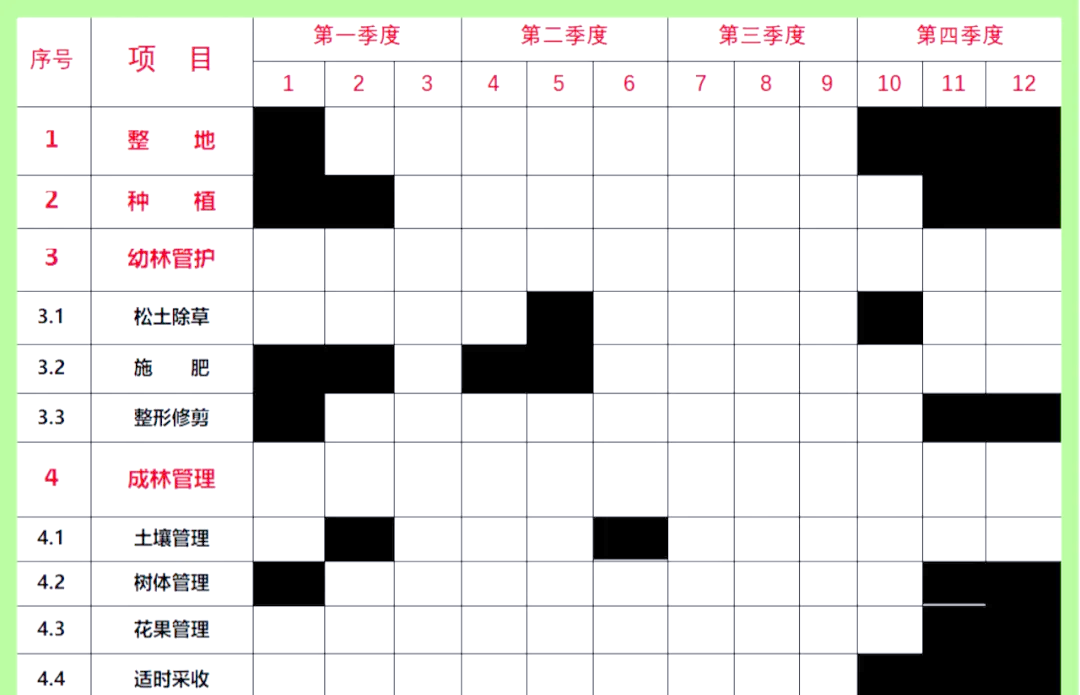
TeaProductionPlantation techniquesYes
Oil tea, a unique economic forest in guangxi, is of great concern for its widespread distribution and long-term earnings. In order to achieve high and steady production of oil and tea, it is particularly important to have a well-functioning and productive production technology。
Selection of suitable forest land
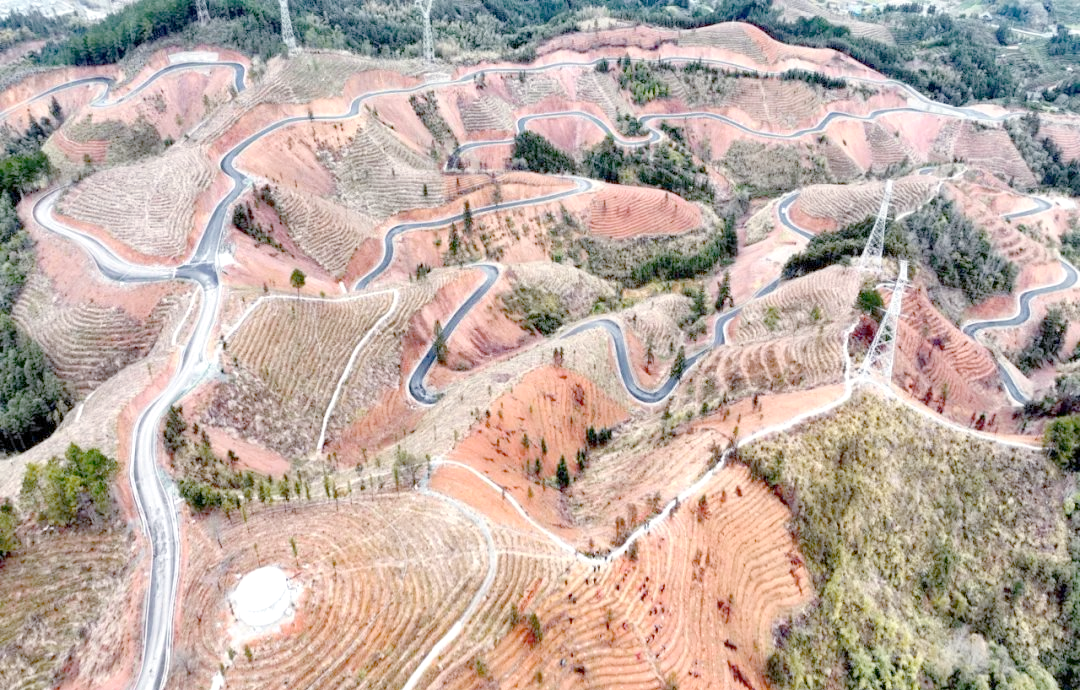
It would be appropriate to select sandy red or yellow-hot areas with a height of between 0 and 5 as plantations for oil tea, with a gradient of not more than 25 degrees, with a deep earth layer (at least 60 cm) and good drainage conditions and fertile soils below 800 m above sea level。
Pre-selection tea varieties
Following the selection of suitable woodlands, the next step is the selection of high-quality oil and tea varieties. Oil and tea varieties that are adaptable, resilient, yield stable and of high quality should be preferred to ensure high productivity and efficiency after cultivation。
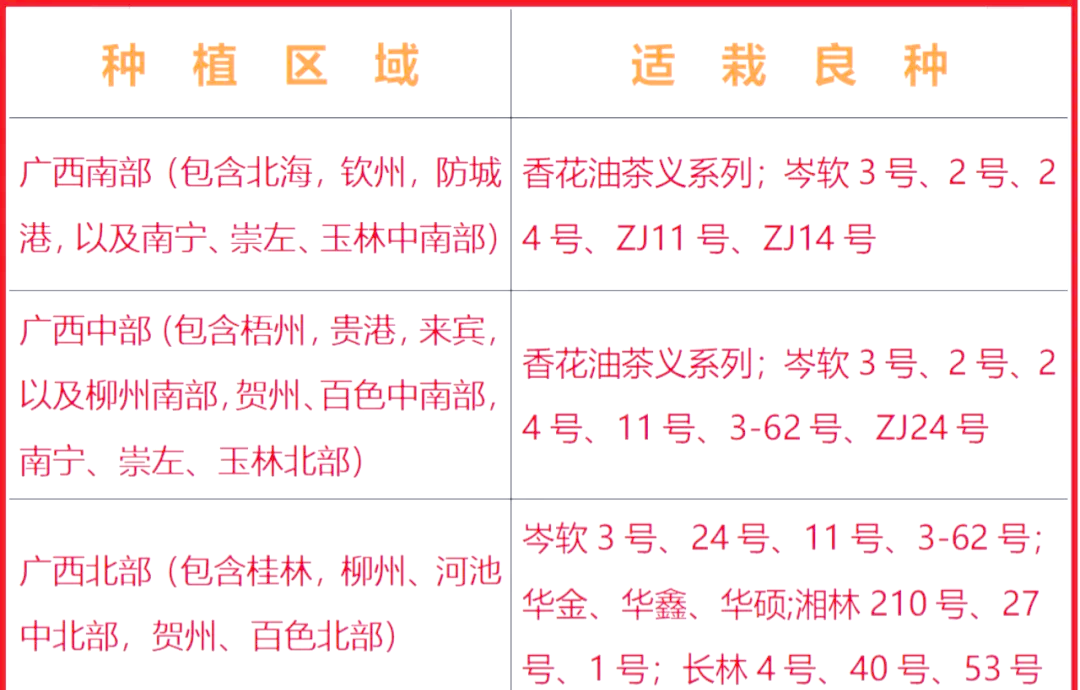
(i) selection of good species according to local conditions。
Please note that the division here is for information purposes only. Altitude factors also need to be taken into account when selecting suitable species. For example, in the high-altitude area of cinnamon, the planting of a series of fine species of vanilla oil tea is not recommended for the time being。
(ii) rationally configured varieties。
In order to increase sit-in rates, two or more species should be selected for silviculture, with high levels of pollination and sexual orientation, with flowering periods and a generally consistent maturity period. A one- to two-line configuration is recommended to ensure that the proportion of individual varieties is not less than 25 per cent。
Careful selection of trees。
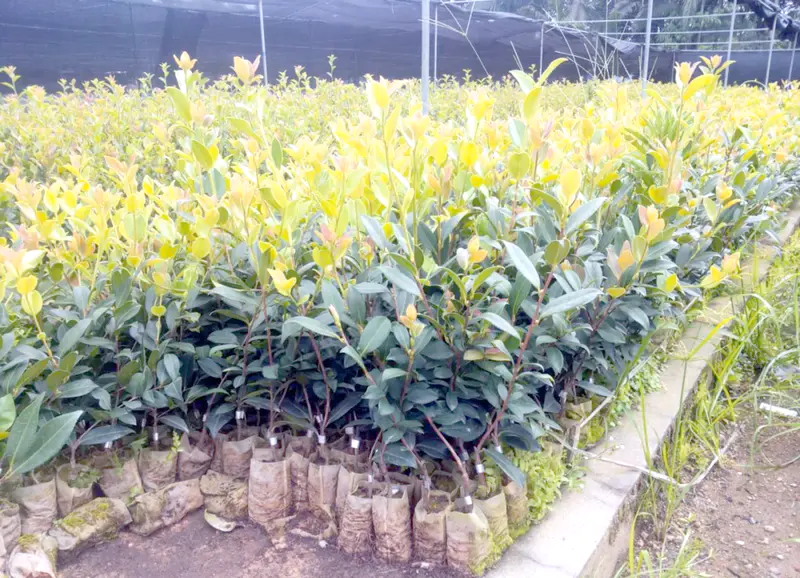
The three-year first-class sap shall not be less than 100 cm tall, have a geology of at least 00 cm and have branches of not less than 9. If such trees are not available, they may also be selected for a two-year first-stage sap, which is higher than 60 cm, have a diameter of at least 60 cm and have no more than five branches. Finally, if the conditions are limited, a two-year choice may be made for a sapling with a height of at least 50 cm and a diameter of over 50 cm and a branch number of not less than three. At the same time, it is important to ensure that the selected trees grow robust, have developed roots, have good roots and are not quarantined。
Reasonable control of afforestation density
Selecting the appropriate afforestation density, based on different land conditions and variety characteristics, is usually between 53 and 74 acres. In the area of the slope, mechanical work may be used and designed in conjunction with a wide-range design with a width of 0 to 0 metres and a narrow-line of 5 to 0 metres. For other operations, it is recommended that line spacing be within 0 to 0 metres。
Scientific afforestation
(i) fineness
The site was completed within one month of planting. In slopes of less than 10 degrees, total land reclamation is desirable; in slopes of between 10 and 25 degrees, the rim-level band method is recommended, with a width of about 2 metres, with total internal cultivation and preservation of inter-platform native vegetation to reduce soil erosion; for slopes of more than 25 degrees, the rim-level mass method is more appropriate. In any case, it is important to ensure that the vegetation of the top, foot and gutter areas is preserved。
(ii) regulating cave digging
Peaks are dug at 60 cm long by 60 cm wide by 60 cm deep。
(iii) rational application of base fertilizer
Application of base fertilization in the month preceding planting. After completing one third to one/2 of the soil back to the planting grounds, 10 kilograms of organic and 5 kilograms of phosphorous fertilizer are added to each of the caves, which are fully ploughed with the interior soil and then refilled to the whole of the planting grounds。
(iv) select the appropriate time for afforestation。
Usually, afforestation is most appropriate when rain is wet through the soil between late november and late february. Drought prevention and water conservation measures are required if forests are to be planted in april-may spring. For dry, wet season areas, afforestation should be chosen during the rainy season. At the same time, care is taken to avoid afforestation when the trees are not ripe。
(v) regulate planting and replanting。
During planting, container cups shall be removed to prevent the dispersing of roots and matrices. (b) dig and refill the soil, and put it in the tree and tilt it on the ground (with care not to step straight above the tree base). The height of the land should exceed 5-10 cm of the tree base of the seedling. In the case of slope afforestation, the plate shall be in the form of an outer, low, shallow basin。
Within one month of afforestation, the activity of the tree shall be checked. In the event of the discovery of a shortage of plants, the same type of tree should be used to replant it after the rain or in the middle of the day. Ensure that the survival rate for the year of afforestation is above 90 per cent。
(vi) cover the trees。
Where appropriate, weed-free sheeting coverings of trees are recommended after afforestation, with an area of approximately 1 m2 in order to preserve wetting and inhibit weed growth。
Care of larvae
(i) pine soil weeding。
For larvae that are not covered, weeding will be carried out once a year in may and october, respectively, with a view to restoring the trees and raising the earth. During this period, weeds that affect the growth of young trees should also be removed from the rows and covered with tree plates to maintain soil moisture and inhibit weed growth. In the period from july to august, pine earth activities around the trees should be avoided. For larvae that are covered, weeding is sufficient。
(ii) fertilizing。
Determine the timing and fertilization。
Prior to the onset of the summer in april-june of the year of afforestation, high-nitrogen compound fertilizer should be followed up once, at a rate of approximately 1 kg per plant. In the second to third years, before the spring starts in january to february and in the summer of april to june, each application of high nitrogen compound fertilizer is also required, with each application being controlled at 1 to 2 kg. By the fourth year, oil and tea trees had begun to bloom, and attention should be paid to the co-application of nitrogen, phosphorus and potassium to maintain a balance between nutritional and reproductive growth. Specifically, high nitrogen and high phosphorus and potassium complex fertilizers, respectively, should be applied at a rate of 2 to 3 kg each before the spring start in january-february and before the summer start in april-june. In addition, one organic fertilizer of 5 to 10 kg per plant can be applied during the winter in areas where conditions exist。
Know how to fertilize。
For the first year, the larvae should be fertilized approximately 30 cm from the root of the plant. For larvae in the second to fourth years, round or arc grates of about 20 to 30 cm depths should be dug outside the canopy, so that the fertilizer is applied to them and the soil is solid。
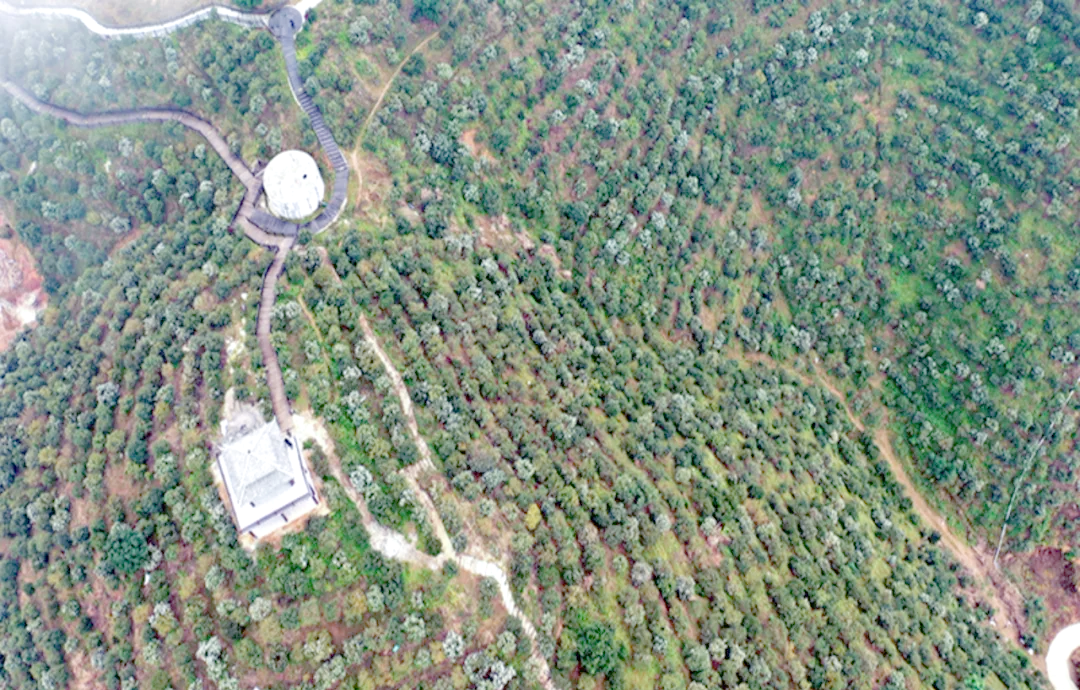
Integrated water fertilizer systems perform fertilization and drip irrigation。
(1) tilt configuration: 1 to 2 drops per tree to ensure that 4 litres of water are dripped per hour to meet the water needs of trees。
(2) time of application and fertilization: before the onset of the summer of april to june of the year of afforestation, the application of high nitrogen water fattening through drip irrigation was about 1 kg per plant. Subsequently, before the springs of january to february in the second to third years and of april to june in the summer, high nitrogen water solubles were applied equally, but each usage was controlled by 1 to 2 kg. From the fourth year onwards, high nitrogen, high nitrogen compound and high phosphorus, potassium water, respectively, are to be applied before spring and summer start to ensure a balanced nutrition of 2 to 3 kg each。
(3) fertilisation method: after the required water soluble fertilizer is fully dissolved in the dissolved fertilizer pool, the water fertilizer is transported to the root of the tree through a pipe using a pressure system for precise fertilization. During drip irrigation, water fertilization concentrations are strictly controlled in accordance with product use instructions to ensure fertilization。
(4) drippingManagement: when soil moisture is less than 24 per cent or 15 days of continuous drought, drip irrigation systems should be activated for recharge. The drip irrigation option can be automatic or manual, depending on the circumstances, to ensure that the water needs of trees are met in a timely manner。
(iv) integrative trim。
For saplings of more than two years of established drying, they are trimmed before the onset of the second year of afforestation. The main task is to keep three strong branches on each branch as its secondary branches, while ensuring that the main branches and the secondary branches are properly configured and evenly distributed in order to facilitate the ventilation of the tree crown. The trim is best done during the winter and is followed by timely elimination of buds in order to preserve the beauty and health of the tree。
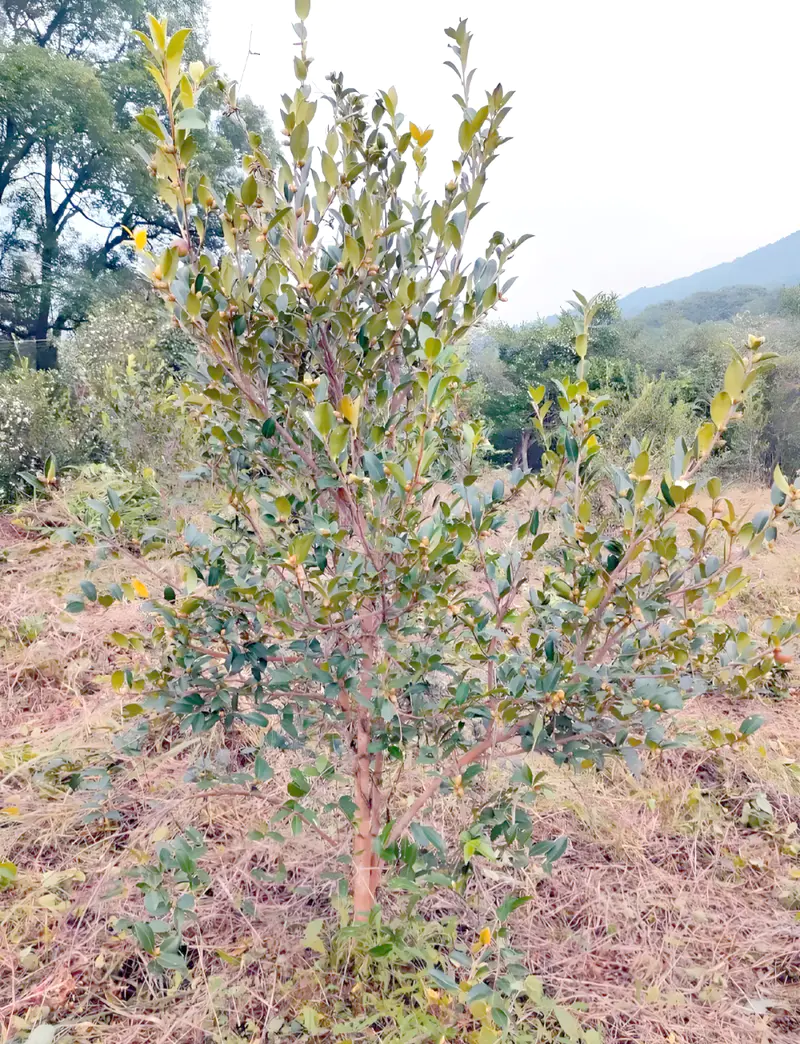
Sung-lin management
(i) soil management。
In february of each year, depending on the direction of the tree, the application of high nitrogen or balanced composite fertilizers was controlled by 5 to 1 kg each. In addition, organic fertilizer is applied every two years between november and december, ranging from 5 to 10 kg each. When applying fertilizers, a ditch should be selected for the symmetrical position outside the canopy projector line, which is 50 to 100 cm long and 25 to 30 cm deep, and should be careful to replace the fertilizing ditch each year. For a plant with a high capacity of hanging fruit, additional potassium phosphorus compound fertilizer, 3 to 5 kg per plant, was required in mid-june, and leaf face fertilizer was sprayed in early july to promote fruit development. When integrated water fertilization systems are in place, the above-mentioned fertilizers can be dissolved and accurately fertilized through a pipe. During the period from early july to mid-september, drip irrigation systems should be activated for water recharge when soil moisture is below 24 per cent or 15 days of continuous drought。
At the same time, a rational formula should be applied according to the nutritional status and strength of the tree. In winter, organic fertilisation is predominant, while in spring, compound fertilisation is applied. When nutrient growth is too strong, fertilization should be properly reduced or stopped or fertilized。
(ii) tree management。
For oil and tea plantations, which are structurally unreasonable, appropriate cutting is required. In general, three to five skeletal branches are kept evenly distributed, while foot branches and tops are cleaned. Cut off long branches, cross branches, overt branches, injured branches and insect branches in order to keep the trees ventilated. In the case of large branches, the distribution of branches could be adjusted by means of open windows. In the event of a emptiness of the inner chamber and an outward migration of the result, measures to retrenched the body may be taken to safeguard its health and beauty。
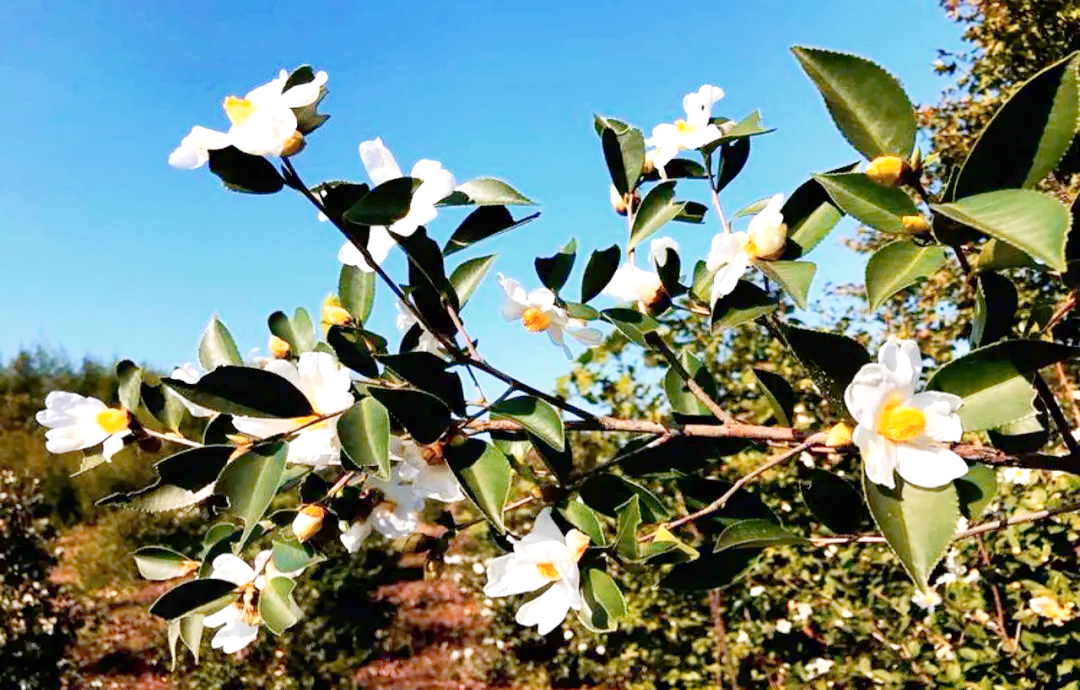
(iii) flower fruit management。
In the management of oil and tea nuts, proper preservation of native vegetation is needed first to protect the living environment of pollinating insects. During flower seasons, large quantities of growth regulators, such as gravy and mossin, can be sprayed to promote healthy growth of oily tea. In case of low-temperature weather effects, supplementary pollination measures such as artificial pollination or pollination by insects such as bees can be introduced, thus increasing the rate of sitting fruit. For plantations with high sit-in rates, proper fruit-cutting is required to guarantee the quality and yield of the fruit, while fertilizer is increased to provide adequate nutrition for the plant。
(iv) pest control。
In the area of pest control of oil and tea, the principle of biological and physical control, supported by chemical control, should be upheld on the basis of camping measures. In particular, by creating a good forest environment, the oil tea itself is being made more resistant to disease, while biological control measures such as natural enemies and predatory insects are being used to control the occurrence of pests. Environmentally friendly chemical control measures are used when physical and biological control cannot meet demand. For major pests, parasites and their control measures, as required by appendix a, appendix b and appendix c of the national indicator ll/t 3355-2023。
(v) collection in due time。
The fruits of oil tea should be collected in a timely manner when they mature. Different varieties of oil and tea are suitable for harvest periods, such as the seng soft series's non-sexuality system, which is suitable for harvest in mid-november to early december, the zing forest series's non-sexuality, which is mid-october, and the sanhua series's non-sexuality system, which is late october. Therefore, in practice, the optimal timing of harvest should be determined on the basis of specific varieties and growth。
(vi) reasonable collection。
In real time, the use of taping or folding should be avoided to avoid damage to the branches and buds of oil tea. In the case of fragrance oil tea, harvesting using seed grain or mechanical oscillation is recommended in order to ensure efficiency and non-harm on plantations. Now, let's look at the work history of oil and tea growing。