


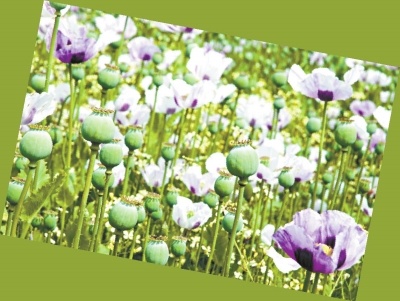
Poppy
Poppy
Shujia
It will soon be 6-26 international drug control day. The concept of drugs has emerged only two or three hundred years ago. It initially appeared as a drug in human life, but when it was used beyond the “reasonable” threshold, it became a drug. It took a long time to realize that the history of the fight against drugs has begun. However, the process has become more “toxic” than it has been when it has been convoluted, convoluted, or even through a curved path — a transformational product developed to replace an addictive drug. To date, humankind has not yet won the fight against drugs. The fight against drugs has a long way to go。
From cure to addiction
Many of the drugs that we are talking about today have entered our minds early in the form of drugs. Some plants were used as neurotoxic agents。
The most typical is opium. Prior to the birth of aspirin, opium was an important analgesic to deal with pain, and was even once considered “a cure for every disease”, which, in addition to pain, was used to counter symptoms such as anxiety, distress, chronic fatigue, chronic pain, insomnia and dysentery。
A long time ago, opium poppy was seen as a medicine for disease, with conscious small-scale cultivation. Poppy cultivation occurred in the western mediterranean region about 8,000 years ago. The raw fruit of opium poppy is cut with a pragmatic knife, which is then scraped down and then turned into raw opium, once the fluids flowing out of it have been condensed. Russians started using opium in 5,000 bc. In the site of the new stone age house in switzerland in 4,000 b. C., archaeologists discovered traces of opium poppy seeds and fruits and belonged to a variety of artificial hybrids. In the two river basins in iraq today, 3400 b. C., people have grown poppy on a large scale。
In 1552 b. C., about 700 different opium formulation uses were recorded in a record in ancient egypt。
However, with the development of medicine, the volume of opium is increasing. Europeans have also begun to stimulate other uses of opium through the production of opium aluminum and opium alcohol. Patients and even normal people slowly become biologically dependent on them. By the 17th century, opium was more than just analgesics. Opium had been transformed from a purely pharmaceutical role to a drug。
Opium use in the united kingdom has a long history and was seen as entertainment for the rich as early as the nineteenth century. We can see the shape of opium in the literature of the time, like the holmes survey. Opium is even used to stop babies from crying. In the victorian united kingdom, many babies were seriously ill or died as a result。
Too much opium is used to become thinner, non-blooded, straight-eyed, reduced pupils, insomnia and nothing. Long-term opium consumption can deprive people of their natural immunity and make opium addicts highly vulnerable to diseases. Overdose of opium can also lead to acute poisoning deaths。
Cannabis, coca leaf, etc. Have a similar development path and have evolved from treatment to addiction。
The search for alternatives has slipped into the abyss
In the nineteenth century, as technology continues to develop, opium has also been “upgraded”。
In 1806, for the first time, zertina, the chemist, separated morphine from opium. Morphine is the predominant biobasin in opium, with strong anesthesia and analgesic effects, which are not comparable to any of the compounds naturally present. It has a wide range of pains that are almost applicable to severe pains of all kinds, including severe pains due to advanced cancers. At the same time, morphine can also contain coughs, laxatives and constipation. This discovery has had a profound impact on the medical community and human society, and morphine remains an important painkiller until now。
Morphine was mistakenly seen as an anaesthetic without any side effects. Morphine can give rise to some degree of euphemism and pleasure, but in the cortex of the brain, it can lead to a decline in attention, thought and memory functions, long-term large-dose use of morphine, leading to mental disorders, hallucinations and large-dose morphine can also lead to loss of breath and death。
Morphine is more addictive than opium, and long-term abusers are heavily dependent on morphine, both physically and psychologically, with only increasing doses to achieve the same effect. Morphine-absorption symptoms include sweating, tremors, fever, high blood pressure, muscle pain and convulsion. At the outset, when these symptoms were produced, the patients did not know that they were precisely “cancerous syndrome”, which they thought was a disease. The doctors were also puzzled by the fact that, when it became clear what was going on, they could only give the patient more morphine to relieve the pain temporarily. In 1853, the invention of syringes had greatly stimulated the prevalence of morphine, as morphine was injected directly into blood more strongly。
Morphine was widely used in the 1960s as an analgesic in the united states military. After the end of the war, for the first time in the united states military there was a group of morphine addicts。
When people realized the serious consequences of addiction to opiates, especially morphine, they were eager to find a non-addictional analgesics to replace morphine。
In 1855, for the first time, german chemists separated coca from coca leaf. Coca-alkali was initially used for morphine addiction and physical infirmity, and was also used as a local anaesthesia. However, with the gradual abuse of cocaine, the world's main drug species end up as well。
Then heroin appeared. Most ironically, heroin listed in the name of “unaddicted morphine” is more addictive than morphine。
In 1874, the chemist wright at st. Mary's hospital in london, england, added substances such as acetic anhydride to morphine, the first time a semi-synthetic derivative with a better effect of sedation - morphine diacetic acid - was first synthesized heroin. This finding has not been brought to the attention of the world。
In 1897, the german bayer pharmacy chemist hoffman manufactured heroin into drugs 11 days after synthetic aspirin. The analgesic effect of heroin is 4-8 times more than morphine and 100 times more pure than opium, which significantly inhibits the acute cough, asthma and chest pain of patients with lung palsy. At that time, bayer believed that it was a remarkable invention that could be used to replace addictive drugs such as morphine. And aspirin, the great discovery of human medicine, was once considered by bayer to be too toxic to be put on the top. In the end, time gave the exact opposite answer — aspirin and heroin, a saving world, a notorious one。
In 1898, bayer pharmaceuticals began to scale the production of pharmaceutical heroin and officially registered as “heroin”, which in german means “herogenic new invention”。
Heroin is used as a medication for cough, pain, depression, bronchitis, asthma and even stomach cancer, which is common in prescriptions. In fact, it was initially found in animal experiments to have side effects such as shock, pupil amplification, etc., but because of its excessive efficacy, reports of adverse effects were not given sufficient attention at the time. In the campaign, only the negligible side effects of “sickness, dizziness and constipation” were documented, and it was clearly stated that heroin was not addictive and could be treated for widespread morphine addiction。
Soon, however, this statement was “shocked in the face”. Heroin is more soluble in water than morphine, absorbs it faster, is more soluble in fat, is more likely to enter the nerve centre through a blood-brain barrier, is more addictive and has more harmful effects on individuals and society than its medical value。
Since 1910, the clinical use of heroin has been eliminated worldwide. At the international conference on opium, held in the hague, the netherlands, in 1912, delegates agreed to control trafficking in opium, morphine and heroin. In 1924, heroin was banned from export. In 1931, manufacturers such as bayer eventually stopped producing heroin and no trace of heroin was found in pharmacies around the world. Heroin, the demon created by humans themselves, is temporarily locked in a cage. However, pandora's magic box had been opened, and heroin had quickly occupied an important seat in the drug family。
When does opium come into our country
When did the opium, which left a bitter memory in the hearts of the nation, enter our country
According to the test, opium had already reached china when zhang xian was out of the west in 139 bc. Opium has been used as a drug for a long time。
In tang dynasty, opium flows into china were documented. The old tang book says: “the two years of dry seals are the best.” the main component of the eastern roman empire was opium。
The first methods of opium production in china were documented in ming dynasty's medical forest digest, when opium was often called “avron” and “u-heung”. Although the chinese had learned how to produce opium at that time, there was no opium poppy cultivation in the region, and opium was mainly imported and expensive. Foreign envoys often supply opium to the emperor. During the excavation of the tombs of the emperor, experts have detected a habit of opium consumption。
By the time of chong dynasty, especially after the mid-term, opium consumption among the population was increasing. According to the history books, “kaqing's first eaters are very few, for less than 20 years, spreading from a doctor to a dealer, and they're coming back and never coming back”. During the years of the dynasty, there was a proliferation of opium and a large annual outflow of silver and silver, which resulted in a emptiness of the treasury and a lack of livelihood。
In december 1838, the emperor of hong kong appointed lin zhou as minister of state chin chai to go to guangdong to check on opium. In collaboration with two broad governors, deng tinteng, and the chief of waterworks, guan tianpei and others, lin tsai arrested the smokers, cleaned the sea and ordered foreign businessmen to turn over opium and torched more than 20,000 boxes of opium from the british and american merchants. This is the famous history of tigers selling cigarettes。
China's earliest legislation against drugs
The fight against drugs in china does not begin with the sale of cigarettes。
After clarity, the harm caused by opium consumption in society is so great that it has to be managed. The british-indian colonial government, the east india corporation and opium smugglers continue to dump opium in china. In 1729, the emperor issued his first edict prohibiting the sale of opium and the opening of smokers, which clearly set out the initial sentencing criteria for traffickers of opium smokers, private opium smokers, opium addicts, etc. This was also the first anti-smoking (opium) decree in china。
In 1796, the karking emperor decreed a ban on opium imports and domestic cultivation. In 1823, the qing government enacted the lost opium smoke ordinance. In 1839, tao guangxi promulgated china's first anti-smoking law, the charter for the prohibition of opium, which was the first anti-drug law in china. Since 1906, qingxiang has been issuing the regulations on tobacco prohibition, article 10, the regulations on tobacco ban, the regulations on tobacco inspection and the regulations on smoking licensing. In 1910, the anti-smoking regulations were promulgated to criminalize opium smoking。
Despite this, the determination of the government to ban opium has not worked well, since china has formed a large group of consumers of opium from the middle to the early part of the country, and a large number of government officials have been involved in the opium trade, a pattern of profit-making gains. Opium at ports such as guangzhou is still imported, either explicitly or implicitly. Smoke-free operations, such as the smoking of tigers, have also been opposed and interfered with by imperialists, and the ban imposed after the opium war has not been implemented。
During the national era, the national government had declared a ban on tobacco trafficking, but some officials had protected drug trafficking, supplied aircraft, ships and arms, and facilitated the smuggling of drugs by drug traffickers, resulting in widespread tobacco abuse。
Following the establishment of the people's republic of china, in february 1950 and may 1952, the general decrees for the strict prohibition of opium smoke drugs were issued, and a massive mass anti-smoking campaign was launched throughout the country, banning cultivation, trafficking and manufacture, and smoking. At the end of 1953, opium cultivation, drug manufacture, drug trafficking and opium consumption were generally banned throughout the country. In a short period of three years, china has been virtually eliminated from its opium poisoning for more than a hundred years, creating a miracle of universal recognition。
The first conference of the nations against smoking was held in shanghai
Drug abuse is gradually becoming a serious social problem in many countries around the world and has attracted the attention of the international community。
On 1 february 1909, a meeting of the international opium commission was held at the chinese hotel in shanghai beach. Representatives from 13 countries, including china, the united states, the united kingdom, france, germany and russia, negotiated a smoke ban。
For the first time in the world, the anti-drug conference had recognized that drugs such as opium must be banned worldwide. The conference gave rise to the first international anti-drug convention — the 1912 hague convention against tobacco. The conclusion of the convention had given impetus to the world's fight against drugs. Thus, a universal ban on smoking would be a landmark in the international history of drug control。
After the second world war, the fight against detoxification and drug trafficking was carried out at the international level. However, the drug-consumption market has developed and the three main sources of drugs have emerged internationally。
In june 1987, the international conference on drug abuse and illicit trafficking was held in vienna, austria, on the recommendation of the secretary-general of the united nations. More than 3,000 delegates from 138 countries attended the general assembly on 26 june. At the end of the meeting, participants unanimously adopted a resolution to designate 26 june of each year as the international day against drugs, in order to draw the world's attention to the drug problem and to call on the people of the world to fight against it。
The drug problem had become a long-term problem and was becoming more serious. In the wake of the international tide of drugs, drugs from abroad continued to infiltrate into china, leading to the resurgence of banned drugs. The chinese government's attitude towards drug control is clear, it has established a specialized anti-drug unit and has vigorously combated drug-related crime。
On 12 january 1995, the state council issued the mandatory detoxification scheme. On 1 june 2008, the counter-narcotics act was introduced. On 22 june 2011, the state council promulgated regulations on drug abuse. People who are addicted to drugs are subject to compulsory detoxification, psychological treatment, community detoxification, etc. In addition, there has been extensive awareness-raising campaigns on the issue of drug control, and a number of videos have appeared on the subject, such as the red prescription, the jade pronunciation, the mekong river case, the ice breaking operation。









