
Add twitteryqs638, get more control technical articles
Tea tree— also known as the tea tree, the tea tree, the white flower tea, etc., which is a shrub or the chinese wood. Seeds of oily tea trees are very oily and very important oily plants, while oily tea trees are good winter honey plants with good planting value and prospects。
So, how do you plant the tea tree? Now the tea treeMethods of cultivationAndManagement techniquesThe main points are as follows:
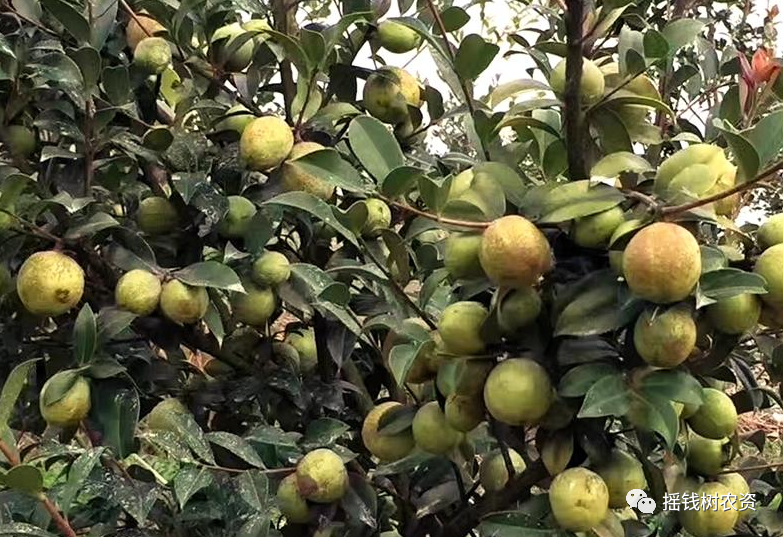
Methods of planting oil and tea trees
01: cultivation
It is mainly sprouts of sprouts and sprouts of ordinary oil tea, which are sowed 35 to 45 days before the sprouts, which are cast on sandbeds or nutrients, about 3 cm deep, with a little pressure on the sand, around 1 ocm thick, and early aging of sandy saplings from the ground, to the detriment of marriage. When the tree leaves the sand, two to three leaves are to be rewed. The sprout saplings are usually interwoven in the following procedures:
The first is to remove the naked seedlings from the sandbed and put wet sheets on the indoor operating table (desk)。
The second step was to cut it with blades (one-sided blades) at 1 to 1. 5 cm above the sprout, and then split it from the heart of the lumber, opening about 1 cm, retaining 5-6 cm in the root and removing the excess。
A third-step entropy: a thin aluminium piece (or toothpaste skin) with a calibre slightly greater than that of aluminum. A thin piece of aluminium, growing about 3 cm and measuring about 1 cm wide, is first made of cylinders (of large calibres and small calibres) for ease of assembly。
The fourth step is poaching: at the bottom of the earring, on both sides of the leaf handle, one wedge of 15 degrees and about 1 cm long and double-slanted, cut off from 2 to 3 mm above the leaf handle, and form the ear of one leaf. Clear water for use. Finally, a sharpened ear will be inserted into the aluminum cut, and the cortex on the side of the leaf handle will be aligned, and the drums will be gently lifted and the tweak will be attached。
02: the whole area
Oil tea is less demanding for a forested land, but in order to be productive and stable, it is desirable for the forested land to choose the sandy, corrosive soil (the soil is 60 cm thick and above, at least 40 cm), well drained, more fertile, wet, permeable, micro-acid (ph range: 5. 5-6. 5), light-coated soil (the limestone mountain cannot be planted). However, poor sandy soil and drainage, with high levels of sand grains at the top of the mountain, are to be avoided and the land is to be cleaned during the autumn and winter preceding the year of afforestation。
03: afforestation
The planting of seedlings takes place in the winter and spring, for the better. Its main objectives are: to enter the topsoil, to break it into pieces, and to apply some organic or earthly fat in the dens before setting up the conditions. The stem ends are straight, slightly deep, the root is stretching, the layer is strangling, so the roots are bound together, and the soil is covered. A year-old planting depth is better than 1 cm on the top of the tea-saping interface。
Points for management of oil and tea plantations
Pine soil weeding
This year, weeding was done once, and twice a year thereafter, the first in may-june and the second in late august-september. It is not appropriate to weed our grass from the loose earth, when the heavens and the earth are hot. Pine depth, usually 3-5 cm. The forestation was relatively shallow at the time, and it deepened from one year to the next; the larvae were shallow and could deepen outward; and the land was shallow and the clay was deep。
Fertilizer in the larvae
For the first year, no more fertilizing woodland with base fat. Fertilizers are applied twice a year, with delayed fertilization in winter, such as fire dust or other decomposition organic fertilizers, and rapid fertilization in spring, such as urea. Early springs are better than summer autumns, with no more than 25 grams of fertilization per year and preferably more than 10 grams per application per application. The methods are evacuation and loops. The fertilizers are spread evenly around the tree crowns, so that they are ploughed together into the soil; the rims are applied, i. E. Round or half-circles, 20-30 cm deep, along the tree canopy。
The larvae
The larvae method is two-step: first, dry. During the 1st to 2nd year of afforestation, the springs that have emerged should be preserved in their entirety so that they can rapidly form the backbone; the second step is to take shape. Three or four strong branches of the main branch, with the number of secondary branches on each branch depending on the size of the tree and the distance between the two branches, are selected at a 60cm backbone height. The most timely cut is early spring. Cut it off in time. The larvae must be repaired with light and light。
In the woods
Crops, medicinal products, green fertilizers, etc. With short harvest periods are grown in larvae for farming, oil and tea growth and short-term harvests to improve economic efficiency. The choice of crop types between crops is based on the principle of non-supplening, competition for fattening and competition for water, in which one square metre is requested to be reserved for oil and tea trees. Crops such as peanuts and pulses and some green fertilized plants are suitable in the oil and tea forests, rather than crops that consume large amounts of water in the high weds, vines and dry seasons。
Collection
The harvest of fruit in real time is a period when oil and tea are in the pipeline, and the harvest is strictly forbidden. When the fruit is recovered, the stack must not exceed five to six days and must be tanned several times a day to facilitate the break-up of the fruit, the cleaning of the miscellaneous items and the gathering of seeds for extraction。

If you have a lot of uncertainty about planting technology
We can add more free management points for our little money sister (yqs638)
If you have a better idea of growing, you can tell us on the message board and share it with the farmers