


Hello, i'm a romantic cherry blossom who says that every day brings you up to date, that everything is dry, and if you think it's useful for your life, you'll notice
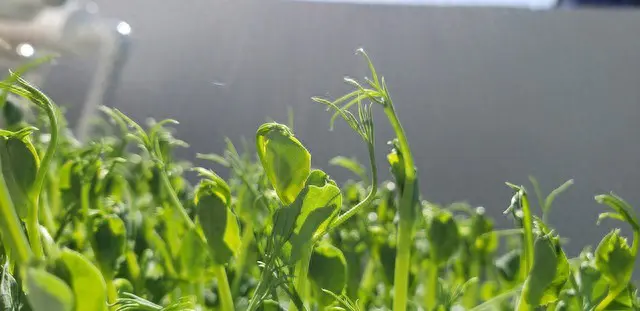
Regularly, most varieties are grown every year and the earth is turned over. These are cabbage, carrots, lettuces, which are collected once and the plants are blighted and the seeds are to be re-painted the following year. A lot of people grow their vegetables, and it takes time to buy seeds, land and seed. But there's a different type of vegetable. Once it's planted, it'll workOngoing harvestAnd when the ground is cut off, the roots are left in the soil, and when the nutrients are sufficient, new seedlings will soon emerge, which can be picked repeatedly within a year, that is to say, “a year at a time and a year at a time, after which they will continue to grow”。
A lot of people think of it firstCaucasineI don't know. Vegetables have the highest prevalence in rural institutions and urban balconyes. Many people grow small pieces of their walls, starting with spring warms and continuing until late autumn, with six to eight cuts a year. But in addition to herbs, there are a number of vegetables that also have the properties of "cutting and growing" and are suitable for ordinaryFamily cultivationI don't know. I'll tell you the characteristics of each dish, the method of planting, the harvest points, the easy pits, whether there's a friend of the garden or only a balconies。
First of all, the most common bellies. The herb is a vegetable that has been growing roots for many years. It is a secret that it regenerates, not in leaves, but in the roots and roots of the earth. When we harvest, we cut only the leaves above the ground, and as long as the roots of the ground are intact, the roots absorb the water fertilizers in the soil and re-emerge the new leaves. Many of the new-sourced beryllies fail, and most of the problems arise from harvesting methods. A lot of people cut the floor with a knife and cut the runner, and the seedlings will follow. The correct approach is to leave a two to three centimetre stub at the harvest and not to be uncircumcised。
Cultivation, with priority given to shifting herring roots, is much faster than direct planting. In the spring or fall, they can plant plots that are well-lighted and drained; and in the balconies they use a flower basin with depths greater than 25 centimetres, so thin that the roots are too thin to stretch out. As far as possible, soil is mixed with decomposed organic fertilizers and does not use unfermented raw manure directly, making it easier to burn roots. The bellies like fertilizer, and once the harvest is finished, when the new seed is three to five centimetres, they have to add fertilizer, decomposed goat dung or compost, and keep up with the nutrients, and then the next cauliflower is thick。
In summer, when it's hot, it's easy to pick up flowers. Scratch consumes nutrients stored at root, leaves become thinner and tastes older. If it's mainly eating leaves, see the flowers coming out and choke them off as soon as possible. After winter in the northern regions, the leaves of the land are aching, roots resting in the earth, simply covering a layer of dry grass to keep warm, and the next spring will re-emerge itself. High winter temperatures in the south do not allow for complete hibernation and slow growth in the cold seasons lead to longer harvest intervals。
Apart from herbs, the second one that suits the familyEmpty cabbageI don't know. Empty cabbage is a typical “long-strangled” vegetable, and many people think it can only be soaked in the current year that the harvest ends after a season, but it is well managed and can continue to be picked in warm seasons for six months. There are two ways in which hollow cabbage can be grown, with seed seed seeding or swidling, which is faster. Each harvest is not to be pulled out in its entirety, it is to be squeezed from the top of the branch, with three or four nodes on the bottom, and the remaining branches are to be picked up more and more from the branch chief。
Vacuum dishes are hot and wet, with temperatures above 20°c growing the fastest and summers the best. Soils should remain wet, empty cabbage fibres short of water should be thick, and wood should be given by mouth. It is intolerant to cold temperatures, which are reduced to below 10°c and largely stop growing, with the frost and death. So emptiness can't get through the winter in the open, but can only be picked up multiple times in the same year, i. E. Within the same year, which is what the title means by “a year at a time”, not to be understood as a number of years of growing. There's a lot of online content that can be confused here, and the empty cabbage is a lot of pick-up, not a lot of years of survival, like a pick-up。
The third is onions. A number of family balconyes grow onions, with a small onions bought directly from the market, cut off most of the onion leaves and bury the roots in the soil, so that they can live. The small onions have a strong capacity, are maintained and are slowly fragmented. The harvest does not have to be full, only leaves onions are cut, roots and onions are preserved, and new onions will soon emerge. It's good to cook a small amount of food and cut as you like. Onions require sufficient light, long in the dark, easy to grow and thin yellow. The soil is sunk and the plant must keep the bottom drain open。
Number four, big leaves. The mussels are also a species of sharp harvests, which continue to be picked in spring, summer and autumn at the right temperature. The harvests only take the top edges, keep the base branches dry and continue to grow. Woodbuckets are hot and can grow at high temperatures in the summer, and the disadvantages are equally cold, which can kill them after frost, which is a variety of harvests. The leaves of the mussels are thin, they are silhouetted and cooked, there are few pests and diseases, and family cultivation is easily managed。
Many newcomers can easily make the same mistake when they grow these “exactly regenerated” vegetables: harvests are frequent and no time is given to plant rest. Plants produce new leaves and produce nutrients from luminous co-operation, which are stored in the root. If the harvest occurs as soon as it is seen growing, there is no time left for it to accumulate nutrients, the roots of the ground run out, and the seedlings that follow will grow thinner and even fade。
There is a general harvest principle that applies to regenerative vegetables such as cabbage, cabbage and mussels: each harvest is followed by sufficient recovery over the long term. Cauliflowers are usually harvested once between 25 and 35 days; empty cabbage and mussels can be harvested once at high temperatures of about 20 days, with low temperatures being stretched. In addition, each harvest does not remove all the leaves at once, and a portion of the lower leaves is retained for light co-operation and the provision of root nutrients。
With regard to fertilisation, this type of vegetable, which continues to harvest leaves, has a high demand for nitrogen fertilizer, but it cannot be applied alone. Long-term nitrogen fertilizer is used, leaves grow fast, but plants become less resistant and vulnerable to long-term disease. With a small amount of potassium phosphate fat, the roots are stronger and do not easily fail. Priority is given to the use of decomposition organic fertilizers, which are warm and persistent; the use of fertilizers is controlled by concentration, which is applied in a small manner, and one-time heavy fertilizer is burned. The water is dry and wet, and the surface is dry and then watered, avoiding the long-term rooting of the water。
Tell me more about the location. Most of the many harvests require sufficient light, preferably four to six hours of direct sunlight per day. There is insufficient light, long plants and weak leaves, and production has declined significantly. If there is only a northerly balcony and light is weak, it is not suitable for large-scale seeding, with only a small number of test seeds. Ground planting avoids low-lying water catchments, and during the rainy season, the roots are prone to decay and have a direct impact on subsequent growth。
Many people are concerned about pests and diseases. Vegetables that continue to be harvested are growing fast and are prone to aphids and white powder in high-temperature wet environments. Household cultivation is prioritized for physical control, with a small number of pests washed directly with water or manually removed. The use of pesticides is minimized and, if necessary, sufficient safety intervals are set aside before collection. Home-grown foods are designed to be comfortable, ventilated in advance and free from overcrowding, which reduces most of the disease。
There is also a key point to distinguish between “more harvests in the year” and “manufacturing root vegetables”. Caucasine and beryllium are ground roots, which can be grown over winter and for many years at a time; empty cabbage, mussels, cabbage and cabbage (screws) can only be picked repeatedly during the same growing season, with the death of entire species following the cold frost, which needs to be replanted the following year. There are many short videos that mix these two groups and say, "speculate for life at once," which is not very strict. The title “sown at once for one year” means that in the same growth cycle, multiple picks can be taken and supplied for an entire year, not to say that after planting, there will be no longer any need for care。
Such regenerative vegetables, which are well suited to family gardens or balconyes, have the greatest advantage of saving their minds, not having to re-plant them, eating them, taking them off and pouring them directly. It also saves a portion of the cost of buying food. But it's not shortboard, it can't harvest indefinitely. In either case, continued harvesting will continue to consume plant nutrients. After many years of herring, the bush is becoming thicker, the internal ventilation is poor and the long-term trend is declining, and it usually takes three to five years to separate plants and renew stocks. Empty cabbage moored in the fall and winter with natural atrophy and replanting in the coming year。
There's a lot of freshmen who look at the regenerative power of this type and think about it. The seedlings are overcrowded, their leaves are shielded from each other, their ventilation is poor and they are very sick and each of them is small. Sufficient space is set aside for planting, with about 15 centimetres left between the acreage and the acreage; the space is 20 centimetres. Reasonable spacing ensures that each tree has a long branch of space and continues to harvest。
Weeding cannot be ignored in day-to-day management. Weeds grab nutrients and water. If weeds grow in large quantities, even if you fertilize on time, the growth of vegetables will be affected. Weeds are cleaned when you have the time to plant them; weeds are small enough to pull them off. In addition, for varieties that are prone to flowering, once they are seen to grow, they can be eaten and poignant, and if they do not want to leave seeds, they are cut off, avoiding large nutrient supplies, and leaves cease to grow and become fibrosis。
Many friends would ask if such vegetables were suitable for the plant. The answer is yes, but the flower pot can't be too small. The cauliflower root is well developed, with a flower pot depth of at least 25 centimetres; the hollow cabbage and the muscular root are extended horizontally and the basin is as wide as possible. Plantation soil is fast consuming nutrients, requiring more regular fattening than ground planting, rapid evaporation of water during the summer and more frequent water recharge. There are limited ventilation conditions on the balcony, and care is taken not to pile the flower pots so as to leave a gap for ventilation and reduce the disease。
Then we talk about the food part, which is the most delicious of the many harvests of vegetables, and of the fresh leaves. It's too late to harvest, it's getting old, it tastes rough. Home-grown production is free of pesticides and simple washing allows cooking. However, wild plants of similar shape should not be picked off in the wild and toxic species. The market buys seedlings, selects regular channels to the extent possible and does not buy seedlings of unknown origin to prevent the carrying of eggs and bacteria。
A lot of people are in the countryside when they are children, and they leave a cuisine in their kitchens and cut them when they want to eat them. Many people now live in buildings without land, a pattern that can be repeated in the balconies. The growing of vegetables is not only a harvest of vegetables but also a hobby of relaxing, looking at cut leaves and re-growing young seedlings over time, a process that is healing。
But it must also be viewed rationally and without unrealistic expectations. Regenerative vegetables are not grown without management, watering, fertilization, weeding, pest control, and so on. Long-term neglect, lack of water and fertilizers, and the weakening of growing plants slow down new leaves and lower yields. The nature of the vegetable crop is to be managed at the expense of sustained harvests, and there are no completely untreated and growing vegetables。
It is also a reminder that climates vary from region to region and that the appropriate varieties vary. In the north, the winter is cold, empty cabbage and mussels can only be grown in spring and summer and fall, and fall and fall, and can be covered or dried for winter. In the warm regions of the south, the empty cabbage is longer and the harvest cycle longer. Choose the varieties, and combine them with the local climate, not blindly。
Now there are a lot of short videos that blow this type of vegetable to the ground and say, "let's leave it alone and eat every day." this is exaggerated. Basic maintenance cannot be saved if the harvest is to be sustained and stable. We need to be objective about this type of vegetable: it is highly regenerative, it reduces the difficulty of replanting seedlings, it is suitable for families to grow small amounts of their own, and it provides their own daily table, but production is limited and cannot be expected to sell on the basis of this large number of vegetables。
A wide variety of dish lovers are given small plots of land in their gardens, where they grow these types of vegetables that can be harvested over and over again, accompanied by one-time pick-up of guacamole and radish, which can sustain the harvest. It is convenient to have a little onion cut for the daily cooking, and to have a little cabbage and a little cabbage。
If you're growing food at home, try it. The newcomers suggested that priority should be given to onions and beryllium, two varieties with a higher tolerance rate, with greater likelihood of success, and then to the acquisition of experience before trying the cabbage and mussels. A small number of test seeds should not be planted over large areas at once, so as not to keep up with management and eventually completely decay。
The topic: have you ever grown vegetables that can grow again after cutting? What kind is it? What difficulties did you encounter during the planting process? You're welcome to share your experiences with vegetable gardening in the comment area, ask for attention, and continue to share useful home-grown food products。









