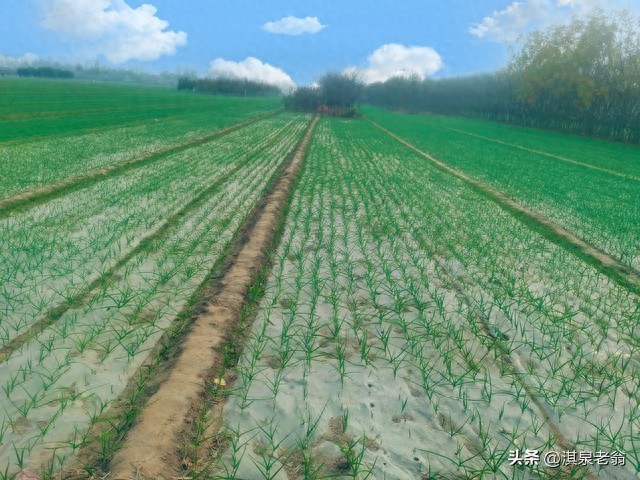
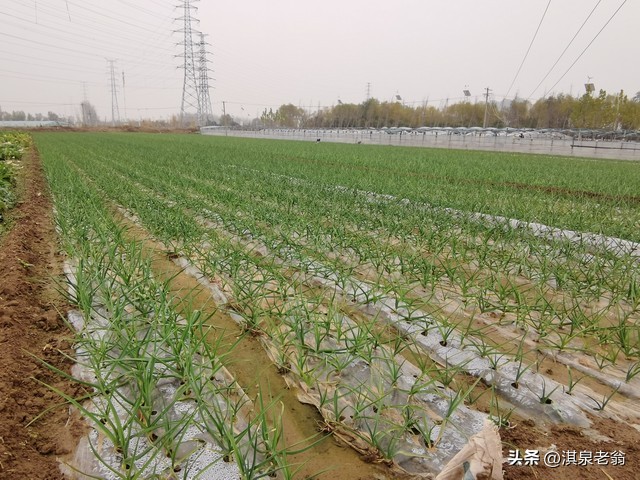
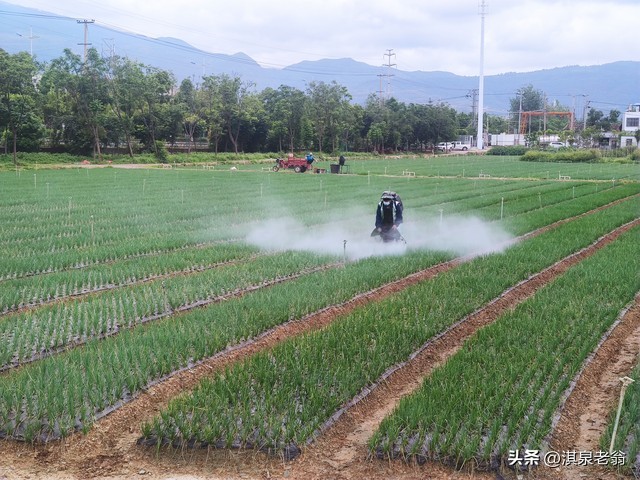
At the heart of the winter of onions lies not in freezing late in the winter, but in rooting and controlling a strong tree. The probability of freezing, drying and dying in winter will be significantly reduced by strong, deep-seated roots and abated soil. Many farmers have lost their onions over the winter season, mostly because of poor watering and under-ploughing, resulting in seedlings growing, shallow roots, soil sheeting and freezing roots, dead trees and slow return problems in the early winter. The following is a detailed description of the water management of post-planting science and the methods of farming in china, taking into account the experience of the winter management of old vegetable farmers。
I. Scientific management of the scientific department of ones, resources and resources
Onion roots are shallow, water-absorption weak, drought- and flood-prone, and water management in winter follows the core principles of “suffering water feet, long-term control, smoothing water in winter and returning to green water”, with different phases of watering, with one wrong step affecting winter quality。
1. Timing of seedlings: pouring down the water, fast slow-growing roots
After the onion has been planted, there will be a period of damage to the seedling system, at which time drought is most feared. On the day of planting or the following day, the water must be soaked, slowly soaked, so that the water slowly permeates 15-20 centimetres of the earth, so that the soil surrounding the seedlings is completely soaked, and so that the “half-wielding” is eliminated。
The purpose of the watering was to bind the soil and onion roots closely, remove the soil gap, quickly restore the capacity of the root system to suck water and reduce the period of slow seeding. Caution: a slow-sapling water can be poured only once and not so often infrequently and infrequently as a result of which the soil is wet enough to grow, causing rotting roots, yellow leaves and seedlings to grow。
2. Post-crawling to pre-crawl: control of water seedlings, strong seedlings
After the slow seedlings (7-10 days after planting, the seedlings stand up and new leaves grow), they immediately stop pouring water into the control of the sapling phase, which is the most critical step in winter。
Old vegetable farmers often say, “stand down well before winter, with garlic coming”, a period of moderate drought that forces the onion roots down deep, inhibits the growth of the leaves on the ground, allows the seedlings to grow solid, thick and thick, accumulates sufficient nutrients and improves their resistance to freezing significantly。
All that is required at this stage is to look at soil-filled water: the soil surface is white, the hand-held soil is loose, the leaves have a slight stroke at noon, so that the soil is half dry and half wet. If rain rains are heavy, it is necessary to fill the drains in the fields in a timely manner and to protect them from the rooting of the water, which makes it extremely difficult to find frozen roots in winter。
3. Freezed water in winter: right time, anti-freeze shield
Frozen water, which is a “life-saving water” for onion winters, can both stabilize temperature, prevent thawing, save soil moisture, avoid dry thawing in winter, and store water for the next spring。
The best time for watering: mastering the principle of “freezing the day at night”, i. E. Temperature of about 5°c during the day, mild freezing at night, watering the soil when it is about to be frozen but not frozen, and the field in the north usually finely adjusts according to local temperature before and after the winter to the snow。
Water-watering techniques: water pouring, one-off watering, permeation depths above 25 cm, then water-free and muddy fields. The ban on early watering, which leads to the continued growth of seedlings, young leaves, poor resistance to colds and cold winters, too late for the soil to freeze and water to permeate, and the freezing of roots by freezing water。
4. Oversleep: water control, no water
When onions enter the deep winter hibernation period, low temperatures and seedlings cease to grow, there is no need for water at all. In winter, the soil is wet, the temperature is low and the breathing of the roots is blocked, not only because it is prone to decay, but also because it reduces its permeability and exacerbates the frosting, which can be smoothed through the winter only by the presence of frozen water。
Ii. Phased plowing of pine land, air-smoking and cold-proofing
It is said that “water, fire and fatness are beneath the beechheads” and that onion farming in the science of post-plantation can break the slabs, increase the aerobics, increase the temperature of the earth, and protect against drought. It can also discourage weeds from fighting for nutrients, so that the roots are deep and the seedlings are strong and cost-effective means of management. Chinese farming follows the principles of “lightness, diligence and stability” and varies in depth and frequency from time to time。
1. First-time cultivation after a slow seedling: shallow cultivation of pine soil, breaking of sheeting
The first tillage is carried out after the final root water, when the soil is half dry and wet (3-5 days after the water is poured). At this time, onion seedlings are shallow and weak and must be ploughed at depths of 2-3 cm。
The main role is to break the slabs formed as a result of water drainage, to address the problem of poor soil gas and ground turtles, to avoid rapid evaporation of soil moisture, while preventing weed buds and creating a defusing environment for root growth. This time, the plowing of the plows has become more resistant to deep cultivation, otherwise it is more likely that the fresh roots will be pulled, resulting in yellow leaves and rigidity。
2. Long-term tillage in winter: deep-croping, rooting
After 15 days of planting, the seedlings are generally stable and can duly deepen to a depth of 4 to 5 cm, till the soil is frozen every 10 to 15 days。
A moderate deep tillage can cut the surface plume of the soil, reduce the evaporation of the deep water and act as a safeguard; and decompress the deep soils, guide the onion roots to grow downwards and avoid the roots floating over the surface. The surface roots are highly susceptible to freezing during the winter, with deep seedlings becoming more resistant to freezing, more resistant and faster to recovery after winter。
It is a method of preventing onions from dying in the winter。
3. Last tilling before freezing: protection against cold
When frozen water is filled and the surface of the soil is white and not sticky, the last tillage occurs before winter, at a depth of about 3 centimetres, with full-scale soil cultivation。
The core purpose of this practice, which does not involve lax gas, is to flatten the plots of land, compact surfaces, seal the soil gap, reduce the heat dispersion of the soil, and lock the groundwater off, so as to keep the temperature cool and minimize the probability of freezing the roots。
4. Core taboos in chinese farming
1. The whole process of avoiding cultivation after rain, during soil mudslides, which can easily result in soil sheeting and oxygen-depleted roots
2. The prohibition of deep cultivation and injury to roots and the elimination of large-scale conversion of the earth's layer during seedlings
To stop all cultivation after freezing, to avoid disturbance of the thaw, to damage the roots and to exacerbate the thaw。
Iii. Auxiliary management in winter, cold-proofing and enhanced production
1. Control of strong seedlings: avoiding the application of nitrogen fertilizer before winter, preventing the growth of seedlings and the unfrozen foliage, and increasing the resistance of plants to cold by combining the cultivation of a small amount of additional potassium phosphorus fertilizer。
Weed cleaning: each time weed is completely removed from the fields, weeds not only compete for water and nutrients, but also cover up the light, breed moisture, increase the probability of disease and affect onions over winter。
3. Drain drainage: low-lying plots opened long-distance drains early on, during the rainy season, rapidly draining water, eliminating water from fields and avoiding rotting roots and freezing roots。
Summary
The key to the safe passage of the onions over the winter and the high productivity of the coming year is proper water control and laxity. After planting, the water is soaked with steady roots, before winter, and frozen water is soaked and frozen in due course. A programme of cultivation with light-burning, deep-burning and frozen soil is designed both to breed strong seedlings and to improve soil temperature protection capacity, and to address the problems of cold seedlings, cold seedlings and recovery, thereby laying a solid foundation for later onions to swell and produce。