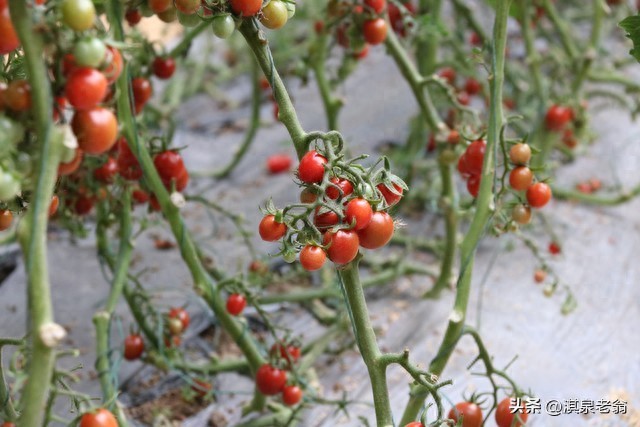
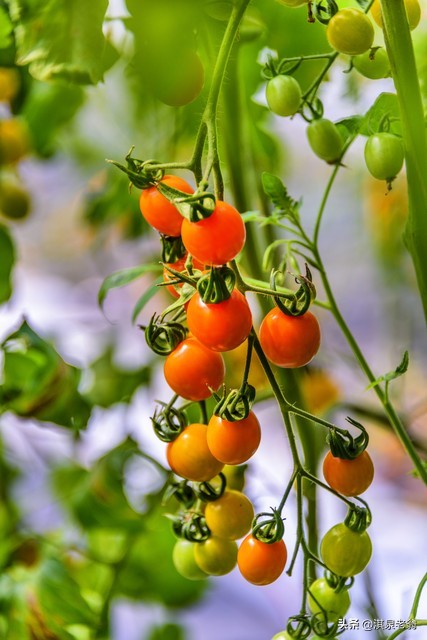
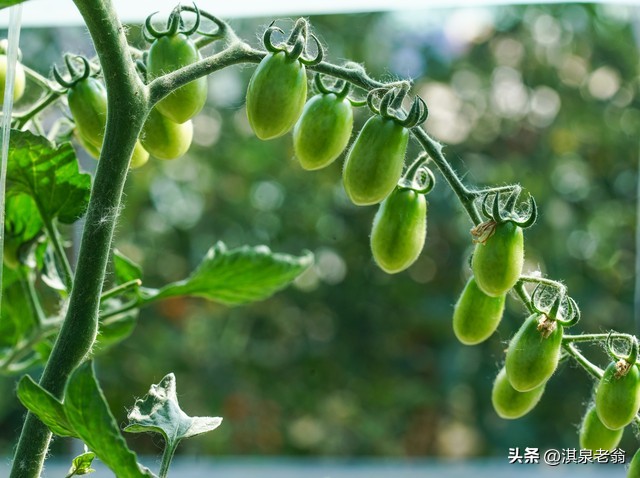
Cherry tomato is a high-quality fruit and vegetable variety with both taste and production, as it is small, sweet and long-term, market-friendly and a preferred type of plant and field-scaled plant. At the cherry treeHigh-yield cultivationIn the system, the whole branch and the chicken are core field management techniques that directly determine the strength of the plant, the ventilation conditions, the efficiency of nutrient distribution, and ultimately the production and quality of the fruit. Science's whole-stretching operations effectively avoid the growth of stock, nutrient waste and disease, prolong the outcome cycle and achieve continuous high and high quality production. This paper combines the growth characteristics of the cherry tree and tomato, and elaborates on the core operational points of the whole branch and the chickenAuxiliary managementTechnology to provide practical guidance to growers。
I. Basic prepared for the twenty of the ass
Pre-preparatory work is required to prepare the ground for follow-up operations to avoid damage to plants and diseases due to inadequate preparation. First, the variety corresponds to the planting density, with the cherry tree small tomato multiplications of powerful, unlimited-growth varieties, which are strong and long-lasting, and which are subject to control over the strength of the whole branch of the chicken; planting density follows the principle of wide-banded strains, with a facility of 1 metre wide and 0. 6 metre narrow, with approximately 3,000 units per acre, ensuring ventilation in the field and easy operation of the whole branch。
Second, when the plant is long, when the seedlings grow to 25-35 centimetres and the first bouquet begins to show, it is built in time to fix the main tuber with a nylon rope and avoid a fall of the plant to support the subsequent whole branch and fall chicken. At the same time, water is properly controlled for three to five days before the chicken drops to reduce the amount of water contained in the plant, to increase the resilience of the penis and to prevent the cracking of the mantle during the operation; and to prepare pre-operational sterilised trims and gloves to avoid cross-infection。
Ii. Core technical elements of the cherry tree tomato whole
The whole branch is used to optimize the critical operation of the plant structure by removing the extra side branches, keeping the result branch reasonably, concentrating on the provision of fruit and strong chickens, and using the single, double-dry, modified mono-crystal in the form of cherry little tomatoes, which growers can choose on the basis of planting density and variety characteristics, with the following core operational points。
(i) mainstream whole-way exercise
1. Single-dry whole branch: suitable for dense, pre-drive planting, retaining only the main stem as the sole result branch, removing all sprouts and sprouts from the main stem. This approach maximizes the concentration of nutrients and promotes the rapid flowering of the principals, and the rapid expansion and even quality of fruit is the preferred method of high-yielding plant cultivation at the facilities。
2. Double-dry whole branch: suitable for rare, long-cycle planting, with the retention of the main tuber and a strong side branch at the bottom of the first line, which forms the backbone of two results, with the remaining side branches completely removed. This approach increases the number of outcome branches, increases single yields, and is suitable for field-growing and dynamic varieties, operating with strong, disease-free branches and avoiding nutrient depletion by weak ones。
3. Improved monolithic whole branch: taking into account production and strength, with two leaves to the top of two to three bees, with one strong side branch to the top to replace the stem, with six to seven outcomes and 12 to 14 fruit for the entire reproductive period. This approach prolongs the outcome cycle, avoids premature plant failure and is suitable for the anniversary cultivation model。
(ii) a whole set of key operating codes
1. Exploiting the side branches in due course: the side branches are removed in a timely manner when they are up to 6-8 cm, they are too early to cause damage to the main tubers, lead to the early decay of the plant, and later the side branches are fertilized and consume a large amount of nutrients, thereby preventing the long-growing and flowering fruit. The selection takes place in the morning of the sun, at which point the wound heals quickly and reduces the risk of infestation of the fungus; it is operated with hand-to-hand bending of the side branches and avoiding the tearing of the main tuber's cortex, which, if replaced with a cut, requires the early disinfection of alcohol。
2. Rational topscarving: after an unlimited growth pattern, with the main stem growing up to the target number of ears (generally 8-10 ears), the top leaves two to three functional leaves to the heart, inhibiting the top advantage and contributing to a shift of nutrients towards the expansion of the fruit; after the harvest, the result is the timely elimination of the old and weak, and the selection of a new strong side branch to replace it with the result and the achievement of a continuous set. It is strictly forbidden to remove the top of the fruit and keep the functional leaves to protect light cooperation。
3. Leaf control: timely removal of the old, yellow, sick and mutilated leaves under the plant, as well as the resulting twigs, reduction of nutrient consumption and disease caches and increased ventilation in the field. Leaves are subject to the principle of “leaf-only, no-flying” and each plant retains more than 20 functional leaves to ensure the provision of nutrients for photosynthesis。
Iii. Cherry tree tomatoChicken technologyCore elements
Roast chickens are the core technology for an infinity-growing cherry tree tomato, which is designed to reduce the height of the plant, bypass the penis, avoid the top of the plant touching the roof, improve light in the field, extend the outcome period, suitable for the facility's high-planting, and operate on the principle of “timely, softly and orderly” with the following core points。
(i) timing
Roast chickens need to be at the best of times, with premature chickens affecting the pre-plant longness of the plant and, later, their excessive, difficult and easily broken operation. The first chicken fell after the harvest of the first fruit, the rapid expansion of the second fruit and the stabilization of the first fruit, followed by the timely one and five to six chickens for the entire reproductive period. At the same time, the chicken must choose a warm afternoon, when it is low-water and soft in quality, significantly reducing the risk of a break and tear; it is strictly forbidden to operate in the dark, in the morning and in the evening to avoid the disease caused by the dampness of the wound。
(ii) the standardization of chickens
Pre-treatment of chickens: thorough removal of penises before falling chickens the latter leaves, sick leaves and yellow leaves, which are removed, will be taken out of the fields to be buried or burned in order to eliminate the source of the disease in the fields, and all the fruits of the fall of the chickens will be harvested so that the leaves and fruit will not be brought closer to the humid soil on the ground, and such diseases as greyy and leafy diseases will breed。
2. Regulate the way the chicken works: untie the leash, lightly decentralize the penis, in accordance with the same direction and graduality, wraps the penis around the side of the pedestal, works with the natural bending of the penis, strictly prohibits forced bending, reverse distortion and prevents break-ups. Using the inter-plant cross-cooked chicken method, the plant is re-planted to the adjacent plant position to ensure that the plant is evenly spaced and avoids photo masks。
3. Roast chicken height control: each time a chicken falls, leaves and chickens are kept at a distance of about 15 centimetres from the surface, and the plant is maintained at an altitude of 0. 8 metres south, 1. 5 metres north of the shed, with no more than the upper end of the front line of the plant to ensure lighting in the field; the control area coefficient is 3-4 and equal distribution of the leaves to increase the efficiency of light co-operation。
(iii) incidence matters
It is strictly forbidden to pull the penis, damage the growth point and the functional leaves in the course of the chickening; to avoid its dragging and burying in the soil, and to prevent the growth of its roots, causing disease and disrupting the distribution of nutrients; and to re-establish, in time for the chickening, the cranium ropes to ensure that the plants are grown up and that they are not tilted。
Iv. Accompanying management elements of the whole chicken
The whole of the chicken would result in the planting of a wound and a change in the distribution of nutrients, followed by improved field management, accelerated healing of the wound, restoration of the strength of the plant and guaranteed high productivity。
(i) temperature control
Three to five days after the whole of the chicken fell, the temperature of the facility is increased appropriately, at 20 to 25°c during the day and around 15°c at night, to facilitate rapid healing of the wound; the ventilation is improved, the humidity of the field is reduced, the disease is avoided in the high-wet environment, and the field is planted with rain-proof measures to prevent rain from washing wounds。
(ii) disease and pest control
After the whole chicken, the wound is susceptible to bacterial infestation, the timely application of fungicides such as bacillus, dyson manganese zinc, as well as the prevention of asymptomatic disease, premature disease and folate, and the simultaneous application of insecticides to combat pests such as aphids, white powder lice and masts, which can be combined with the simultaneous application of foliage, with both preventive and prophylactic effects。
(iii) fertilizer management
The continuous expansion of nutrients following the fall of the chickens requires an increase in water and fertilizer supplies, so that the lack of nutrients does not lead to smaller fruit and lower quality. Fertilizers are concentrated on high potassium compound fertilizer and potassium sulphate, with 15-20 kg per acre per trip, combined with drip irrigation to keep the soil humid but unwatered; and phosphate potassium, calcium fat, boron fat sprayed on the oscillating leaves, preventing fissures, umbilical diseases and increasing the sweetness and commerciality of fruit。
(iv) follow-up maintenance
When the chicken drops, new side buds are removed from the lower part of the penis in time to avoid the waste of nutrients; the plant is regularly inspected, new leaves and sick leaves are removed in time to keep the fields radiant; and the fruit-preservation process is synchronized to increase the seating rate and ensure continuity of results。
V. Common problems and measures to address the whole prostitution
1. Early failure of the whole plant: due mostly to premature and excessive fretilation, it is necessary to control the timing and amount of fretilation, retain sufficient functional leaves, catch nitrogen-activated fertilizers in a timely manner and restore plant strength。
2. Fragmentation of the falling penis: primarily due to the uncontrollable water before the fall, forced bending of the operation, the strict application of pre-laying control of the water, the operation being carried out softly and adjusted to the natural strength of the penis。
3. Multiple diseases in the field: due to unprotected wounds, incomplete foliage clean-up, timely spraying of the whole chicken, thorough cleaning of the sick and the sick, and increased ventilation and humidity。
Summary
The whole branch is the basis for the high production of cherries, small tomatoes and chickens are the key, and the two are mutually reinforcing. The whole core is weak, concentrated nutrients, and the structure of plant results is rational; the core of chickens is the control of high light, extension of results and the optimization of field growth. Growers need to be flexible in their selection of the whole branch according to the nature of the species, the pattern of cultivation, strict control of the timing and operation of the chicken, integrated management of temperature, water fertilizers, pests and diseases, in order to effectively increase the strength of the plant, extend the cycle of the adjoining fruit, achieve a high production, quality and efficient cultivation of the cherries and maximize the benefits of planting。
In actual production, it is necessary to adjust the frequency and strength of whole chickens in combination with the strength of the field, climatic conditions and soil fertility, to avoid mechanization, to ensure that it is adapted and managed with precision, to maximize the efficiency of the whole chicken technology, and to contribute to the production of cherries and small tomatoes。