


The farmers who grow cherry tomatoes know that the dish looks good and wants to be high-yielding, multi-loafed, fruit-typed, evenly tastes good, not just to climb the vine。
Many small tomatoes, grown from the old country, with long vines and foliage, with poor ventilation, with fewer trees under them and more empty branches on the upper side, are prone to rotten fruit, sick pests, and have worked hard for a season, with directly less than half the output。
Most growers do not eat whole branches, do not know chickens, and do not fight. Either they can't give up their branches and leave them to their masters, or they are too heavy, strangling the branches of the results by mistake and cutting off production。
Today, i'll share with you a large room, open-air cherries and tomatoesThe whole chickenThe whole set of hands-on techniques is a summary of many years of combat in the field. The steps are clear, read and understood, and can be done without paying for the technology, so that it can be done in such a way as to produce more and more。
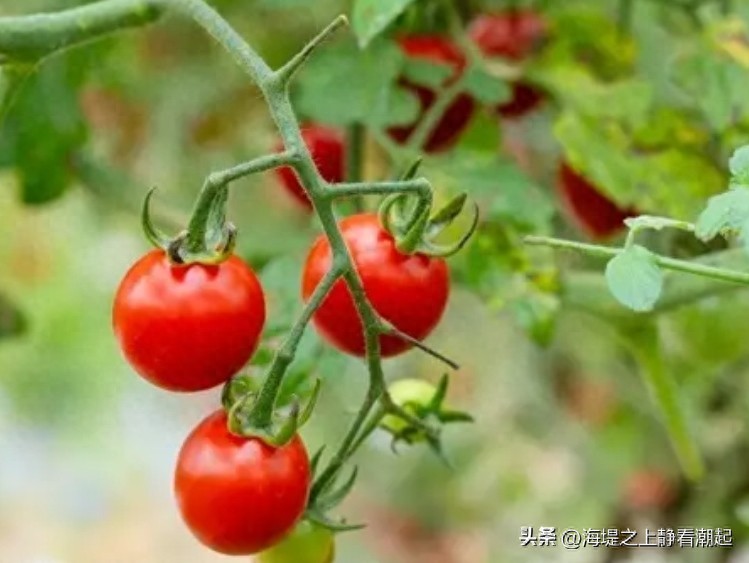
I. Understand: the core purpose of cherry tomatoes and chickens
Many farmers grow only water and fertilize, neglecting the whole chicken, a move that is more important than fatting。
Cherry tomatoes are of unlimited growth type, and vines and vines have been long and long, and if they are not artificially controlled, all nutrients are provided for vines and vines to grow, the number of hanging fruit will be significantly reduced, and when the leaves are closed, there will be no ventilation and no light in the fields, as well as a succession of problems with ash, frost, powder and bad fruit。
The core has three advantages:
1. Concentration of nutrients: all nutrients shall be supplied by cutting off the branches of invalids, and all nutrients shall be enriched with fruits, flowers and fruits, without waste of fertility。
2. Ventilating light: stratification of branches, permeability of fields, reduction of disease and of the use of pesticides。
3. Continuously high yield: the total production of vines and vines is very high, they are grown in an orderly manner, they are extended indefinitely, they are more numerous, they are taken for two to three months。
This is a common management approach, full-blown rhetoric, without professional terminology, and easy to operate by new farmers, whether it is winterization, early spring arch sheds or open spring。
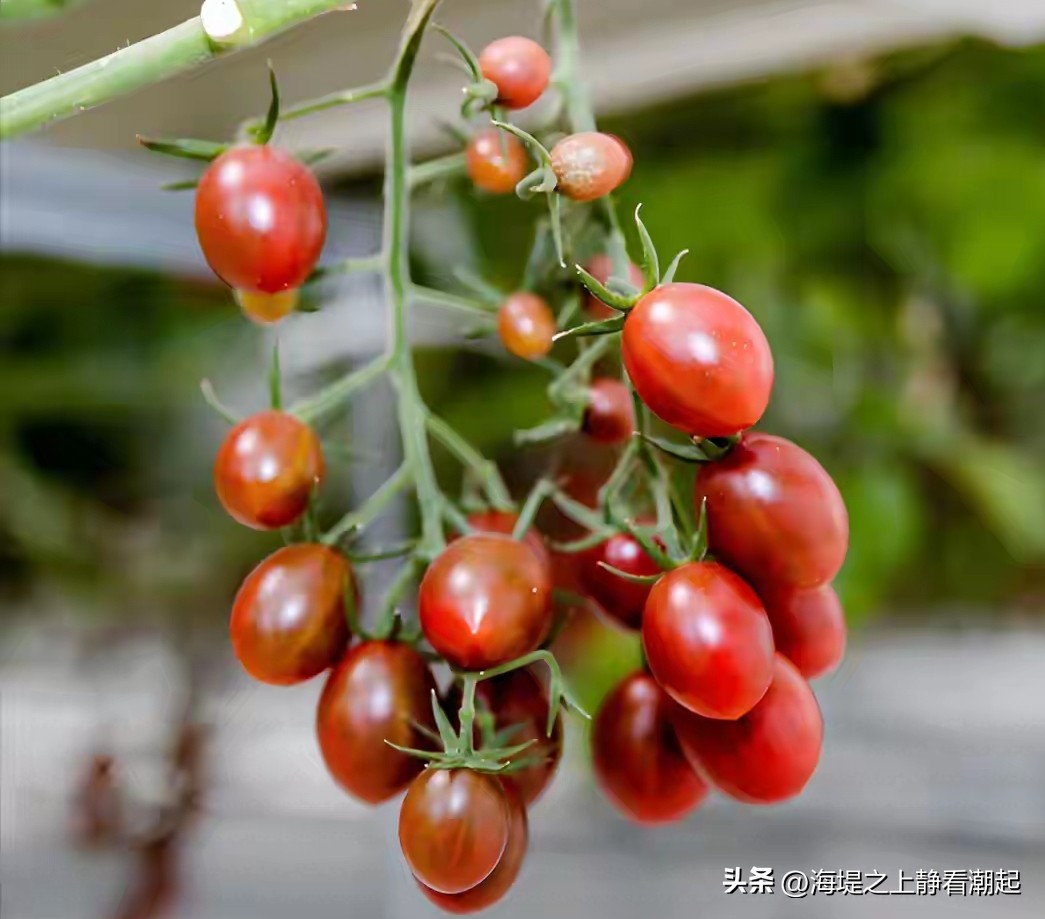
Ii. Standard whole branching method for cherry tomatoes: single chicken whole branch (high-yield preferred)
Cherry tomato is one of the most well-established trees in scale, and has one of the best trees in the world。
A lot of old people like chickens, they look like a lot of branches, they have a lot of nuts, and they have a lot of problems: the two vines compete for nutrients, the fruits are of variable sizes, the little nuts are too large, the branches of the field are too dense, the disease is high, and the production is reduced at an early stage, and there is no loss。
Core criteria for single chicken whole branches
Only one of the brocades will grow upwards throughout the journey, and all the leaves will be removed from the side branches, the blisters and the branches, without any extra branches。
2. Best time for strangulation
This is the most critical detail, with early growth affecting the root system and late consumption of large amounts of nutrients。
- after the seedlings were planted and the first sprout appeared, formal stinging began
- it is most appropriate to remove the twigs when they grow up to three to five centimetres, and not to wait until the twigs become woody, leaving them with large wounds and vulnerability to disease
- to resolutely put an end to the misdeeds of “narrow strangulation and strangulation” and to the small sprouts。
3. All-round exercise steps
1. Suffering periods: 7 to 10 days after planting, the seedlings take root and do not sprouts! The seedlings need a small side branch to assist in light cooperation, so that the seedlings are grown up, and they are easy to sow and grow。
2. The first flower (the first sprout): begins to be completely emptied, from the root to the first sprout, all the branches and buds are removed and the main chicken is left。
3. Sphinx period: each time water is poured and patrolled the field, the new breech of the root of the main leaf is removed with hand, with a seven-day tour to prevent the rebirth of the side branches。
4. Control of the previous branch: the main part of the chicken shall be removed and the main part shall be strengthened。
4. Focus on pit sheltering (high frequency area for farming households)
Zone 1: rain and rain
The heavy humidity of the rain makes it impossible for the wounds to dry quickly and is highly contagious with fungi, bacterial diseases, causing chickens and dead trees。
Good practice: operation from 9 a. M. To 3 p. M. On a sunny day, high temperature, good ventilation and rapid healing of wounds。
Zone 2: hard-hand wrench
A hard-on would tear the main skin, leave a large and irregular wound and become a fungus intrusion。
Correct practice: cutting with disinfectant scissors, or squeezing the twig base gently, and cutting off the scraps。
Mistake 3: residual stakes, sprouts
Many farmers keep small stakes that tend to protect the backbone, while the residues continue to grow, grow repeatedly and hide bacteria。
Correct approach: clean root, no scraps。
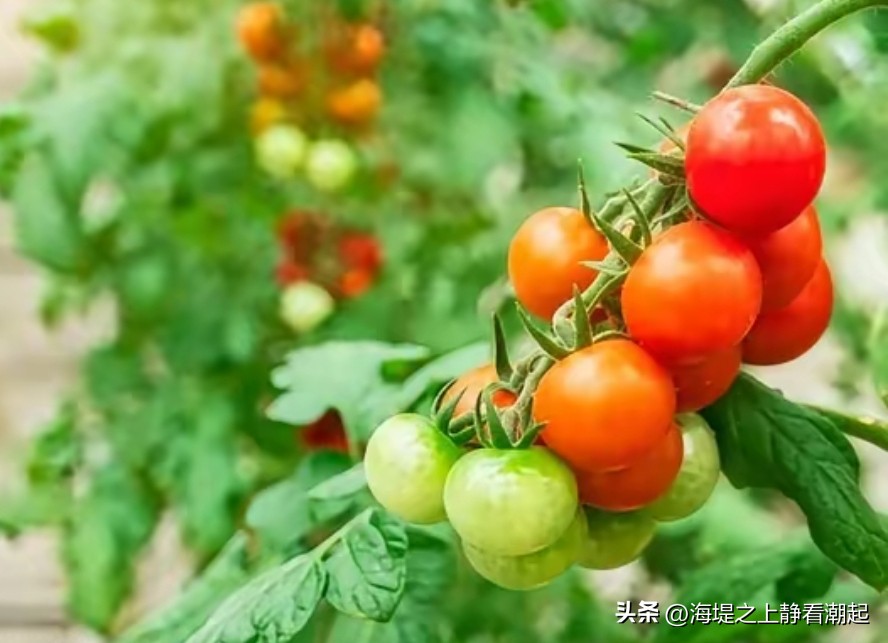
Iii. Bottoming, old-leafing, pick-up of sick leaves, increasing the rate of hanging fruit
It is not enough, and in order to get some light, it is necessary to hit the leaves in time and go to the leaves. This step is the key to reducing the growth of bad fruit and promoting it。
1. Best timing for bottoming
When the first sap begins to swell, it starts to hit the bottom
Precipice leaves are at the core of nutrient production, and premature leaf removal leads to inadequate nutrients, a slow expansion of the fruits and the fallout。
2. Standards of defunct exercise
1. All old, yellow, sick and handicapped leaves below the first sap shall be removed at once。
2. After each fruit is turned to ripe for harvesting, the aging leaves below the ear of the fruit are removed in a timely manner, with a layer of clean leaves and a layer of light。
3. The upper health function of the plant is firmly maintained! These leaves are for light co-operation and provide for the growth of the upper flower, which can lead to premature decay and loss of production。
3. The core benefits of leaf removal
The bottom blades are close to the ground, the worst ventilated and most susceptible to mud, and the most affected areas. When the bottom leaves are removed, ventilation on the ground can completely reduce the problems of asymptomosis, disease and bad fruit, while all nutrients are concentrated in fruit, which is larger and more sweet。
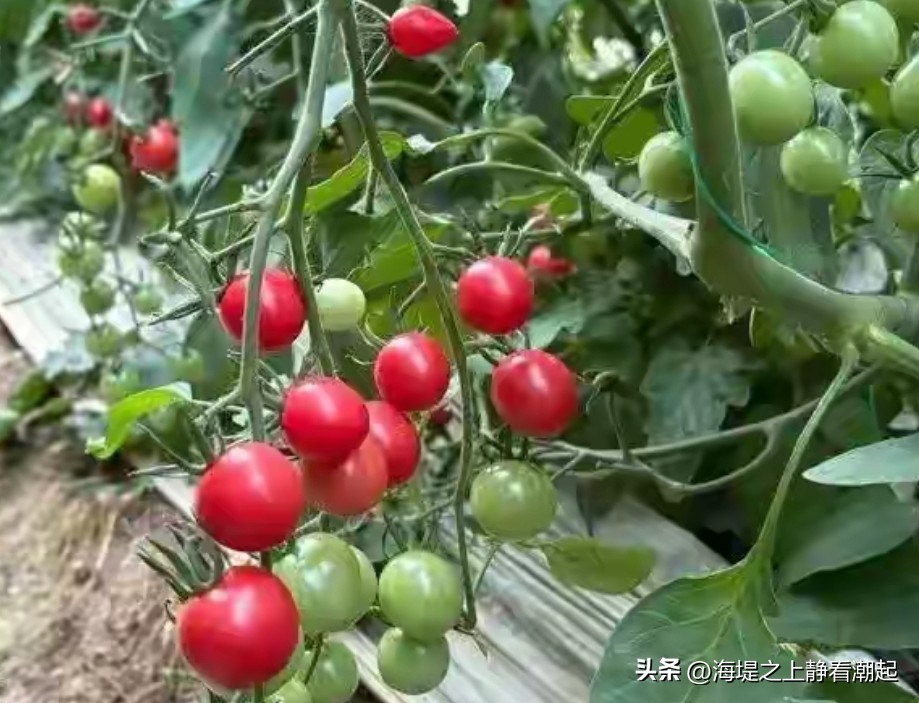
Iv. Focus central fight: the finishing of the scientific potus
Chicken is a very productive soul for cherry tomatoes
Infinite growth varieties, vines can grow up to three to five metres, common mats can be tied to chickens, the top is weak, the upper end of the vine is weak, the upper part of the posteriori period does not bear fruit, and yields increase directly。
The correct landing of chickens allows the vines to extend indefinitely, laminates, full of fruit from top to bottom, and the picking period is extended by two months。
1. Best time for first chicken landing
A lot of farmers are too young and too late to remember one sentence:
The plant is grown to the top of the shelf, at the top it begins to bend, and the first and second ears are essentially harvested and the first chickens are laid down。
Specific criteria: the height of the chicken is 1. 8 - 2 metres, touch the ceiling, and the growth of the top is hampered, i. E. The best time for the chicken to fall。
2. Preparatory work before chickening
1. Discontinuation of water: low humidity in the field in front of the chickens, moderate water content in the vines, the most resilient, difficult to break and fracture. And when water is poured, the vines are brittle, and they break as soon as they touch them, and they are extremely vulnerable to plant damage。
2. Complete cleaning of leaves: before the fall of a chicken, before the fall of a leaf, before the fall of a leaf, before the fall of a leaf, and before the fall of a leaf, when the fall of a leaf, when the fall of a vine, shall be made clean。
3. Tool disinfection: cranium cord binding, early drying of tans to avoid bacterial infestation。
3. Standardised lay-down steps (as done directly by beginners)
1. Untie the upper tie: untying the fixed rope on the upper part of the main chicken, not to pull hard, and avoiding pulling the vine。
2. Flow-in-the-roll: the old, leafless, fruitless, old vines and vines will follow the line of cultivation and will be slowly and gently taken away from them, and the left vines will be laid down naturally, without squeezing or overlapping。
3. Control of the height of the chicken fall: not too many chickens per fall, and a single drop of 40 to 50 centimetres is most appropriate. There are too many chickens, and at the top of the plant a nutrient feed fault can produce yellow leaves and figs。
Re-stabilizing the main chicken: when the chicken is finished, the strong chicken at the top is re-locked to the staves to ensure that the top grows up and maintains its growth advantage。
5. Consistency: one plant in the same field, one chicken in the same row, one chicken at the same height, one ventilation, one management and one harvesting。
4. Fancy patterns
Growing up season (spring and summer): 1 in 15-20
Low temperature and long season (autumn and winter shack): once in 25-30 days
The whole process was guided by the principle of “a small number of times” and it was forbidden to fall once and for all。
5. Highest priority for chickens: mistakes that must not be made
1. Don't wet the lactating vines land
The laid vines shall, as far as possible, be emptied or covered with straws, membranes, and shall not be attached directly to the wet soil, otherwise the vines shall bear roots, rot, be sick, and they shall be divided into the main chickens, so that the upper part shall not bear fruit。
2. Prohibition of pouring water immediately after falling chicken
The planting of a small mechanical wound on the fall chicken will immediately increase the humidity of the field, induce disease and then normally water and fatten the chicken after three days。
3. Weaknesses and disease
Weakly grown, yellow leaves, and sick, grow seedlings, rejuvenate and prevent diseases, and then fall into chickens, or else they will die of the tree。
V. The whole chicken mix: porcupines, management techniques for early death
It's hard to keep up with the weight of the chicken, but it's still not very productive, and it's easy to share a few of the skills that we have。
1. Articulation techniques after whole chickens
At a time when a small wound is caused by a sting and a chicken fall, and the nutrients are consumed, it is most critical to gain weight:
- the high-phosphorous potassium water soluble, with less application of nitrogen fertilization; more nitrogen fertilization can only result in vines and no results。
- a permutation of potassium fertilizer for 10-15 days to promote the expansion of fruit and sweeter colours and prevent the planting of plant longs。
2. Ventilation and temperature control techniques (e. G., stock cultivation)
The field has a high permeability after the whole chicken drop
- daytime temperature control 25-30°c, night 12-15°c
- night and day are so hot that they can accumulate nutrients. Less
- wet and ventilation in the middle of the day
3. Injury prevention techniques
After each large-scale stinging and chickening, the following morning a wide spectrum of anti-psychophagus was sprayed, focusing on the prevention of ash, disease, bacterial disease and early protection, which did not include further treatment。
Vi. Assessment of assessments of place assessments coming to a run in a house
1. Unnecessary: the side branches are so long, their nutrients are wasted, their ventilation is poor, they are sick and have little fruit。
2. Premature precipice: young children without auxiliary leaves, root systems are slow to grow, weak and weak, and production is reduced later。
3. Down to the end of the chickens: long-growing, cliffs, yellow leaves, fruit, premature decay。
4. Operation of whole chickens during rainy days: wounds infected and large areas of rotten chickens killed。
5. The blinding presence of chickens and chickens: trees are messy, with small, poor quality and low yields。
6. Infringement of the leaves: the bottom is hot and humid, with many fruity and repeated outbreaks of disease。
Summary of the high-yield core + crop development advice
Cherry tomatoes want high yields, multiple results, good tastes, long picks, and the core secret is four points: light twigs during the seeding season, clean twigs during the flower season, fruit to the leaves, and long-term care。
The whole chicken branch is a high-yielding base, scaffolding is the key to disease prevention, and a small number of chicken drops are at the core of the extended outcome period, combining them with high-yielding tomatoes that can easily be grown with fruit without the need for blind fertilization。
I want you to put together a good note of the plant and suggest that farmers collect:
The tomato is high and the whole branch is first
If you can't get a hold of it, the old leaves will be cleared in time
(a) a small number of hours of work and a full basket of ventilated light
It's the weather that keeps us safe









