Wave-coated steel-coated steel-spreading plant, process, selection, procurement complete analysis
IWave protectionBasic producer awareness
Two-wave, three-wave protection column disassembly
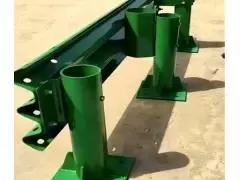
The beam fence, known as the beam steel fence, is part of the semi-rigid road protection against collisions and is the most used protective product in road traffic safety works. While many procurements, municipal units and road construction parties are looking for specialized wavewall manufacturers in the context of project tenders, many purchasers are not clear about distributors and source production plants and are prone to problems such as loss of thickness, corruption-resistant standards and failure to accept and inspect。
In accordance with the national standard gb/t 31439, the wave-shaped fences absorb vehicle impact energy from wave plate deformations, buffer vehicle impact, deter vehicle outbursts and reduce the risk of accident and injury, and are used extensively in highways, provincial roads, rural roads, landscape roads, municipal ramps, parking ramps, etc. Semi-rigid characteristics differ from rigid concrete fences, soft rope fences, with buffers, easy to repair, and affordable advantages。
The formal wave-form fence producer is a physical plant with a pressure-forming, perforation, thermal zinc plating, and an integrated spray line, capable of autonomous production of the pads, poles, resistance blocks, racks, end ends, high-strength bolts and complete accessories, which support tailoring to project drawings, arc processing, and heteo-head processing. This paper is a step-by-step approach to the process of production, classification of products, preservation programmes, standards of quality testing, procurement of pit avoidance points, helping the engineering party to find a spectrogenic header to ensure successful project acceptance。
Ii. Classification and country specification of wavewall products, basis for plant selection
Two waves and three waves
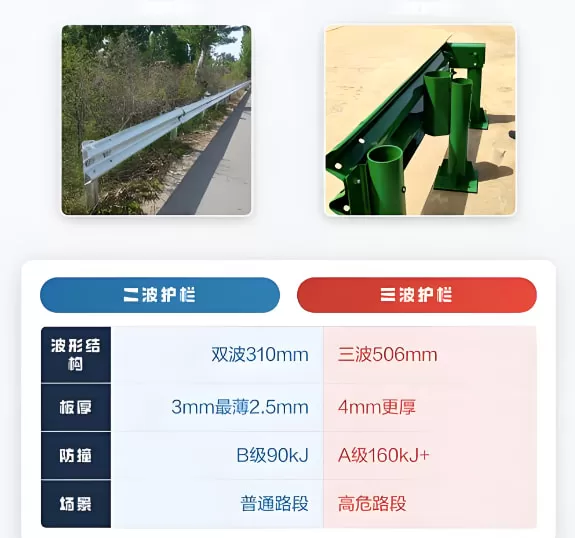
The main product is a two-wave and three-wave series of specialized waveform fence producers, with a combination of impact-resistant class b, a, sb, sa, ss, with different levels corresponding to risk factors for different sections of the road。
(a) the conventional dimensions of the two-wave plate: 4320 mm x 310 mm x 85 mm, with 3. 0 mm thick and 4. 0 mm thick, mostly for rural roads, county lanes and general municipal roads
3-wave plate conventional dimensions: 4320 mm x 506 mm x 85 mm, dominated by 4. 0 mm thick, with greater impact resistance, mostly for high speed, steep slopes, cliffs and high-risk sections。
Common specifications for cylinders: cylinders 114 mm, 140 mm, cylinders 130 mm, wall thickness 4. 0 mm, 4. 5 mm, 6 mm; fittings include resistance blocks, stand-ups, end-ends, gradients, adjoining strong bolts. In low-temperature cold areas, manufacturers will select q235d steel, and in ordinary areas q235b carbon steel will be used to ensure that steel is not fractured and resilient in low-temperature environments。
At the same time, the manufacturer can produce special tailors: a curved arc fence, a elevated guard, a central partition fence, an open-door campaign fence, a bump-proof end, a bridge sheet, a tunnel-appropriate entry/exit, interlocking, and a hard-on。
Iii. Core production process at wave-based headers
Real picture of the automated production line of the wavewall
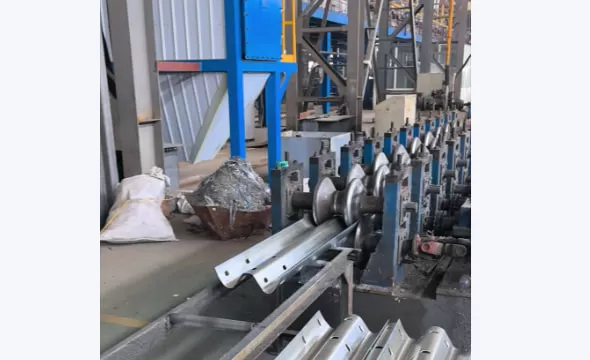
The gap between the low-cost fences on the market and the national fences is rooted in the production process. (b) complete process at the plant for the production of the formal waveform fence: the raw materials are inspected at the plant and the materials are checked at the factory and the flats of the school are placed in a continuous pressure-forming, position-stamping pores are cut off and the polishing and preservative treatment is processed and packaged for delivery。
Scrambling is a key process, using continuous scrambling devices to ensure that the wave radians are even and that the plate is not distorted; and the scrambling process requires that the snail position be unified, that the pore range error is controlled within the permitted range of the national mark, and that the on-site adhesion is protected from the failure of the bolt to match the hole. In many workshops, simple equipment is used, styling plates are distorted and perforated, and work is carried out with forced holes, damaging structural intensity。
The most important is the preservation process, which is divided into thermal impregnation of zinc, thermal plating of zinc + electrostatic sprays, and epoxy zinc coatings, which are also the most varied locations for plant prices. All components must be de-oiled, de-revealed and protected against coating and loss of skin before corruption。
Iv. Detailed analysis of the three preservative processes at wavewall production plants
A comparison of the heat-plated zinc fences with the spray fence details
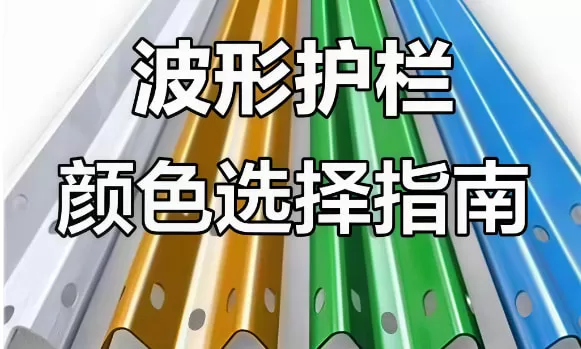
The beams are used in the open for a long period of time, sun-tan, salin corrosion, rain and snow wash, the preservation process directly determines the useful life, and professional producers recommend programmes based on the environment of the project site。
First, pure thermal impregnated zinc plating: the zinc layer is 85 mm thick, highly rust-resistant, suitable for inland dry roads, with a useful life of 15-20 years and medium cost, a common programme in the country's provincial province
Second, thermal zinc plating + electrostatic spray (zinc plating): zinc plating, high temperature solidification of outer polyester powders, colour selection for grass green, silver ash, white, taking into account rustproofness and beauty, preference for viewing areas and municipal roads, uv-resistant, non-diluting
Third, epoxy zinc preservatives: environmentally friendly coatings, contamination of non-heavy metals, meeting of environmentally strict control areas, excellent salt fog testing, suitable for coastal salt mist areas。
It is important to remind the poor producers that they use cold zinc plating, painting instead of thermal impregnated zinc, thin coating and poor investment, with extensive rust in six months, extremely high maintenance costs at the end of the project and no acceptance。
V. Standard quality quality review system for bower production products
Label salt fog test, thickness test laboratory map
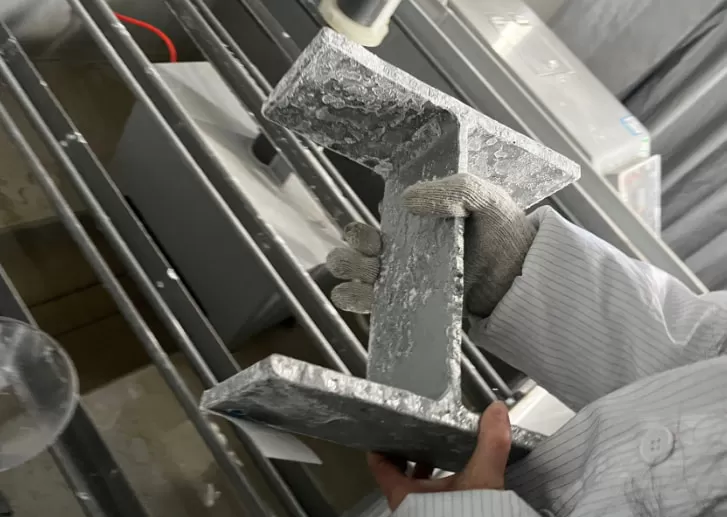
The wavewall producers who meet the requirements of the bid for transport works must establish a full quality check process, leave samples for each batch and issue a product certificate and test report。
The detection project consists of: base materials thickness testing, zinc layer thickness testing, mechanical stretching test, salt mist corrosion test, outer size mass differential, bolt anti-ray load test. The national flag requires that the high-strength bolts be joined to the whole anti-charged nitrousium 133kn to ensure that the interface does not break directly upon impact。
Formal manufacturers implement a system of spot-checking: raw materials are sampled at the plant, post-spectroscopy is formed, plating is performed after corruption has been completed, and substandard products are returned to work. Many brokers do not have the capability to detect, look only at the surface, do not have the ability to control the thickness of the zinc layer, the thickness of the base plate, and often have negative poaching problems with “point 4 mm, actual 3. 2 mm”, which is the greatest risk point for project procurement。
Vi. Auxiliary services for wave-shaped fence production
The wavewall site installation guides the construction figure
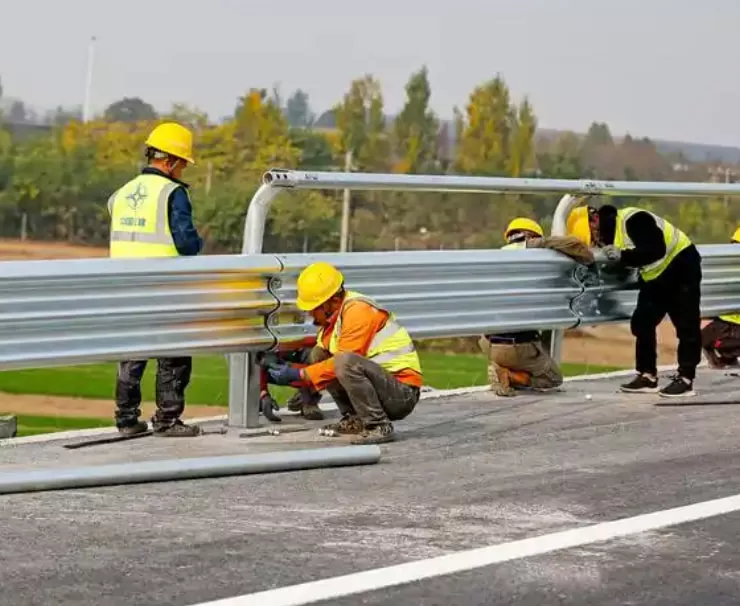
Speculation-based wave-shaped fences are produced not just by selling board, but by providing a full package of transport facilities to match the full process requirements。
First, drawing deepening and programme optimization: upon receipt of the construction drawings, the factory technicians review them, recommend a collision-proofing level for fast bends, steep slopes, bridge segments, and customize arc boards, gradient ends
(ii) alien processing: curved arc boards, height poles, non-posted head-processing, with small workshops having difficulty completing high-precision bends
Third, a combination of supplies: fences, poles, resistance blocks, bolts, gaskets in full, without multiple purchases, to reduce colour differences and mismatches of accessories
Fourth, logistics and delivery: standing stock in large plant areas, rapid delivery of conventional two-wave fences and controlled release of large volume engineering orders
Fifth, on-site technical support: arrange on-line or on-site mentoring of technicians to set wires, piles, collages to avoid installation errors leading to reduced collision resistance。
Vii. Electronic equipment corporations
A schematic of the quotron quotes
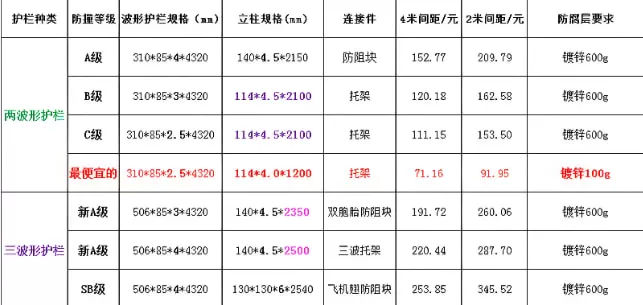
Many purchasers were puzzled, as were wavewalls, and there was a wide gap between the prices offered by different manufacturers, which consisted mainly of the base plate thickness, the type of preservative, the level of protection against collisions, the standards of accessories, transport distance, and taxes and charges。
The thickness of the base plate is core: the difference between the cost of 3 mm and 4 mm of steel is clear; the corrosive formula is low to high: cold zinc plating (not recommended) < hot zinc plating > zinc spraying; high and strong bolts are also divided into common bolts and high and high bolts of the national label, and the low price list is often replaced by normal bolts。
The formal manufacturer's quotations are broken down as follows: fences, poles, barriers, bolts, end-ends, processing fees, preservation fees, freight charges, clarity and transparency. Only the total price, no thickness, no standard zinc level are quoted, with an approximate risk of theft. The tender project for the project prioritized third-party testing reports, site qualifications and site inspection。
Viii. Procurement of place survey by bower production production
Comparison of source plants and brokers figure
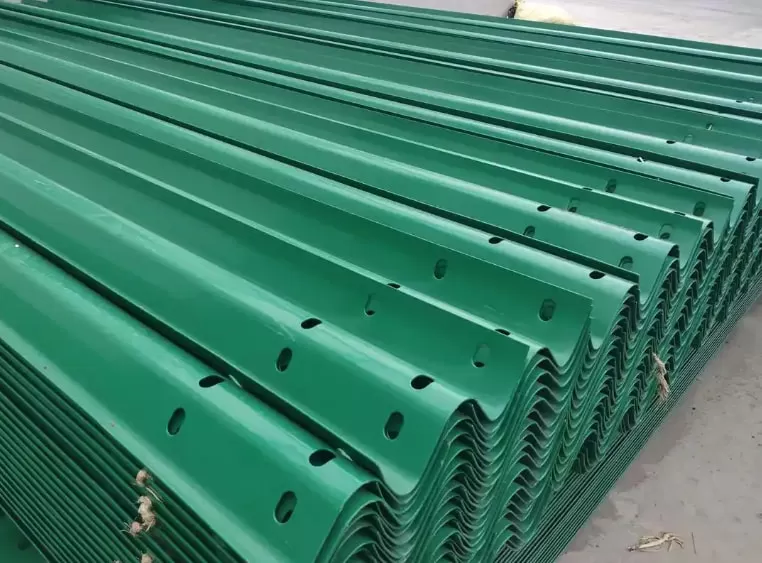
Many traders in the market, who claim to be waveguarders, are actually brokers who do not have production lines to control quality and cut deadlines. Let's be simple
1. Availability of site-based, production-line video and real-time workshop viewing
Whether to support site visits and spot sampling for inspection
3. Whether formal vat-specific invoices can be issued to provide complete certification and testing reports
4. Whether large quantities of orders can be taken over, custom bends, or alien ends。
A common pattern of intermediaries: verbal promises of national signs, actual negative sheets; no guarantee of a delivery period; pushes after sale and no person responsible for rusty, deformation problems. For municipal, road tender projects, priority is given to the selection of physical producers, reducing the middle links and reducing quality risks。
Ix. Comprehensive components of the worse transfer
Summary of the main points of the wavewall procurement
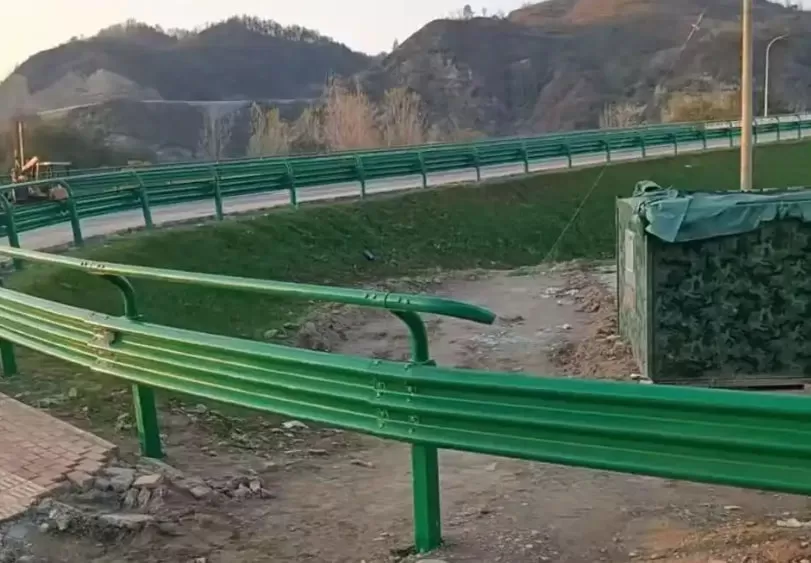
The wavewall producers are the physical transport facilities that combine pressure formation, piercing, corrosive, mass-checking, customised and integrated. The core product consists of two waves, three waves of sarcophagus steel fences, with the full set of anti-crash fittings, which are produced according to the gb/t 31439 state standard and are suitable for all types of transport works, including high speed, provincial arteries, rural roads and landscape roads。
The core of product quality lies in the selection of the base material, the thickness of the base plate, the preservation process, and the inspection of plant quality. Thermal impregnated zinc, zinc plating, and epoxy zinc are three types of preservation that fit inland, municipal landscapes, and coastal salt fog environments, respectively. In addition to product production, high-quality source producers can provide a one-stop service for drawings deepening, bend processing, ancillary supply, and site installation guidance。
In the procurement of the works, priority is given to checking the qualifications of the factory, testing reports, production capacity, distinguishing between regular factories, brokers and small workshops, avoiding hazards such as base plate erosion, corruption-proofing, non-faulting bolts, ensuring the impact of the wavewalls to meet standards, and successfully performing road protection functions through the successful acceptance of traffic projects。