


A suitable period of marriage of fruit trees is critical to the rate of marriage activity; marriage is premature, with low temperatures, aqueous fluids are not yet flowing, healing is slow and the rate of survival is low; and it is too late for marriage, and the logs have sprouts, most species are susceptible to erosion and low rates of survival. The practice shows that most fruit tree species are married during the abdominal period and have a more stable survival rate. In cases where plastic membranes are fully closed, or where the ears are closed by wax, the marriage period can be 7-10 days in advance。
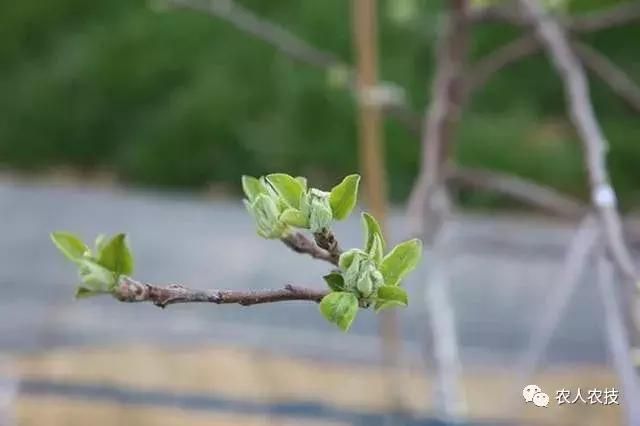
I. The breaking period
At the time of the sprouts, the sprouts were required to be fully developed, the logs were grown to a degree of consummation, generally ranging from 0. 5 to 0. 8 cm; at the same time, the formations of the sprouts and ears were during a period of great fragmentation. These conditions are met only for a long period of time suitable for marriage, but the operation also takes into account the emergence of the gestation year, local climatic conditions and special requirements of individual species. Usually in the north, the sprouts are usually carried out in the spring, summer and autumn seasons。
The spring sprouts generally began in mid-march and ended in early april; the summer sprouts began in early may and ended in mid-july; and the fall sprouts began in mid-august and ended in early september. During these periods, the temperature and humidity are appropriate, the nutrient content is higher in the logs and ears, and the logs have reached a certain level of roughness, and the sprouts are fully developed, resulting in a higher rate of indoctrination. The premature marriage, the poor growth of the sprouts and the thinness of the lumber; the late marriage and the cessation of the division of the stratification of the kelp and oscillating cells are not conducive to marriage。
The sprout period is also linked to factors such as flatness in the year after the sprouts, the way in which they are fertilized and the characteristics of the tree species. If the years of marriage are not smooth and the buds remain unprecedented, the period of marriage is not too early, starting at the earliest in mid-august, but it is too late for the tree species to heal and the rate of survival is significantly reduced. If the marriage is later than the second half of june, the day the tree leaves the bed, the sooner the marriage is sooner。
It has been found that early trees such as peaches, almonds, prunes, large cherries and pears, with the gestation period later than late june, and low levels of first-level seedlings by fall, should normally end by mid-june if the first-level seedling ratio is to increase. Another factor limiting the timing of the marriage is the problem of fluids, which should end as much as possible before the onset of the rainy season; walnuts sprouts between late may and early june, with a much higher rate of growth than in other periods。
Ii. The stage
The branches are usually introduced in the spring, and the suitable period begins with the flow of neptunium tree fluids to the early stages of new growth, beginning in the middle of march and ending at the end of april, especially at the best of spring break times, during which the lenses used must remain unpretty. The green branch is usually contracted between may and july, and the logs and ears are semi-woodized, and the logs are too old to have a significant impact on survival. Green branches of trees such as grapes are generally not to be married by the beginning of july; they are to be married later than they should be in the autumn, when new varieties do not reach the level that wood should be. It is also possible to carry branches during the winter, usually indoor, and is also known as the roots, since most of them are lumbered. When the fruit tree falls on the leaves, the ear is attached directly to the roots of a fruit tree, bound to the roots of the tree, bound into bundles and sands; it is planted in the spring of the following year, which can be a good-quality tree。









