


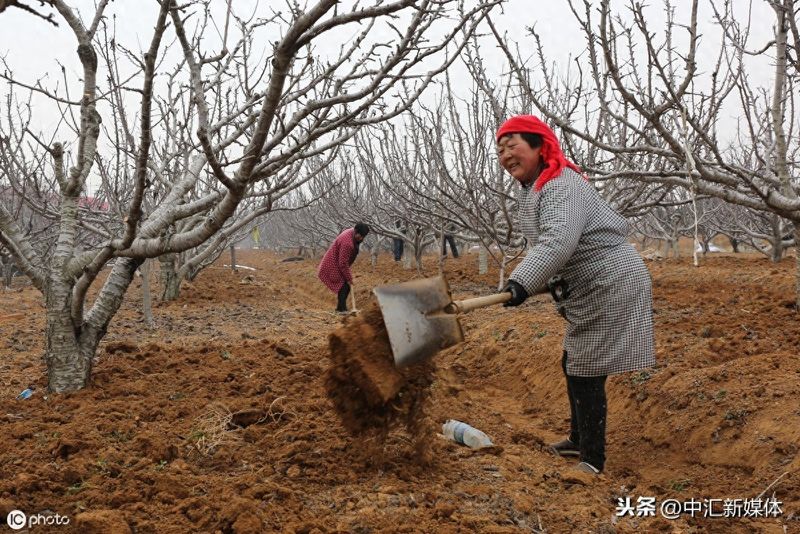
One, fattening without water
Orchard management is mainly in two main areas of fertilization and watering. Fertilizing and watering are inseparable. When fertilizer is applied to the soil, nutrients cannot be absorbed directly by fruit trees, and mineral nutrients must be converted into ionoids with moisture in order to be captured by the roots of the fruit tree, and then transferred to the tree by power such as evaporation pull and root pressure. Fertilizing without water is nothing but transferring the fertilizer to a place to store, not to use it. After fertilization, the soil is warm, so that it dissolves the fertilizer, without water or shallow water. In times of excessive drought, the application of fertilizers is followed by timely watering so that the fertilizers can be used quickly. In production, most people consider the application of fertilization and water irrigation as two unrelated measures, and “empty water” is more common. The best way to manage is to integrate water fat。
Ii. Open the branches of water, open the fruit of light
Cultivation requires more water and sufficient light if it is to produce results. During the larvae stage, the fat and large water can grow as quickly as possible, so as to create the basis for the construction of more outcome areas; after the fruit tree period, it is necessary to control the irrigation of the water, otherwise it will increase nutrient growth and affect sit-ins and yields. Orchard management is sophisticated, and it's important to get through the key, and the production potential of the orchard depends on the luminous capacity of the fruit tree. The high quality of fruit production in orchards is based on the large area of effective light and strong trees. Lighting is an important factor in improving the quality of fruit。
Three, small branches are a treasure
The big branches have a lot of results, and apples have a lot of larvae and a lot of new growth。
The first is that the right branches can be selected in many branches to cultivate the bone branches
The second is that a large number of branches and a large number of leaves can increase light and capacity and rapidly expand tree crowns
Thirdly, it is possible to take full advantage of the branches to ease the trend and promote their early outcomes and production. So, on the winter trim, the fruit branches are cleaned or updated in a timely manner。
Iv. Tree cutting is difficult to make decisions
Cutting trees is a mystery to ordinary people, and people who cut trees are respected as able. So, where can one be? It's actually a decision before the cut。
One is that most people don't judge the tree, the branch. I don't know if i should be able to do it with a combination or a split。
Two is not to judge the cut-back. I wonder where this cut will be redistributed next year, where it will grow and where it will weaken。
Thirdly, there is a lack of understanding of prior-period under-investments. It's also a cutting technique that invests in big cuttings differently from small cuttings。
Five, you don't always know how to cut. Cut
The fruit tree trim is undoubtedly a technical job. Technically, the brain is faster than the hand, which branch should be cut, which branch should be left, and must be judged first. It's common to see people trim and not to judge why. It is only by doing what it takes to get better and better, and it's getting bigger and bigger。
Cuts are designed to judge both the whole tree and the branch; they take into account the relationship between neighbouring trees and the post-cut reaction. Consideration should be given to the regulation of nutrition by cutting and the impact on the number and quality of outcomes. A lot of farmers don't cut their own trees. They're used to paying for people. It's hard to do this with people who cut fruit trees, don't know what you're doing, what you're doing. If you're in a hurry and you're afraid of delaying your work, let alone thinking about it, you're almost cut。
It's also a kind of tree cut. Why do some of the cut reflect well, others don't? The reason is that the judgment is less or wrong. That is why we advocate that the farmers themselves cut themselves, that their own orchards know best, that the cut is the most accurate, and that the chances of failure are very small. To learn to trim themselves, you must first understand the basic habits of fruit tree growth and master the basic requirements of cutting。
At the beginning, we can slow down, think more, do less, and become skilled. In fact, the fruit tree trim is a "broad job" and if the main contradictions are captured and resolved, there will be no serious consequences for the wrong cut. You know, you don't always cut, you cut, you cut, you see, you look wrong, you move, you think fast。
Six: slicing is not about cutting, not cutting
The fruit trees are trimmed, and different people have different morning techniques. In assessing the level of trimping, some tend to consider it heavy and others light. Is it light or heavy? What are the criteria for judging? It cannot be generalized. For example, in the case of a lopsided tree, it takes a little bit less to go to the big branch, and one or two at a time. The removal of large branches is a boost to the position of the tree, and if it is removed in large quantities, the tree body tends to become more lopsided in the second year, to be poorly controlled and to affect into flowers。
Wing trees go to large branches and to small branches, which is to trim the weight; but if the tree is weak, removes one or more large branches, and properly removes some of them, and concentrates their nutrients on the remaining branches, it will facilitate the shift of the tree to the middle。
Cuts are not uncut, cuts are not large, and are mainly directed at two extremes. Some people have a heavy mind, not from a tree's direction, but from a bud, and they can't do it as long as they have flowers, and it's too big, and some people can call it a "fence fence," which is a "holy nest." there are also those who are eager to solve the problem of the deterioration of light, who don't judge the trimmings, who seek the shape of trees, who go to large branches and have a large number of trims, who want to form at once, and who do not. In short, the weight and weight of shears vary from tree to tree. The weight of the shears is based on tree positions and is judged by the shearing reaction, with the aim of eventually achieving a reasonable number of leaves. The weight of the trim is only relative, not absolute。
Vii. New branches of old branches of old trees
Newly larvae, with nutrient growth greater than reproductive growth, is managed with a focus on increasing crowning as quickly as possible, maximizing the coverage of the whole garden, developing the skeletons and laying the foundations for the cultivation of productive trees. Apple branches are divided by nature into result branches and developmental branches. After entering the ferocious period, the result, especially the flowering of the balconies, collide with the fruit, causes the branches to fall down, weakens their growth and reduces their capacity year by year。
Eight. Half a tree, half a tree
"founded with half a tree and half a tree full of fruit" refers to the idea that there will always be fewer flowers and that there will probably be more flowers. This phenomenon is evident in various fruit varieties. Now that this is happening in all kinds of fruits, it's not the nature of the species that is inherent in them, it's the management. The direct cause of the phenomenon of "half tree fruit and half tree fruit" is nutrition accumulation。
The largest consumption of nutrients during flowering occurs in the physiology cycle of a year. In this period, there are no mature leaves on the tree, no photosynthesis, no nutrients, all the energy consumed by flowering comes from the accumulation of last year. There's a limit to the nutrient content of the whole tree, and there's a limit to the capacity to produce. The flowering of trees means that the nutrients consumed are so much that when the nutrients cannot support so many “children”, the “child” dies because of a “milk shortage”, leaving only “half-tree fruit”. On the contrary, there are few flowers on the trees, few nutrients consumed, high sit-in rates, and eventually, there's a lot of fruit。









