


Half-summer, known as the mandarin, the watching field, and so on, is a star of the sky and has been growing herbs for many years. Half-summer heights of 15 to 30 cm, wildness lies on the slopes, in the moist grass by the stream or under the forest, with long handles on the leaves and yellow and green flowers in the early summer. There is also distribution in tibet, around 3,000 m above sea level. Most of china is distributed. It is widely distributed in the yangtze basin of china and in the north-east and north-east china。
The half-summer is also called "samayu", "samaji", "samaji", "samaji", "samaji", "samaji" and "samaji", "samaji", "samaji", "samaji", "samaji", "samaji", "samaji", "samaji" and "samaji", "samaji", "samaji" and "samaji", "samaji", "samaji" and "samaji", "samaji" and "samaji" and "samaji" and "sama"。
Half-summer has a white tuber that can be drugged. The medicinal plants, which have damp, decomposition and oscillation, are used by veterinary doctors to treat the larynx. The half-summer species are toxic plants recorded in china's plant spectrograph database, which are toxic to the whole strain and are more toxic to the tubers。
Growing habits: semi-summer cool and wet climate and shaded environment, high temperatures, drought and strong light exposure, cold tolerance. The soil is grown on a sandy border with a thick, lax and well-drained soil, and the soil is not suitable for planting. It can be associated with fruit trees, agricultural crops, etc。
Half-summer is shallow, warm, wet, dry and dry. Summer should grow in the half-middle sun, fearing the bright light; under conditions of direct sunlight or insufficient moisture, seedlings can occur. Cyclops, colds, troughs can go through the winter. Half-summer, may-july, may-september。
It is more appropriate to require soil to be humid, fertile and deep, with a water content of 20-30 per cent and ph 6-7-neutral sandy land. Soils are generally less demanding, with the exception of saline, gravel, sandy, pasta and adhesive land, which are not suitable for cultivation, other soils are generally acceptable, but are better estranged from fertile sandy border soil。
Half-summer cultivation
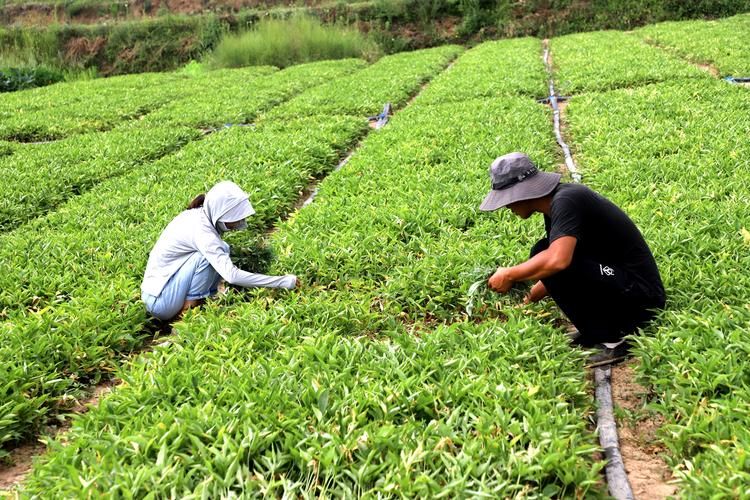
Land selection: half-summer, wet and fertilized, lax, well-drinked and neutral sandy land or land plantations, and semi-moderated slopes. Half-summer cultivation in plain areas requires the choice of plots that can be irrigated and have a higher topography, and the digging of drains before planting. After the selection, in october-november, the land was thrown deep around 20 cm, removed from the gravel and weeds and fertilized them。
Field management: the membrane should be removed at approximately 50 per cent of the mid-summer seedlings in order to prevent excessive internal temperature. Before going to the membrane, the wind was lifted from both sides of the compartment at noon, sealed in the evening, for several days in order to produce seedlings, and then all of them were removed. The seedlings were combined with the pine soil and the weeds were removed at any time。
After the membrane is removed, the ground should be watered in a timely manner. More water is required during periods of bulge expansion and soil humid estration should be maintained. The rainy season should exclude water accumulation. Plumbing requires soil to grow, and in the months of june and august, ripe buds and seeds are to be laid on the ground, where they are to be bred twice。
All the buds that grow in the long run are removed, contributing to the fattening of the tubers in order to increase production. After the mid-summer atrophy in november, the upper leaves of the ground and the fallen buds were collected, in which the membranes were laid on the surface of the plume。
Half-summer plants are small and are often pine-fed during their growth. In addition to the application of foot-based fertilizer, there will be a timely pursuit of fertilized soil, which will be ploughed with urea in late may or early june and combined with a ditch. If seed is not retained, the semi-summer sequence should be removed to increase tuber production. Drought pays attention to watering, and during the rainy season water is drained in a timely manner in order to prevent the accumulation of water in order to prevent its decay. Cultivate in a shadeless place, preferably between crops, in case of exposure in the summer sun。
Half-summer planting techniques
The semi-summer requirements are stringent for soil, fat, water, temperature, light, etc. In the management of cultivation, there is a need for flexibility in relation to their growth habits and environmental requirements, taking into account the natural conditions and the specific circumstances of each region。
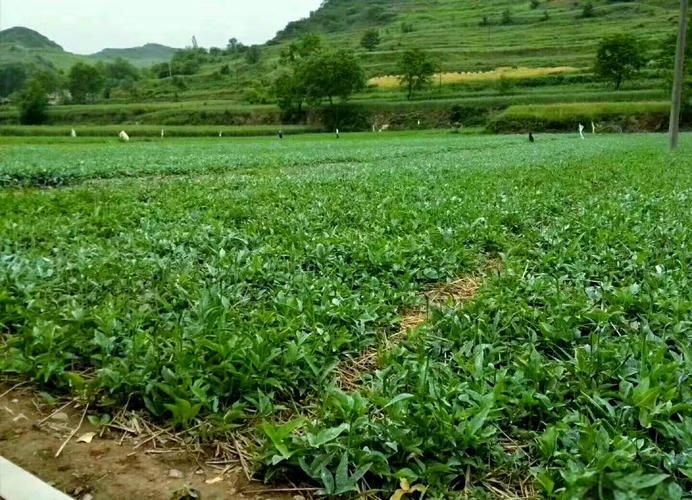
1. Land selection: land selection, re-enactment of organic base fertilizers, land previously sown with maize and beans, may be suitable for wet, fertilized, lax, neutral sandy land or ridges, or semi-massive slopes, or cornfields, oilseeds, wheat fields, fruit wood。
Bottom fertilizer requires acreage of high-quality farm fat with high levels of phosphorus-containing potassium to be cultivated early in the winter. Whether it is broadcast in winter or spring, the land before the freeze is watered once in order to help the soil weather and decompose. Keep it warm before spring. It is not appropriate to re-engage in half-summer, and a year-long cut in production is not evident, and a three-year and more severe cut in production. Half-summer mother plots could not be cultivated, otherwise the mother would be worse。
After the selection, the soil is tilled in the winter, about 20 centimetres deep, so that it is fertilized. In combination, 2,000 kg of cyanide per acre or calcium per phosphate per acre are applied to the ground and are converted to base fertilizer. Before it's broadcast, it's tilled again。
It then flattens to a height of 1. 3 metres wide and a ditch of 40 centimetres wide. It should preferably not exceed 20 metres in length to facilitate irrigation. It would be preferable to pour water before freezing in order to facilitate the next spring. In the case of dry soil before planting, water should be watered and allowed to permeate and dry the ground and sow。
2. Selection of the good species: the strong, sprouts, the cutting of hand-stained platinum slime as a good seed; the poor species of the softness of the soil, of the impurity or of the flow of water when squeezed, and the risk of decomposition after flooding. A high yield of willows and platinum leaves. And the half-sprouts of the beads shall not be seeded。
In due course, the spring sows the buds in the earth: in late february, in the area of the hwang and in the north, at the end of february and early march, when temperatures of 5 to 10 cm above the ground reached 6°c, they begin to sow, so that the seeds can be planted early and the reproductive period extended. The seeding has already been produced and can be grown at temperatures of more than 8°c from the ground of 5-10 cm before and after hoang huai。
This allows for 15 to 20 days of growth and development of the buds to take place in a small underground climate that is warmer than the temperature in the early springs, and is formed about 15 days before the leaf handles cross the ground. The buds form early, grow fast in the earth and produce high。
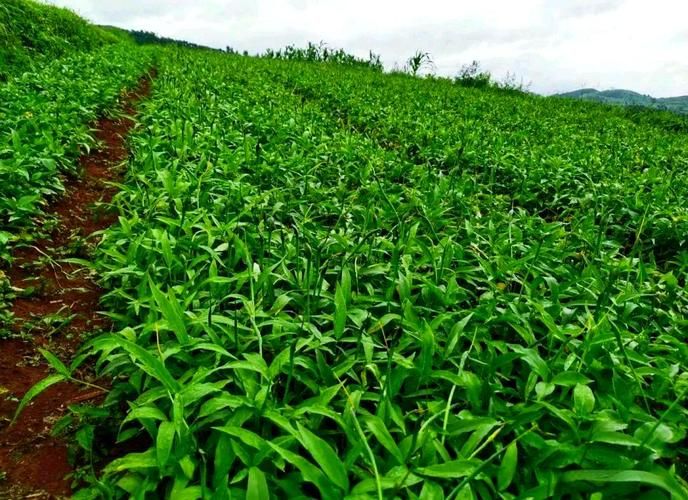
The soil is suitable for sowing: it is approximately 2. 6 times the diameter of the stem, depending on the vertical height of the bead on the handle. In order to make a bud underground, reduce one-time cultivation and form a new plant as soon as possible, the general plume is grown at a depth of slightly more than 2. 6 times its diameter, but not more than 10 cm and not less than 5 cm. When planted, some soil-coated biopotent fertilizer was planted on the tubs, with a marked increase in production。
Herbicides and evaporation membranes: the effects of ground spraying of alachlor for herbicide after spring are very significant, not only to maintain soil moisture but also to increase the temperature of the ground by about 4°c, allowing it to enter life 20 days in advance of the mid-summer. Herbicides are also sprayed when spring membranes are spread in the winter。
3. Fertilizer management: regardless of the method of reproduction, a permutation of water should be carried out before it is broadcast to promote seedlings. Cultivated environments are cold and wet and can be prolonged for half-summer long periods, delayed seedlings, favourable for light cooperation and more dry matter accumulated. Strengthening water fertilization management is therefore key to increasing production in the semi-summer period。
In addition to the application of foot-based fertilizers, four long-term pursuits were made. The first, after the first, in early april, covered 1,000 kg of human and animal dung per acre at 1:3; the second, in late may, covered 2,000 kg of human and animal dung per acre during the sprouts; the third, in august, was reprinted when fresh sprouts appeared in the mid-summer and the mother and half-summer shells re-emerged. (b) when the root is poured with 1. 10 dung, once every half month and gradually seeded after autumn
The fourth in early september, half-summer whole-sapling, applied 25 kg per acre of cortex fattening, 20 kg of calcium perphosphate and 10 kg of urea, evenly mixed with the mud in the ditch, spread over the earth's surfaces and act as abated soil and pro-graze. Frequent flooding of scarce human and animal dung is conducive to maintaining soil humidity and promoting semi-summer growth, thus contributing to increased productivity。
4. Reasonable combinations of species: the south, which is hot in the summer and has a long hot sun, grows semi-summer plots that are reasonably thick in leaves, and cool the sun in the summer to protect the seedlings. In combination with wheat, wheat is harvested only in the ear, leaving straws and leaves to protect the sun from seeding. Crops that are ploughed and mixed must be properly programmed and moderately shaded in the middle of the summer, while in the event of heavy autumn rains, drainage should be carried out in order to prevent wet mothers。









