


A number of farmers and friends who grow their own vegetables struggle with a problem when they plant peppers. In one field, in each of the planting pits, it's better to plant a pepper seed or two. The two types of planting are not absolutely good or bad, except that the applicable environmental, plot and management models differ. When planted blindly, there are constraints on plant growth, less flowering and more pests. A detailed description of the specific practices of single and double cultivation of peppers is provided today, as well as the choice。
Chengdujemi cleaning - a company specializing in public cleaning
Jelly-mi cleaning ads x
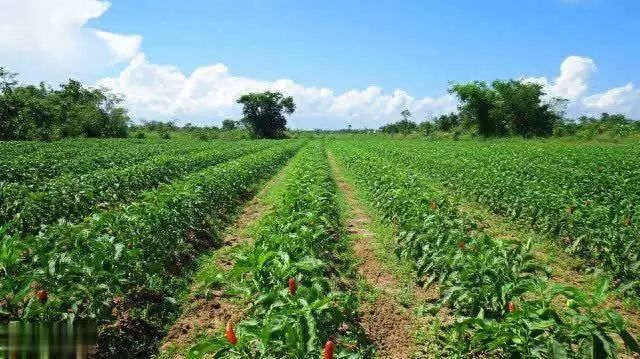
First of all, chili is planted on a single tree. This method of planting is currently used by a relatively large number of growers。
A single plant has a corresponding scope of application. Sufficient plots, well-ventilated fields, unshielded light, or the planting of large, large and swirling pepper varieties are suitable for single-plant planting. In addition, hot peppers are grown in large sheds, most of which also opt for monoculture。
Once a single plant is established, the spacing of the rows and the length of the stands is controlled. Open-air area, with a line distance of about 60 centimetres and a range of 40 centimetres above and below. Large huts are planted at a distance of 55 centimetres and 35 centimetres. According to this distance, there is only one pepper seed in each pit。
Harmonization of planting processes. First, the land is to be levelled ahead of schedule and the planting pits are to be dug according to the planned distance. The depth of the pit is consistent with the height of the ground mass of the paprika seedlings, so that it is neither too deep nor too shallow. Put the paprika seedlings in the pit, put them right in the plant, then fill the roots with soil. Upon completion of the landfill, the soil and the root line will be soared as to fit the root water。
The late management of monoculture is relatively simple. A single plant has a large space and leaves do not squeeze each other. Every day, we just have to do normal water and fertilizer work. When they grow too many side branches, some of them are removed in time to ensure ventilation in the field. The single paprika root system stretches into space and the absorption efficiency of nutrients is stable。
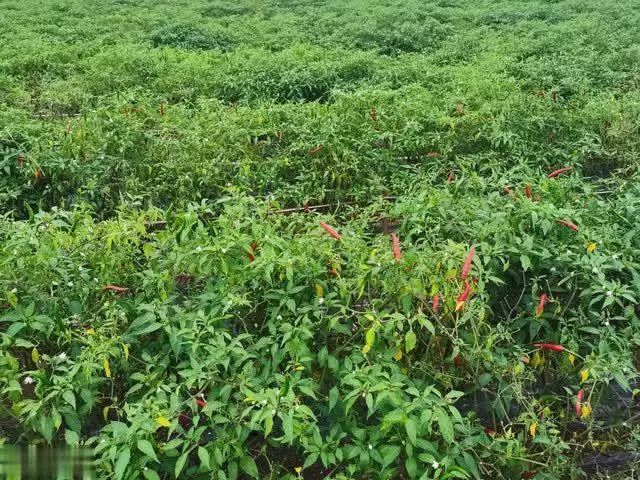
Here's to paprika double planting. This is mostly the case in garden gardens, small plots of land, and in areas of limited land cultivation。
The small size of the land allows for the choice of a pit to plant two seedlings in order to increase the number of peppers in limited space. Some of the pre-maturized, short-planted and small-separated pepper varieties are also suitable for double-planting。
Two plants are also to adjust their distance. Because there are two plants in a pit, the distance needs to be increased appropriately. Open planting, with 60 centimetres of range maintained, adjusted to 50 centimetres or more. The pit is slightly larger than a single-planted pit, which facilitates the growth of both seedlings simultaneously。
At the time of planting, two pepper seedlings were released into the same planting pit, leaving a distance of about five centimetres between the two seedlings, rather than being attached together. It is then filled with soil and then watered with root water. The water should be ploughed to ensure that the roots of both seedlings are absorbed。
There are additional requirements for field management for double-plant farming. The two plants are long to the middle and late, and the leaves will intersect and ventilation and light will be affected. During daily patrols, the bottom leaves and yellow leaves are cleared in a timely manner, and the dense internal branches are removed. Water and fertilization are subject to the principle of a small number of times that two plants consume more quickly and that the lack of fertilizers and water directly affects the outcome. There is also a need to pay more attention to pests and pests, to close inter-plant distances, to speed up the spread of diseases and to address problems in a timely manner。
Many do not know whether to choose a single or a double, and can be judged on their own terms. Land is sufficient, management is sought, and large pepper varieties are grown, giving priority to single-plant farming. The small land area, increasing the number of plants per unit area and growing small pepper varieties, is chosen for double planting。

Middle-aged households: detailed analysis of the cost of installation of 10 kw photovoltaics
Regardless of the type of planting, there are common management points. In the early stages of the migration process, the soil is kept wet and not frequented by heavy water. Plantation moves into the flowering phase, refuelling fertilizer in a timely manner and securing nutrient supplies. Weeds appear in the fields and are cleaned up in the first place to avoid competition for water and nutrients。
In general, the process is not complicated by single and double cultivation of pepper. The core is the choice of the appropriate approach, combining the size of the home plot, the chili variety and management energy. The strict control of planting distances, subsequent barbing and management of water fertilizers, both models allow for normal growth of peppers and normal results. By mastering these underlying practices, we can avoid planting faults and stabilize the overall production of peppers。









