


Many farmers who grow peppers experience the same problem every year. After shifting to daejeon, the earlier period seemed normal and after a dozen or even 20 days, the seedlings remained small, did not produce a tree, did not grow new leaves, and the difference between normal peppers was clear。
This is the case for many people, and the first reaction is to catch up with fat, and to think that a seedling is short of fat. Not only do the seedlings not grow, but they also produce yellow leaves and rotting roots, which directly result in rigidity and late recovery。

Middle-aged households: detailed analysis of the cost of installation of 10 kw photovoltaics
The small stagnating growth of peppers is not a single cause. In order to solve the problem, there is a need to find the right cause and to manage the problem. I will now describe, in conjunction with the actual situation of open-air vegetable fields and sheds, all the reasons for the low size of the paprika seedlings and the corresponding solutions, which can be done directly by all operators。
First, misplanting causes root damage and slow seedlings fail. Most of the hot peppers are frozen, and the problem is the transplantation. When the seedlings are removed, the roots will be damaged if the strips are too small and bare. The seedlings were planted too deep, the roots were buried too thick and the roots were not breathing well. It's too shallow, it's hard to catch the ground and it's unstable。
These conditions will keep the paprika seedlings in a state of slowness and prevent them from entering normal growth. Sapko is watching as he survives, but he does not grow new roots and have new leaves. The solution is simple, and the seedlings that have been planted do not move frequently. The surface soils are compacted with plots of subsurface pine soil, increasing soil permeability and promoting new roots. Follow-up planting of paprika seedlings, ensuring soil transfer, controlling planting depths and avoiding rooting。
The second point is that the soil environment is inadequate, resulting in the non-growth of the paprika root system. Soils are the basis for the growth of peppers. The planting of plots of land is adhesive, with long-term water accumulation, with no air in the soil, no stretching of roots, no absorption of moisture and nutrients and no growth of seedlings. Low spring planting temperatures, slow rises in the tectonic layer and low activity of the root system can also result in short-lived seedlings。
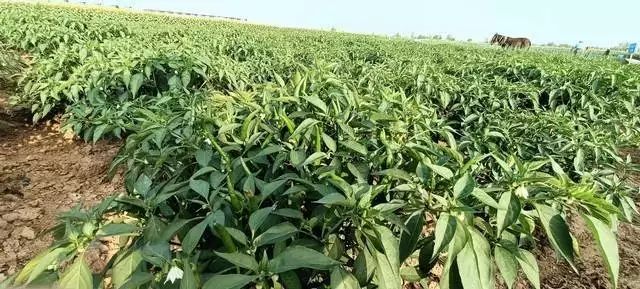
In order to deal with such problems, first of all, it is necessary to carry out drainage and ensure that the fields are free of water. When the rain is over, the soil is loose, breaking the slab. Low-temperature weather does not have to rush to fatten, but only to control the pine soil, raise the temperature of the soil, and when the roots recover, the seedlings naturally recover。
Thirdly, inappropriate fertilization triggers rigidity. Fertilization in the seeding season is the management focus and the most prone to error. The low absorption capacity of the root system during the early stages of paprika production, when high concentrations of composite fertilizers, urea or one-time fertilization are used, can lead to higher soil salinity and slight fertility。
Fatty does not burn the seedlings directly, but it inhibits the growth of the roots and keeps the seedlings short for long. All fat-tracking operations are prohibited until the seeding period is fully slow. When the seedlings become alive and stable, the pursuit of fattening is dissolved only by thin water, following the principle of a small number of times, which prohibits heavy and heavy fat. The application of fertilizers has led to the halting of small plots, the fertilization of fertilizers and continuous pine soil control of water, which can be restored in a week。
Fourth, there is an overdensity of cultivation and insufficient ventilation. In order to increase production, many farmers are planting high concentrations of peppers. The saplings are too small to cover each other's light and the ventilation conditions are deteriorating. In high-density environments, paprika seedlings do not separate, spread leaves, grow small and grow slowly。
The solution is to raise the weak, the sick and the healthy. To ensure reasonable space in the fields to meet light and ventilation needs, seedlings can return to normal growth。
A fast recovery of the growth of rigid pepper seedlings would suffice to be managed according to a single process. The first step is to stop fertilization and watering. The second step, the shallow pine layer, increases the soil air. The third step is to bridge the drain and eliminate water from the fields. The fourth step is a rational one, improving the field environment. Finally, depending on the sapling, a small amount is added to the special fat for the seeding period。

There's no tv in the living room. It's popular now
In the absence of complex techniques, finding the causes of rigidity and not blindly managing them will allow the seedlings to grow normally, to grow robustly and to lay the groundwork for later branching, flowering and results。









