


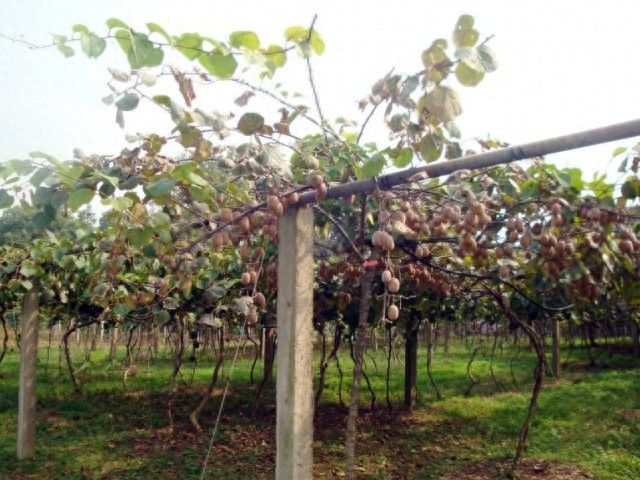
The monkeys, also known as ecstasy fruit, are very popular because of their high nutritional value and their resistance to cancer and their unique taste of sour sweets. Cultivated areas have also increased in recent years。
I. Botanical properties of the monkeys
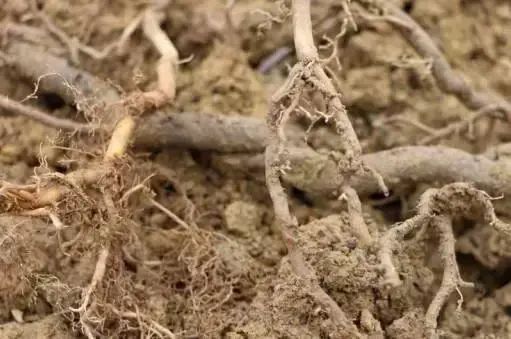
Roots: the main roots of the monkeys are underdeveloped, secondary roots are well developed, the root cortex contains abundant starch, the roots are widely distributed and can absorb large amounts of moisture and nutrients. The catheter is well developed, the root is heavy, the water is watery, it's fat but it's burning。
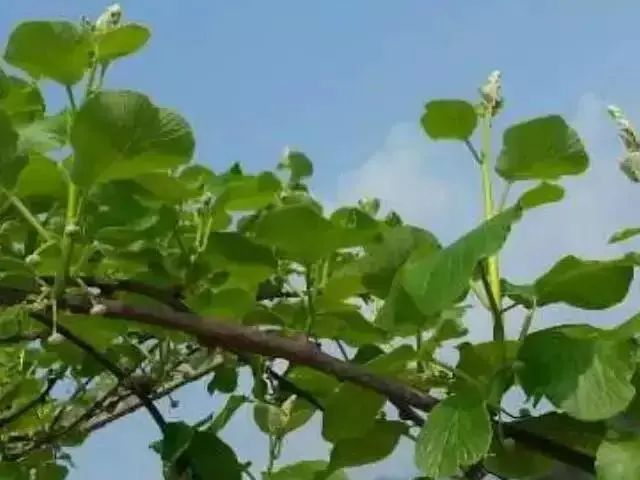
Chickens: the high annual growth and capacity of the monkeys to climb up to 3-5 m per year, with a maximum of 8 m or more, and the ability of the top of the chickens to rotate against the clockwise at the end of their growing life, are characteristics of their growth。
The chickens are divided into three groups, which can be divided into long branches, growing branches and short branches, depending on their strength and strength。
The sprouting of long branches from the main chicken or the base of branches, which are growing up and flourishing but are underdeveloped and difficult to form。
The branches of growth, which originate mostly from the centre of the branches, are fully developed and are mostly the result of the next year's outcome。
Short branches, from within the canopy or from the bottom, grow weak and become self-defeating。
Fragmentation: divided into two parts: biological and morphological. Of these, physiological differentiation took place mainly in the period between july and september of the year before the flower was blooming, and in the period between the bud and the flowering year. The bud grows mainly at the bottom of the result, section 3-7, which is a mixed bud。
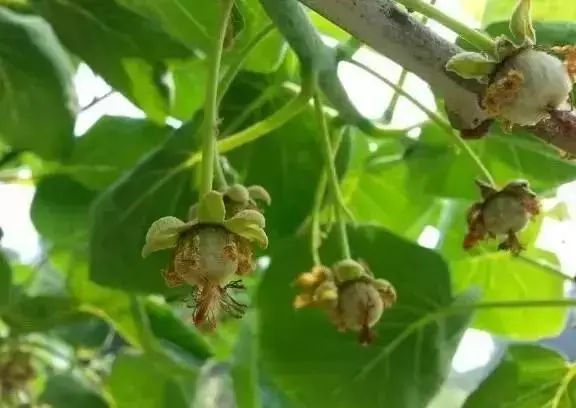
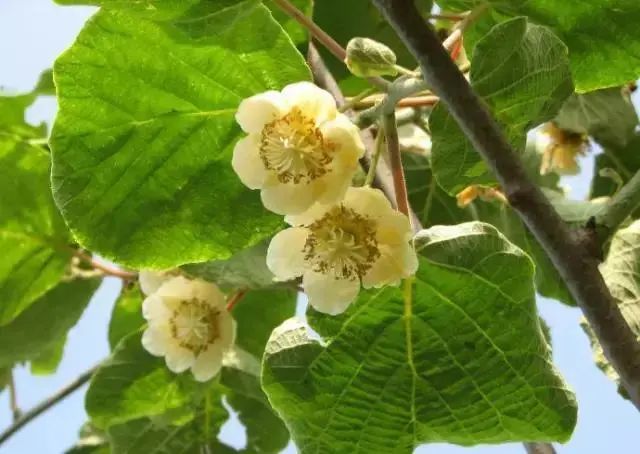
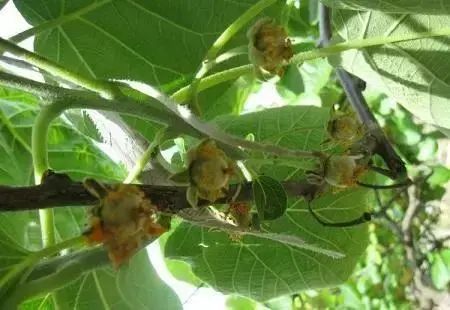
Flowers and fruits: the flowers of the monkeys have obvious characteristics, divided into females and males. Although morphologically expressed as female and male, physiologically, it is shown only as a flower, i. E. A female who degrades, a female who degrades, and a male who spends longer, but at the end of the period。
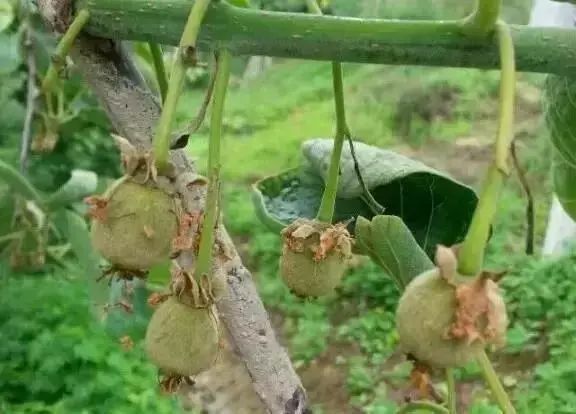
The fruit usually matures in september-october, typically taking 120-140 days from fertilization to maturity, each containing 200-500 seeds in larger quantities, and the seeds are black or dark brown. The fruit is collected and stored at room temperature for up to 20 days。
Ii. Environmental needs of monkeys
Temperature
Pistols are warm and grow well at moderate temperatures, as in the case of chinese monkeys at 14-20°c and delicious monkeys at 13-18°c. Monkeys are prone to freezing in cold weather, which can be caused by temperatures of around -10°c in the winter, and they are prone to freezing in spring during their spring season. There is therefore a need to do something to keep the cold warm。
Water
Monkeys grow well in well-fed areas, such as mountainous areas where the rains are abundant. Despite the high demands on moisture, the gills are insatiable, and prolonged water accumulation can lead to the decomposition of the roots of the gills, leading to death in serious cases. The summer weather is dry, the air is not wet enough, the monkeys do not have enough moisture, the growth and development of the species, and irrigation is needed in a timely manner。
Light
The sun is warm but sensitive to strong light and direct light, and belongs to the medium-opportunity tree species. The lack of sunlight in adult trees can lead to the growth and death of the branches. But if the fruit is exposed to strong light, it is prone to sunburn。
Soil
The monkeys are suitable for growing on the deep, rich, air-transmitting, well-drained, organically rich sandy and gravely border. Therefore, the selection of the field for the cultivation of the monkeys should be made in the direction of the sun, with easy drainage irrigation and fertile soil。
Iii. Summary of the technique for the cultivation of monkeys
Park selection
Geographical location: when establishing a production base for monkeys, water sources should be selected, with easier access. In particular, mountainous areas with complex terrain must take into account the availability of roads for the movement of products。
Altitude and topography: the orchard gardens should be built in high-altitude mountainous areas, but not more than 1,000 metres above sea level. The hilly terrain is thick and well drained. It is a more suitable planting area for the monkeys. But there must be a water source in case of high temperatures and drought in the summer and autumn. The ecological conditions of the mountains are appropriate, but care is taken to select the slopes, slopes and slopes. As far as possible, a slope of less than 15 degrees or a more flat segment is generally selected. It is desirable to choose a south-south or south-east-south wind-shield slope and a northward route. It is not appropriate to choose the top of the mountain or other wind vents, especially in the direction of the growing season。
Soils: it is desirable to select micro-acid soils that are deep in the earth, estranged and fertile, well-drained and have adequate water protection capacity to avoid planting in the viscous soil。
Set windproof forest
The poor wind resistance of the monkeys, with the spring winds often breaking new ground and damaging leaves and buds; the summer dry heat that reduces air moisture, causes extensive evaporation and drying of the soil, and the foliage of the leaves hinders growth; and the autumn wind that rubs fruit and affects the value of commodities. As a result, wind-proof forests are to be built prior to construction。
Tree selection: pussy, sugi, wetland pines, willows, sugi, yang, seng, seng, hong, hong, shell, etc., co-operates with the green and falling leaves, the wood and the shrubs, mainly with the green tree species, to prevent the wind from april to may。
Plantation
Female-to-female matching: because of the female-to-male plant of the monkey, the female-to-male plant is to be planted with the female-to-male plant, and care is taken that the flowering period of the pollinating male-to-female strain is consistent with the female-to-male ratio, which is currently common at 5-8:1。
Cultivation density: cultivation density generally depends on shelfing, land conditions and cultivation management levels. The soil is thinner and less fertile; the “t”-shaped shed is more dense than the flat roof. For fences, the range is increased by 3 m x 4 m and the range is increased by 3-4 m x 4-5 m for “t” formations and by 4 m x 4-5 m for flat roofs。
(c) timing and method of planting: the monkey can be planted from the fall of the leaves until the early spring spring, so that it can be planted as soon as possible after the fall of the leaves, which should not be planted later than the end of february. The roots of the monkeys are mainly fleshy and resistant to trampling, so it is advisable to plant them with loose and fragranced topsoil to fill the roots, with soft feet and water. Retract it properly and leave three to five full buds. A little bamboo pole of about 1 metre long, placed by the tree, and fixed the seedling to avoid wind。
Post-plant management: when monkeys are planted, they are often kept wet and fertile, protected from stains, drought, higher survival and higher growth. Two months after planting, 50 to 100 grams of urea per unit, each with a pixie biostimulant (see figure ii). Five hundred times the root application; two in the summer and autumn dry seasons to cover the tree plate so that it is wet and drought-proof; three to ensure that there are more side branches and to promote multiple spasms; and four to keep as many mid- and lower-side branches as possible, increase the total area of leaves, boost the roots and lead to early results。
Fertilizer water management
(b) base fat: most applied during autumn and winter seasons should be based on organic fertilizers, supported by quick-impact fertilizers, applied in the form of strips, ditches, etc. In general, adult trees produce 50 kg of applied weight + 0. 5 kg of balanced compound fat + 1 ~ 1. 5 kg of perphosphate。
Long-term pursuit of fertility: the number and duration of pursuit varies according to climate, tree age, tree position, soil, etc. In general, high temperatures and heavy rainfall or sandy soil are prone to loss of fertilizers, which can be pursued many times over, but instead can be properly reduced. It is desirable that the number of fertilizations followed by larvae be low and that, as the age of the tree increases, the number of outcomes increases and the number of fertilizers decreases。
Pre-famination 1 mainly nitrogen fertilizer, which supplements the demand for nitrics for flowering fruit, should be followed up on weak trees and large trees with many results, such as strong trees, sufficient base weights and the possibility of postponing pre-flower fats until after the flower. A combination of 0. 5 ~1 kg of ferocious bio-stimulant (the root application) per balanced fertilizer is 300 times the liquid rinsing. Spraying of potassium phosphate on the leaves enhances the nutrition of the tree body and has a combination of anti-frozen resistance。
After a flower, after a flower, after a flower, after a flower, after a flower, after a flower, after a flower, after a flower, after a flower, after a flower, after a flower, after a flower, after a flower, after a flower. Fertilizer choice is the same。
This period has been characterized by a rapid expansion of the fruits, and with the booming growth of the new ones, the bouquets have been physically divided simultaneously, with the following types of fertilizer being applied with nitrogen, phosphorus, potassium and trace elements。
4 e-fertilizers the real accumulation of this period is approaching final size, the starch content in the fruit begins to decline, the soluble solids content rises, and the fruit moves into the accumulation of nutrients. Fertilizers are dominated by phosphorus, potassium fertilizer, leaf-faced, and can be sprayed with 800 times more fluid from the potassium-phosphate source bank to enhance fruit products。
Drainage irrigation: the kippers need to ensure that the soil is humid throughout their growing life and that there is no more or less moisture. Therefore, hydroponic management of monkeys, such as the ease of irrigation during droughts and drainage during floods, is required to meet the water requirements of monkeys。
Integrative trim
(b) array: the monkeys are well-trained and need to have a support frame in place for planting, with the usual main fences, a peach stand and three sheds. Select the appropriate frame, based on the characteristics of the t-form and t-form or t-form or t-form or t-form, t-frame or fence, depending on the outcome characteristics of the t-shirt, i. E., the t-form or t-form or t-fence。
Orthopaedic: reasonable plasticization based on the frame. In the case of tectonics, a strong and strong chicken is chosen as the backbone, and two poles are fixed on both sides of the backbone to guide the chickens up. Thus, 10-15 cm under the shelf is to be taken from the heart, the branch is to be split, two chickens are to be grown on both sides, and at least one parent is to be left on the chicken。
Shearing: to include summer and winter trim. One summer trimmed mainly to regulate the size of the branches and the volume of the chickens. Cutting is done by removing thin branches, long branches and gills, while taking a heart on common chickens, taking a heart on or shortings on long-lasting chickens and long-haired chickens; the effect of winter cutting is to prevent injuries, mainly by trimming thin branches, sick branches, long branches and overt branches。
Pest control
The main diseases are ulcer disease, root rotor disease, black spots, flower rotor's disease, and dysentery disease, among others, are among the most frequently infected by the monkeys. The main pests are aphids, mackerel, roll moths, gold turtles, foliage, etc。









