


Hello, you growers
In 2026, the rain was more sticky and longer than in previous years. Since its entry at the end of may, the south has been raining almost daily, and the air is so wet that it can wring out water. Many of the comments from the back of the village were sad: good gardening, moths coming out of the rain – bad root of cabbage, pepper drops, cucumbers with sick spots, bean bean bean bean bean bean bean glowing. I couldn't sleep in a hurry when i was working for half a year and looking at the harvest and being dragged by the rain
Actually, it's hard to grow food in the rain, and it's hard to find three things: the roots of the water, the wetness, the lack of light. These three approaches, which are difficult for many people to survive year after year, can make the seedlings alive and productive if they are able to grasp their temperaments and use earth-to-earth methods without paying for expensive medicines. Today we're talking about the latest field experience of 2026. It's simple, it's cheap, it's useful, and you can clean up the garden
First, the number one problem: rain-fed roots, soil slabs, and fast-growing seedlings
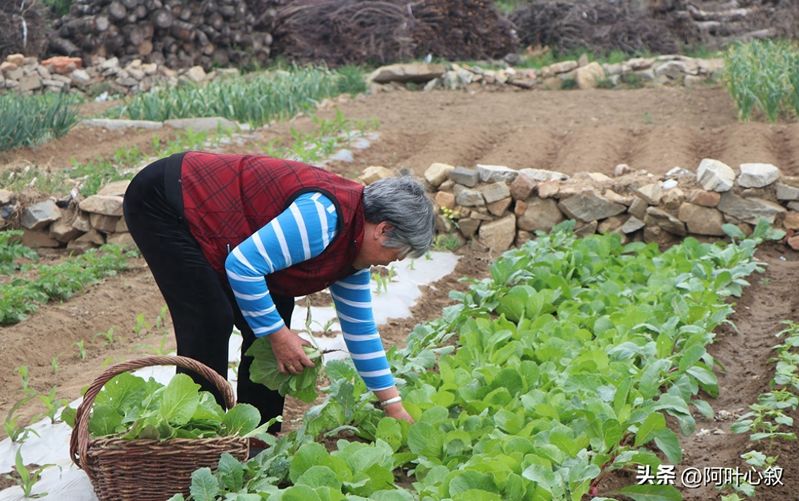
The first thing you're afraid of is water. After the continuous heavy rains, the pits of the vegetable pits are low, and the rain cannot be drained and suffocated. Vegetable roots are in the wet mud for a long period of time, and they can't breathe, they're dark, they're rotting, they're yellow, they're gently pulled out and they're all gone。
A lot of old people wonder, "i'm all watered up every day. Why is it so rainy? “the key difference is in soil permeability. When water is watered, the moisture is slowly permeable and evaporated; the rain is pouring down in the rain, the soil is saturated, the air is not able to enter, the roots are like “the people in the water”, and the length of time is bound to suffocate and rot. And with the heavy rains, the ground is stained, hard to breathe, and the roots become faster。
Corresponding method: open ditches plus pine soil after rain, so that root is "breathing well"
This is a land-based approach focused on the agricultural sector in 2026, which can be done by households at no cost and with greater impact than fertilization。
1. Before it rains: rise up and dig deep trench
The flats are the most easy to accumulate and are converted into high-strength plantations, which are about 20 centimetres tall, with 15 centimetres deep and 20 centimetre wide dug in the middle. As a result, the rain falls into the ground and flows along the slopes into the ditches, which are quickly drained away, and the earth is always dry and the roots are not bubbled。
Light leaves such as cabbage, lettuce, spinach, and peppers, tomatoes and eggplants are suitable for high-saltage. The garden that has been planted will not be able to rise to the ground and dig a shallow ditch in the middle of the course and lead the water out as soon as possible。
2. After the heavy rains: loose soil within 24 hours, break the knots
Wait, wait, wait, wait, wait, wait, wait, wait, wait, wait. The purpose of the pine soil is to break the surface of the sheeted ground, to drill the air into the soil, to help the roots to breathe, and to evaporate the excess water and prevent the rotting roots。
Many old people are lazy, the rain stops for days, the earth is hard as a stone, the leaves are yellower every day, and it is too late to find the rotten roots. Remember one thing: one inch loose after the rain and three points strong。
3. Small technique: pellets, small gardens are more effective in doing so
In the case of family members who grow their vegetables in foam boxes and bouquets, it is not necessary to rain outside the house and move under the roof and on the balcony. If the rain is pouring water, water should be drained with a few small holes beneath the pelvis wall, then with a little fork, into the soil, with loose soil and through air。
Ii. Question no. 2: high wet fever, bacterial outbreaks, continuous yellow leaf rots
The second biggest problem in the rain is the disease and rapid spread. High-temperature and wet environments are the “hotbeds” of the fungus – frosting, greyy disease, disease, morbid disease, one wave at a time; aphids, vegetable geishas, snails, slugs, snots are following, leaves are chewed to death, and a good garden changes in a few days。
Many old people are in a hurry to spray pesticides every day, and they spend a lot of money, which is not working well, even with pesticide residues that they are afraid to grow. In fact, the point is not to treat the disease in the rain, but rather to prevent it; not to “multiplier” but to “moisture, ventilation”。
Corresponding method: ventilated wetting + cleaning of leaves + physical insecticidal, with low use of medication
This is a “green disease prevention approach” promoted at the agricultural station in 2026, which is not dependent on pesticides, is safe and effective and is particularly suitable for small gardens。
First step: leaning leaves and giving the vegetable garden a “windlight”
The vegetables are too thick, the leaves are too strong, the ventilation is bad, the moisture is not scattered, and the fungus is the easiest to hide. In the middle of the morning, all the old leaves, yellow leaves and sick leaves on the bottom of the vegetables are removed, along with the branches that are too thick and fruitless。
The cucumbers, the bean horns and the silk canals, so as to attract the chickens on the shelf in time to keep them on the ground; tomatoes and peppers, so as to remove the overlapping internal leaves and ensure ventilation and light around each dish. Remember: leaves within 20 centimeters of the ground are all wiped out, and the fungus is half。
Note: don't cut leaves in rain and in the middle of the day. The wounds are easily infected with the disease, and the more the disease is cut。
Step 2: cleaning up sick leaves in a timely manner and leaving no “smooth source”
A yellow, rotting leaf and fruit were found and immediately removed, and the vegetable garden was taken and thrown away, not in an inch or in a ditch. These leaves are the “home camp” of the fungus, which remain in the ground, with rain pouring, the fungus running around and healthy vegetables being infected。
The vegetable gardens are wetter after the rain and the disease is spreading the most rapidly, visiting every morning and finding that the leaves are being cleaned in time to keep them from spreading. This step is ready to reduce the incidence of disease by 80 per cent。
3. Step three: less drugs, more medicines, priority for physical pest control
In the rain, the disease is protected from disease, which can be done without pesticides and with earth。
- wetting: after the rain, a little grass-wood ash is spread around the root of the vegetables, both to suck water to dehumidise and to prevent disease and to replenish potassium fat。
- snail slugs: put a few cabbage leaves by the garden at night, attracts a pile the next morning and throws them away; or put some tea seed powder around the root, which can drive the snails away。
- extortion: it's really important to spray it, to spray it in the middle of the sun, to spray it in the back, not to spray highly toxic pesticides, to choose low poison, to be safe, to be strictly stated, and not to add any more。
- vegetables are grown in large sheds: the rain sheds are closed to protect them from rain, the sheds are opened in a timely manner after the rains have stopped, and the humidity is controlled by less than 75 per cent and the disease is much less。
Iii. Question no. 3: lack of light, insane elders, small flowers, small results
The third big problem in the rain is the lack of light. In successive rainy days, the sun cannot hide, and when the vegetables do not see the light, they are “crazy” long — long and thin, thin leaves, light colours, looking at them fast, weak and windy, with little flowers, trouble and little and bad fruit。
A lot of old folks ask, "why is my cucumbers and bean bean bean bean bean beams not working?" most of them lack light + too much nitrogen fat. There is insufficient light in the rain, weak luminous co-operation of vegetables, nutrients are used on long leaves, long troughs, and no energy to bloom; combined with heavy rain in the rain, nitrogen fats in the soil are concentrated and are more likely to grow。
Corresponding method: photolithic fertilizer + mounting seedlings + foliage supplementation, control of long-term growth
It is not expensive to buy fat, but to adjust the way it is managed, and in 2026 many vegetable farmers will be able to do so with a significant increase in the number of seats。
1. Fertilizer control is key: less nitrogen fertilization, additional potassium phosphorus
No urea, no carbon ammonium can be applied in the rain, and the longer it is, the leaves are growing。
- rainy day: stop fertilizing the roots, which washes out the fertilizer, and burns the roots easily。
- after the sun is clear: soil is dry, with less phosphate fat, such as potassium phosphate, water on the roots or on leaves, strong, flowering and multiple results。
- vegetables (buchts, lettuces): potassium can be properly filled so that the leaves are thick, tasteful and free。
2. Busted seedlings: prevent inversion and increase light
The long vegetables are thinly distilled, the soil is soft after the rain and can easily fall back. Cucumbers, bean horns, tomatoes, peppers, pre-positioned racks, with vines and plants tied to them, to help them grow。
This would prevent inversion, but also allow the branches to stretch, receive more light, ventilation and reduce disease. Don't tie it too tight, leave a hole in it so that it doesn't stomp。
3. Light + leaf fertilizer: fast-refilled nutrition, yellow leaf prevention, promotion of results
In successive rainy days, the light is not enough, the vegetables are not nutritious and are prone to yellow leaves and flowers。
- growing vegetables in large sheds: in the middle of the day, the light can be turned on and the light can be filled four to six hours a day to prevent the master。
- vegetable gardens: after the sun is clear, sprouts of foliage, application of 0. 2% potassium phosphate + 0. 5% urea solution, spraying of the right and the wrong side of the leaf, quick nourishment, greening and thickening of the leaves, increasing resistance and promoting flowering。
- note: leaf-based fertilizers are sprayed in the middle of the sun, at high temperatures at noon, and in the middle of the rain。
I'm going to grow food in may rain and remember these three little details
In addition to the solutions to the three above-mentioned problems, three small, but important, details are being shared。
1. Do not water or fertilizer in rain
There is enough rain in the rain to stop watering, whether in the morning or at night. Even less so, rain washes out fertilizer and can lead to fertilizer and the burning of seedlings。
2. Timely seedlings, soil cultivation after heavy rains
After the heavy rains, many seedlings are washed down and their roots are exposed. When the soil is semi-dry, the seedlings are raised and the soil is grown on the roots, with a fixed plant, and the root system is protected, so that the roots are not dry and dry。
3. Timely collection of mature vegetables
The rain is very wet and mature vegetables (such as cabbage, lettuce, cucumbers, bean bean horns) are prone to decay and deterioration. Close to maturity, take it off quickly, both to reduce losses and to reduce the burden of growing plants and to make the small fruit grow better。
End topic discussion
You old people, the plum rain in 2026 is really sticky, and it's not easy to grow food, but it's only natural and earth-to-earth, and all three ways to get past it, the roots, the sick and the heads。
The three dilemmas that we're sharing today, and the equivalent, are the latest field experience, simple, cost-effective and useful. Have you ever had a bad root, yellow leaf, bad luck in your garden? What do you usually do? Do you have any ideas
Welcome to the comment section, where we share our experiences, learn from each other, clean our gardens, and have fresh food every day









