


Whether they grow grass on their own balcony or in small gardens, many friends have a common desire to grow new seedlings easily and easily without paying for them, without waiting for them to sow, and with their own existing branches. It saves the cost of buying flowers for seedlings, and it increases the number of preferred varieties, with one bowl becoming more pottling, with its own growing seedlings growing to suit the local environment, with higher rates of survival and later conservation。
This is the most popular and cost-effective form of sexless reproduction in our community, whether it be greening or eating vegetables on our daily table, in which the vast majority of the species reproduce their offspring. Unlike the time taken to sow seedlings, there are also stages to germinate, seedlings and slow seedlings, cutting through the growth of strong branches directly, with fast rooting, short-forming times, and then quickly growing into independent plants, which then bloom and harvest。
A number of new friends who look at other people's hands, cutting their branches, are so envious that they fail to do so. Either the branches are cut down slowly, slowly drying up and rotting; or the thin and weak roots are barely grown, and the yellow leaves die shortly after the planting; and there are also incision wounds that have blackened and have completely lost activity before they have taken root。
In fact, it's not as complicated as you think it is. There is no one-size-fits-all trick. It's just the core steps of cutting, handling, plugging and preserving. As long as the growth habits of green vegetables are matched by a standardized process of step-by-step operation, even the pure new hands who have never grown a seedling, they can steadily increase the rate of survival and easily achieve a multibasket, and can play spin-in-plant reproduction at home。
Today, the generic piping system is broken down in detail, distinguishing between common green plantings, embroidery elements of traditional vegetables, selection from branches, cutting and processing, root promotion techniques, embroidery implantation, and later slow-plant conservation and diversion. The steps are simple and straightforward, and can be done by doing what you want, by learning to do it, and by growing flowers from later on。
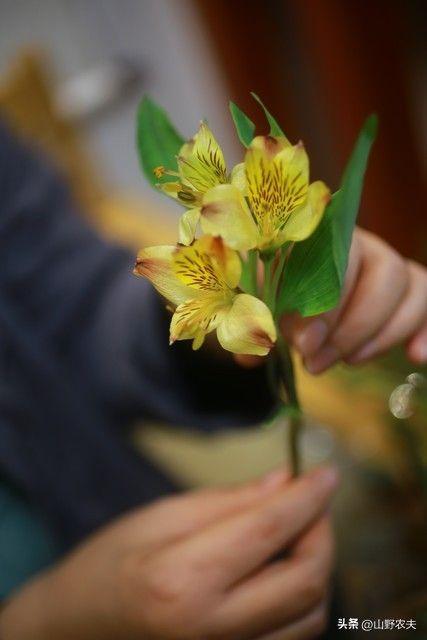
I. Disaggregation of products and green vegetables for insertion
Before we do it, we know what we're talking about, and most of the common household foods are suitable for breeding, with a particularly wide range of coverage。
First of all, family vegetable gardens, open cabbage on the balcony, red potato vines, pickles, peppers, eggplants, cucumbers, cucumbers, mussels and fish weeds can all be cultivated. In particular, hollow cabbage, red potato vines, with almost 100 per cent activity, can survive by cutting any part of the branch into the soil and growing much faster than planting seedlings. It has a strong capacity to split branches and to harvest fruit and fruit at an earlier age, with greater production。
And watch green plantings. Triangular plums, monsoons, green roses, rich bamboo, jasmine, twilight, long-lived flowers, sunflowers, embroidery balls, tigers, copper-grass plants are the most popular. It's a shame to lose the scraps that are usually trimmed, and then grow them into brand-new potting plants, set up a balcony living room, and beautify the home environment。
There are also a few species that are more suitable for sowing, with low activity rates, and priority being given to seeding in daily breeding. As long as it is a seedling that tends to grow and is resilient, it is safe to use a peg, with a low threshold。
Ii. Capturing the best plug-in time and doubling the time-saving rate
Whether or not an intervention is successful, the timing of the selection takes a large part, the timing of the selection is wrong, and a more standard approach can be problematic. The most suitable time frame for large-scale injections is concentrated on early autumn after the spring warms。
In march and april of spring, the temperature recovered steadily, soil temperatures were appropriate, the strains were active, branch cells were split at high speed, wounds were healed and roots were sprung with the highest efficiency, and the year-round period of poached gold. In summer, june and july, just as long as extreme noon temperatures are avoided and shades are kept wet, so is normal hysteria。
When late autumn temperatures are low, plants slowly reach hibernation, metabolism slows down, rooting slows significantly, and the operation is minimized; cold winters and cold weather are largely unrecommended, and cryogenic frosts tend to cause incubation and death。
The day-to-day home is small-scale incubation, with preference given to the sun or the sun and evening operations to avoid the sun. At this time, the temperature is soft, the water evaporates slowly, the branches are not rapidly atrophy after cutting, and they retain maximum activity and provide a basis for subsequent rooting。
Iii. Choosing a cut is the key to survival
In order to succeed, the first step must be to choose the branches, which are themselves strong and weak, and which directly determine whether they will succeed. Many newcomers pick up small and old branches of the system, and it is natural that they will not survive, bearing in mind several criteria。
First, priority should be given to a year of healthy semi-wood branches. Such branches are young, resilient, have sufficient reserves of nutrients and have the greatest capacity to separate their roots. Full woody old branches are weak and slow to take root; freshly produced juicy water is not as good as semi-wood branches。
Secondly, we must put an end to the disease, the weak and the growing. The branches with wormeyes, disease spots and yellow aging are simply discarded; the thin, long and weak branches are not sufficiently nourished to take root; and there is a loose internal structure and a significant loss of activity。
Third, cut the length of the branches. The generic standard length is controlled between eight and fifteen centimetres, and vegetable vines and vines can be appropriately lengthed, and the short branch of flowers remain appropriate in size. Each of the slots has two to four full buds, which are the key to the subsequent growth of new leaves and branches, and cannot be cut out in full。
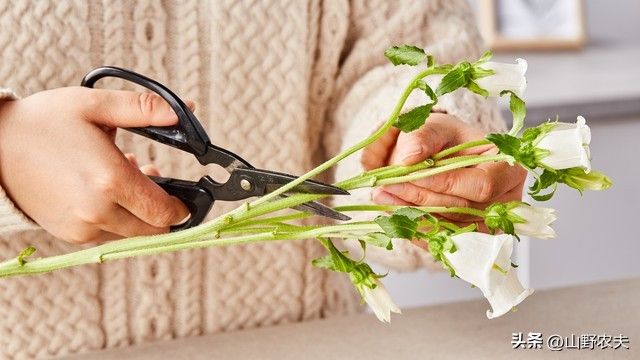
When cutting branches, using sharp and clean scissors or art knives, the cuts are as smooth as possible. The lower end of the branch is reduced by cutting the slant style, increasing the slope and the area of exposure to the soil, which absorbs more moisture nutrients; the upper cut is kept flat and reduces excessive evaporation. Cutting is a simple thing, so don't squeeze the skins of the branches over and over again, so that the wounds do not break into the fungus。
Cut off the plug and make simple repairs. To remove all the leaves from the lower half of the branches and to avoid the foliage of the leaves in the soil; to retain only a small number of healthy leaves at the top, too many leaves consume extra nutrients and affect the pace of rooting. The size of the leaves is too large to cut half of the lobe and reduce water evaporation。
Iv. Epidemic stimuli, two major steps to reduce the acceleration of decay
Once the trim is completed, do not rush into the soil, do germicides and rooting, and can effectively reduce the probability of bad strips and reduce the waiting time for rooting。
First of all, we've got sterile treatment. The wounds that have just been cut are exposed, and direct contact with the soil is susceptible to bacteria, causing decay and death. The family's constant availability of polyglycerin and potassium permanganate can be used, which is described as diluting water, soaks the lower end of the incision into the medicine and leachs it for about 10 minutes。
The absence of specific microbicides and the fact that the country's usual methods work in the same way, as well as the preparation of a bowl of clean water with a small amount of salt to mix, and the impregnation of salt water for a moment, can also have a deterrent effect. Upon completion of the treatment, the incubation is placed in the cool ventilation area, which naturally drys the surface water and waits for the microcreature of the wound to close。
The second is the promotion of operation by the roots. If we want to take root faster and better, we can simply take root. If you have a root powder, then you can have a thin root powder with a dry cut。
There are no medicines for everyday living and there are purely natural practical methods. At the lower end of the dry branch, immersed in clean water, immersed for four to six hours, filling in the drained water of the branch; it is also possible to impregnate for a moment with willow, sugar and thin water, and natural matter that stimulates the growth of the root, which is a simple and simple rooting technique common to old flower farmers。
V. Selection of the matrix and decomposition of the gas are central
The soil matrix that is used for embroidery and the pellets that grow green vegetables in peacetime require different requirements. The core requirements are ablution, cleanness, good drainage and not excessive fertility. The nutrients are too strong to burn fresh and fresh roots, causing insects to rot。
To share several sets of generic soil distribution programmes, which are easily accessible and suitable for the vast majority of the type of thongs。
The first generic basic formulation: mixed river sands, which are mixed at a ratio of one to one. Clean gardens on the surface of the garden are equipped with coarse, balanced river sand, air-freight compliance, moderate wetness and low cost, suitable for large-scale vegetable plug-in。
The second fine-created seed formulation: the foliage is mixed with pearl rock, with a small amount of nectar. The soil is soft and soft, is sterile, is warm and humid, and is suitable for green gardening of flowers, sapling of precious vegetables, and has higher roots。
The third category of lazy people is soilless: pure water, pure river sand. Clean river sand washes and drys them directly, with pure water plating intuitively, allowing for a clear view of the growth state of the root system, and then, when it becomes operational, it is sufficient to plant them in the soil, with a high incidence of errors on the part of new hands。
Regardless of which matrix is chosen, it is advisable that the use take place one or two days in advance, with the use of sunlight to fertilize and avoid the presence of insect eggs and harmful pathogens in the soil, and to secure the healthy growth of the ear in the environment. Prepare a flower basin, a nursery tub or a vegetable garden, fill it with a base, do not push it to death and keep it loose。
Vi. Normative embedding and securing deep and shallow distances
When everything is ready, it can be formally plugged into the operation, with a soft handling, with a steady increase in the probability of becoming active。
First, with a wooden stick or finger, the appropriate size of the hole is placed on the matrix, so that the branch is not pressed down, so as to avoid the scratching of the mouth skin and damage the new tissue。
The smoothness of the processed plugs into the hole, with a generic reference standard for the depth of the piping, and the insertion of three to five centimetres inside the matrix, is approximately one third of the entire branch. The insertion is too deep and air-transmitted to make it easier to rot in branches; the insertion is too shallow to be solid, and the water shakes easily。
A basin or more, with reasonable space, leaves no room for foliage between branches and leaves room for subsequent growth. Upon completion of all placements, the surrounding matrix is slowly refilled so that the soil and branch cuts are closely aligned and leave no gaps to facilitate the rapid flow of moisture nutrients。
Immediately after the end of the piping, the water was filled with water, slowly along the pelvis until the bottom permeated. The purpose of the water is to establish a foundation, to fill the humidity, to adapt the branches quickly to the new environment, and to keep them still in the shade。
Vii. Precise and slow seedling conservation after impregnation is largely viable
Completion is only the first step, and conservation of seedlings in the next 20 days or so is a crucial stage in determining the ultimate success or failure. Many of the early stages of the plugs are safe, and they are poorly maintained. It is sufficient to maintain four points of control around humidity, light, temperature and ventilation。
First, moisture control, water retention. The pre-plugging matrix remains micro-humid at all times, and the surface drys up with a small amount of water, which must never be filled with water. When the air is dry, fog can be sprayed around the leaves every morning and evening, increasing local air moisture and avoiding dehydration of branches. A gradual reduction in the frequency of water spraying will be achieved when white new roots are visible and new buds grow。
Secondly, the management of light is strictly forbidden. All of the seedlings were kept in dispersing and cold positions during the period, avoiding the hot sun in the summer. The strong light extracts water quickly from the branches and burns young leaves, causing rapid loss of water in the ears. When the roots are solid and the new leaves stretch, the light slowly increases。
Third, temperature control, 15 to 28 degrees. In this temperature zone, the roots are the fastest-growing and stable. High temperatures are tempered by increased ventilation, low temperatures are protected against wind temperature, and excessive temperature fluctuations are not conducive to healing。
Fourthly, there is a need to improve ventilation and reduce disease. Day-to-day guarantees for the preservation of ambient air flows, with closed hot spaces prone to decay. Reasonable ventilation can both reduce the probability of disease and contribute to the smooth growth of new roots。
For about 10 days of normal maintenance, the bottom of the end of the end of the end of the end of the end of the end of the end of the ear, the basic formation of the root system in 20 days and the emergence of fresh leaves at the top of the sprouts, represent the success of the plating and the completion of a new plant。
Viii. Responsibility responsibility destruction and restruction management
When the new roots grow so strong that the new leaves come out three or four, and the plants grow so that they are stable, they can move into the basin or be planted in the daejeon garden。
The plant was moved softly and with the roots of the earth, so as not to disperse the roots or damage them. Plantation into the pelvis or vegetable fields of normal nutrients, where seeding is completed, continues to spread light for two to three days and adapt to the environment and then to conventional conservation patterns。
When the green flowers are alive, the light is gradually increased, the plastics are trimmed and the phosphate fertilizer is reasonably replenished, and the vegetative season can soon be met; when the vegetated vegetables are alive, they are supplied with water, weed-proof and fast-growing so that they can be taken for consumption in a short period of time and eaten early and fresh vegetables grown from their homes。
Ix. Self-check for common failure to fit in, and avoid any deviations
The failure of many newcomers, most of them touching common error zones, has resulted in a significant improvement in survival rates by adapting the methods to the problem in a timely manner。
Zone one: improper selection of branches, embroiled with small, old and weak branches, innate inactivity, making it difficult to survive。
Erection ii: slitting rough, non-microsis, infection with black and rotting wounds, direct necrosis。
The three faults are: the matrix is adhesive, the water is swollen, long-term impregnation of the lower part of the branch, and the rotting roots are frequent。
Mistake iv: boiling, lack of water and poor ventilation during cold seedlings, with severe environmental conditions leading to the dehydration of branches。
The error zone is five: deep and shallow, too boring and too shallow to grow properly。
A timely correction of the problem and a step-by-step approach would effectively avoid failure。
X. Small points in popular goods, targeted and developed heart
Combining daily high-frequency breeds with simple decorative details, new hands are better trained。
Vegetables are the best in the world, with hollow cabbage and red potato vines, and they are almost all able to survive by cutting their branches and keeping them wet. The paprika picks up a strong side branch before the flower starts, takes root to control the branches and hangs the fruit early in the day. Wood eardrums, fish scavenging vines and vines, maintain a wet environment and grow very quickly。
In green plantings, green beads and rich bamboo are the simplest, water conservation is regularly replaced by water and roots are produced and planted on the ground; triangles and monsoons tend to the sandy soil in preference to the sandy soil, with light-scattered humid conservation, with more sun-fed seeding after their roots; and long-lived flowers and sunflower grafts, with less water to be poured on when they are inserted, and a strong protection against the tubers。
All kinds of products are unique to each other and the core piping process is consistent, and only fine-moisture and light based on plant characteristics。
It's easy to learn how to breed, and it's easier to grow flowers at home. A large number of new plants can be produced without the need to buy seedlings again and make rational use of the effectively cut branches. It saves the cost of breeding, and it experiences the pleasure of nurturing life with hands, watching a branch of a branch take root and grow into a strong plant with a sense of achievement。
The whole set of plug-in steps is clear and simple, without a complex technical threshold, even a zero-basic start-up, patiently operating in the order of selecting branches, fixing branches, handling, embroiling and maintenance, and can be mastered several times more. While the climate is right, it may be useful to try with the idle branches of the family, so that the green vegetables can be easily greened in a multi-basket, and the small garden can grow in a healthy manner every year, with flowers and vegetables picked up every four seasons。









