



Scientific application of fertilizers is key to achieving high quality and high-yielding shed tomatoes。
Focus on organic fertilizer. Organic fertilizers contain nutrients that are complete, slow and long. Organic fertilizers are sources of energy for soil micro-organisms, which are active soil micro-organisms, and the increase in soil micro-organisms can increase soil nutrient utilization and crop resistance. The release of carbon oxide from the decomposition process by organic fertilizer, which is used as a feedstock for light cooperation, can significantly increase production. At the same time, organic fertilizer also has the function of improving crop quality. Emphasis on organic fertilizer is at the core of tomato fertilization technology. However, the organic fertilizers used must be fermented, otherwise they can produce harmful gases. - in general, 4ooo1-5oo kg of high-quality organic fertilizer per acre. Inoculations with microorganisms can also be used, with a general usage of 21. 3 kg per acre。
Balanced use of fertilizer. Fertilizers are characterized by high nutrient content and high fertility, and their rational use can be measured
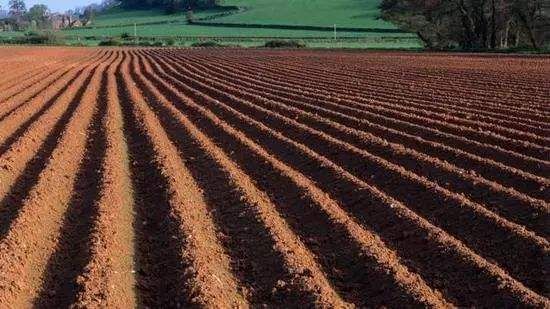
Compensating organic fertilizers and deficiencies in the provision of certain nutrients in soil have the same effect as improving yields and quality as organic fertilizers, as long as balanced use of fertilizers does not pose a hazard to crops and the environment. Fertilizer varieties commonly used in tomatoes include urea, calcium perphosphate, potassium sulphate, boron, zinc sulphate and triad compound fertilizer. Of these, calcium perphosphate is used more effectively in acid soils or old sheds. Large organic fertilizers and old sheds, with a low choice of fertilizer. Small quantities of organic fertilizers and new sheds can be used at high limits。
Rational distribution of base fat, rate of pursuit. Based on fertilizer characteristics and tomato requiring fertility patterns, the ratio of base and pursuit is determined. - in general, organic, phosphorous, micro- and 8o% potassium fat, 3o% nitrogen fattening, and 2/3 of these are flatly distributed on the ground and then rolled down to the ground, while the remaining l/3s are applied in the plant line, while the remaining 7o% nitrogen fattening and 2o% potassium fat are used to catch up。
When the tomato enters the sprouts, the root system loses its fattening capacity, and leaves are used to fatten it, usually by urea solution of l% per acre plus o. 5% phosphate. Potassium solutions plus o. L. Per cent of boron blends 401-5 kg, 517 days - times, 2 or 3 times, are conducive to slowing old age and longer harvest periods。









