


Filter leak method
Filter leakage method - count scanning
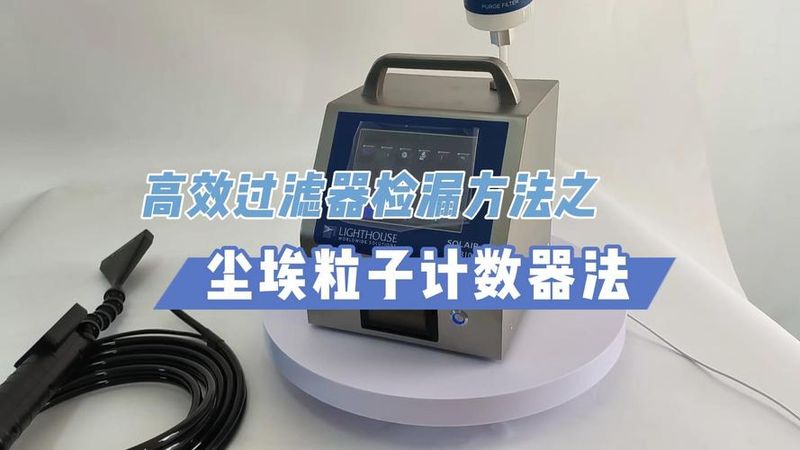
In accordance with the clean house construction and acceptance directive (jgj71-90), inspected filters must have detected wind volumes and are designed to operate between 80 and 120 per cent wind speeds. For the concentration of particles on the wind side of the inspected filter, the concentration of controlled particles for thallium 0. 5 mpc/l shall be 3. 5 x 10⁴ pc/l and for the concentration of particles in controlled particles 0. 1 m x 106-3. 5 x 10⁷ pc/l. Using the zui small sample >1l/min method of scanning particle counters, the filters are scanned for seams and main fractures. The detection point should be 20-30 mm from the measured surface, the head moved at 5-20 mm/s, and the entire fault of the inspected filter, the seal head and the frame of installation are scanned. In the clean house construction and receiving and inspection guidelines, the penetration rate converted from the lower wind leak concentration of the filter is measured。
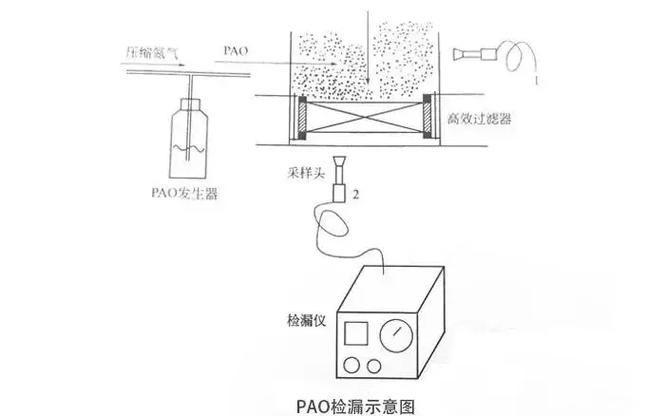
Practical problems: filters are generally carried out after the balancing of system and vent winds, with a standard deviation of less than 15 per cent between each wind vent and the design, which satisfies the condition for the vent to be tested at close to the design speed. So when the wind is balanced, the filter leak is detected in a timely manner。
Large-flow particle counters are more suitable for detecting leaks in filters, and the larger the air sample, the more representative and accurate the test results. The standard sampling requirement is 1 l/min, while we use more than 0. 1 cfm (2. 83 l/min) to meet the test instrument requirements, but this will affect the efficiency of the detection of leakages, which is still to be modified。
Filter leakage method - dop particle scanning positive pressure detection leakage method
Testers are required to note the operationality of parameters such as the sampling time required in the norms and the concentration of upstream particles in practice. When participating in a leak in a filter at a purification plant at a pharmaceutical plant, the laskin dop particle generator is used to produce a large and stable quantity of conforming particles, resulting in an upstream concentration of thallium 0. 3 μm particles greater than or equal to 1 x 10⁵ pc/l. Dop particles are sprayed into the system upstream by compressed air (cool occurrence) and are measured in the detection instrument range because the concentration is generally greater than 1 x 10⁵pc/l, which is beyond the range measured by the instrument。
The particle generator's concentration above the filter was 3. 3 x 10⁶ pc/283l at 0. 3 m, converted to downstream limit concentrations for different wind systems, e. G., 1960 pc/283l lower limit concentration for a design wind volume of 15,000 m3/h. When the aerosol concentration in the particle generator stabilizes, the installed filters are tested for leakage with the particle counter. The particle counter shall conduct two scans of the filter's outer frame and internal surface at the same time, and the upper filter shall conduct two sampling tests of aerosol concentrations in the windpipe for equal periods of sampling and cleaning surface and for as long as possible。
3. Filter leakage method - particle countr
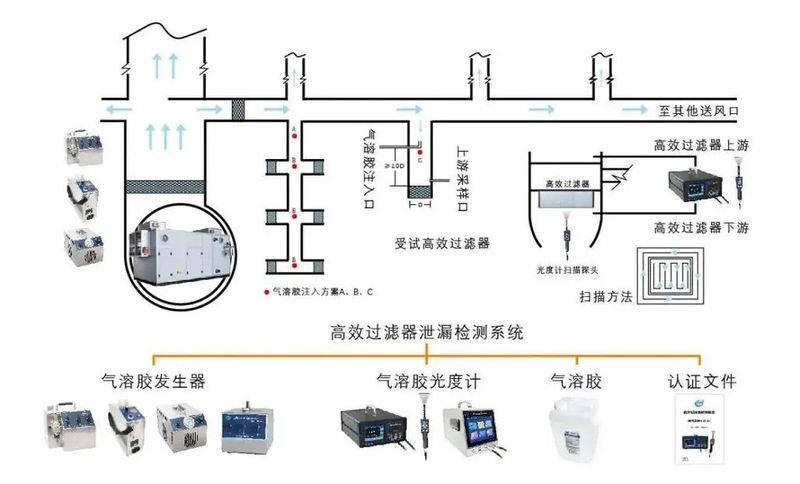
Test principles: when the dust-gas stream is passed through a high-light lighting area at a very small current rate and the dust particles in the air are passed in turn, each dust particle produces a light dispersion, forming a photopulse signal, which determines the efficiency of the filtering by measuring the number of particles and the brightness of the photo-multiplier tube in proportion to the size of the photopulse signal range。
There are other filters to detect leaks









