


Efficient filters are key to clean air purification and their own filter efficiency is generally tested by manufacturers. For enterprises in use, an efficient filter leak is an on-site leak following the installation of an efficient filter and its systems, primarily by checking the sealing of small needle holes in filters and frame connections, detecting deficiencies in a timely manner and taking appropriate remedial measures to ensure regional cleanliness。
The detection of leakages using dust particle counters is very practical, filling clean air conditioning management gaps, providing effective assurance of the production environment of the product and saving the cost of equipment procurement。
The regulation on the quality management of pharmaceutical production (revised 2010) specifies that clean-up air-conditioning systems are included in the important scope of plant certification and environmental quality control, and hvac efficiency filter leakage is a mandatory action, while enhanced clean-up air-conditioning operation management is important for quality assurance of products and for balancing system energy efficiency and control of operating costs。
E. Basics and treatment methods for clean air-conditioning systems
Hvac means a system with heating, ventilation and air conditioning and air filtering. Sanitary air-conditioning systems are used only by physical means (e. G. Heating, wetting, drying, cooling, purification, etc.) for various types of air treatment, while purification air-conditioning is designed to resolve the tension between internal and external interference with indoor air transport and distribution from pharmaceutical, health-care production workshops。
1. 1 air heating and heating
Air heating is generally carried out by steam and electro-heating, which is the heating method for dispersing the heat, whereas electric heating is mainly by electric or infrared tubes。
1. 2 wetification of air
An air purification system with wetting functions, i. E., a wetting device has been added to the air purification function to achieve “purification + wetting”, which is generally carried out by saturated vapour and spraying mist。
1. 3 dry air
Air drying generally takes the form of cooling, humidification and physical absorption。
Temperature dehumidification is the use of surface cooler cooling in air-conditioning tanks to reduce the temperature of the wet air to the point of decomposition and to allow water analysis to be released from the compactor to meet the dehumidification requirements; physical absorption, on the other hand, is mainly based on sorbents (e. G. Silicone, activated carbon, lithium chloride, calcium chloride, etc.) to satisfy the drying requirements. The latter would need to be regenerated。
1. 4 air cooling
Air cooling is largely done for the purpose of air cooling through the absorption of heat by surface chillers, the source of which is provided by cold water units。
The type of cooler commonly used can be divided into volume and absorbent forms, with the usual volume group being piston and screw type, while the absorbent group is mainly in the form of lithium bromine。
1. 5 air purification
Air purification is the filtration of air to environmental requirements. There are three types of air filters currently commonly used: sticky filling filters, dry fibre filters and static filters。
Sticky filling filters and electrostatic filters are rarely used in pharmaceutical air conditioning, mainly dry fibre filters。
Dry fibre filters
(1) filter materials and forms: filter filters include fibreglass, synthetic fibres, asbestos fibres, as well as filters and filters made of these fibres, often in bags and plates。
(2) filter filtration principles: filter filtration primarily serves the purpose of filtering through interception, inertia, diffusion, gravity and electrostatic power。
(3) the main test indicators for air filters are four: efficiency, resistance, dust tolerance and filter speed。
1 filter efficiency: the greater the value, the greater the percentage of dust captured by the filter and the percentage of dust entering the filter, at rated speed. Filter filters are commonly represented by penetrating k in addition to filter efficiency. Permeability represents an image of filter performance, e. G., 99. 9 per cent and 99. 8 per cent, respectively, for two high-efficiency filters, with almost almost equal surface filtering performance, but one-fold difference between 0. 1 per cent and 0. 2 per cent for the former and the latter。
Filter resistance: filter resistance is one of the main components of the total resistance of the air conditioning system, which increases with the increase in the number of filters passing through the wind. In evaluating filter resistance, both refer to a rated wind mass and, when filter dust is glued, the resistance is increased by increased dust contamination. Therefore, resistance before dust is generally defined as the initial resistance, while resistance when replaced is defined as the final resistance。
3 filter content: when the filter's resistance is within a rated wind mass and reaches the end resistance, the dust mass contained in the filter is referred to as the dust content of the filter。
4. Face speed and filter speed: face speed is the rate of passing through the air stream in the wind-receiving area and is a commonly measured wind speed. The filter speed is the rate of air flow over the filter area. Its speed conveys the main performance indicators of the filter. Air filter classification and efficiency testing are generally classified as crude (also known as initial), neutral, sub-efficient and efficient by filter efficiency。
Common efficiency detection versus efficient leakage detection methods
The current high-efficiency air filter detection in the country is based mainly on gb/t 13554-2008, gb/t 14295-2008, air filter, jb/t 6417-1992, air filter for air conditioning, gb/t 6165-2008, filtration efficiency and resistance for high-efficiency air filter performance test methods, including sodium fire, oil mist and alcalculator 3 methods, using sodium fire as the baseline method。
As can be seen from the evolution of international high-efficiency filter testing standards, high-efficiency air filter testing methods include, inter alia, mass, color, sodium fire, oil fog and particle count。
(1) quality law
Quantification measures the amount of dust fed and the amount of filtered catch, which is then referred to as its mass efficiency and applies to the crude filter。
(2) color method
Sampling before and after filters with sample filters, using pvps (pvds) measure the perforation of filters, convert to dust mass and calculate mass efficiency. For neutral filters, electrostatic filters, etc。
(3) sodium fire
The earlier method, which originated in the british industrial experiment and was implemented in the 1970s and 1990s, was based on a single dispersed phase of nacl salt fog, the main instrument being a photometer, and nacl solid dust grains were distributed in multiple dispersive stages (0. 007 to 1. 7 μm), which, by combustion in hydrogen pyrotechnics, could stimulate a flame with a wavelength of 5,890 a, and in turn measure sodium chloride particles by fire light pyrometry and then apply to the detection leaks of medium and efficient filters based on concentrations before and after filters。
(4) oil mist
The source of the dust is oil fog, the “mass” is the hazyness of the oily fog air, the instrument is a hysterometer, the photodispersibility of the pyrotechnic liquid dust particles, the determination of the amount of dust in the air before and after the filter by means of the photo-intensity gauge, the efficiency of which is described, and the use of oil fog in the measurement of filtering material by only some of the plants that produce filters in the country。
(5) particle counter method
Using atmospheric and artificial dust, artificial dusts have a single dispersed phase (heating) with a particle distribution of about 0. 3 m (dop) or multi-dispersional phase (pressure method), correspondingly known as the dop method (commonly used efficiency filter efficiency detection method), which is based on light dispersion to form a photopulse signal, the intensity of which is higher than the surface area of the dust, the height of the photopulse signal to determine the size of the dust particles and the number of signals to determine the number of dust. The method is widely applied to the detection of leaks in high-efficiency filters, detection and room purification。
The hvac air filter replacement cycle is replaced once a half-yearly with the initial filter, which generally allows an efficient filter to live for about two years, but is normally replaced once in february-march to protect the use of advanced high-level filters and to ensure the safe operation of clean rooms。
The replacement of neutrals and sub-efficiencys every 12 months (or the selection of efficient protection filters at the end of the above-mentioned wind closet) will ensure the useful life of the efficient filters for more than three years, and the replacement of the filters will be much less expensive than the electricity required for the operation of the air conditioners because of the small resistance of the new filters。
The frequent replacement of the front stage pre-filter actually enables air-conditioning systems to operate efficiently under low resistance loads, saving significant energy consumption and achieving energy efficiency reductions。
03 basics and treatment methods for clean air conditioning systems
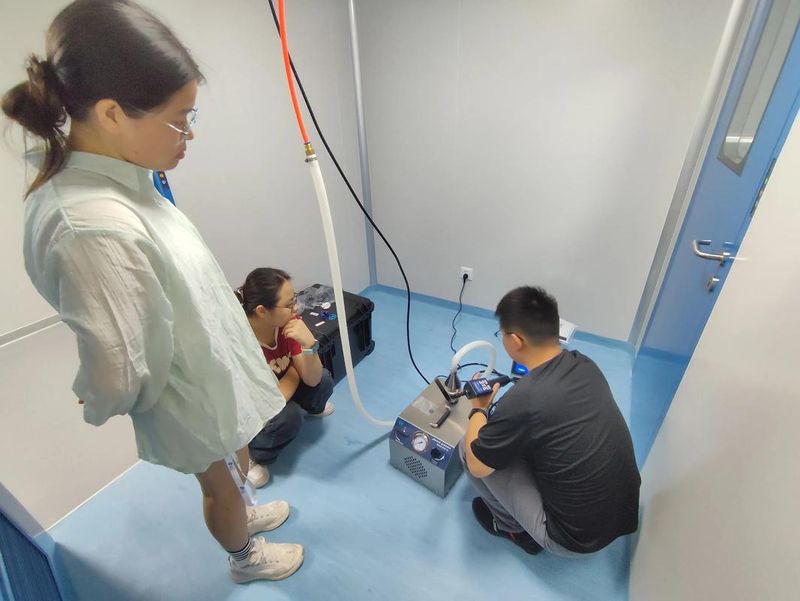
For clean areas with non-bacterial formulations of level d and higher cleanliness requirements, an on-site high-efficiency filter detection of leaks, using dust particle counter detection materials and instrumentation testing methods, is necessary to meet actual needs and to complete demand while achieving cost control。
(1) reduce pollution. The dust particle counter was sterilised with 75% alcohol before being passed into the clean zone。
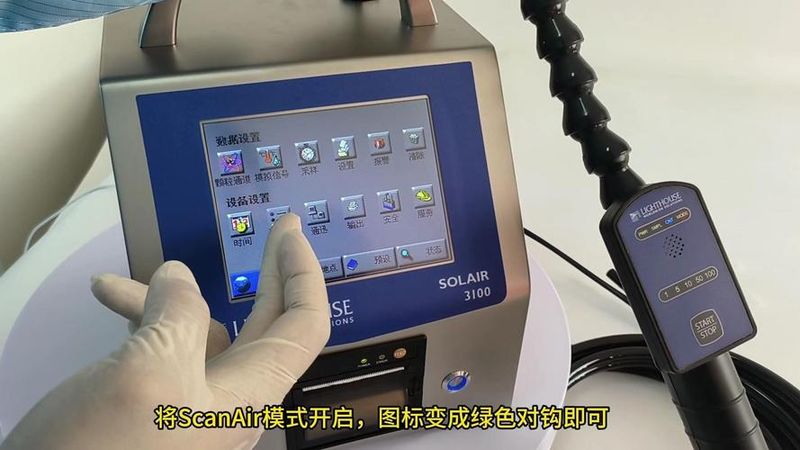
(2) turn on the power. The instrument is self-checked and selected and removes the measured plastic tube from the back plate. The port is located where measurement is required。
(3) the particle counter method means leakage detection. In the wind side of the detected high efficiency filter, using the air of the medium efficiency filter as a source of dust, adjustments are made to the filter operating near the design wind speed, and leak concentrations are measured on the wind side of the detected high efficiency filter。
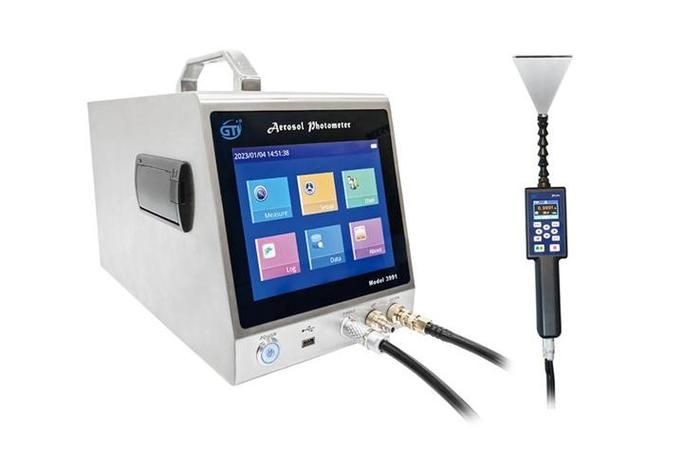
(4) according to the standard operating procedures for particle counts, the meter is correctly used, moving the counter probe at approximately 3 cm below the windside of an efficient filter and slowly scans the inner and intermediate edges of an efficient filter, with at least five points per piece of efficient filter being tested and data being observed。
(5) for monitoring the base figure, the reference value for detection of the number of dust particles after effective filtering in the depuration area should not exceed 0. 1% of the base figure。
(6) scanning at 2-5 cm/s at 3-8 cm from an efficient filter using a dust particle count. When the dust particle counter value increases significantly and deviates from normal values, it is preliminarily judged to be a leak and then narrows the scanning range until a leakage point is found。
(7) the leakage of efficient filters can be seen through the above methods. Whether leaks or replacements are required and the filters must be repaired or replaced and retested。
The 04 particle counter leaks the attention of the efficient filter
The dust particle counter leak is a dynamic operation and there is also a risk of error, with a focus on risk control, mainly the impact of scanning the leakage zone, resulting in deviations from results due to inexperienced vibrations。
To minimize the detection of leakages and control the impact of leakages, it is proposed to use the dust particle counter scanner to detect paths using s-line parallel scans, to swim in close proximity to the wind surface, and generally 0. 5h for a filter to detect leakages, while using a perimeter and centre-based strategy to detect leakages and reduce control risks。
Control operations are unsophisticated, seismic fallout results in a mimic deviation, which should be controlled as far as possible at suitable distances, reduce deviations due to the fall of paint plate dust, and complete clean-up of the depuration area is essential to reduce dust production. Lw









