


I. Ho chiu's sexual reproduction
Seeding and storage are the first collections of pure, disease-free and well-developed monolithic strains as mother-plants. When the seed matures from white to brown and internal to black, it needs to be harvested in a timely manner, otherwise the seed will fall naturally. Seeds collected, because of their high water content, their susceptibility to rot and pests, have lost their germinate capacity and must be dried before they can be placed in sacks or gauze bags, stored in ventilated dry areas, and prevented from being stored in plastic bags。
1. Land selection. The seedlings are more stringent for soil selection, and are suitable for deep-dwelling, soil estranged and fertile, water-friendly and drainable plots. When seedling beds are identified, weeds are removed before weeds bloom in the first year so that weeds do not compete for nutrients and light with the young seedling of the second year。
The whole area. The soil can be reduced to pests and insects by having the nursery ground thrown deep and exposed for 15 to 20 days. Where conditions exist, twigs and twigs are used to set the weeds on fire once, which can significantly reduce weeds, reduce pests and diseases and increase soil fertility. Then we'll do the whole floor together with the fertilizer. High-quality farm fattening of 10 kg per square metre is required, which is then to be drilled, weeds removed and flatted。
3r. After general planting, due to severe spring and drought, which is mainly irrigated, it is appropriate to have a flat rim of 1. 5 m wide, around which the earth is made and 30 cm wide, in order to preserve water and fertility。
Seeding. The results of the multi-year tests confirm that the best planting order for the first place is justified by the shock of march. Premature, low temperatures that do not meet the requirements of seed sprouts, which do not produce seedlings, but also degenerate seeds; and late, although seeding results quickly, the optimal period of growth is short, to the detriment of the seedlings. It is appropriate to sow the seeds, which are small. The seeding rate is 4-6 g per square metre, and the topsoil of the topsoil is slightly flattened with a tool before seeding, and the soil space is not too large and cannot reach the ground too deep. The option must also be to sow in the morning or evening when there is no wind, sowing with sifted soil and a small amount of fat for farmers, with a thickness of 0. 1 to 0. 2 cm, followed by a layer of twilight, with a thickness of one fifth of the earth。
5. Slenderland management
(1) drunk water. The seed is small and must be sprayed repeatedly with a canteen and cannot be poured directly from water. It is then watered once a day after 10 a. M. Or 5 p. M. In the middle of the sun, and two to three days after the birth of some 20 to 25 days。
(2) weeding. Weeds should be weededed and watered, as appropriate, in a timely manner after planting. Weeding is done every 10 days or so。
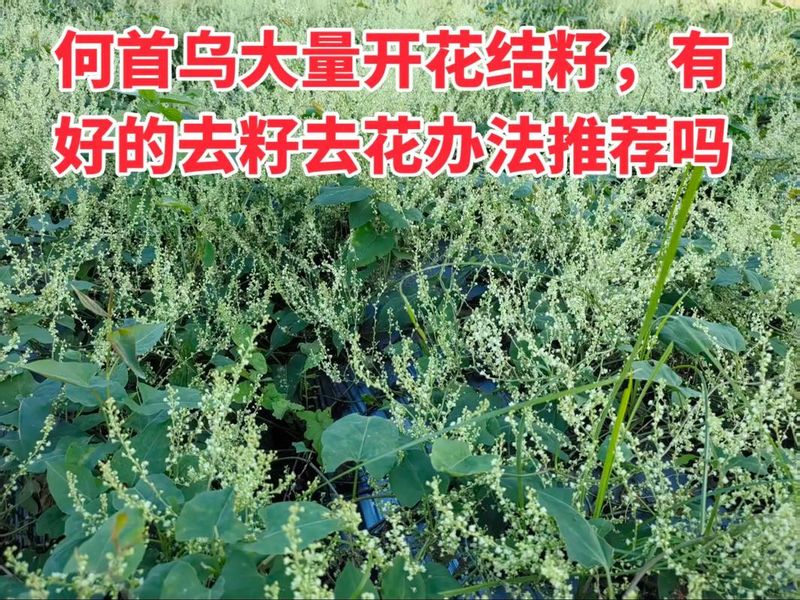
(3) getting fat. After 60 days of soil production, 100 kg water plus 0. 2-3 kg compound fertilizer or urea can be sprayed at a lighter and more frequent concentration and every 10-15 days. In the later stages, seedlings can be sprayed at concentrations ranging from 0. 5 per cent to 1 per cent of composite fertilizers or urea, or with 50 kg of clean water and 5-8kg of faeces。
(4) a seedling. To grow a seedling, it is necessary to remove a dense, small seedling. The second was taken about 30 days after the seedlings were released; the second was taken about 50 days after the seedlings were released; and the third was called the seedlings, with a distance of approximately 3-4 cm. It is desirable that it be done sooner rather than later, otherwise it will lead to the growth of the seedlings. Water should be properly poured after each seedling。
(5) prevention of diseases and pests. The pests currently found in the nursery are mainly tigers that can be hunted manually or are treated with 12,000 times more than the enemy. The disease is mainly pollinosis, which can be prevented by 1:200 times the bordeaux fluid spray, and 25% of the polybacterium 500-800 times the solution。
Ii. Ho chiu's non-sexual reproduction
1. Reproduction of stalks
(1) the treatment of pharmaceutical products, which are to be carried out in february-march in the form of a ten to 20 cm length in the stem and centre of the pre-sprune plume of wild or domestic seed, with 2 to 3 sprouts and dozens of sprouts, which will be immersed with root powder nos. 1, 2, 3, acetic acid, 2. 4-d, respectively, with specific reference instructions to ensure that solutions cannot be filled with iron or copper vessels. It is also possible to use the above method for the second batch of seedlings in may-june, after the geront. Both batches have a live rate of over 80%。
(2) in the months of february-march and may-june, the same method was used for the treatment of the plume, which was followed by the use of alcohol in the base section or ash in the grass, with a survival rate of over 70 per cent。
(3) after the seeding of the vine in may-june, the stalks are free of any treatment and can be inserted directly into the activity rate of more than 50%. In any case, any part of the tubing must be laid into the soil on the same day, at a distance of 10 cm x 20 cm, preferably with loose soil or without fertilization, 2 to 5 days of water — and managed normally。
2. Root procreation
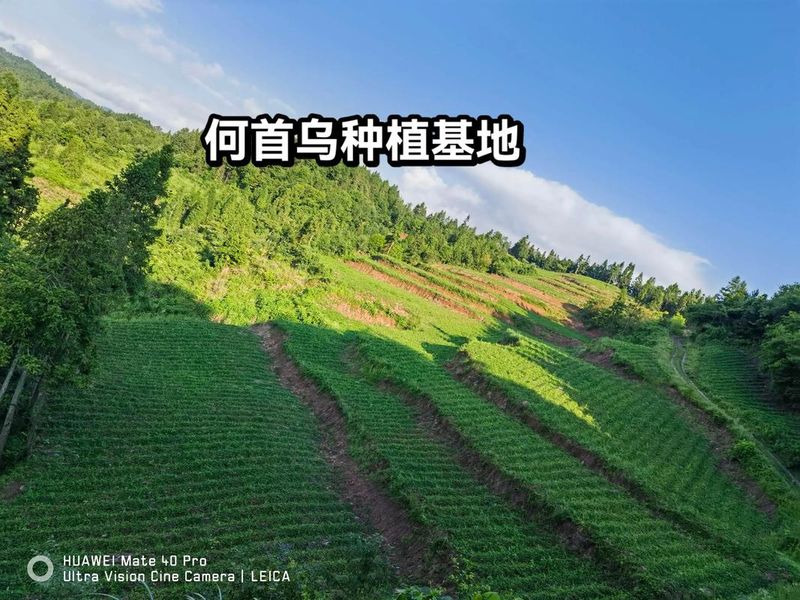
In the months of august and september or 2 to 3 march, the roots of the rags were extracted and planted using small and medium roots or the base parts of the roots. They were planted in loose and fertile plots with a distance of 10 cm x 20 cm. The planting must be followed by a watering of the roots once and normally managed。
Sapling plots of saplings and seedlings must be strengthened to grow grass in china, and when new seedlings grow up to 20-30 cm, water must be ploughed equally with compound fats of 2-3kg。
Iii. The planting time of ho chu
Regardless of the method by which the seedlings are produced, the best transfer order is suitable for mid-june. The soil and the effects of light, heat, water and gas can only be exploited in a rational and dense manner for high-quality and productive purposes. 9,000 to 11,000 plants per acre shall, as far as possible, be subject to earth transfer at a distance of 25 cm x 30 cm or 25 cm x 25 cm。
Iv. Transport management of he july
1. Fertilisation. Agricultural fattening of 1,000 to 1,500 kg per acre and phosphorous fattening of 30 to 50 kg or compound fattening of 20 to 30 kg per acre is used. In general, fertilizing soil in the pond is followed by replanting。
2. Catch fat. When the plant is grown to about 60 cm, it is combined with a meadow, which can be used for a combination of 30 to 40 kg or 30 kg of urea per acre, with proper water and weeding at any time thereafter。
3. Combat pests and diseases. Powder disease, caterpillars, etc., have been detected and must be treated with multibacterium, enemy killing, etc。
Four. The frame. This is a special management measure for what is being cultivated. Part of the land is flourishing because of what is known as the vegetative plant. In order to further improve production and quality, plants must be planted at a height of more than 1 m, such as poles or branches, as long as they grow to about one metre, and ventilation should be improved to facilitate the growth and development of plants and underground roots。
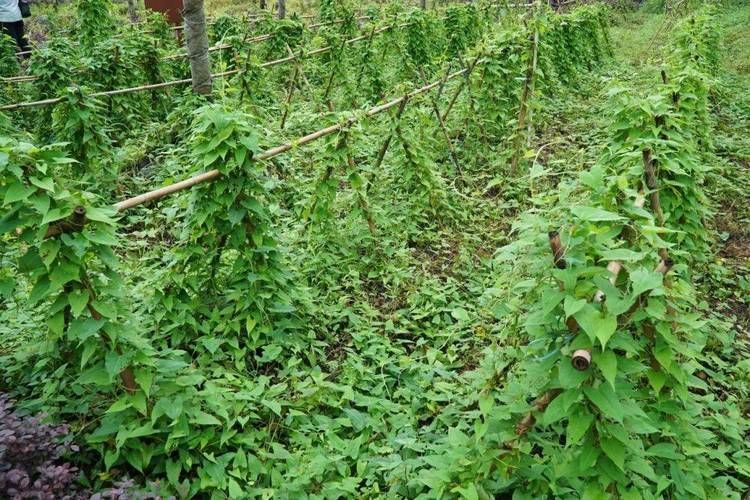
Five on top of the chicken cut. And when the vines grow to two metres high, they shall take away the sprouts, so that they may split their branches. Thirty days later, it was cut in secret branches and sprouted branches from the base to reduce nutrient consumption. Take off the leaves of the tuber's base and the uncultivated buds for ventilation and light。
Six. Peasant. At the end of december, the southern-producing region carried out an inter-breeding exercise to increase breeding materials and promote root growth; the northern pre-circumber land was cultivated to facilitate winterization。
V. The poll and pest management in hoju
1. Leaf spots begin to develop during the rainy season at high temperatures, with severe inflammation in the fields and harmful leaves. Method of prevention: maintain ventilation, light and cut leaves; 1 :1 :120 bordol sprayed at the beginning of 2 cases, once every 7-10 days, 2-3 consecutive times。
2. Most of the causes of decomposition occur in the summer and endanger the roots. Methods of prevention: 1 attention to gonorrhea; 2 extraction of strains, with gravel covered with lime; 3 protection by l000 times the liquid root of more than 50 per cent fungus humid powder。
In the second half of february, the disease began, and in march-may and july-august, it was severely hazardous to the leaves. Method of prevention: 1 elimination of sick leaves, strains and ground debris; 2 application of 75 per cent of cent of centenary bacteria to clean 1,000 times the fluid or 75 per cent of the quantity of methyl tobzin 800-1,000 times the spray, 1 spraying every 7-10 days and 2 successive times。
4. Aphids are sprayed with 1500-2000 times more lactation and a small amount of laundry powder every half month。
The collection and processing of quiu
Cultivation can be harvested in two to three years, with a high yield in the fourth year. Excavated after fall leaves or early spring, removed the vines, dug out the roots, washed the soil, cut into thick pieces of about 2 cm large, uncut small, dry or dry. In weight, strong, and pink。









