


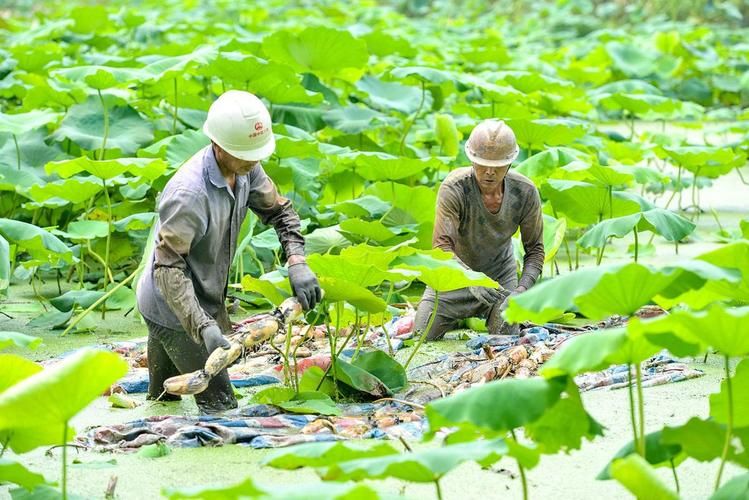
According to the chinese village voice, dr. Noon online, zilong lin is the most exciting of 63-year-old cao lian do-hang in mangung county, hebei province. According to cao, planting a shallow-water lotion saves effort and can be used to water normally, making 60,000 or 70,000 dollars a year on an acre, more than processing small plastics. As a matter of fact, the east hsiao village in manchuria county, which had been used for the processing of used plastics, was heavily contaminated with smoke and smoke. However, since 2011, when the east shun village invested 150,000 yuan to introduce shallow-water lily planting projects from shandong, cao hong, like many farmers, has abandoned many years of plastic processing and taken up herring. By the harvest season, more than 70,000 pounds were harvested, not only to recover investment costs but also to earn tens of thousands of dollars net. The methods used by cao guang are different from those used by most people. The common lotus is in a deep water pond about 2 metres long, full of flowers and leaves, deep in water, and white in a deep mud. However, under conditions of artificial cultivation, shallow water cultivation of about 1 metre is increasingly common。
Is “soft-water planting technology” really a better economic benefit? The zhang honghong practice of the chief of the village of xuelu village in shanxi province demonstrated the potential of this technology to increase revenue. Zhang xiaohong saw information about shallow-water-land cultivation on the internet and, in combination with the actual conditions in the village, felt that shallow-water-land cultivation in the village had great potential for development. Since the beginning of spring 2009, zhang kuhong has been building two lichen ponds in his home land and, thanks to his previous experience, has begun to grow shallow water lichen. Compared to the production of less than 4,000 pounds of acre in traditional beaches, the acre production of shallow-water lichen is close to 8,000 pounds, with considerable economic benefits, and full investment in the construction of the pool could be recovered in that year. Having witnessed the benefits of shallow-water lichen, more and more people have come to this technology and are planning to build a “poaching basin”. What do you care about the shallows
Guest: “dr. Noon” - liu yichuan, research fellow, aquatic vegetables research unit, wuhan school of vegetables
What are the criteria for planting a shallow pool
Liu ying: this is a very good technology in our northern part of the country, mainly in the yellow basin, because of the relative scarcity of water sources in that part of the country, the fact that some of the areas have relatively few water reserves for the first two years, the considerable benefits of planting them, the many advantages of planting them, the high productivity, the protection of water, the protection of fat, and the mechanization of you. So, in particular, we have to choose the fastest pool to be built, to grow shallow water, to determine first the choice of a piece of land, and what is the selection of our parcels? First, the terrain is flat, and irrigation water is relatively abundant. This is a better place to build a pool, preferably in a more fertile soil, a flat terrain, abundant water, easy transportation and a more fertile soil。
What difference does it make between the mouth and the other ones
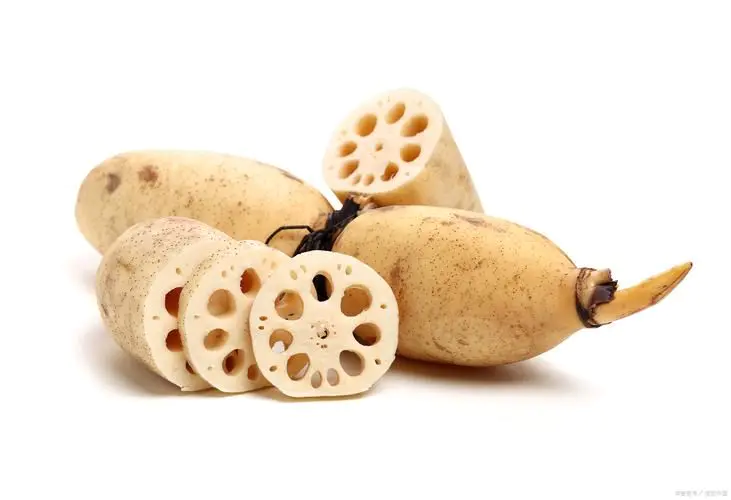
Liu yiman: there is not a general difference in taste, but since our shallow water is mainly developed in the north, the yellow basins in the north, such as the kawadong, hebei, henan, shaanxi and shanxi, are best suited for development. This nutrient accumulation is relatively abundant because the area is more luminous and contributes to the accumulation of carbohydrates。
Isn't all the lilies suitable for planting in shallow waters
Liu ying: for the time being, all the varieties that we use in production, the lotus varieties, are suitable for planting in shallow water. Of course, in our northern part of the world, because of differences in consumption habits, we have to choose the varieties that are in line with the consumption habits of the northern market. In the northern part, the main reason we eat is that in the northern part, we eat the variety, i. E., by fire or by cooling, unlike the southern part of the world, which is the main source of rice。
How do you plant the right fertilisation in the shallow pool
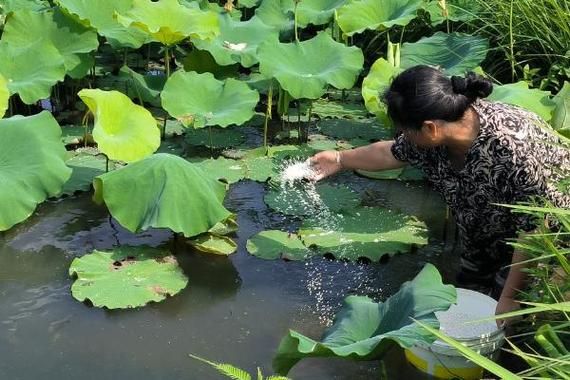
Liu ying: when you build a shallow pool, you have to satisfy the demand for the fertilizer grown by the lichen, and above all two aspects. In addition to filling in, the first aspect of the pool is going to require that, when we build the pool, we set aside the soil on the surface of the site, which is about 30 centimetres above the surface, and then fill it back in, which is about 25 to 30 centimetres. This is a basis for ensuring that soil waste is geologically high. The second is that we have to do the fertilizer work, which is very important when the crop starts to grow, and it depends on the use of the fertilizer, which is very important for the lotus alone, because it is a much more fertilized crop, which is one of the principles of how to fertilize, and one of the principles of how to fertilize, which is that before we use it, we have to clean up the base fat, and if we have a farmer's fertilizer, we can use it as much as we can, like this supporting farmer, who is fertilizing more than three and a half kilos per acre. But in this case, where we are less fertilized, what is the main recommendation? Like compound fat, three cents of potassium nitrous phosphorus, and normally one acre is recommended for more fattening. One and a half bags. One bag is 100 pounds. And then we're going to get fat, and we're going to get urea, and we're going to put a bag of urea, and a bag of urea, and we're going to put it all together, and we're going to put it down, and we're going to add some potassium fat, and we're going to give it a half bag, because what is that? It's usually 80-pound bags, half-packs, 40-pound bags. It's usually recommended to the north in mid-june and early july, at this point, because it's better to start the process, because if it's a little bit short, it's a little bit short, it's two to three times the amount, it's about an acre, it's about half a bag, it's about 50 pounds, and it's better to do it。
Isn't it a little small for a shallow pool
Liu ying: for the time being, all the varieties promoted in the market are suitable for shallow water growth, and in fact, they are professionally located, i. E., all shallow waters are below 50 centimetres, deep water is 50 centimetres, or even deeper, which is what we are currently promoting, but the plant, the hyena, is environmentally appropriate, because all the hyenas are in the same range as the wild and evolved from wild resources. So the main method of cultivation of the species selected for promotion is also suitable for shallow water, but in practice they are planted in deep water, and they are capable of growing, and what happens to the nymphs in deep water? In fact, deep water is grown in places that tend to be larger, often in fish ponds or old water ponds, where the soil mud is thick and organically rich, so that it is well suited to the growth of the lichen, which is growing back into its original environment, which tends to be larger, but with a better taste, the biggest problem is that it is not easy to dig and is expensive to dig。









