


Ginger is not only a common spice, but also has a medicinal value and is suitable for family gardening or field farming。
I. Typology selection and ginger processing
1. Varieties selection
In the south, there is a choice for a highly pathogenic “south ginger”, and in the north, a cold-resistant ginger breed is recommended. (b) the selection of ginger clots with a weight of 50-80 grams, free of pests, bright skin, fresh meat, to ensure adequate nutrition。
Two, ginger treatment
I'll remove the rotten, dry, or a ginger clot. Activating ginger for 2-3 days before seeding, with 50% more than 500 times more ferocious or grass ash sowing。
Breathed in small blocks (retention 1-2 sprouts) at 20-30°c and seeded at 0. 5-1 cm. Length。
Ii. Methodology
One, indoor sprouts
The bottom of the pool is dryed with barley and grasspaper, with a layer of ginger seed (60 cm thick) covered with warm materials and sprouts 20-30 days below 20-25°c。
2 greenhouses/breeding
A basket of insider wheat, stacked 30-35 cm tall, at 20-25°c, with shorter cycles of 3-5 days。
Three, flame or cellar sprouts
Use a stable temperature environment and then cover the straw or plastic membranes to keep them wet。
Caution: ventilation every 7-8 days to avoid high temperature, high and wet seeds; bulging longer than 2 cm easy to break and planting in time。
Land plot preparation and seeding
1, land selection
The soil is selected to be deep (30 cm) and soaked and well drained from the sandy border soil to avoid a sticky soil. It is preceded by legumes or cross-facility crops and avoids re-cropping (3-4 years)。
The terrain is flat or slow, facilitating irrigation drainage。
2. Soil treatment
25-30 cm before seeding, applied to base fertilizer: 2,000-3000 kg per acre of decomposition organic fertilizer, mixed with 50 kg of compound fertilizer, 20 kg of potassium sulphate and 1-2 kg of zinc boron fertilizer. Treatment with multibacterium or bordeaux to reduce endemic diseases. (b) high or high, 60 - 70 cm wide, 20 - 25 cm deep, with organic fatted and thin ground on the bottom。
3. Time and manner of planting
May 3 - 4 for the south (15°c) and may 4 - 5 for the north (16°c). The sprouts are flattened upwards into a ditch, 18-20 cm and 60-65 cm long, with a light pressure of 4-5 cm from the ground and watering through the bottom. (b) 150-500 kg per acre, adjusted for ginger block size。
Iv. Field management
1. Fertilizer management
Underwater is poured during the sprouts, no water is poured until 70 per cent of the seedlings are produced, and the sandy soil is properly replenished when it is dry。
Soil moisture of 65-70 per cent is maintained during the nursery period, and small water effort combines shallow pine soil。
Long-term (after autumn): every four to six days water is poured, and during the rainy season water is discharged and protected against flooding。
Water stopped 5-7 days before the harvest, facilitating storage。
Base manure: 1500-2000kg fertilizer per acre of decomposition farmers, mixed with 40kg fertilizer, 100 kg phosphorus fertilizer and 10 kg urea。
Fertilizer pursuit: urea 15-20kg at 30 cm height; 75kg + 50kg compound fertilisation before and after fall; 25-30 kg compound fertilisation during periods of expansion。
Leaf fertilizer: potassium phosphate spraying contributes to expansion。
2. Peasant management
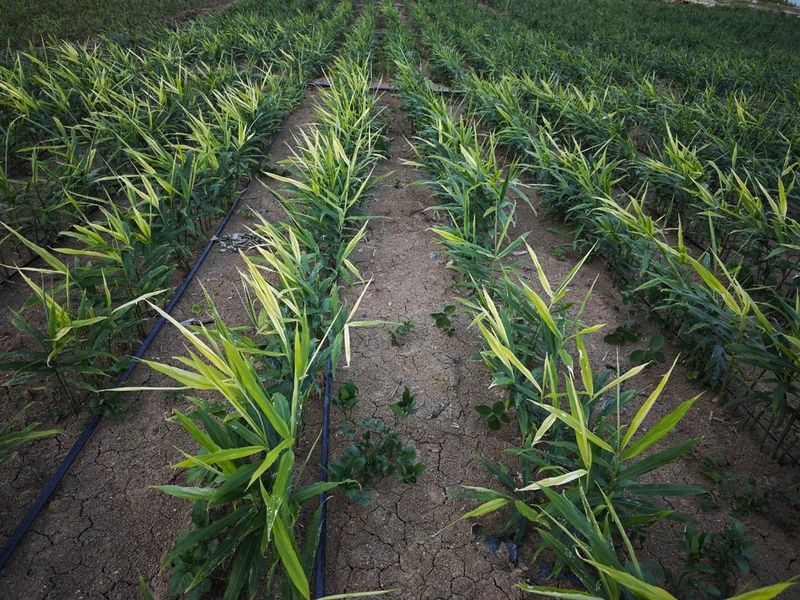
First (30 cm tall): clay 3-4 cm to prevent the roots from coming out。
Second (5-6 branches): peasant 5-6 cm combined with fertilization。
Third (extension period): 7-8 cm of clay, turn the ditch and ensure root growth。
3. Mask management
Ginger-resistant and strong light is too hot for the summer (may-august)。
Method: a 50-60% luminous net (1. 5-1. 7 m high) is installed, or inter-cropped with a high-dry crop (maize, taro) or a grain grass/slubber cover。
Be careful not to over-face
V. Pest management
1. Disease prevention and treatment
Chontrum: no ginger seed, quintozene is sprayed in the early stages of the disease with quintozene or a mixture of amino acid。
Anthrax: increased phosphorus fattening, removal of leaves, methyl tobutzim + enzymes。
Spectrum disease: drain drainage, ester spray or benzo-propylene。
2. Pest control
Ginger (drycardial worm): artificial killing or late-stage use of pyrethroids in pyrethroids。
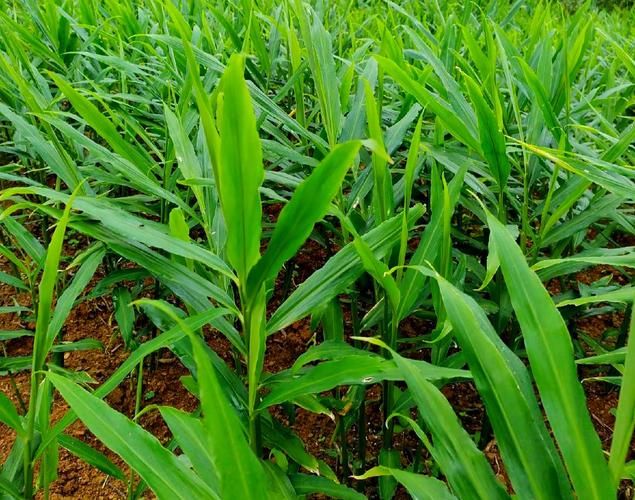
Ginger maggots: ginger is immersed with avil. Ginger's cellar is fumigated。
Root nematodes: made from a water dryer, washed with abactin cream。
Vi. Harvest and storage
1, harvest time
Ginger: from mid-august to october, the meat is tender and suitable for pickles。
Chon: in mid-october until the beginning of november, the leaves were collected when they were yellow and stored in storage。
Chon: early harvest in june-july, avoiding roots。
2. Harvest methods
It operates in the middle of the sun and has 15 days to control the water to dig and avoid mechanical damage。
The old ginger needs a leaf to harvest when it's yellow, cut off the top of the ground and dig up the ginger。
3. Storage methods
The cellar method: 10-15°c, 80-85% humidity, layered and regularly ventilated。
Sand-laying: river sand or straw shall be stacked internally to cover the membranes to keep them wet。
(c) avoiding the growth or decay of high temperatures and planting of ginger for storage。









