


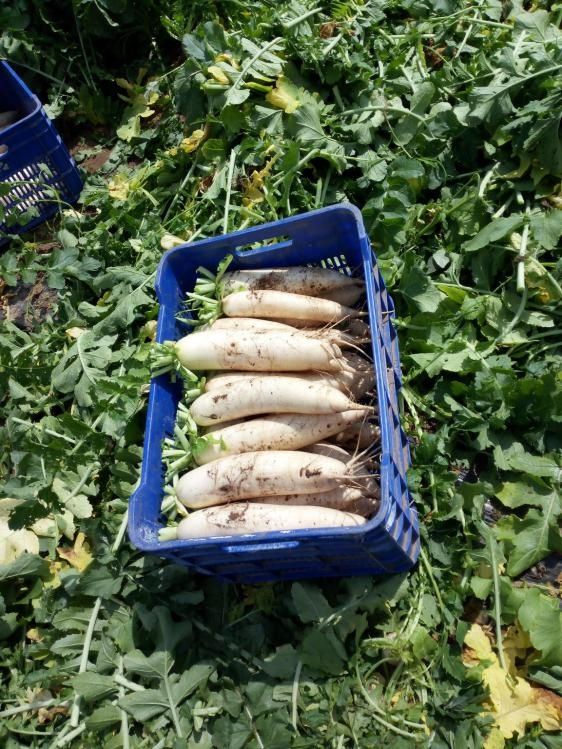
The radish is rich in nutrients for human needs, especially starch enzymes, and can be used as a vegetable, fruit and important food processing and pickle raw material. Carrot is also a medicinal congener, with the popular version of a winter radish, which has the effect of imitating, digesting, pissing, queasing, etc., and is a type of vegetable preferred by consumers. There are many types of radish, simple crop management, high monolithic production, high market demand and producers ' preference for cultivation. Autumn carrots supply the winter and spring markets through storage, which regulates the market supply, but which is not properly stored, tends to cause problems such as atrophy of the root, heart, buds, decay, etc., affecting storage effects. Sound post-acceptance management can help improve the efficiency of storage, maintain its commerciality and reduce the rate of loss and loss. To that end, the following post-harvest management guidance was provided by experts from the beijing agricultural technology extension centre for information purposes only。
By object
Autumn radishs are fully luminous, hot, suitable for fast seeding, fast growing in the first period, with a high temperature difference between day and night in the later stages of growth, and contribute to the accumulation of nutrients. The radish harvest period is not rigorous, and the collection criteria may be adjusted in a timely manner, taking into account factors such as monolithic and price, depending on the characteristics of the species and market needs, but the radish used for storage shall be collected in accordance with the criteria. Premature harvests are not sufficiently ingested, with high moisture content, poor quality and low yield, and radishs are more suitable for direct sale but not suitable for storage; collection is too late, mature and high, storage is fragile and suitable for immediate sale after harvest; and collection should be done in a timely manner, in accordance with standards, upon reaching the most suitable harvest period. When the market is not sufficiently supplied and prices are higher, it can be taken at an appropriate early stage, ensuring both market availability and early earnings, while avoiding problems of concentrated marketing and low prices. Prior to harvesting, soil moisture content is appropriate, both to protect the integrity of the root of the meat and to make the root of the meat suitable for water content and to lay the foundation for storage. Autumn carrots in the beijing region are generally collected before the frost, which affects the quality of their storage。
Focus on the commodity dimension
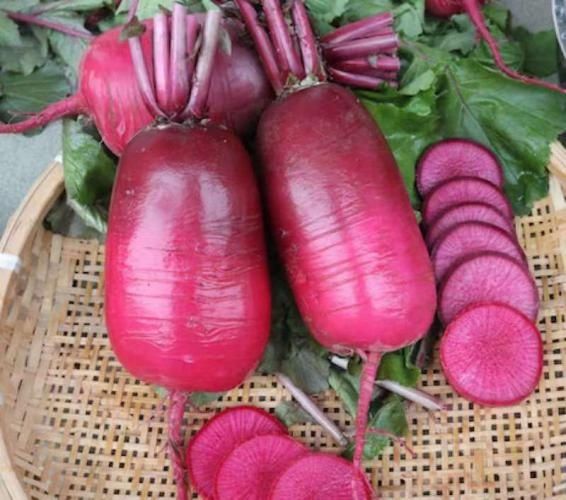
The size of the radish, the colour of which is white, pink, purple, green, dark green, etc., the shape of the radish is round, flat, egg, cylindrical, long cylindrical, hammer, etc., and the single weight of the roost ranges from a dozen to thousands of grams, with a wide variety of different varieties, and the choice of suitable species and varieties should be made according to the marketing channels. In the autumn of the beijing region, radish varieties, such as heart, tianjin, ivory white and zhuang county, as well as ice cream and purple meat, are grown. The variety of purple radish has a high level of licorice and is very popular with consumers. It should start with the production chain and focus on the commercial problems of radish fork, bending, cracking root, heart, bitterness and spicy taste. The high light and temperature of pre-accumulation carrots in the autumn should be accompanied by measures such as small-water irrigation to increase environmental moisture and create a small, growth-friendly environment; high temperature differentials in the post-growth period and climatic conditions are suitable for radish growth, facilitating the accumulation and production of nutrients of the body. Overdrying of the soil results in small radish gravitates, faulty roots, forks, rough surfaces, increased spicy tastes; soil moisture is uneven and fractures can occur. Carrots are grown on the frontier or on the sandy side, with smooth fruit-skin, low incidence of malformations and good commerciality. The high use of nitrogen fertilizer can increase the spicy taste. Crop varieties should be selected in accordance with the commerciality requirements of the marketing channels and should be guaranteed by measures such as the selection of the planted soil, the rational planting of the soil, the preservation of its water content, the rational application of fertilizers, pre-harvest control of water, and control of harvest maturity. White radish commodities require: full individual shape, uniform colour, fluent whiteness, delicate flesh, smooth skin, cleanness, no chrysanthemum; straightness, smallness, no fork, no worm eyes, no mechanical damage, fresh, non-fruit, no black spots on the surface, no black hearts, no hearts, no leaves, 4 centimetres at harvest, no decay. There are different commercial requirements for radish。
Storage techniques
Ropes are stored at temperatures of 0°c at 90%-95% humidity. Autumn radish moisture content is appropriate and can be stored on a long-term basis, with different radish varieties having a high degree of resistance; white radish and cherry radish are not suitable for long-term storage. Carrots have traditional and modern storage methods. Traditional storage includes ditches, piles, cellars, etc., and modern storage methods include cold storage. Storage of vulnerable water for short storage periods; ditches of higher water content, prone to sprouts and loss of water, which are more suitable for radish varieties with low water content and dark skin colours; and low temperature variability and long storage time in the cellars. Carrots may also be stored in the soil, but seeding should be delayed appropriately to avoid maturation and cracking. White radish may be washed before storage in cold storage, and other radishs may be suitable for earth-belt storage. When the soil moisture is insufficient, the ditch shall be watered at the time of storage, depending on the nature of the soil, the moisture of the soil and the variety of radish stored, but the general principle is that no water shall accumulate at the bottom of the ditch. Refrigerated storage should be careful to maintain humidity and avoid atrophy after surface loss. In any case, low temperature and high humidity are necessary for the storage of radishs, under which conditions poor quality such as the atrophy of the body, heart, buds, decay and deodorant can be avoided. Storage with earthy mud helps to prevent loss of surface skins and atrophy. Carrots should be selected before entering the library to remove pests and pests, mechanical damage and malformations; where product specifications are required by the distribution channels, they should be graded according to the specification indicators. Fruit carrots such as green carrots and pickle pears are stored, and the radish spicy and sweeter。
Treasury management
When the radish is out of the closet, the skin should be washed. Trenches, cellars and cold storages vary, as does the way out. Ropes in ditches and cellars shall be sold as soon as they need to be sold, and radishs in cold storage shall be sold at once and in instalments in order to avoid frequent openings, resulting in significant changes in temperature and humidity in the cone, affecting the quality of the radish。
Processing packaging
Carrots are divided into packaging methods for storage packaging and the sale of small packagings. Storage can be carried in packagings such as paper boxes, plastic baskets, net bags, etc.; when storage is particularly large, it is more directly coded. Sales of small packagings vary between the type of packaging and the channel of sale, and appropriate packaging should be chosen according to the channel of sale. Carrots are packaged in the form of film-protected packagings, pallet + film-protected film, skin-conservation bags, and fruit radishs are more often packaged in the form of skin-conserving boxes and bags. Meat and red carrots can also be processed into frozen dry products, coloured with other products, sold as snacks and added value to products。
Family storage
In autumn, when the radish is heavily marketed at low prices, and in autumn and winter, when the radish is consumed, families can place the radish in a plastic bag, laminated and stored at lower temperatures, or in the middle of a storeed cabbage, where the temperature and humidity of the radish is maintained using cabbage; a small amount of storage can still be covered with protective film and stored in a refrigerator at home; and the radish can also be sliced and stored at low temperatures outside the room after the run-off。









