


Housemen, more and more winter melons in the summer! A lot of old farmers say that winter melons can produce more, seven by pipe and three by cut. But many people grow winter melons, either they can't cut them, the vines are crawling all over the ground, the leaves are infested, and the lofts don't cumber, or they cut them blindly, and they cut all the branches of the melon, and they spend most of their lives confiscating them。
In fact, the whole guacamole doesn't have to work in the middle of nowhere, nor do it have to use any deep technology. Just remember the "five watch" trick: it's nothing to watch a spot, watch the weather, look at the strength, look at the variety, look at the density! Today, we're talking about the latest field experience in 2026
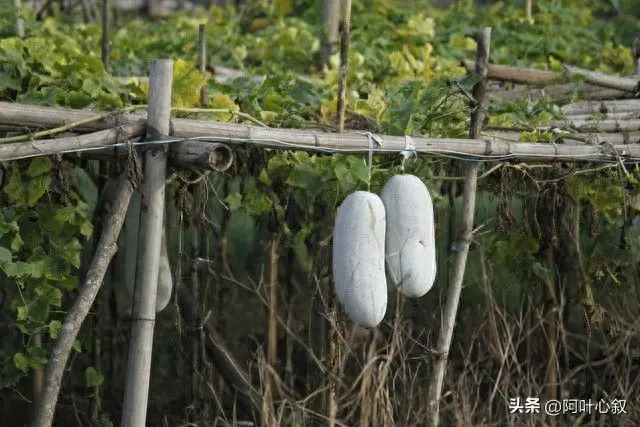
I. At the nodal level: i've got a guacamole in pairs of position, and i've got all the branches on the lower side. Divide
Old farmers who grow winter melons know that the melons depend on the main chicken and that the melons are well located, not all of them. It's the first step in the whole branch and the most critical one. It's in the wrong place and it's useless to cut it。
In short,** “all of the 10s and the 15s and then the melons”.** the main chickens of winter melons are grown from the root to the top, and the sprouts and chickens, regardless of size, grow below 10 knots. Why are you so mean? Because low-side branches are attached to the ground, not only are they fattening, but they are also susceptible to soil and disease, and they are the cause of post-mortem scavengers and insects, and these low-side branches simply do not create large-scale melons and keep pure waste of nutrients。
By the time the main chicken grows to 15-20, it'll be able to keep the melon. The most robust female at the nodal level is the one with the large, well-shaped, non-fatal, melon. In the case of black-skinned large winter melons, the reserve can be slightly pushed back to sections 18-22, and the condensed melons can grow up to 30-40 pounds; in the case of small melons, melons, melons 10-15, melons, melons, melons。
One more detail: don't scratch the top of the chicken! A lot of people see vines grow, they beat them early. The chicken must be kept at its top and long, with new branches and female flowers, until it grows to 25-30 knots, or climbs to the top of the shelf and strangles, so that it can grow more melons。
Ii. Looking at the weather: clear-cut periods with different temperatures
It's not always the right time to cut the whole guacamole. It's the wrong weather. It's the same thing that many people miss. In the summer of 2026, when rains were high in the south and temperatures were high, the whole branch had to follow the weather, and one wrong step could cause problems。
1. Sunshine cut and rain never cut
The whole branch is better picked from 9 to 11 a. M., when the sun is not sunburning, the temperature is moderate, the cut wounds are quickly dry and the disease is not easily infected. Never cut in a rainy day or evening, the air is so wet that the wounds cannot dry for half a day, and frost and powder go through the wounds, and the vine is yellow and rotting in a few days。
2. Light cutting at high temperatures and slow cutting at low temperatures
When the temperature exceeds 35°c in the summer, do not recut it. It evaporates quickly in high temperatures, leaves are cut too quickly, water evaporates too quickly, and seedlings are easily stung and sunburned. At this point, all we have to do is cut out the thin side branches, the sick leaves, the old leaves, and keep the strong branches as low as possible and leave the leaves to protect the water。
If the spring is fresh and the temperature is low (below 20°c), the vines grow slowly and do not have to be cut. When the temperature rises, the vines start to grow, and the branches grow slowly, or they are cut early, the seedlings are weak, and there are no later smelts。
Don't cut after the rain
After a heavy rain in the summer, the soil is wet, and at this time the vines are fully wet and thin, and the wounds can be cut with fluids, and the mud-coated bacteria can easily be found. It would be better to wait for the rain to stop for two to three days, to dry the soil a little bit, to do the whole branch and to be safe and secure。
Iii. Look at the strength: mzuto cut and control the madness, and weenie cut the air
The winter melons are different, and the whole branch is completely opposite - the muskets don't cut long, the vines are cut down. It's important to remember that many people, no matter how big they are, cut it in one cut
1. Prolonged: green leaves, thick vines, ten centimetres per day
This winter guacamole is too “crazy” and its nutrients are used for the long leaves of the ivy, and must be cut and cut. Apart from keeping the chicken, all the chickens and the sprouts are emptied; the extra shrouds and the male are removed from the chickens, so that they do not waste their nutrients。
In addition, the main chicken will be strangulated until 20-25 knots so that it can no longer go mad and force its nutrients to go on to the female and the guacamole, so that it can congeal and congeal。
2. Weaknesses: yellow leaves, thin vines, slow growth
It's boring. Don't cut it. It's dead. All you have to do is remove the leaves at the bottom, remove a few very thin branches, keep the strong ones as long as possible, save extra luminous co-operative leaves for nutrients, and grow the spasms slowly and later。
3. Moderate: green leaves, small vines, steady growth
This is the most economical and normal branch: the main chicken is kept, all the branches below 10 knots are strangled, all the melons are left behind after 15 knots, the spare side branches are trimmed, the old leaves are cleaned up in a timely manner, and they are neither cut nor retained deliberately。
4. Small technique: mundane, mundane
In the long winter melons, two or three can be left in each; in the weak, only one can be left, even without the melon, until the scavengers grow, or the nutrients are insufficient and the melons are cut out。
Iv. Looking at the those: majors of guys, shoots of shoots, shoots of shoots, shoots of weapons of weapons
Now there's a lot of winter melons, black-skin, white-skin, little melons, cucumbers, different varieties, different melons. The whole thing's a lot worse
1. Large winter melons (black leather, white leather big melons, 20-50 kg single)
Core: only the main chicken, all the side branches. The large, fatty, small and poor quality of these winter melons, with their side branches, keep their nutrients and affect the mackerel. When the whole branch is taken, the main chicken is kept in its entirety, and all the chickens, sprouts and rolls must be erased. In addition, only the female melons on the chickens are kept, and only one melon is left in each of them to ensure concentration of nutrients so that the melons can grow to the maximum。
2. Small cucumbers, cucumbers (two to ten pounds per cucumber, cucumber)
Core: main chicken plus side chicken, double chicken whole branch. The capacity of this winter twig is strong, leaving only the main chicken too wasteful and few. In the whole branch, the main chicken is kept and one of the most robust chickens is chosen for the chicken, the rest of the chickens are strangled, and the main chickens and the chickens can leave melons, two to three melons each, with high yields。
Crawling melons vs
- crawling of the melons (for the great winter melons): the chickens grow to 2-3 metres before the top, the side branches are strangled and straw is laid beneath the chickens to prevent the melons from decomposition。
- a winter melon (for small melons): the main chicken grows to the top of the shelf (1. 8 - 2 metres) and hits the top with 2 - 3 chickens on the top, evenly distributed, ventilated and luminous, and guardo。
V. Looking digital: scientized scientized, silent and silent
The fact that the winter melons are so rare or so dense, that they make a direct decision about the weight of the whole branch, so it's not cut, so it's all sick, so they're cut, so blind, and so many growers can easily make mistakes in 2026
1. Enriched plant (up to 1 metre and over 600 species per acre)
Must be recuted, strictly controlled. Screeched, spaced, uncut, cross vines, overlapping leaves, no wind, no light, high temperature and high humidity, and an immediate outbreak of frost, with no melon。
The whole branch is covered by a single cranberry branch, with only one main chicken, all the sides of the chicken, sprouts and rolls must be emptied, and the extra leaves, sick leaves and yellow leaves on the cranberry chickens are removed in time to ensure that there is a gap between the plants, which is radiant and reduces the disease。
2. Rare plant (more than 1. 5 m and less than 400 trees per acre)
You can cut them gently, and you can put them on the side branches. They're rare, they're big, they're big, they're good, they're good, they're good, they don't have to cut them too hard。
The whole branch is made of two or three chickens, with one main chicken + one and two strong chickens, and the rest of the thin side branches are strangled; the old leaves are cleaned up, the strong leaves are left, the light cooperation is strong, the nutrients are nourished and the melon is grown。
Plantation, milling (small space)
Lighten the whole branch, keep the vine under control. There is limited space to allow the vines to crawl, the chickens to keep, the side branches to keep only one or two, and the rest to choke; the chickens to the top when they reach 1. 5 metres, do not let it grow mad, concentrate on the guacamole, and the pots can give up three or five little melons。
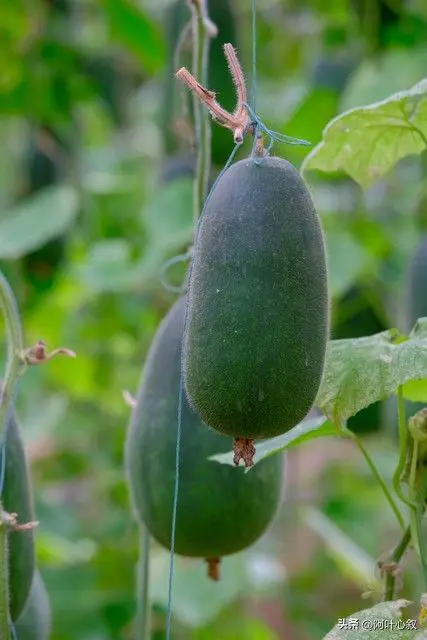
Six, three golden hours for the whole winter melon. One more year
It's not enough to remember "five look" and the whole time is wrong. The latest field experience in 2026 led to three critical periods for the whole of wintermelon
1. Shrimp period (4-6 real leaves, 30-40 cm high): light strangulation, lashing bud
This is the first full branch, the core is light. Only the plumb of 0. 5 centimetres of the top of the brocade shall be strangled, so as not to hurt the leaves and the troughs; the sprouts of the roots and of the armpits shall be wiped out without the long branches. The aim is to make the chicken grow strong and deep and to lay the foundation for later melons。
2. Roast stretching (one metre long, starting on board): clean side branches, lead chickens on board
This is the most critical piece, the core of which is “net”. When the chicken is 1 metre long, all the sides, branches and rolls of the chickens shall be strangled, and only the chickens shall be kept; then the chickens shall be drawn to the shelf, bound by ropes, and bound every 40 centimetres, and shall be directed up to grow without climbing or crossing。
3. Sitting period (eggs big, sit tight): weak melons, pick old leaves
This is the last full branch, the core of which is "pucum." when the guacamole sits firmly, all the deformed, thin, diseased and weak are removed, leaving only healthy and good ones; the old leaves, sick leaves, yellow leaves are removed from the base of the main cranberry, and they are radiant, so that the disease is reduced and the nutrients are fully supplied to the guacamole, growing fast and large。
Vii. Old farming practice reminds: 3 small details to avoid a reduction in production
1. Use the whole branch with as much hand as possible and not with scissors. Scissors are easy to carry with them, their hands are safer and their wounds heal quickly。
2. Do not water or fertilize the whole branch for two or three days. If the wound is not healed, the water is watered and fertilized, it is easy to rot in vines and dead seedlings, and until the wound is properly managed。
3. The effect of the whole branch is multiplied by the weight of the water. The whole branch is followed by 10 kg of compound fat + 5 kg of potassium fat per acre, weight and effort, and nutrients, and the melon is much larger and thicker。
End topic discussion
My family, these are the most recent practical experience in 2026 of the entire winter melon, five eyes and three golden times
Do you grow winter melons in any way that could have led to a reduction in production because of the whole crop? Or do you have a single trick? Welcome to the comment section. Let's talk and learn and grow more and better









