


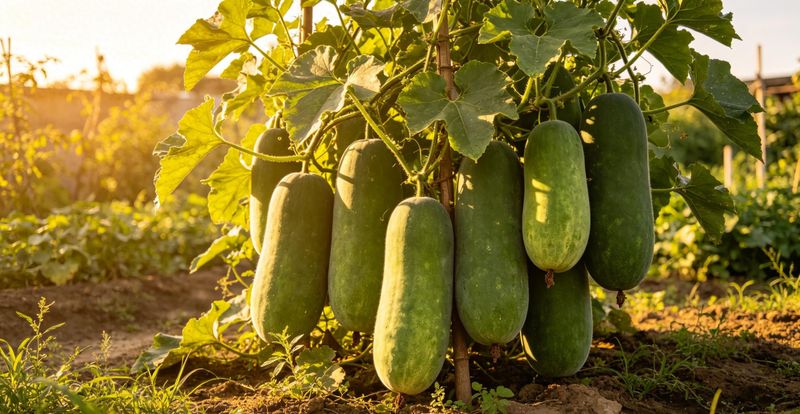
It is common in the day-to-day planting process for melons and vines to grow, and many growers to watch as they climb in the mud, making trouble in their hearts. Leaves the vines to grow, leaves are folded to cover the light. All the nutrients are provided to the vines with long leaves, with small numbers of adjoining fruit, small heads of guacamole, and prone to pests and pests; blindly cut the chickens, fearing that the branches will cut their roots, causing a loss of production。
The winter melons, melons, melons and melons all belong to the same species of cyanobacteria. They grow in a similar manner. Many do not know the timing of the chicken cut, the part of the trimmed and the number of chickens left, either by not cutting the vines at all or by over-refining them, and by working hard for half a year to harvest. Today, it is clear whether or not the four melons should be cut, when they should be cut, how they should be plasticized, and how they should be treated in a day-to-day manner, which is a practical way to be used for practical exercise in the field。
I. Distinguishing the growth characteristics of the four species and determining whether to cut the chicken
In order to be able to do this, it is not possible to generalize, first of all, that there is a difference between the four patterns of guacamole shapes and the pattern of the branches, and that there is a clear distinction between the principles of cuttering, which first ascertains the characteristics, so that subsequent operations do not make mistakes。
It is the most dynamic of cucumber vines, which spread quickly, with large numbers of splendors, and the branches of natural growth that are scattered. The winter melon is largely dependent on the result of the main chicken, which only consumes nutrients, squeezes the resulting branch into the growth space and must be trimmed on a regular basis with only the effective result branch。
The melons are small, have a medium capacity to split branches, and both the main and the strong chickens can have normal fruit. They do not have to be completely cut off, they clean up the chickens and the chickens, and the rational retention of the chickens increases the number of broths and trims mainly with a venom。
The maggot has a strong capacity to climb the ground and mount, and its hair is concentrated in the lower part of the plant. The maggot is concentrated in the upper-middle branch, the bottom of which is largely ineffectual. It is also attached to the ground-contaminated mud disease, with a focus on cutting the lower part of the useless chicken, and keeping the upper part moderately。
Cucumber vines are so reptile, they have many branches, they are so full of leaves, they are medium-sized and they are evenly distributed. The gold melons keep the vines too close to the sun, the leaves too dense to fall fruit, and the day-to-day need to trim overlapping chickens, cross-circle chickens and shape the vines in their direction。
In summary, none of the four can be cut completely, nor can they be cut out without any branches, and the chicken plastics can be trimmed according to the characteristics of the species in order to balance the delivery of nutrients in order to concentrate on the flowering results, which is the basic prerequisite for increased melon production。
Ii. Basic chicken cutting during the shrunk season
After planting the seedlings into life, they reach the critical phase of the first cranium styling, which is designed to keep them in shape, avoid the early separation of the young and the waste of prenavigation。
The seedling season of winter melons only conserves the growth of the main chicken, with small sprouts of the roots, euphemisms and all the young chickens removed. The seedling stage has limited nutrients, and once the chicken is left to grow, the main chicken grows weaker, and the subsequent climbing of the vine and flowering is delayed. When the main chicken grows to about a metre and leaves a small number of strong branches in line with their strength, they are determined not to leave any extra chickens。
The saplings do not deliberately remove all the sprouts, but simply clean up the sprouts close to the ground, long and thin. The main chicken is maintained upwards, with a small staggered sprout temporarily retained, followed by a secondary trim on the basis of the degree of estrangement of the plant, so as to avoid an insufficiency of post-shrimp branches。
The macamel seedlings take root at a fast pace, and the lower is prone to the breeding of grafts, which are rare and difficult to flower and cut directly from the root. To ensure that the main cranium is extended upwards, that only one backbone is retained during the nursery period and that the rest of the fresh buds are removed in time。
The goldmelon seedlings are large and the side buds are growing at a fast pace, and the seedlings are visited every three days, cutting out the chickens that are growing internally and entangled. The plant branches are loosely distributed, the ventilated light becomes better, the seedlings grow big and strong, and the post-revolutionary resistance increases。
Shrimp chicken cutting is done gently, as long as it is done in the morning of the sun, so that the wound can heal quickly and reduce the probability of bacteria entering. In the rainy weather, which is not trimmed, the branches are prone to decay in a damp environment, which causes problems with yellow leaf saplings。
Iii. Focused cranium cutting and routing of branches
After the seedlings have passed, the vines are rapidly stretching into the cranium, which is also the most prone stage of fowl sprawling, during which the core of the chickens are combing the branches, controlling the length of the vines, and dividing the result areas。
The number of chickens kept in control is strictly regulated during the cranium stretch, with the family garden growing in the open, with only one of the main chickens being kept for each of the cucumbers; large-scale stand-ups can provide for an additional one to two of the best-sized chickens, with all the rest cut off. The extra branches would only take nutrients, resulting in a small number of bronchies and an increase in the number of malformations. The vines should also be streamlined in a timely manner so that the branches do not entangle each other and spread along the stairwell or the ground equally。
The chicken season is governed by the principle of weakness and weakness, with the complete elimination of short, yellow-haired, weak-haired chickens and the retention of three to four strong branches as the result. The most appropriate number of flavoured branches, which are too few to go up, and too many ventilated branches are prone to falling apart. Once the trim is completed, the vines are gently towed, so that the branches are evenly distributed, leaving a reasonable gap between each branch。
The macabre cramming period focuses on cleaning up the bottom of the chickens, and on planting the vines within 30 centimetres of the lower half of the plant, avoiding the disease of the branches growing on the soil. The upper and middle parts of the healthy vines are naturally preserved, and the branches that overlap and shield the internal light are trimmed to ensure that every leaf receives the light and promotes the separation of buds。
Cucumber-spread control of the whole length of the vine, with long and tall branches hitting the length of the vine in time to prevent its unlimited extension. Cut off the branches that gather internally, cover the flowers, and set the vines in the direction, so that they do not pile up and grow. The large number of guacamole buds and the set-up of branches can significantly reduce the incidence of flowering。
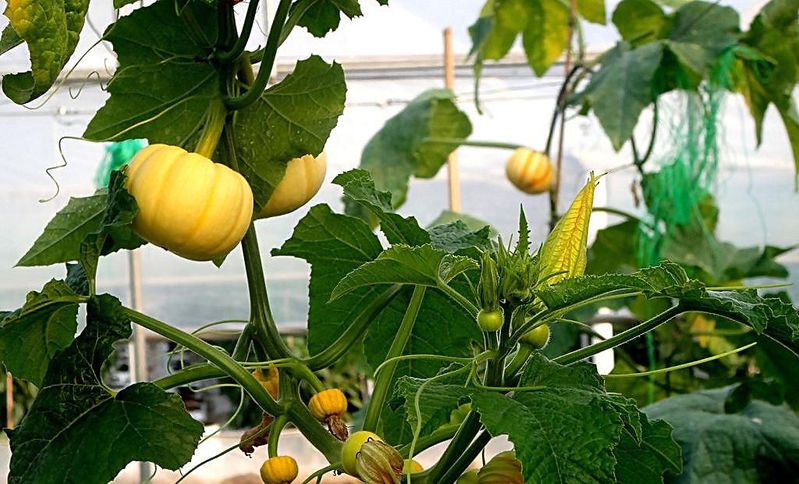
After cranium trim, weeding with simple pine soil, without damage to the roots of the plant, and within two days of the end of the trim, without the heavy weight of the water, gives the branches enough time to heal。
Iv. Finely curded chickens during flowering and smooth fruit production
When the vines grow and start to bloom, they enter the critical stage of increasing production, when the chickens cannot be re-circleed significantly, mainly with fine chickening and fruit-care, and the inappropriate cutting is extremely likely to cause the melon to fall off。
The flowering phase of winter melons is no longer marked by a large number of chickens, mainly cleaning the new buds on the branches and the useless branches. On the main chicken is a strong guacamole, with only one or two perfectly good guacamole left by a branch of the result, with a moderate trimmed branch covering the guacamole and consuming nutrients. Do not remove the fruit twigs in large areas, which are responsible for providing guacamole nutrients for photosynthesis, and blindly extracting the leaves leads to slow growth。
The guacamole period is stable, with emphasis on cutting off the leaves that cover the guacamole, which are closely attached to the guacamole, and avoiding long periods of rubbing of the guacamole, resulting in skin injuries that affect the shape. At the same time, empty, fruitless chickens are cleared and all nutrients are delivered to the remaining guacamole. The condensed fruit density is moderate, the branches are too dense to swirl, and the branches are trimmed as little as possible to ensure the stability of the brood。
When the maggot sits on the fruit, the old yellow leaves on the bottom, the empty chickens continue to be cleaned, and the resulting branches in the plant are kept as low as possible. It is sufficient to trim the small leaves that shield the larvae and do not damage the main branch of the result. The melon fruit is grown close to the branches, and the surrounding vines are fixed to prevent them from crushing the melon and deforming。
Cucumbers cut out the tiny branches around the small malformations in time for the guacamole period and concentrated on feeding healthy melons. The vines entangled on the surface of the guacamole are slowly removed so as to ensure that the guacamole is luminous in its entirety and that its head is full and its colour is even. It also removes dried yellow leaves from the plant and reduces unnecessary nutrient consumption。
Cutting in seasons is only fine-tuning, so as to eliminate large-scale cuttings of chickens, and during this period the planting of nutrients gives priority to the growth of fruit, so that a slight and reasonable repair of the chickens can serve as a protection。
V. Light cutting maintenance during the expansion period, contributing to the expansion of the melon
The formation of the guacamole enters a rapid expansion phase, with chicken cuttings dominated by minor trimmings, with the core safeguarding of ventilation and protection against fracturing that affects fruit growth, while preventing diseases caused by high temperatures and high humidity。
The winter melon expands quickly, the fruit is big and the thick surroundings cover the leaves in small fractions of the leaves, ensuring the melon is ventilated. Cutting off the fresh and fresh sprouting, eliminating nutrient consumption from the extra branches and increasing the continuous delivery of fruit and meat. The strong branches are properly protected, so that they do not bend and do not break。
The condensation period is small and the branches need not be trimmed to the point of cleaning up only the small twigs in the interior. The maintenance of branches and the circulation of air in the fields are effective in preventing common melon diseases such as frost, powder, etc., the growth of the melon fruit is stable and tastes better。
During the macamel expansion phase, emphasis is placed on cleaning the unwinding branches under the plant and reducing the humidity of the field. The top result is the normal retention of the leaves, the accumulation of nutrients through luminous co-operation, the filling of the flesh and the reduction of the problem of empty hearts and dried fruit。
The golden melon bulges the vines, so that the branches are not stacked to crush the fruit, and so that the old and useless branches are eliminated. Sufficient light allows melon sugar to accumulate more fully, and the fruit tastes sweet and the quality of commodities to improve significantly。
During the expansion phase, with the exception of light cutting of vines and vines, daily water is used to keep the soil humid, no heavy water is used for drying and damp, together with basic field plumbing, cutting and water fertilizers, and the head and quality of the melon are significantly improved。
Six, four common fault areas for chicken cutters, avoiding errors and reducing production
Many growers have poor harvests, mostly through chicken cuttings that have stepped on the wrong spots, combined with common problems in the fields, combing where people are most vulnerable to mistakes, and daily cuttings to avoid them。
The first one is wrong, and the whole trip doesn't let the chicken grow. Many newcomers feel that the more vines are hung, the more they are left to be divided by branches, the last of the leaves is unventilated, there is a serious lack of light ventilation, and the buds are difficult to form, and even the adhesives are mostly melons, deformed melons, pests and pests, and the overall yield is significantly reduced。
The second error is that too few overcuts are left. Fearing insufficient nutrients, cutting off most of the chickens, retaining only one main branch, too few branches, insufficient number of buds, low base number of nuts, and the difficulty of achieving high yields in the later period。
The third error, no matter what weather. Rainy and wet days, high-temperature and high-light trimmed, and the wounds heal slowly, either infecting the fungus of the fungus or losing the branches and causing damage to the normal growth of the plant。
The fourth error, a massive cut during the bulge period. During the critical period of the growth of the guacamole, a large number of leaves are removed, branches are cut, the supply of nutrients for photosynthetic purposes is disrupted, which directly triggers the fall of the flower and the growth of the already formed guacamole is stopped。
In the fifth error zone, only vines and vines are cut. The cutting, which is followed by the entanglement of branches, continues to shield the light from the ventilation, and the cutting of the chicken is not meaningful and does not have the effect of increasing the protein。
The correct way to cut chickens is to perform the function of plastic growth by phasing them in accordance with the characteristics of the species, styling them, stretching them, fine-tune the flowers, and preservation of the fruits, so as to control the strength and timing of the cutting, and to shape the branches。
Vii. Chicken shears with field catheters to reinforce the overall harvest
The high yield is not achieved by chicken cutting alone, and the effects of this increase can be realized only if the vines are trimmed and accompanied by appropriate field management measures。
Aqueous fertilisation management is associated with the growth phase, which is dominated by thin nitrogen fertilizers, which promote the robust growth of branches; increased application of phosphorus fertilizers during the flowering phase, which reduces the use of nitrogen fertilizers, avoids the re-emergence of vines, and helps to diversify and expand the guacamole; and during the expansion period, which guarantees the balance of water fertilisation and the smoothness of the soil's dry and wetness and prevents cracking melons. Fertilizers are applied far from the roots of the plant and do not burn roots to damage vines。
The rise in growth space is enhanced by scaffolding, four scrawny scrawny, flat-crawling and planting leaves that are prone to soil-infested diseases, conditions that allow for the construction of a scaffold, the lifting of trimmed vines, the suspension of branches, better ventilation conditions, a reduction in disease, and a significant increase in the rate of hanging fruit。
Pests and pests are routinely pre-prevent, leaf-intensive are a contributing factor to the high incidence of pests and pests, increase in field permeability after chicken cuttings, and conduct regular inspections of plant plants, which reveal that a small number of yellow leaves and sick and insect branches are removed in a timely manner, are protected in advance and reduce widespread infestation。
In time, weeds will be cleaned from the fields, which will take the soil's moisture nutrients and will also cover the light of the guacamole, each time the vine is trimmed and the surrounding weeds will be cleaned and the environment in which the guacamole will grow well。
Summary
In the case of melons, melons, melons and melons, the four species of melons need to be scientifically and rationally sculpted, and there is no situation in which they can produce more productively without the use of vines. The winter melon focuses on the control of the side chickens, the weakness of the melons, the rational presence of the branches, the cleaning of the groundless chickens at the bottom, and the guacamole on the whole branch。
A gradual operation based on four stages of sapling, condensing, corset and light-cuting of fruits, avoiding common faults such as blind re-cuting, allowing for long periods of madness and faulty trimmings, and combining the basics of water fattening, frame-laying and disease-proof weeding can effectively reduce the problems of growing, falling flowers and deforming fruit, increase the number of adhesive fruit, and allow the fruit to be symmetrically and of good quality, and produce good yield from gardening and small-scale cultivation。
The growth status of each melon changes finely with the climate, soil and planting density, and the daily cutting of chickens without rigidity and with flexible adjustments to the actual growth of the chicken in the home, keeping the number of branches and the strength of the sheaves in order to steadily increase the yield of cultivation。
Interactive topics
Are you used to growing these four guacamole, or are you used to leaving more vines or less? Have you ever had any trouble with a flower cutter, or a vine and vine? It is possible to share its own practical experience in managing it。
Disclaimer
This paper is intended to be an experience-sharing exercise for private field farming, with differences in geographical climates, soil and water fertilization conditions, the effects of which vary from person to person, and does not constitute a commitment to the proceeds of cultivation, and should not be replicated as a common planting standard。









