


Form characteristics
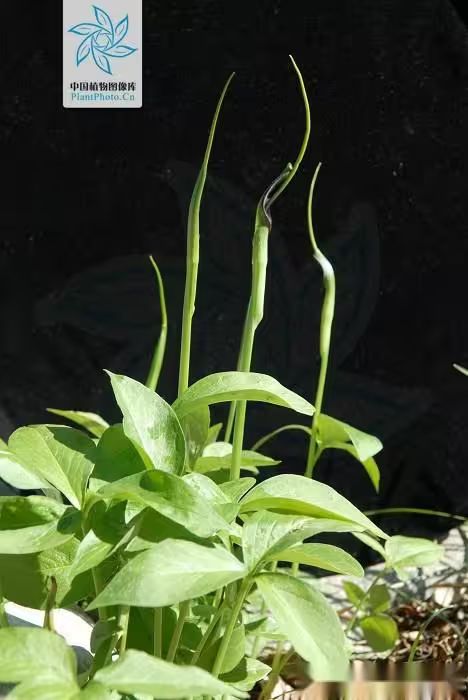
The tuber ball, 1-2 cm in diameter, with stubble root. ~5 leaves, sometimes one. The leaves are 15-20 cm long, the base is a herb, the inside, above the sheath or the foliage base (head of the leaf handle) has a bud of 3-5 mm in diameter, and the beads are lumbering on the mother's stem or are luminous; the ovary form of the young leaves is edifice to the arctic shape, which is the whole lobe, 2-3 cm long, 2-2. 5 cm wide; the old leaves are fully fractured, fractured green, back pale, long circle ellipses or pins are sharp, with a diameter of 3-10 cm in length and 1-3 cm in width; the side is slightly short; the whole loam or less visible shallow beams are 8-10 cm, thin, thin, thin, thin, fine vein vein, dense, and confluence 2 cm。
Serial handles are 25-30 cm long, longer than leaf handles. Flame green or green white, tubular narrow cylinders with 1. 5 ~2 cm long; guild minister round, green, sometimes on the edges of purple, 4 ~5 cm long, 1. 5 cm wide, blunt or sharp. Scrolls of meat: the female is 2 cm long and the male is 5-7 mm long, with a distance of 3 mm; the auxiliary is green and purple, 6-10 cm long, straight and sometimes "s" curves。
The berries and eggs are rounded, yellow and green, and the first end narrows down into visible luminaries. May-july, august。
Distribution
In the semi-summer period, with the exception of the undiscovered wild areas of inner mongolia, xinjiang, qinghai and tibet, widespread throughout the country, growing up below 2,500 metres above sea level, often on grass slopes, wastelands, maize fields, edges or forests, is one of the weeds in drylands. North korea and japan also have 3。
Cultivation
Reproduction methods
One is a tuber breeding. Half-summer cultivation lasts 2 to 3 years and can be used to dig up subterranean saps in june, august and october of each year. Select a small, medium-sized, disease-free tubular seed with a width of 0. 5-10 cm and a healthy, insect-free stem, which is better than a large tuber. They shall be mixed into dry and wet fine sand, stored in the coolness of the ventilation, and shall be taken out of the plant in the winter of the year or in the spring of the following year. Spring planting is good, and fall and winter planting yields are low。
Two are bud breeding. In the summer and autumn, strippings are made from the ripe buds of the leaf handle, 10-16 cm, 6-10 cm, opening caves, with three-5 sprouts per den, and 1. 6 cm thick. At the same time, the application of a suitable mass of mixed fertilizers can contribute to the growth of the bud and to the fertilization of the mother's tuber, which can be beneficial。
Three is seed breeding. Half-summer over two years, from early summer to autumn winter, can produce flowers, which are used when there is insufficient or breeding. From the fall, about 10 d of pyrotechnic acids were sprung to harvest mature seeds and store them in wet sand。
Plantation techniques
Land selection
It is desirable to grow sandy land or land that is wet, fertilized, lax, well-drinked and neutral, or to select a slow slope of half-moderate. Half-summer cultivation in plain areas requires the choice of plots that can be irrigated and have a higher topography, and the digging of drains before planting. After the selection, in october-november, the land was thrown deep around 20 cm, removed from the gravel and weeds and fertilized them。
Field management
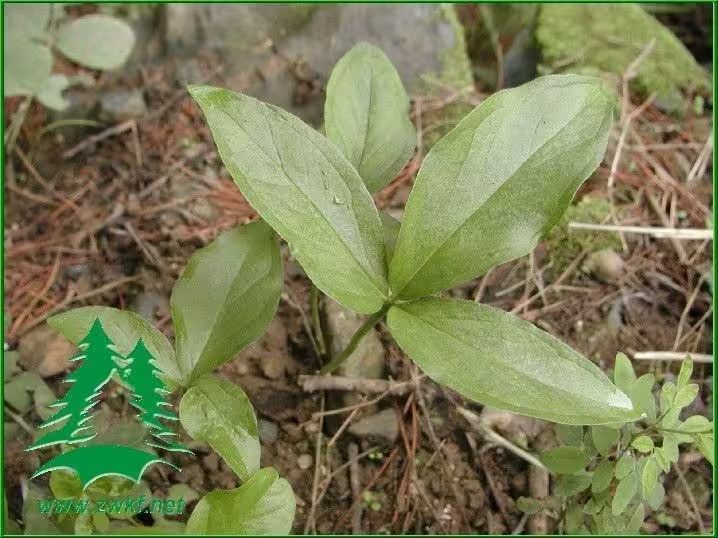
Up to 50 per cent of the seedlings should be removed from the membrane in order to prevent the burning of the seedlings at excessive internal temperatures. Before going to the membrane, the wind was lifted from both sides of the compartment at noon, sealed in the evening, for several days in order to produce seedlings, and then all of them were removed. The seedlings were combined with the pine soil and the weeds were removed at any time. After the membrane is removed, the ground should be watered in a timely manner. More water is required during periods of bulge expansion and soil humid estration should be maintained. The rainy season should exclude water accumulation。
Plumbing requires soil to grow, and in the months of june and august, ripe buds and seeds are to be laid on the ground, where they are to be bred twice. All the buds that grow in the long run are removed, contributing to the fattening of the tubers in order to increase production. After the mid-summer atrophy in november, the upper leaves of the ground and the fallen buds were collected, in which the membranes were laid on the surface of the plume。









