


From the mba think tank encyclopedia (https://wiki. Mbalib. Com/)
Apparel modeling
What's a costume
Clothing formation is defined as the structural relationship of the garment in shape and the way in which it exists in space, including external and internal formations, also known as overall and local formations. Point, line, face and form are the basic elements of any form。
Composition of costumes
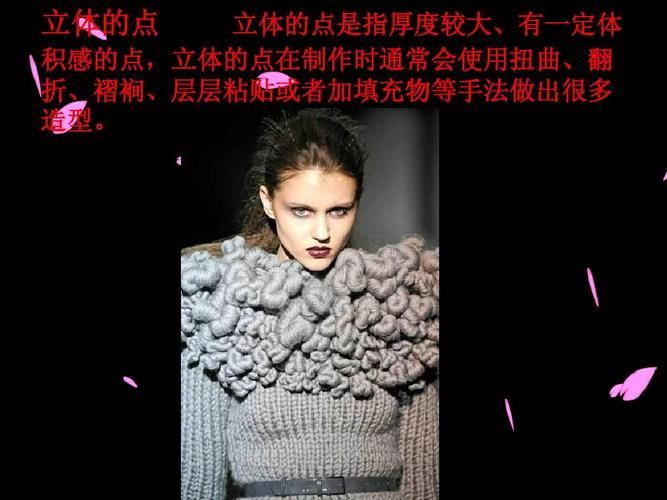
Clothing is a stereotype that is shaped by the transformation of the plane fabric, with characteristics such as multicurvature and dynamic transformation. A combination of human shapes, fabrics and process characteristics can be divided into three main types: body-appropriate clothing, loose clothing and partially relaxed clothing。
These three types of specific shapes can be divided into the following three areas:
(i) total
The overall shape of the clothing, the outline of its outer form, is formed on the basis of, but not equal to, the human form. The outer contours of a dress are contours of a stereo, which can be adapted to the human body and can be summed up and exaggerated on its basis, while at the same time it can change the appropriate amount of the human body. The total shape of clothing can be classified into x, y, h, a, v, t and o, depending on the geometry of the contours。
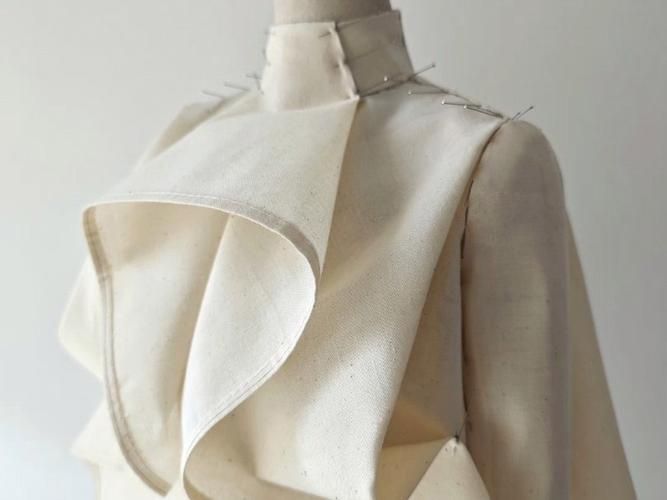
Clothing can be structured according to the pattern (or layout) of the main structural point of the human body, with four cells of vertical mid-axis crossed by the waist line; six lines of six through the nipple vertical line and the waist-wire cross; eight cells of vertical axis added to the vertical line; and sixteen cells of breast-string, i. E., chest and plume, i. E. Hip-bar. Partly divided along these lines can form a variety of costumes. However, the aggregate is closely related to popularity, geography and brand style。
(ii) point, line, face, body
This is an extremely important component of clothing. Point can increase the lively, vibrating, rhythm and focused effects of clothing. Point can be achieved in clothing by buttons, pins, pockets, butterfly knots, etc.; line can enhance clarity of the outer contours, increase a sense of motion, seism, groove, width and rhythm, etc., while line formation can be achieved by structure lines, stitches, dress lines, decoration lines and edge lines; face can be achieved by dividing colours, with different visual effects in different sizes; body is actually the contours of the overall fabric of clothing, which plays an overall volume, style and interest。
Point, line, face, body should be applied in combination, but with some focus, or face-based, or line-based, or focus, with no respect for equal use, disarray and stacking。
(iii) local (details)
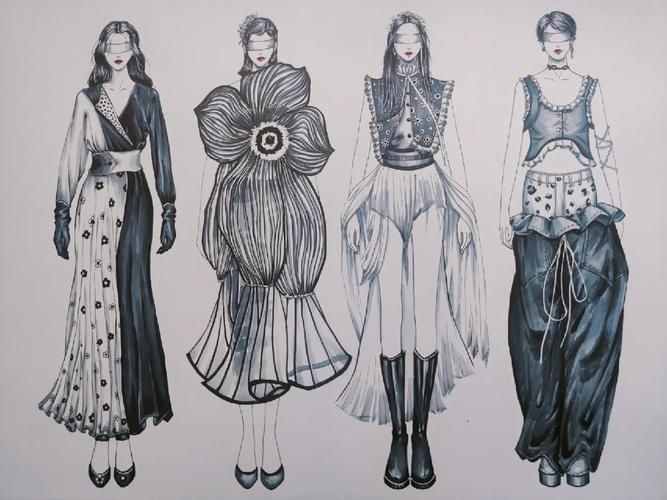
In clothing design, local change designs are often more important than dots, wires, surfaces, because we rarely have the possibility and opportunity to make very “big” design changes to clothing, and small changes and designs are often the focus of an “eye” design, and this point is often a popular element or element. Local changes are in the form of leading changes, sleeve changes, bag changes, body changes, etc., and in the form of decorative changes。
The composition of clothing can also apply the principles of plane composition, such as through combinations, bindings, partitions and combinations, approximation applications, changes in appearances, and various gradients。
Zhao xianxian, the garments, across the latitudes, textile rolls, shandong science and technology press, 2007. 4. Zhang sinko, eds., chapter iv. The composition of the garments.
From "https://wiki. Mbalib. Com/wiki/%e6%9c %8d %e8%a3%a8%e9%e9%e0%e5%9e%8b"









