Almost every psychologist has been confronted with the fact that during the counselling process, visitors have not been able to speak very well to the counselor and speak of their psychological problems。
However, the visitors were keen to resolve their psychological confusion. So, what is the way to mobilize visitors to “speak” their own psychological problems in such situations
Paint projection analysis! Paint projection analysis! Paint projection analysis
So what's behind the psychological analysis
Let's go check it out
Biological base
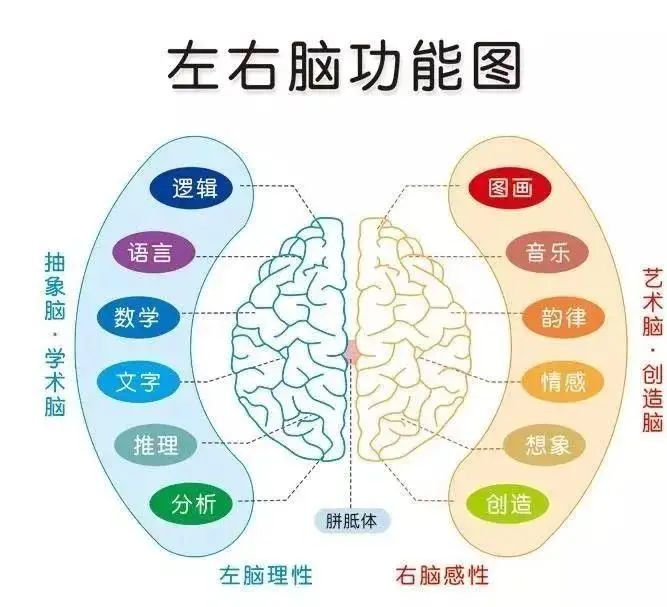
(note: this chart is based on the thesis by professor speri, doctor of medicine, u. S. C
The psychological analysis of paintings as a form of psychotherapy is based on the division of labour between the two hemispheres of the brain and psychological projection theory。
The neurophysiologist sperry's crack experiment confirms that the hemisphere is associated with abstract thinking, symbolic relationships and the logical analysis of details, and that the hemisphere is graphic, it is related to consciousness and spatial positioning, and it has musical, drawing, integrated assembly -- spatial identification。
Psychological projection
Psychological projection is defined differently in different areas of psychological research。
In classical psychoanalytical theory, psychological projection is seen as a psychological defence mechanism to ease anxiety and defend oneself in order to maintain the inherent personality structure。
The projection at this time is an individual's desire to impose his or her fault or lack of social recognition on others, also known as denial。
In the child development psychology, projection means that during a child's self-centre period, it is often perceived that others feel the same way as themselves, also known as assimilation projection。
The techniques of psychological analysis of paintings, however, are based mainly on psychological projection in psychological analysis。
In the analysis of psychology, projection is considered as an unconscious and active expression of one's own activities, a reflection of the consciousness of a free object。
The product of the projection exists not only in the form of art, but also in the form of dreams, hallucinations, delusions and so on。
Artistic psychology believes that painting is a tool for self-expression, a non-verbal symbolic tool for expression of a subconscious。
So painting can be a psychological projection technique。

The role of psychological analysis of paintings
The deeper a person's emotions are buried, the further away from his consciousness, the less likely he or she is to find the language to express it。
However, emotional distress can be expressed in a different way, such as giving it visible form。
Painting, as a tool for emotional expression, reflects information at the inner, subconscious level, and is the process of visualizing subconscious content。
People are less defensive about drawings, and unwittingly project deep-seated motivations, emotions, anxiety, conflicts, values and aspirations into drawings。
Sometimes you can release the hidden or repressed elements of your early memories more quickly and start rebuilding the past. As a result, the picture conveys much more powerful information than language。
And, in the drawing process, individuals can further refine their thinking, visualize intangibles, concretize abstract things。
So, there's enough real information for the therapist to analyze and treat the patient。
At the same time, according to the constant law of energy, energy neither disappears, nor increases or decreases, but only in other forms, so that the amount of negative sentiment in the mind can be translated into work through painting。
On the one hand, it relieves depression and anxiety, on the other hand, and on the other hand, the patient, guided by a therapist, can recognize and reflect on his emotions and problems through his own work。
In addition, robin, the master of drawing therapy, has made a more comprehensive analysis of the mechanisms of drawing therapy: people's thinking is mostly visual, and thus is better understood and solved through visual drawings;
Memory can be pre-speak or confined, and people's traumas can be suppressed and cannot be extracted in language, making it difficult to treat。
There are many emotional experiences that are in their own right, that cannot be described in language, and that cannot be treated;
The dark side is easier to express through painting, which is itself symbolic and value-neutral, and where patients can freely express their wishes and problems, an expression that is hidden and not bound by, inter alia, social ethical standards。
Unaccepted ideas, emotions and impulses, if perceived and accepted by individuals, can transform destructive energy into constructive energy。
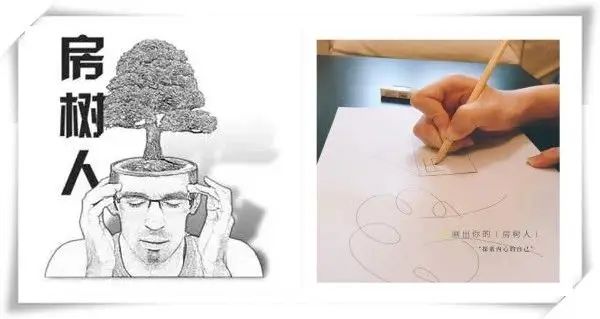
The psychological analysis of paintings, also known as painting projection test techniques, is an important technique for subjective psychological testing, including painting tree tests, room tree man tests, etc. Visitors are required to complete drawings on specific topics, during which they present subconsciously depressed emotions and conflicts, which can be supplemented by consultants who can interpret to assess the visitors ' personality, emotional state, psychological state, life experience, etc。
The “house tree man” test is based on psychoanalytical schools and is a psychological projection test。
It is possible to excavate the psychological energy of the subjects, which is at its deepest, unaware and primitive levels, and to discover something that we ignore in life。
The course " drawing psychosocial advice - clinical use of house tree people in psychological counselling " will begin on 26 and 27 october 2024. Young people interested in the course, sign up and join us