


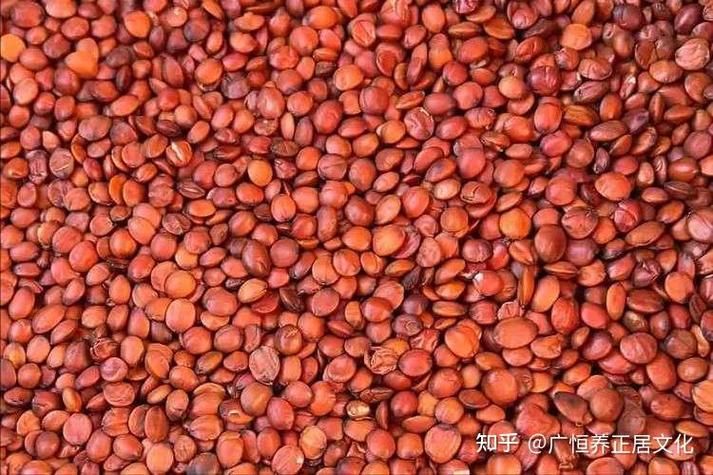
"uploadid": "v03a62g10003d917os2ljht96nl4el10", "duration": 375. 878, "sourceprovider": "readtt", "contanttype": 1, "extra": "audio text": "today we talk about three types of medicine that have recently received more attention in the market, namely, sour palms, earthworms and yellow chains. Yes, these three drugs have recently become more difficult for a number of pharmacists to take advantage of because of some weather, and because of the cycles of cultivation and some supply, as well as higher price volatility. That's right. These varieties are, indeed, more recently discussed, so let's just start. Let's start with this sour-tree, which is a recent topic that has been discussed by many, namely, what is it now, why are prices so high, and what are the more pronounced divisions in the market, and what are the manifestations of different production zones? Well, it's true that the sour palms are acting very special this year, although many of the conventional varieties in the chinese drug market are weakening. But it's still strong, even rising. Yeah, it's now $450 to $460 per kilo, and 950 per kilo. Then it's more expensive to load. It costs between $460 and $470 per kilo. Wow, that sounds really expensive. Then why is this happening? The main reason for this is that the main production areas of hebei and shanxi have rained continuously during the season. And it caused a lot of pollen to be washed away by rain, so most of the first fruit was not sitting, and in many places it was less than 60 percent. So, a lot of money starts to get involved, and the purchase price is pushed up. But these parts of henan shan east, the weather is normal, so they're good. It has also led to repeated shocks that do not increase unilaterally, but rather in high places. Then i wonder what will happen to the sour palms, and what other factors will make their prices more volatile? The most critical point is the new period of delivery in september, when prices are expected to fall if there are no major natural disasters in the primary area before the new production takes place, and then new goods in the secondary sector are available in large quantities. However, if extreme weather were to be experienced in the main production area, there was a risk that the volume of the nine or eight goods would be higher. Well, the whole year, however, is supposed to be a pattern of massive shocks that will not lead to ever-increasing unilateral cattle markets. The opportunity lies in new pre-production weather, which can easily be pushed down. I see. The price of this variety has been rising so much lately. What's the reason behind this? This is mainly due to the fact that, in the recent period, there has been a sharp drop in the volume of goods in the market, and then the price of the powder tablets in the market, such as that of chuzhou, has risen to between $40 and $43 per kilogram. Well, in fact, the increase over the past two months is about 20 percent, mainly because the resources of the wild are diminishing, and then the production is expensive. As a result, the willingness of farmers to dig is low, resulting in a tight supply in the short term. Is the trend towards rising prices likely to continue, and is there any factor that might change that trend? In the long run, prices are bound to rise and fall because of the depletion of wild resources and the subsequent restrictions on imports. However, in recent years there have also been places in the country where seed testing has begun, although it will take three or four years to harvest. So, will the earthlings maintain this strength for some time to come? For the time being, it should be priced at a position of $40 per kilogram, with a stronger support. Then the average price for the whole year should also move upwards, especially after the fall and winter seasons, when the demand is being filled, prices may be higher. Well, it should be hard to see a sharp fall next year. Okay, so how's the market going in yellow company lately? What's the price change? The recent market situation in yellow company has been somewhat polarized by the fact that the market has not moved fast. And then the price, because of the quality, is very different. Well, for example, it's $320 to $330 per kilo for a single line, and it's $340 to $350 per kilo for a new one. The chicken claws are then in the range of $310 per kilogram, and the new product is 330 to 340 per kilogram. The most exaggerating is the yellow series, which costs $340 to $360 per kilogram, and the new product runs directly to $370 to $380 per kilogram. Wow, the difference is quite obvious. What caused it? This is mainly related to its growth cycle, i. E., it takes five years to plant it. Oh, so in the last two years, even after the expansion of the primary area, the fastest seedlings will not be on the market until 200028. As a result, the production of new goods in 2002 and 2006 is still very limited and may cover only about 30 per cent of the market demand, the remainder of which will be covered by past stocks. That means that the impact of inventories on prices is still significant, but isn't it true that everyone's inventory costs are different? Yeah, yeah, because some people might have been hoarded at a low price, so he might have made a little profit and, um, that would have caused occasional price drops. But most of the people, who spent more than $300 per kilo, were reluctant to sell at a low price. Added to this is the increasing demand for yellow companies for medium medicine and sugar-based health products. So stocks are consumed very quickly, and, uh, prices are very high, so it's probably a high-level shock for the whole year, and then there's not much room to return. By the second half of the year, there may be a small wave of fluctuations when the pharmacists begin to prepare for the fall and winter. So the long line is actually more secure. Understand, what are the greatest differences in the logic of investment between these three drug varieties and what are the most critical considerations when we make our choices? Actually, each of these three varieties has its own way of playing. The sour palms are mainly dependent on the weather, so it's very volatile. You have to get in and out. You have to have the courage to stop the damage. Well, yellow company depends largely on its supply and demand gap, so you have to be patient and able to withstand its fluctuations. It's mainly because of the scarcity of resources, so you have to slow down and you don't have to rush. Yeah, but either way, you have to figure out how much risk you can take, you have to have your own pace of dealing, and don't go blind. All right, today we're going to go over these three more popular chinese drug varieties, from price trends to influence factors to investment logic. Well, it is hoped that some reference will be brought to your decisions. All right, that's it, then. Thank you for listening. See you next time。", "ttts m"https://tosv. Byed. Org/obj/tos-tingtoutiao/ai podcast m== sync, corrected by elderman == @elder man









