


Depending on the climatic and geological conditions throughout the country, the suitable vegetable greenhouses can be divided into nine categories (including eight greenhouses and one archage): shandong sheds, north china sheds, high cold sheds, high plain sheds, extremely cold sheds, medium-sized sheds, gangnam sheds, gangnam sheds and south china sheds。
Shandong shed type
It is suitable for shandong, henan, north, hebei, south shanxi and south central and south shaanxi。
Climatic characteristics: mean temperature for the coldest month of winter (january) - 2°c ~ 4°c and average minimum temperature - 4°c ~ 8°c. The winters are heavy, the sun is low and the days are high, of which shandong is affected by the sea and the winters are high。
Geological characteristics: the soil is thick, the groundwater table is deep and only shallow near the yellow river。
Suitable sheds: ready for excavation, semi-surface, back-story, roof-to-top, small window archer-line sheds, low-lying areas, suitable for deep excavation, ground-wide, back-story, earth-wall-to-top parabolic sheds, 9 m - 14 m in width, high-wide 1:2 ~1 :2. 5, surface covered by grass curtains and membranes. Basic sheds for chinese vegetable greenhouses to meet winter conditions for vegetable cultivation。
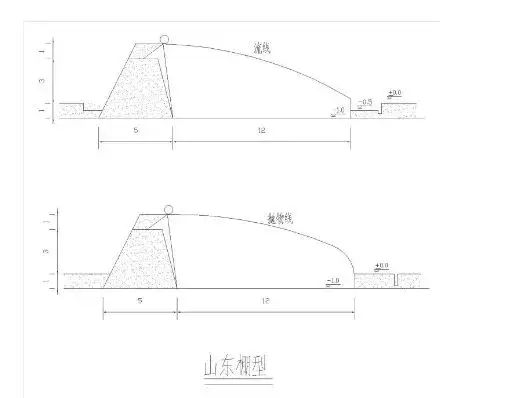
Cultivation patterns: plantation in september/october, harvest in november/june (long term) or august, harvest in september/december, planting in january and harvest in february/may (two short periods)。
Distinctive features: back wall to top, cooling and energy retention; large area of light; winter and spring rain, suitable for covering straw curtains and membranes, depth of groundwater table, internal cultivation。
North china shed
It is suitable for hebei, shaanxi, central xianxi, tianjin, ningxia autonomous region, beijing, liaoning, shanxi, southern gansu province。
Climate characteristics: the coldest winter month (january) averages 4°c ~ 8°c, the lowest average temperature 6°c ~ - 10°c, the winter and spring snows are larger, the sun is bright and the sun is warm, of which the southern provinces of tianjin and liaoning are affected by the sea, and the winter winds are high。
Geological characteristics: the soil is thick, the groundwater table is deep, and only the coastal areas are shallow。
Suitable sheds: small backsides, excavated back-to-back walls, semi-terrestrial parabolic sheds, low-lying areas (defeating water) suitable for excavation, back-to-back houses, earth walls up to a quarter of elliptical sheds. It is 8 m ~ 12 m wide and has a high width ratio of 1:1. 8 ~ 1:2. 2. The area of light is larger and smaller, and the walls and cover are thicker than those of the shandong shed。
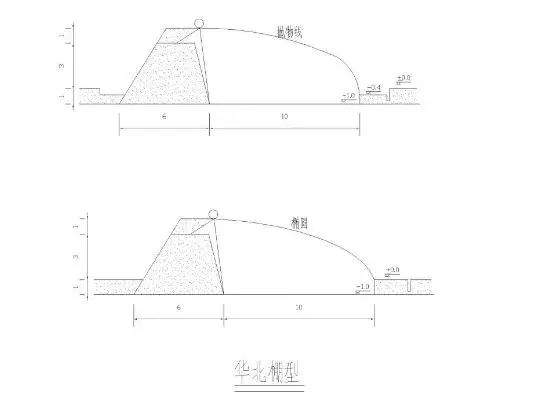
Cultivation patterns: plantation in september/october, harvest in november/june (long term) or august, harvest in september/december, planting in january and harvest in february/may (two short periods)。
Remarkable features: rear wall to top and thick, energy retention; low solar bearing angles, increased radians; winter and spring rain, suitable for covering straw curtains and membranes, depth of groundwater table, and in-planting。
High cold shed type
It is suitable for beijing city, hebei province, liaoning province, shanxi province, shaanxi province, northern gansu province, central west of inner mongolia and south central xinjiang。
Climatic characteristics: mean temperature for the coldest month of winter (january) is 8°c ~-12°c, limit temperature - 18°c ~ 16°c, weather is high, light is bright during the day, and temperature varies widely between day and night。
Geological characteristics: most of the soil is deep and the groundwater table is deep. Only the gobi salinized areas of inner mongolia and xinjiang are shallow and of poor soil quality。
Suitable sheds: semi-surface, slant behind the house, 1/4 elliptical and 1/4 round sheds from earth wall to top, 6 to 10 metres wide and 1 to 1. 5 to 1:2 large. This increases the light arc, reduces the span of the shed, increases the slopes on the back to reduce the bulk of the heat in the back shed, and increases the temperature of the back wall, backside and cover。
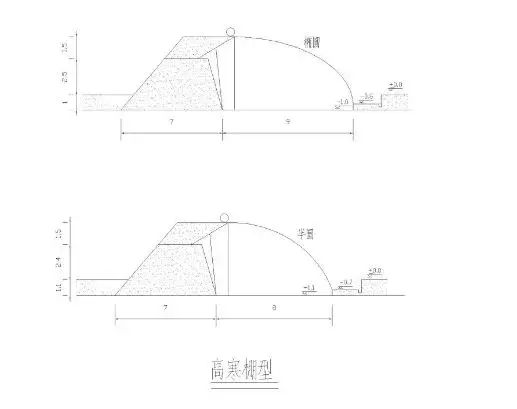
Cultivation patterns: planting in september/october, harvest in november/june (long-term) or august, harvest in september/december, planting in january and harvest in february/may (two short-term)。
Distinguished features: back wall to top and thickening to keep the energy warm; low solar intake angles and increased arcs of the roof; high shade coefficients and lower front walls; low temperature snow in winter and low rainfall suitable to cover the temperature protection; larger backside to reduce the heat spread of the shed; deep groundwater table and internal cultivation。
Highland shed type
Suitable for ulanchabu, qinghai, tibet and western sichuan. Qinghai province is a representative。
Climatic characteristics: temperature averages 4°c ~-12°c in the coldest months of winter (january), good daylight in the day, sufficient light, long daylight hours, low temperature at night and very high temperature at night. The spring wind is getting bigger. Rain is always low and summer is cold。
Geological characteristics: earth layer is thick and groundwater table is deep。
Suitable sheds: the following are suitable for excavation on the back of a large slope, before and after the earth wall reaches the top, semi-surface parabolic sheds or one quarter elliptical sheds, with a width of 8 metres ~ 12 metres and a height ratio of 1. 8 ~ 1:2. 2. Longer slopes on the back side of the back room than those of the north china shed in order to reduce the bulk of the heat in the back shed, to keep the back wall warm, the back side of the house and the cover thicker, and to use membrane lines to protect against the wind。
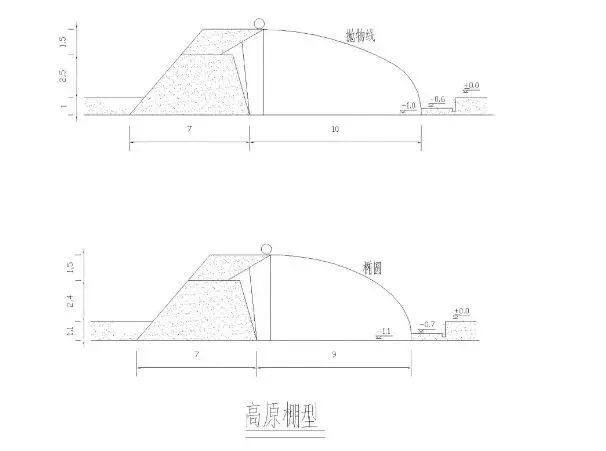
Cultivation patterns: vegetables can be grown at all times of the year, without high temperatures。
Distinct features: backwall to top and thick enough to keep the energy warm; lower solar intake angles and higher arcs of the roof; low temperature snow in winter and less rain, suitable for cover temperature protection; high winds in the high plateau, with membranes resistant to the wind; larger backside to reduce the heat spread of the shed; deep groundwater table, planting inside。
Extremely cold
For the provinces of jilin, heilongjiang, the eastern part of the country and the northern part of xinjiang. It is typically represented by heilongjiang。
Climate characteristics: mean temperature for the coldest winter month (january) - 12°c ~ 24°c. Temperature is low during the day and night, with small differences in temperature. The daylight is good, the light is good。
Geological characteristics: earth layer is thick and groundwater table is deep。
Suitable sheds: an appropriate one-fourth round of semi-surface, back-story, earth wall-to-top huts with a width of 6 metres ~ 10 metres, with a width ratio of 1:1. 5 ~1:2 is appropriate. This increases the light arc compared to the high cold shed type, increases the slopes on the back to reduce the bulk of the heat in the back shed, reduces the span of the shed, increases the temperature of the back wall, the back floor and the cover, and digs around the shed to fill the cold ditch。
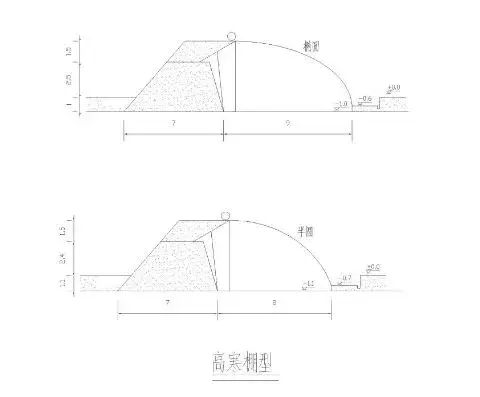
Cultivation pattern: planted in august, harvest in september-january, planting in february, harvest in march-june。
Remarkable features: back wall to top and thick, energy retention; low solar penetration angles, increased arcs of the roof; high shade coefficients and lower front walls; low temperature snow in winter spring, less rain, suitable for cover temperature protection; high winter wind, membrane cord resistance. The back of the house has been increased to reduce the volume of shantytown heat; the groundwater table is deep, and it is planted in the lumber。
Medium original
It is suitable for henan province, shaanxi province south, jiangsu province, anhui province, hubei province, and north sichuan province. The northern part of anhui province, which is typically represented, is the most suitable area in china for the development of greenhouse-based vegetables。
Climatic characteristics: mean temperature in the coldest months of winter (january) - 2°c ~ 2°c, temperature above 4°c during the day, light in the winter, heavy weather, heavy snow and snow, heavy spring wind and heavy summer and autumn rain. Among them, jiangsu province is affected by the sea, with more winter winds。
Geological characteristics: the earth is thick and the groundwater table is shallow。
Suitable sheds: deep-water areas (water drainage facilitation) suitable for excavation, semi-surface, back-story, façade-to-top, sub-surface sub-surface, sub-window-line sheds; deep-water areas (water drainage inconvenient) suitable for deep excavation, full-ground, back-story, earth-wall-to-top parabolic sheds; shallow-water areas (water drainage facilitation) suitable for excavation, half-surface, back-story, earth-wall to total height of 3/4, sub-window-window line-type sheds; shallow-water areas (water drainage incontinence) using small back-story, earth-wall-to-total 3/4; shallow-open-sight roofs with 10 metres ~ 16 metres wide inside the shed, with a height of 1:2 ~1:2. 8. Compared to the size of the eastern shed, the area of light radians is reduced and light is increased, the back wall is reduced, the back of the house is free of soil temperature, the wall is reduced by reducing the amount of soil used to dig down and the membrane rope is used to protect the wind。
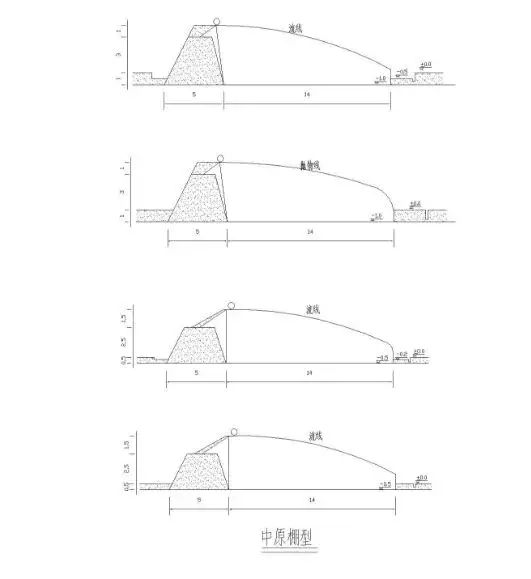
Cultivation patterns: plantation in september/october, harvest in november/june (long term) or august, harvest in september/december, planting in january and harvest in february/may (two short periods)。
Remarkable features: higher temperatures and shallow groundwater tables, with lower depths of digging down from the back wall to the centre; higher solar intake angles, widening or lowering of large sheds; winter snow and spring rains, suitable for covering grass curtains and membranes; large spring winds, membranes resistant to wind; shallow groundwater tables, starting cultivation。
Gang huai shack
It is suitable for jiangsu, anhui, hubei province near the south river and the river basin。
Climatic characteristics: the coldest winter month (january) averages 2°c ~ 4°c, temperatures above 8°c during the day, fewer winter frosts, more shades, good spring sun, heavy summer autumn rains. The coastal areas are affected by typhoons, which are heavy。
Geological characteristics: land diversity and shallow groundwater tables。
Suitable sheds: small arches of the skylight line that are suitable for long-slanted, earthwalls to a total height of 1/2; shallow excavations (high-level drainage); or backfills (low-water drainage); and double-arc air-temperators with no earth-built walls, with a width of 10 to 16 metres and a height ratio of 1. 2 to 1:1. 2. 8. Compared to the lower radial radiance of the central shed, the length of the back floor, the reduction of the back wall, the reduction of the amount of soil used to dig down, and the use of membrane cords to protect the coastal areas。
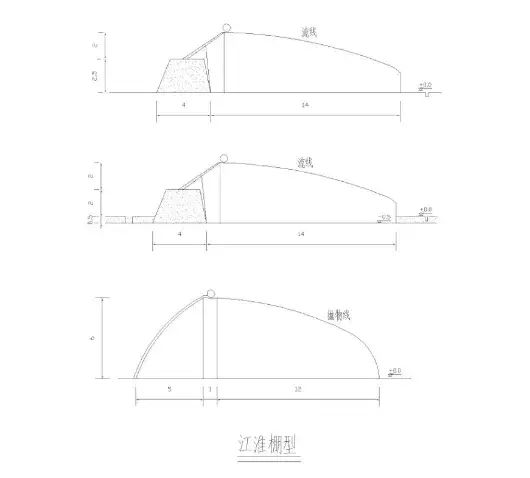
Cultivation patterns: plantation in october after typhoon and harvest in november-may of the following year。
Distinguished features: high temperatures, shallow groundwater tables, unearthed or shallow excavated in the sheds; high sun-injection angles, widening or lowering the sheds; heavy rains in the winter seasons, suitable for temperature protection without water; high humidity in the winter suns, with the use of current drops to remove the wet membranes; shallow groundwater table and rises to plant。
Gangnam shed type
It is suitable for the southern river basins of jiangsu, anhui, hubei, sichuan, zhejiang, jiangxi, hunan, guizhou, fujian, guangxi and northern yunnan。
Climatic characteristics: temperature averages 4°c ~ 8°c in the coldest months of winter (january), temperature above 8°c in the daytime, cloudy days in january, good spring sun and heavy summer autumn rains. The coastal areas are affected by typhoons, which are heavy。
Geological characteristics: land diversity and shallow groundwater tables。
Suitable sheds: a double arc-faced air-preserving four-season greenhouse sheds with no digging and no earth-building is appropriate, the front sheds are 8 m - 12 m wide, 3. 5 m - 5 m high and the back sheds 5 m - 7 m wide。
During the winter, the rear roof is covered with temperature protection, with film installed in the middle poles, the rear roof is formed into an air conservatory room, the front roof is covered by day rolls and night cover, which allows for the planting of hotly hot vegetables, and the backbed is low for the planting of low-temperature vegetables. In the spring and autumn summer, the temperature protection is rolled behind the shed, which cools the flow of wind at the top and on both sides of the shed, so that ordinary vegetables can be grown in the spring and autumn, and so on in the summer。
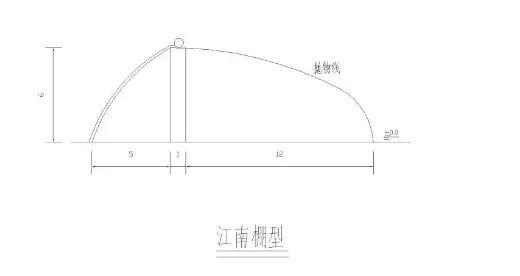
Cultivation patterns: inland areas were planted before the january mist period, during which the prefacing period was spent and the march-june harvest; in coastal areas, after typhoons were established in october and the november-may harvest。
Distinct features: shallow groundwater with no digging in the sheds; four seasons of vegetable cultivation; high land use rates; no snow in the winter season, suitable for temperature protection without water; heavy humidity in the summer fog, with the use of damp membranes; shallow groundwater table, with a rise in cultivation。
The south china shed
It is suitable for most of fujian, guangdong, guangxi and yunnan provinces。
Climate characteristics: temperature averages 8°c ~ 12°c for the coldest winter month (january). The winter was long, warm and bright, and the summer and autumn rains were heavy。
Geological characteristics: land diversity and shallow groundwater tables。
Suitable sheds: large arches of double arc are suitable, with a width of 8 m-24 m and a height of 3 m-5 m. High air and slow temperature changes in the sheds; use of dispersible filaments to reduce light penetration; and use of top and bottom sides to cool the circulating wind。
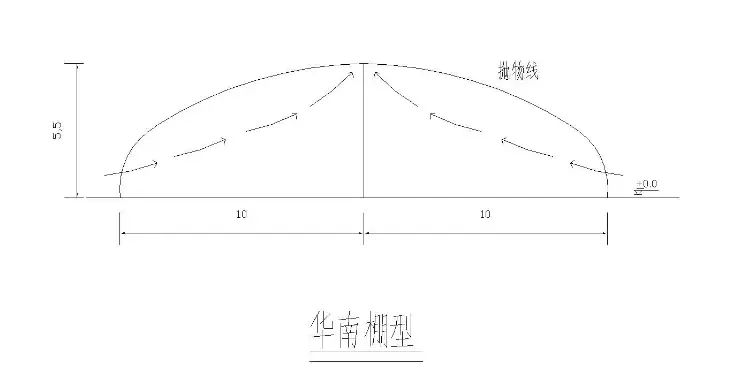
Cultivation patterns: plantation in october after typhoon and harvest in november-may of the following year。
Distinct features: shallow groundwater, with no digging in the shed; four seasons of vegetable cultivation; high land-use rates; strong light, with the use of dispersive film to reduce light penetration; high temperature, with the use of top and bottom sides to cool the flow of wind; and shallow groundwater, with a rise in cultivation。









