


The year 1996 was a year worth recalling in our insurance history. In accordance with the requirements of the law of the people's republic of china on insurance in respect of the separation of property and personal insurance, life in china was independent from the chinese, with the establishment of three life insurance companies, namely, tikang, xinhua and shang hong, and the expansion of the life insurance market. Over the past three decades, our life-risk industry has been accompanied by rapid economic and social transformations, with cross-cutting developments. As an important part of the financial system, the life-risk industry is a vital force for national development, responding to human security concerns, learning from the experience of openness, unleashing dynamism in reform and demonstrating value in services. Its development logic has undergone a profound shift from expansion in scale to value creation, from a single guaranteed service to a full life cycle, and the positioning of the life insurance industry from a financial function to a national strategy for services. Today, life insurance is not only an important complement to a multi-level social security system, but also an important force in serving the real economy, protecting against financial risks and improving the well-being of people。
The life-risk industry has grown rapidly and a number of excellent insurance enterprises have emerged from time to time. With few early market owners, the industry has gradually moved towards a multi-component race, with the emergence of a variety of life insurance agencies, such as state-owned, joint-venture and private-sector enterprises, which, after several rounds of market competition and industrial transformation, have been able to group up and upgrade a group of enterprises, and to build a multi-layered market pattern of life insurance, which has become the driving force behind the multi-level social security system. Tikang, founded in 1996, is the typical business representative。
Taking root in the era of high economic growth in china, keeping pace with the rising demand for old-age and health-care protection, tecang has moved away from the traditional one-size-fits-all philosophy of life insurance, and innovative and innovative business models for life-risk insurance, both as a testament to the intergenerational changes in our life-risk industry and as a constant contribution to the development of our multi-level pension security system。
Changes in growth logic:
From scale to quality
Looking back at the development of our life insurance industry, which has been growing for more than 30 years, the essence of the shift in life insurance has been from a model of scale expansion in the races to a model of growth centred on value creation. From the initial quest for a simple increase in premiums to a greater focus on operational quality, asset security and customer values, the country's life-risk industry has continued to grow in resilience, and the real economy and livelihood security have grown. The total assets of the life-risk market now exceed $4 trillion and are the second largest global market. The completion of this transition depends both on the continuous identification of the regulatory authorities and the promotion of continuous improvement of the regulatory system, as well as on the conscious observance of the industrial ecology of insurance operators。
In fact, for a long time in its early years of development, the life insurance industry was in a state of pursuit of scale, especially the “golden decade”, which was driven by the size of the life insurance industry from 2006 to 2015, when premiums increased at an average rate of more than 20 per cent per year, finance-based products developed rapidly, and a few small and medium-sized companies borrowed from high-indebted and high-risk strategies were rapidly developing. However, the rapidly growing size of the industry coincides with the simultaneous convergence of risks. These deep-seated contradictions, such as the dangerous expansion of altruism, the radicalization of capital use, and the interlocking nature of equity, have also led to a total lull in subsequent regulation. Between 2016 and 2020, the industry entered a critical phase of risk management and correction, introducing a series of intensive regulatory policies, comprehensively regulating the sale of financial-oriented products, such as universal risk insurance and split risk, and strictly controlling the radical investment of insurance funds. In 2018, a new regulatory body was formally established, which integrated banking and insurance regulation, resulting in a significant leap in the regulatory specialization and system of the life insurance industry, providing a solid institutional basis for the shift from expansion to quality priorities。
Following the expansion of the life insurance market in 1996, the next decade was a decade of major expansion of the insurance industry, during which tacon quickly completed its national configuration. For the market at the time, the risk lies behind the aggressive scale of premiums, the successive downward adjustment of deposit rates by the financial administration between 1996 and 1999, the rapid fall in interest rates for life insurance products from 8. 8 per cent to a morass of sharp pricing institutions. Tacon has succeeded in taking over the brunt of the biggest bad debt in the insurance industry, thanks to the introduction of foreign investment through high capital consumption, foreign shareholders have set up “a three-year value-growth-to- gambling clause” and are based on the long-term commitment of chen dong-sung, the founder and chairman of the tacon insurance group. In its strategic decision-making package, chen dong-sung wrote: “we have been the first to introduce value management throughout the industry, which has forced us to truly rethink the efficiency of our operations from the point of view of value creation, the design of products, the size of agents, the per capita premium, the average premium, the operating cost, etc. The introduction and practice of intrinsic values have set the stage for strategic change in the subsequent transformation of tecon values.”
Since the pre-life insurance industry depends on rapid institutional expansion, the banking system contributes rapidly to large-scale and man-made tactics, the expansion of the industry is evident, but it is also generally faced with capital consumption and weak premium growth. Globally, the life insurance industry is also caught in the double trap of slowing down the growth of insured operations and falling investment earnings. Traditional life risks have changed and transition has become a new proposition. How to break it? Only innovation。
In a highly homogeneous market competition in the life insurance industry, tecon explores a “second growth curve” — the innovative combination of virtual insurance products with physical old-age services, through precision judgements about future economic development, the growth of the wealth of the population, and demographic transitions — and the inclusion of “services” for health and well-being in the “pay end” and “investment end” two-dimensional structures of traditional life insurance, creating a three-pronged “new life risk” model of “payment + service + investment”。
As a key vehicle for this model to land, in 2012 the insurance industry took the lead in making life insurance available for the products of the old-age community, entitled “happiness with a life-long pension scheme”. The link between payment, investment and old-age services gives happiness about a whole new combination of not just an insurance product, but an insurance product plus lifestyle。
This is an unprecedented innovation in the global insurance industry. Tecon’s “new life risk” breaks the traditional life risk paradigm and provides a valuable reference path for the high-quality transformation of the life insurance industry in china, as well as a sample of “first-liners” in this enterprise。
The new business model, the new insurance products, led to a new team that was objectively appropriate. Around 2020, this period was also an important point in the history of the life insurance industry in our country. At the same time, the decline in the size of the traditional proxies, which began from near the historical peak of millions, was not due to simple cyclical fluctuations, but rather to the persistent accumulation of internal contradictions, such as high workforce losses, low retention and loss of customer trust, after a long period of extensive expansion, and the gradual collapse of traditional patterns of dependency on proxies, roll-out and memory, with practitioners generally aware that the bottom-up of industry growth is no longer a simple stack of human sizes, but rather an effective synergy of institutions, capacities and organizations, with industry consensus shifting to a steady growth driven by quality enhancement and structural adjustment。
As our insurance agent system evolves from scale to high-quality development, there are significant differences in strategic choices, institutional arrangements and workforce-building paths between companies, as well as marked differences in transformational effectiveness. When the industry remains generally dependent on a large scale of tactical love, tecon relied on the “new life risk” business model, introducing the health wealth planner (hwp) in 2017, redefining agents as professional planners across the three major areas of health care, health and wealth management, and spearheading the transformation of agents from a quantitative to a professional-driven workforce. This initiative is not an isolated channel reform, but is based on tecon's systematic judgement of changes in client demand in the long-life era, an inherent, strategically forward-looking conscious approach that has enabled tecon to spearhead a systemic re-engineering of workforce capacity during the critical window period of industry transformation。
Functional change of location: from risk compensation
National strategy for in-depth services and human security
Another profound change in the life insurance industry over the past three decades has been the overall jump in the functional positioning of the industry, with life insurance products extending from a single risk compensation tool to areas such as wealth inheritance, long-term savings, and becoming important engines of industry growth. In addition, life insurance funds, which serve as long-term stability funds, continue to be invested in the real economy, science, technology and innovation, providing the long-term capital support for our economic development。
In terms of coverage, life insurance products are expanding and expanding. After more than three decades of development, our life insurance product function is no longer limited to a single risk premium, and “insurance + services” has become an industry consensus. The change behind this shift highlights the changing demographic structure of china. With the advent of longevity, the population needs both health-care and old-age services that cover the full life cycle and early financing of long-term sickly survival capacity to pay. In this context, life insurance products are no longer limited to mere risk payments, and “insurance + services” are gradually integrating value added elements such as health management, old-age services, medical services, etc., in order to ensure that their source attributes are further strengthened and expanded。
Tacon was undoubtedly a precursor to this change in the life insurance industry. In 2007, tikang began the deployment of old-age services; 2009 became china's first insurance company to be eligible for a pilot investment in old-age communities; 2012 saw the launch of the “happy deal” with a pension insurance contract plus a confirmation letter from the resident community, linking for the first time virtual insurance to physical services; 2015 saw the opening of the first old-age community, the taikang home yan park; 2017 saw the establishment of a strategy for a larger health ecosystem. The new life risk has transformed insurance from a paper contract to a service that covers the entire life cycle. Today, the tecon house has 48 projects in 37 cities across the country, with 32 in 25 cities operating and 19 rehabilitation hospitals operating, 16 of which are integrated into local health insurance, effectively breaking the traditional problem of being unable to reach old age in hospitals and to see at home. The average age of the residents of the tecon home's old-age community is over 83 years. A follow-up study of the population's health data over the past 10 years shows an increase of more than 10 per cent on average in the “three-highs” rate compared to the pre-inhabitation rate, with myocardial infarction and moderate high-risk disease rates below the social average of more than 50 per cent。

Tikang house, residents of chuwon and nursing division
In terms of supply and demand, life insurance funds have expanded access to long-term capital. The long-term, cross-cyclical nature of insurance funds, which boost insurance funds, helps to nurture patient capital, iron the fluctuations in the economic cycle, and promotes a virtuous “financial-capital-assets” cycle. As one of the first institutions in the industry to be eligible for insurance funding to invest in infrastructure projects, tecon has been involved in major projects related to the livelihood of the people in the countries concerned, such as kyung gao iron, west gas and china oil pipeline; in the area of science and technology finance, tacon has used science and technology as a core strategic investment direction, focusing investments in key areas such as information technology, semiconductors, new energy sources, robotics, etc., and investing more than $180 billion in the science and technology sector; in the area of green finance, tacon's anchoring “bicarbon” targets are directed towards systematic and in-depth research and forward-looking mapping of key industrial chains such as light volts, new energy generation, and energy reserves, with green finance investments exceeding $300 billion; in the area of health, tacon has invested more than $70 billion cumulatively in the industrial sector of the big health entities, building a network of health-care services consisting of “long-life communities + long-life health care”。
Change in social values:
From “risk protection” to “service to people”
The birth of insurance is rooted in the simple wisdom of “risk-sharing and loss-sharing”, which is essentially a fear and defence of life. Over the past three decades, the social value of the life insurance industry has continued to expand and to improve: from a mere “risk compensation” contract, it has evolved into a comprehensive service that covers a wide and deeply embedded range of human security, vividly reflecting its deep value in the country's livelihood and economic and social development. From universal coverage to old-age protection, from health services to risk loops, various types of life-saving services have made it possible for insurance to reach thousands of households, giving ample social value to the industry. This process is both an industry that deepens the functional positioning of economic shocksrs and social stabilizers, and an industry that insists on “business for good” and continues to promote responsibility for the sinking of insurance products and services and the implementation of inclusive finance。
Tacon's practice, which goes beyond the business of one enterprise itself, has become an age-old model for observing the deepening value of the life insurance industry in china. The words “share success, dedicate to society” have been written into the curriculum since tacon was founded for 30 years. The core of this value system has been consolidated into 12 words: people-centred, honest business, good business. It is not a slogan that hangs over walls, but rather a bottom-line logic in which companies respond to the topicality of the times and internalize to serve their products: a deep-rooted market pattern, a focus on people's well-being, a focus on “human” needs, deep-seated life-risk industrial chains, and growing insurance coverage。
In terms of insurance, tacon has, since its inception, managed to recover more than 22. 3 billion yuan in cumulative compensation; and in terms of livelihood works, tacon, as the country's first commercial insurance agency to pilot long-term care insurance, participated in 45 long-term care insurance projects, covering over 100 million cases。
Tikang has also made efforts to organize safety nets covering special groups, new citizens and other priority groups through innovative service models. In 2025, tacon provided over 9. 07 million insurance guarantees for micro-enterprises and self-employed businesses, with a cumulative settlement expenditure of nearly $330 million, providing exclusive customized insurance coverage for priority inclusive groups such as more than 20,000 farmers, nearly 1088 million new citizens and more than 13. 49 million older persons to safeguard the well-being of the population with financial temperatures。
With regard to the re-engineering of the “ageing” lifestyle, tacon has reduced the cost of social old-age pensions with closed ecology, improved overall efficiency and built a life-cycle system of products and services from the “cradle to heaven” to provide a new way of life for an old age that has traditionally been neglected, allowing life to be vibrant and more dignified。
At the beginning of 2025, the opinions on the further reform and development of pension services were issued, which clearly set out three types of service: family, community and institutional. With this policy in mind, tecon, a leading actor in the field of “insurance + old age”, has focused on the three-pronged “city-building” model of “the flagship ccrc community — the urban heart — the community + home operation”, building on the professional capacity that has been developed in the flagship community. For example, in the community and home service scenes, tacang house peace house in beijing opened restaurants and universities to the surrounding population, provided home-based feeding and aging adaptations; and tacang house gyung home in shanghai provided health monitoring and home visits to 26,000 older people in 36 neighbourhoods of the street, a practical initiative to lift high-quality old-age resources out of the “high wall” and access to quality services in professional institutions for the elderly。
From “blood transfusion” to “blood production”, from service delivery to ecological construction, taccon builds a system of public goods and an enabling standard. As of june 2026, the tacang spills public benefit fund, which focuses on the promotion of comprehensive old-age pension, has cumulatively funded 500 old-age institutions and trained more than 150,000 older workers, helping more than 98,000 older persons to improve their quality of life. In response to the huge shortage of older persons, the certificate “1+x medical care case management” developed by the tecon home has been incorporated into the vocational education profession profile of the ministry of education to help develop high-quality personnel。
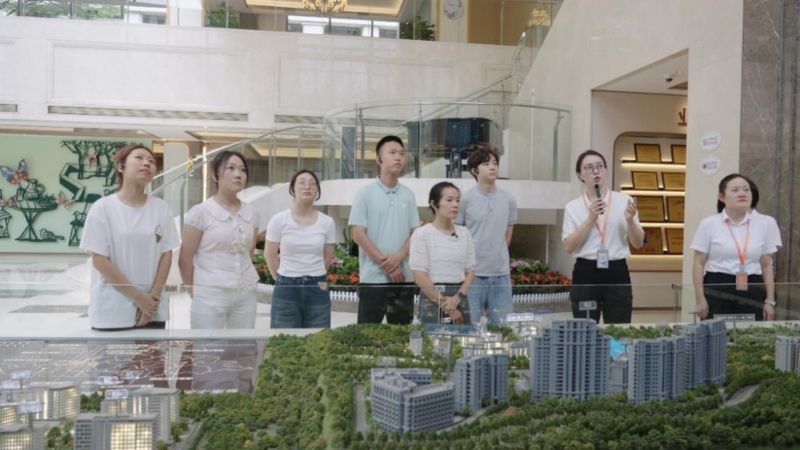
The public benefit programme for the care and welfare of the elderly, launched by the taikang spills public benefit foundation in beijing in conjunction with the relevant authorities, the social welfare centre, the china social welfare foundation and others, organizes training for the rest of the community to visit the taikang home and the kuen park。
The path that the life insurance industry has travelled over the past three decades has shown that only if it has always adhered to the people's primacy, fully functioning insurance, and products and services truly meet the people's needs for a better life will it be able to gain a steady momentum for development and to reconcile commercial and social values. As chen dong-sung said: “thirty rises, must be an innovation, must be a new life insurance, must be a long-lived tacon program.” this is not only a high generalization of the 30-year-old vivid practice of tacon, but also a profound understanding of the direction of life-risking, which can only move steadily along the new path of high-quality development if it is innovative in responding to the needs of the times and serving the needs of the people。









