


Britch
Belladonna
Alias
Strass leaves, pitchegrass, pitchegrass。
English
Belladonna
Introduction
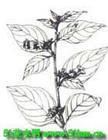
High bushy herbs, with their dried leaves and roots, known as atropa belladonna. Plantation is about 1. 5 metres (four or five feet) high, originating in the central and southern parts of the eurasian continent and growing on forest land or wasteland. Leaf green. The flower is blue or green, born in the armpit or fork. The berries are black, the cherry size. Big root, cone. In france, for example, the argon is cultivated to extract drugs such as alkaline, ortholine and atropine. However, they are being replaced by synthetic drugs for toxic and side effects。
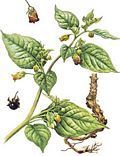
Flowers (up), fruits (down) and roots (right) of the halo
Roles and uses
It works with atropine...
[pharmacological] disrupting anticholine drugs from mcholine receptors is weaker than atropine. The product is lax in the smooth muscles and relieves vascular convulsions (especially microvasculars) and has an anal effect。
For stomach and 12-finger ulcer, mild gastrointestinal graft, etc。
It's forbidden。
[ usage] americine: 0. 3-1 ml per dose. Polar: 1. 5 ml/sec, 4. 5 ml/d. Embroidery: 8-16 mg each. Extreme: 50 mg/mind, 150 mg/day。
The active ingredient is platinum, the same as atropine, but less. The main use is for stomach cramps, stomach, ulcers, corrosive pain, urinary trachea, etc., vomiting and diarrhoea caused by gastric inflammation and stomach convulsions, sweating, salivation, slow heart rate, dizziness, dizziness etc. [use and amount of] americium: 0. 3-1 ml/d, 3 times a day or on demand. Polar: 1. 5 ml/sec, 4. 5 ml/d. Anointed: 8-16 mg/score: 50 mg/sec, 150 mg/d [adverse reaction] visible drying, skin red, drying, reduction of respiratory secretions, viscosity, abdominal swelling, constipation. When used in large quantities, they can cause heart attack, blurred vision, dizziness, etc. The amount of poisoning can lead to confusion, paranoia, manoeuvring, hallucinations, and atropine poisoning. One glaucoma, prostate fatter is banned. 2 cannot be used in conjunction with the agent (methyloxychloropamine, etc.). Concentrations of triazine are not excessive to avoid atrochemicalization. [specific] acetate: 0. 03% bioalkali
It's called atropa belladoI don't know. Years of grass. The whole herb. From central, southern and small asia. China was introduced in the 1930s. Zhejiang, beijing, shanghai, shandong, etc。
High 1-1. 2m. The leaves are interwoven, the leaves are wide or egg-shaped, the full edge, the leaves are green and the back is green. Crown bells, light purple brown. The berries ball, black and purple when they mature. Seeds are mostly brown, small flat, kidney-shaped. Period june-august. The fruit season is august-october。
Warm and wet weather, cold, cold, high temperatures, growth faster at 20-25°c and slower than 30°c. There's plenty of rain and a lot of disease. The beijing region grew fast between may and june, slow in july, and was unable to survive the winter, with only one year of cultivation; the area south of the yangtze river can grow for many years. The choice of fertile sandy soil with sufficient sunlight and easy drainage is appropriate, and low-lying and saline areas that are water-prone are not suitable for cultivation. Conscience. Reproduction with seeds, after 3-4 days of stacking, shredding of fruit, washing of water, extraction of seeds, drying of tans and storage of spares in ventilated dry areas. Pre-plant seeds need to be treated and impregnated with warm water of about 50°c for 12 hours, then sprung in a warm place (about 25°c) and sowed when individual seeds are sprouts. The planting period is from february to march, and can also be advanced until the end of january, when the seedlings are dug with soil at a distance of 50-60 cm before planting, and in early may when they are planted at a distance of 45 cm, with immediate water. The area south of the yangtze river was bred in mid-september and was established from late march to early april. It is also available live, usually from march to april, with seeding per hectare-4. 5 kg. Upon live broadcast, the soil is kept moist and water, weeding and pine soil is poured in time. Phytophthora infestans, leopardy rhizoctoNia solani, lema decempuncta, etc。
The whole herb contains lipid-based bioalkalin, dominated by hyoscyamine, and contains orthopamine (scoplamine or hyoscine), beryllium (belladonine) and de-water atropine (atropamine). It has cough flats, strangulation, and amplification of pupils。
[source] solaraceae atropa belladoNna l.'s dry grass. Picking up during the flowering period to the end of the outcome period, removing the coarse and silt, and cutting the part dry。
We have seed in europe。
The root is cylindrical, 5-15 mm in diameter, with light ash brown on the surface and wrinkled; old roots, broken roots, flat fractures, narrow skins, grey whites, wide wood, brown yellows, forming a cleavage with visible rings and hollow meds. Pumps, 3-6 mm in diameter, yellow on the surface, thin wrinkles and thin, thin skin holes, mid-empty, and hair on the plumes. The leaves are wrinkled, full osteoporosis, yellow to deep green. The fragrance, the crown bell. The fruit spherical, 5-8 mm diameter, long infarction, most seeds. Sneaky, bitter, bitter。
[major chemical constituents] contain argon bioalkaline, including hydrocyamine, c17h23no3 etc。
The anticholine drug. The preparations are usually made in the form of ablution cream and beryllium. Poison。
Herba belladonnae
It's called atropa belladoNna l.'s dry grass. Excavated during the flowering period to the end of the period, removed the coarse and silt and dried the cut。
[sex] the roots are cylindrical, 5-15 mm in diameter, with light ash brown on the surface and wrinkled; old roots, broken roots, flat faults, narrow skins, grey whites, wide wood, brown yellows, which form a distinctive layer of ring. The marrow white. Tube cylindrical, 3-6 mm in diameter, yellow on the surface, thin wrinkles and thin, thin skin holes, mid-empty, hairy plumes. The leaves are wrinkled, full osteoporosis, yellow green to dark brown. The bouquets are split, the crown bells. The fruit spherical, 5-8 mm diameter, long infarction, most seeds. Sneaky, bitter, bitter。
[identify] (1) the powder is light green or light brown green. The calcium herbide sands are very large, ranging from 3 to 10 m in diameter and visible crystals in sand crystal cells, ranging from 15 to 28 m in diameter. Leather skin cells bend around the walls, with horny stripes; gas holes vary. It has a single cell on the head, a handle of 2 to 4 cells and a head of 5 to 6 cells and a single handle cell; it has a large number of starch particles in a circular, helmet or multi-angle shape, with a diameter of 8 to 26 mm, a dotage or crack, with visible mass of large particles. Threaded holes and netted catheters, 24-40 m in diameter. See also wood fibres, convoluted pebble cells and pollen particles. (2) the extraction of the present powder 4g, plus ethanol 15ml, shaking for 15 minutes, filtering through, evaporation of the filter, mixing with sulphate solution (1100) 2ml, leaching after mixing, alkalis with ammonia test fluids, then emulsion 2ml, distillation of the chlorine emulsion, evaporation, and recognition of the slag toxadecone bioalkaline (appendix iv). (3) take 2g of the present powder, 2ml of the concentrated ammonia test, mixing, 25ml of the chloroform, shaking, placing over the night, filtering through, leaching of the liquid, 0. 5ml of the residue and chloroform to dissolve as a solution for the specimen. Atropine sulphate and hbcp are also taken, together with methanol, into a mixture of 4 mg/ml as a control solution. Following the thin layer chromatography (appendix vi b) test, the two solutions above were taken at 10 ml each and placed on the same silica g-coated plate with ethyl acetic acid- methanol-strength ammonium test fluid (17:2:1) is a roller, carried out, removed, dryed and sprayed with potassium diodide. For the test chromatography, in the position corresponding to the control chromatography, the spots of the same colour。
The median powder for the [dense determination] extraction of the product is about 10 g, with a precise designation of 10 g, a mixture of 10 ml of ethanol, 8 ml of concentrate and 20 ml of ether, 12 hours of static, 70 ml of ether, 3 hours of heating back flow, to bioalkali extraction, evaporation of most of the ether in aqueous bath, removal of the fluid, displacement of the fluid leak, 0. 5 ml of sulphate fractions, each ml of sulphate sulphate extraction, combined acid withdrawal, each time with bioalkali extraction, combined emulsion with chlorine emulator, each time with chlorine eml, combined chlorine emulator, combined chlorine emulation with 10 ml of sulphurate, disposal of chlorine emulation, removal of the acid fluids obtained after and after, filtering, 0. 5 ml/l sulphate solution wash with filtering, combined washing with filtering, and filing with fumes, prompting of chlorine to bioresilation. In case of emulsion, ethanol droplets can be added, each of which is taken is washed with the same water 10 ml, dumped with the washing fluids, combined chloroform, evaporated with ethanol 3 ml, evaporated with 80°c drying for 2 hours, residues with chlorine 2 ml, microheated where necessary, condensed with sulphate droplets (0. 01mol/l) 20 ml, hotened with water baths, removed with chlorine emulsion, cooled with methyl red indicator fluid 1 to 2 drops, and determined with sodium hydroxide droplets (0. 02mol/l). Per 1 ml sulphate droplets (0. 01 mol/l) equal to 5. 788 mg alkalis (c17h23no3). Bioalkalin (c17h23no3) may not be less than 0. 30% of this product, based on dry products。
The anticholine drug。
[store] dry place。
[computation] (1) plasma (2) plasma leachate (3) plasma leachate
Chinese pharmacy
It's too much
1. Overdose behaviour: low incidence of commonly used adverse dose reactions. The increase to 6 mg/kg resulted in a significant increase in the incidence of adverse effects, mainly related to peri-neuritis and liver toxicity, and the addition of vitamin b6, while reducing the toxic effects, could also affect therapeutic effects。
1. Hepatic toxicity: this product can cause moderate but excessive liver damage such as an increase in sero-aminosterase and yellow sluice, with an incidence of about 10-20%. Hepatic toxicity is associated with the metabolic acetylazine of the product and the accumulation of acetylazine by fast acetylide in the liver increases, leading to liver damage. Drinking alcohol during medication increases liver damage. Toxic effects are manifested in poor appetite, abnormally weak or weak, nausea or vomiting (precipitation symptoms of liver toxicity) and deep-colour urine, eye or skin yellow contamination (hepatotoxicity)。
2. Neural system toxicity: neuro-inflammation is most prevalent in the surrounding population and has a clear dose relationship. More patients are shown to be slow, numbing needles, burning or pain in their hands and feet. Such reactions are more likely to occur in lead poisoning, arterial sclerosis, amitraz, diabetes, alcohol poisoning, malnutrition and pregnant women. Other toxic reactions, such as excitement, pleasure, insomnia, loss of autonomy, mesotoxic encephalopathy or mesotoxic psychosis, are rare and are occasionally reported in the light of severe toxic reactions such as neuronitis and contraction。
Pervertic reactions include fever, multi-form rashes, lymphoma, pulsitis, etc. Once it has occurred, it should be discontinued and, if reuse is needed, the dose should be gradually increased from a small dose。
The blood system can be characterized by a decrease in the number of particle cells, an increase in the number of acidic particles, a decrease in the number of platelets, and high iron hemoglobinemia。
5. Other occasional reports such as drying, vitamin b6 deficiency, high blood sugar, metabolic acid poisoning, endocrine dysfunction etc。
In addition to the above-mentioned adverse effects, the main manifestations are convulsions, disillusionment, coma, etc., which can result in acute liver deaths if not addressed in a timely manner。
2. Treatment of overdoses:
(1) detoxification。
(2) keep the respiratory tract open。
(3) use short-acting barbiturants and vitamin b6 intravenous drugs. The dose of vitamin b6 is 1 mg vitamin b6 per 1 mg ispt and, if the dose of ispt is not known, vitamin b65g is given every 30 minutes until the convulsion stops and the patient regains consciousness. The stomach wash should take place within two to three hours of taking the product。
(4) blood and gas, electrolytics, urea nitrogen, blood sugar, etc. Are immediately tested。
(5) an immediate vein is given to sodium carbonate to correct metabolic acid poisoning, repeated if required。
(6) use of permeable urea pills and their continued application after clinical symptoms have improved to promote the excretion of amphibians and prevent relapses。
(7) severely toxic patients should be ready for blood dialysis at an early stage, and can undergo a peritoneal dialysis when blood dialysis is not possible, together with a combination of urea。
(8) take effective measures to prevent anaerobic, hypotensive and inhalation pneumonia。
China national essential medicines directory, 2018 edition, selected drugs









