


Common pumps have piston, centrifugal and axle flow patterns. Pistol pumps use atmospheric pressure, such as the usual water press. Centrifugal pumps, which use a leaf wheel to drive the water to achieve centrifugal power, rise to a height, but are subject to atmospheric pressure at the height of the vent of the centrifuge pump. Axle current pumps, similar to electrical fans, rotated leaves and pushed water to the rear of the pump axis. The flow of axle current pumps is high, but they are not elevated at very high heights。
Mechanical transmission
The basic structure of the centrifuge pump consists of six parts: a leaf wheel, pump body, pump axis, bearing, seal ring, filling letter。
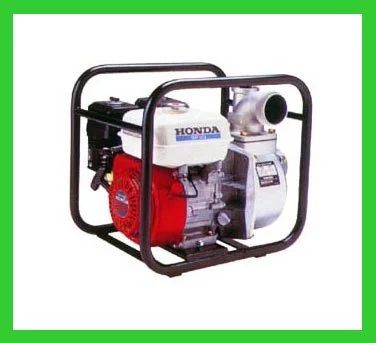
Water pump
One, the wheel is the core of the centrifuge pump, which is very high in speed and plays a major role in the blades on the wheel, which are subjected to silent balancing experiments before assembly. The internal and external surfaces on the wheel require smoothness in order to reduce the loss of friction from the current。
2. The pump body, also known as the pump shell, is the body of the pump. Act as a support fixed and connected to the frame where the bearings are installed。
3. The pump axis is used to connect the axes with the electric motor to pass the transfer distance of the electric motor to the leaf wheel, so it is the main component for the transmission of mechanical energy。
4. Axle bearings are components that support the pump axes on the pump axis, with both rolling bearings and sliding bearings. The slide bearings use transparent oil for lubricants and refuel to the oil line。
5. Sealed rings are also referred to as leak reduction rings。
6. The filling form consists mainly of fillings, water seals, filling drums, filling pressure covers and water caps. The filling letter is primarily intended to close the gap between the pump casing and the pump axis, so that the flow of water within the pump does not flow outside or into the pump. Always keep the vacuum in the pump! When the pump axis and the filling friction produce heat, the water will be contained in the water cape to cool the filling! Keep the pump running. So the inspection of filling letters during the running tour of the pumps is of particular interest! The fillings are replaced at approximately 600 hours of operation。
Classification presentation
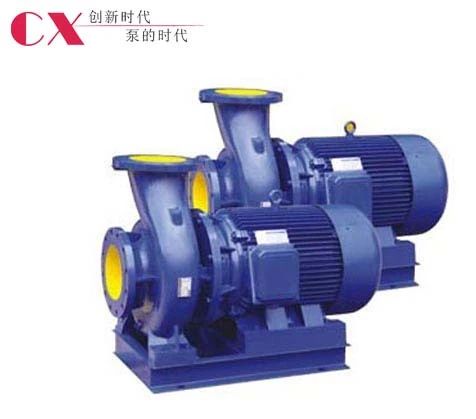
Centrifugal pump
1. The pump body, also known as the pump shell, is the body of the pump. Act as a support fixed and connected to the frame where the bearings are installed。
2. Pump axes are used to connect the axes and the motors and to pass the transfer distance of the motor to the wheel, so it is the main component for the transmission of mechanical energy。
3. Axes are components that support the pump axes on the pump axis, with both scroll bearings and slide bearings. Scroll bearings use butter as a lubricant for refuelling, which normally is 2/3-3/4 in size, heat, sound and heat! The slide bearings use transparent oil for lubricants and refuel to the oil line. Too much oil leaks and floats along the pump axle, too few bearings and too much heat burn to cause accidents! The temperature of the bearing during the operation of the pump is generally around 60 degrees at 85 degrees and, if it is high, the cause (whether it is impurities, whether the oil is dark or whether it is watered) is to be found and processed in a timely manner
4. Sealed rings are also referred to as leak reduction rings. The gap between the importation of the wheel and the pump shell has caused water in the high pressure area of the pump to flow through this gap to the low pressure area, affecting the volume of pump discharges and reducing efficiency! Too small a gap results in wear and tear from friction between a leaf wheel and a pump shell. In order to increase back-flow resistance and reduce leakage, it is desirable to delay the useful life of leaf wheels and pump casings, to have sealed rings on the inner edge of the pump casings and on the outside side of the wheel, and to keep the gap between 0. 25 and 1. 10 mm。
The work of the centrifuge pump
Centrifugal pumps work by relying on high-speed rotation of leaf wheels, and liquids gain energy from inertial centrifugal forces to increase pressure. Pumps must be filled with water before work, both in the pump body and in the pipe, in order to prevent erosion. When the wheel moves quickly, the blades cause the water to rotate very quickly, and the rotating water flies away from the wheel with centrifugal force, and when the water in the pump is thrown out, the central part of the wheel forms a vacuum area. Water from the water source is pressured into the pipe by a network under atmospheric pressure (or water pressure). In this way, if the cycle is not over, continuous water pumping can be achieved. It is worth mentioning here that before a centrifuge pump is activated, it must be filled with water into the pump's shell before it can be activated, otherwise it will cause heat in the pump body, vibrations, reduced volume of water, damage to the pump (known as “air erosion”) and equipment accidents! The so-called corrosive is the phenomenon that, when the centrifuge pump is activated, when the air is present in the pump, because of the low density of the air and the low centrifugal capacity generated by the rotation, the lower pressure created in the central locomotive zone is not sufficient to inhale the liquid pump at a level lower than that imported by the pump and cannot deliver the fluid。
There are many types of centrifugal pumps, and classification methods are common in several ways:
1. Inhalation by leaf wheel: single-sniffed centrifuge pump double-sniffed centrifuge pump
2 by number of leaf wheels: single-stage centrifugal pumps
3. Subtracting by leaf wheel structure: a semi-opener half-opener leaf wheel centrifuge pump
4. By working pressure: a high pressure centrifuge pump in a low pressure centrifuge pump
5. Split by axle position of the pump: side-to-side centrifuge pump。
Diving pumps
I. Selection of standardized pumps
1. What is a standardized pump. Standardized pumps are the state-of-the-art pumps developed and introduced by the state in accordance with iso requirements. Its main characteristics are small size, light weight, high performance, ease of operation, long life and low energy consumption. It represents the latest current trend in the pumping industry。
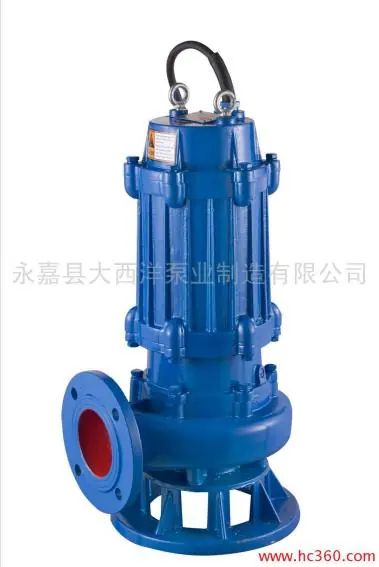
Diving pumps
2. How to select a pump. When selecting a pump, the user should preferably go to a point of sale approved by the agro-machinery sector and identify the manufacturer. It is recommended that priority be given to the purchase of water-filled submersible pumps and to the identification of card numbers and product quality certificates. It is important that “three zeros” (i. E., no producers, no production dates, no production permits) are not purchased, otherwise problems arise and users will be helpless。
Three, what a good pump. As users, it was difficult to determine because of the limitations of expertise, and the best way to do so was to consult with water pumps. It would be wise to consult some older water pump users, especially those close to their own conditions of use, and to buy products of trusted, reliable quality and more mature quality. At the same time, single or three-phase pumps should be determined on the basis of local power supply。
2. Selection of pumps to meet the requirements of the lift。
1. Pumping options. It is particularly important for the choice of a pump to be clear that the journey is the journey required and not the height of the lifting water. The pump stretches approximately 1. 15-1. 20 times the height of the pump. If a water source is at a vertical height of 20 metres, it requires a stretch of approximately 23-24 metres. The pumps should be chosen in such a way that they are preferably close to the required scale, so that they are most efficient and more economical. However, absolute parity is not always required, with a general deviation of no more than 20 per cent and a pump working in more energy-efficient conditions。
2. How good is the branding? The choice of a pump with a significantly smaller scale than the required scale often fails to satisfy the user's wishes, and even if it is pumped, the amount of water will be so small that it will even become a “tiring pump” for a useless land. Is the pump being bought as high as possible? Actually not. The use of high-strength pumps for low-strength purposes results in excessive flow, resulting in overloading of the electric power, which, if operated over a long period of time, increases the temperature of the electric power, and the insulation of the bypass formation becomes ageing and even burns the electric power。
Iii. Selection of suitable flow pumps. The flow of pumps, i. E. The amount of water produced, is not normally too high, otherwise it increases the cost of purchasing the pumps. Specific analysis should be carried out, such as self-suspumps used by users for their own consumption of water, which should be as small as possible; and, where user-irrigated pumps are used, which may be larger。
Pistol pump
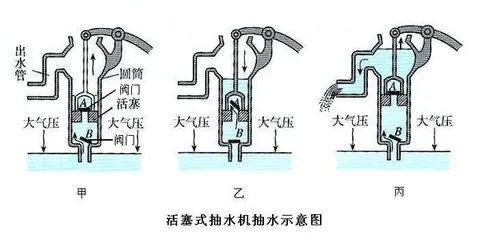
It's also called a "respirator." the intake pipe at the lower part of the body is inserted into the water, and the pump is a drum containing a piston that can move up and closely fit the wall, each with a live door v1 and v2 that can only be opened up. When used, if the piston moves upward, the live door v2 is closed by atmospheric pressure, so the air below the piston is thin and the pressure is smaller than the external atmospheric pressure. As a result, the water at the lower end was pushed into the barrel by atmospheric pressure to open the living door v1. When the piston was pressed, the bottom door v1 was closed by pressure from the water, the water was prevented from moving down, and then the door v2 was washed up and the water entered the upper side of the barrel. When the piston is raised, the water above the piston will be closed to the living door v2, and the water will flow out of the side pipe, while at the same time the water in the well will be pushed through the living door v1 by atmospheric pressure. As a result, pistons continue to move upwards and downwards, and water continues to flow out of the pipes. Such pumps are simple and operational, but have a small volume of water and can only be pumped at an altitude of about 8 metres and less efficient. 1 before pumping, the inhaler tube and pump shall be filled with liquid. Following the pump, the wheel rotates at a high rate, with the liquids rotating with the blades, which, under the operation of centrifugal forces, are ejected out of the wheel, and the fluids ejected slowly in the chamber where the pump shell spreads, with increasing pressure, and then from the pump exit to the discharge tube. At this point, liquids in liquid pools, which are operated by atmospheric pressure on the pool, flow into the pump through the inhaling tube, are consistently pumped out of the pool and flow out of the discharge tube as a result of the release of liquids from the centre of the leaves。
Activation of piston pumps
The piston pump, also called a drawer, uses the piston movement to excrete the air, causing internal and external air pressure differentials to push the water up and out of the piston. When the piston is under pressure, the water valve closes and the exhaust valve opens; when the piston is on, the exhaust valve closes, the water valve opens, and, under external atmospheric pressure, the water flows from the entering pipe through the upper exit. So the pistons move up and down in the cylinders and pull out the water
Note: pistol pumps and centrifugal pumps use atmospheric pressure to pump water up, as there is a limit to the atmospheric pressure and therefore the height of the pump does not exceed 10. 3 metres。
Mini-cycle pumps
Micro-pumps, because of their greater functionality, can be used for water cycle cooling and are often referred to as micro-cycle pumps. It has one out of one pump, one out of one drain, and is able to sustain a vacuum or negative pressure at the point of import; a larger output pressure at the point of discharge; a working medium, water or liquid; and a small instrument. There are also what are called mini-liquid pumps, micro-pumps and micro-squeezers。
Characteristics of micro-pumps
1. Micro-exchange pump mini-exchange pump micro-exchange pump
The exchange pumps are converted by the frequency of 50 hz of municipal electricity at very low speeds, with no electrons in the communication pumps to withstand high temperatures, and the volume and power of the same constant communication pumps are 5-10 times the volume and power of the straight-flow unwashed pumps. Advantages: cheap prices and more producers
2. Direct current pumps:
When the pump works, the coil and transducer rotates, the magnetic steel and the carbon brush does not pass, the alternation in the direction of the current of the coil is done with the transformer and the brush of the electric motor, which, as long as it turns, causes wear and tear, and when the computer pump runs to a certain point, the gap between the wear and tear becomes larger and the sound increases, and the carbon brush cannot function in turn after hundreds of hours of continuous operation. Advantages: low prices。
3. Direct water pumps without a brush:
An electric unbrushed straight current pump is made up of a non-brush straight currenter plus a leaf wheel. The axle of the electric power is connected to the leaf wheel, there is a gap between the fixed and the rotor of the water pump, and the prolonged use of the water increases the likelihood of the engine burning. Advantages: unbrushed direct currents have been standardized, with specialized plants producing in large quantities, with lower costs and efficiency。
4. No straight current magnetic drive pumps:
The length of life of the unbrushed magnetic pumps has been significantly enhanced by the introduction of electronic components in the unbrushed direct flow pumps, without the need for carbon brushes, and by the use of high-performance ceramic axes and ceramic axes, which have been combined with magnets to avoid wear and tear. The fixed and rotor parts of the magnetic isolated pumps are completely isolated, the fixed and circuit boards are partially sealed with epoxy resin, 100 per cent waterproof, the rotor parts with permanent magnets, the pump body with environmental materials, low noise, small size and stable performance. The parameters required can be adjusted by the fixed circuit, and the voltage can operate. Advantages: long life and low noise up to 35 db, which can be used for hot water cycles. The stationary and circuit boards of the electric power plant are partially sealed with epoxy resin and are completely isolated from the rotor, can be installed underwater and fully waterproof, and the axle of the water pump is high-performance ceramic axes, high accuracy and high seismic resistance。
Use the guide to broadcast
Properly mastered use is an important factor in increasing the lifetime of pumps and reducing economic losses。
Some necessary checks should be made before start-up: whether the rotation of the pump axes is normal or not; whether the leaf wheels are in a normal position; whether cables and cable plugs are broken, bruises and broken, etc. Note that voltage changes are observed in the operation and are generally contained within the range of 5% of the rated voltage. In addition, the position of the pumps in the water is important and should, as far as possible, be suspended vertically in the water where the water is abundant, unsilted and of good quality, so as not to allow them to be suspended in the mud or to be blocked from the pump by the suspension, which leads to a sharp reduction in the volume of the water produced or even to the loss of water。
To the extent possible, they should be placed in better ventilated locations to facilitate rapid heat dispersion and lower electrical temperatures. Otherwise, it is very easy to burn down electric power plants for long periods of time. For example, when using a self-suction pump, a farmer did not remove the plastic film that was covered in the electric generator, causing the electric power to overheat and burning the wire. In addition, prior to start-up, the amount of water stored in the pump must be checked, otherwise not only self-inhaling performance but also the burning of the axial parts is affected. Under normal conditions, water should be discharged three to five minutes after the pump has been activated, or it should be stopped immediately。
When the pumps fail, they are discouraged from dismantling themselves. One is blindly disassembly because of its own disassembly, without knowing where the faults are, and the other is the absence of specialized tools, which tends to damage intact parts. The best approach would be to maintain experienced, large-scale maintenance points and to replace “over-age” spare parts and certain vulnerable items in a timely manner. Under normal conditions, pumps should be repaired semi-annually to eliminate “disease” work。
Non-use storage
During off-use periods, pumps should be removed from the water sources in a timely manner and pumped empty, especially during cold winters. It is then placed in a dry place, where the eligible user can also put butter on the main part of the pump and add lubricant to the bearing to prevent the parts from rusting. Moreover, the non-usage period of the pumps is not as long as possible. If not used for long periods of time, not only are the components highly vulnerable to erosion, but they also reduce the useful life of the pumps。
Apply scenery coverage
Urban flood preparedness is at the heart of urban defence, with communities matching and debugging dangerous materials such as mobile pumps. Community emergency response teams can reach the site within 10 minutes for drainage。









