


Location: campus 318
Special guest: professor xu guangchun
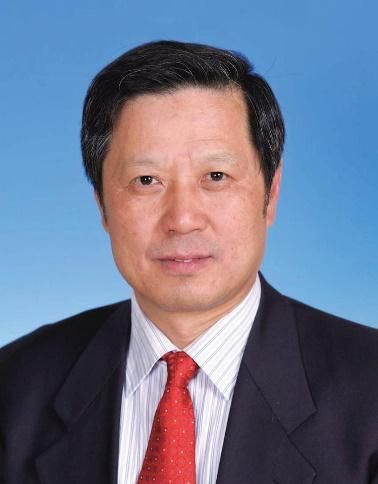
Xu guangchun
Ph. D. In economics, part-time professor, school of economics, beijing university; director, centre for economic and social data research, china university; former deputy director, senior statistician, national statistical office; vice-president, china institute of statistics; honorary president, china national economic accounting research council. The chinese government has long been engaged in statistical theoretical research and practical work. It has chaired the development of national accounting standards, such as the china system of national economic accounting (2002) and the china system of national economic accounting (2016); hosted a number of major and priority projects of the national social science fund; published over 300 papers in authoritative academic journals such as china's social sciences, economic research, world management, economics (quarterly), world economy, statistical studies; and published several individual monographs, such as accounting for china's gross domestic product, reform and development of china's system of national economic accounting and research on statistics of the chinese government. Among them, the world bank, on the adjustment of china's GDP data and its existence, received the ninth (2000) sun metallurgical economic science prize, the first prize for the methodological study of accounting for china's constant gross domestic product, the eleventh (2012) national monograph on the results of statistical research, and the first prize for the award for excellence in scientific research (human and social sciences) at the eighth (20) university level。

The topic focused on the study of china's system of national economic growth and accounting, and professor xu guangcheng was invited to share and exchange information online. Professor xu guangchun has long been engaged in theoretical research and practical work on statistical accounting by the chinese government. He has conducted an in-depth study of major practical issues such as the development of china's reformed and open system of national economic accounting, the reform of the statistical system and emerging economic accounting, and has made an important contribution to the construction and improvement of the framework of our system of national economic accounting。
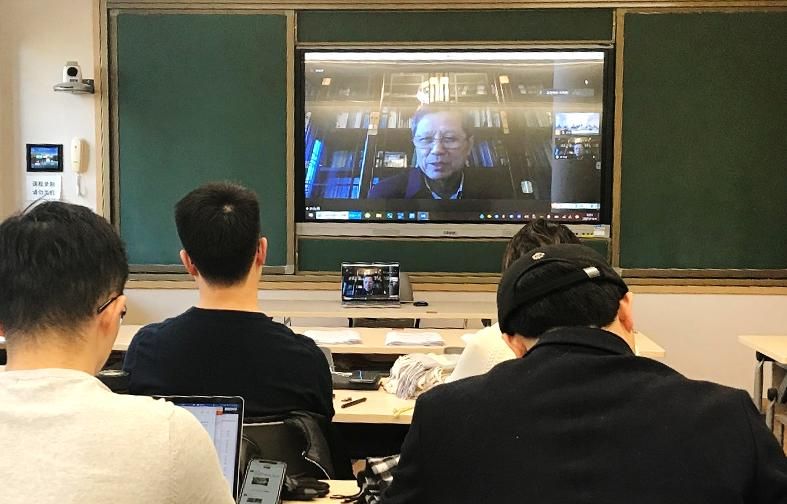
Professor xu xianchun shared it online
In the classroom, professor xu guangcheng summarized his studies on the system of national economic accounting (sna) for more than three decades in three series: first, to summarize the reform and development of government statistics and to examine their content and issues; second, to interpret, respond to and summarize the challenges to government statistics posed by scholars and various sectors of society; and third, to conduct macroeconomic analyses and analyse the economic situation over time and some long-term problems。
With regard to the first series of studies, professor xu guangchun began by reviewing the establishment, reform and development of the system of national economic accounting (sna), which divided the establishment and development of the system of national economic accounting (sna) in three stages after the establishment of the new china: the phases of the establishment and development of the system of physical balance sheets (mps), the transition phase of the mps to the system of national accounts (sna) and the development phase of the sna, as well as the outline of how key accounting indicators such as GDP, input output, financial flows and asset liabilities have evolved and developed at each stage. He then described several reforms in the statistical area of focus in the country at present, including a reform of the methodology for accounting for home-owned housing services and r & d expenditures in GDP accounting, a reform of the methodology of the statistical system for fixed assets investment and services, and an integrated reform of urban and rural household surveys。
Professor xu xuanchun presented the second series of studies, citing an article entitled " accurate understanding of income, consumption and investment in china " . In response to some of the scholars who question the statistical accounting of indicators such as income, consumption and investment in our country, he believes that there is indeed a degree of underestimation of the data on household income and consumption expenditures in our household surveys, which is also a widespread phenomenon in international household surveys, and a degree of overestimation of social fixed asset investment data in investment indicators. These issues will also be taken into account by the bureau of statistics in its statistical accounting and more scientifically rigorous processing of data, so that they do not have a direct impact on the accurate judgement of the major economic structures, such as the distribution of disposable income among the population, enterprises, and government and the final demand structure。
With regard to the third series, on the use of statistics for macroeconomic situation analysis, professor xu guangchun described the role of the real estate and digital economies in national economic growth. He has divided the real estate economy into three broad areas of investment in real estate development, real estate production and real estate consumption, systematically examining the role of the real estate economy in the growth of our national economy and exploring the importance of sound real estate growth for the continued healthy development of our national economy. Professor xu then presented his study on measuring the size of the digital economy, refining the content and building blocks of the digital economy through a systematic mapping of the evolution of the information economy, the internet economy and the digital economy, constructing an accounting framework for the size of the digital economy, measuring the value added and total output of our digital economy and comparing the results with the united states and australia. He noted that our digital economy was about half the size of the united states and that there was still a gap。
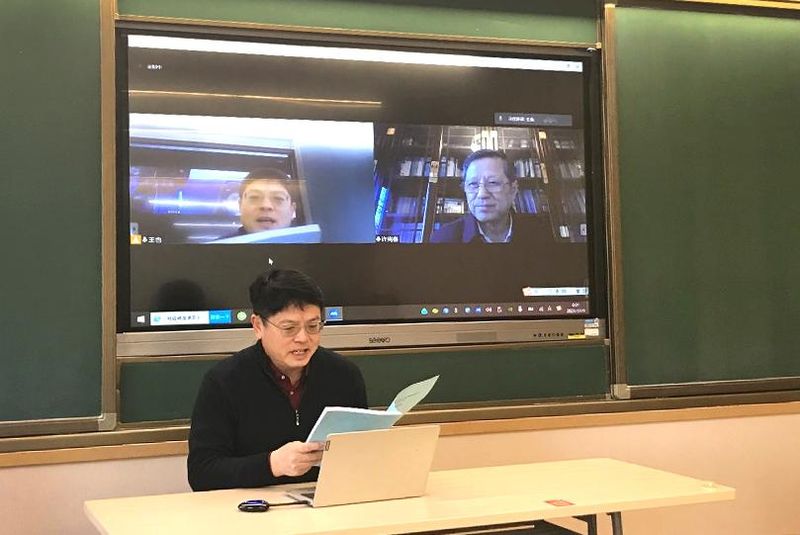
Classroom scene
In the classroom, there was an active discussion with special guests. Professor xu xianchun noted that international alignment was a future development of the system of national economic accounting and expressed great expectations for his fellow students. Students should make more scientific and rigorous use of data from national statistical offices. For example, when using GDP data, they should focus on changes in the basic classifications, methods and sources of GDP accounting, take stock of the overall context, avoid making mistakes and better serve economics research。
Professor tung zhiyong highly values the outstanding contribution of professor xu guangchun to the area of national economic accounting for more than three decades at the national statistical office, as well as the three series of studies by professor xu xianchun, which are of great significance to our understanding of national economic growth and structural change, and sincerely invites professor xu xianchun to continue to guide students at the school of economics, giving them more opportunities for further study. Professor tung zhiyong then directed his fellow students to collage the literature on the topic and to conduct specific analyses and research on relevant issues。
First of all, students have studied in greater depth the establishment, reform and development of the system of national economic accounting (sna), as well as the reform of the country's current priority areas of economic statistics. In the context of GDP accounting reforms, five key reforms are currently under way or have been completed: the reform of the methods of accounting for residential home-owned housing services, the reform of accounting for real consumption by residents, the reform of accounting for research and development expenditures, the reform of accounting methods for the financial sector, the reform of regional GDP accounting methods; the change in the methodology of the fixed asset investment survey from investment projects to legal entities, the change in the calculation of fixed asset investments from the image progress approach to the financial income and expenditure method, the shift in the data collection of fixed assets from the comprehensive survey to the online reporting, sample survey and sectoral administrative records approach; the resolution of the problem of indicators of urban and rural household surveys, the urban and rural classification of rural migrant workers who work and live in urban areas in the long term in the context of the reform of household surveys, the harmonization of household survey samples with respect to the representation of rural workers who work and live in urban areas, sampling methods and survey methods over the long term; and the change in the methodology of the service statistics system has resulted in three relatively regulated data collection methods. This was followed by a detailed analysis and discussion of the size of the real estate economy and the digital economy。
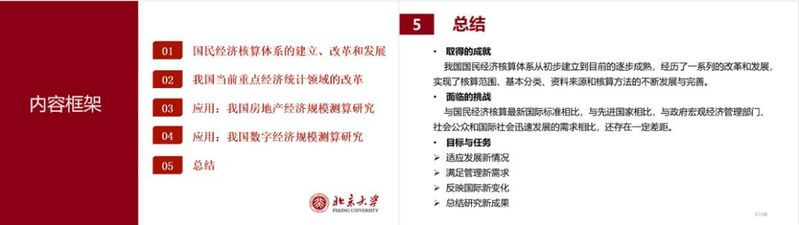
Bibliography framework
Finally, professor tung zhiyong and his fellow students conducted an in-depth discussion on china's economic growth and the system of national economic accounting (sna) to identify some of the problems in the current research on the real estate market and to encourage them to reflect on and explore ideas for reform in accounting for home-owned housing services. At the same time, he summarized the developments in the financial sector in the country in recent years and encouraged them to consider and study in greater depth the problems that exist in the financial sector。

Documentation on the topic
Principal areas of discussion in the classroom:
Xu guangchun. Establishment, reform and development of the system of national economic accounting of china. China social sciences, 2009 (06): 41-59-205.
Xu guangchun. China's current reforms in key statistical areas. Economic studies, 2013, 48 (10): 18-28.
Xu guangchun, jihai, li yong, lee junpo. Study on the role of the real estate economy in china's national economic growth. China's social sciences, 2015 (01): 84-101-204.
Xu guangchun, zhang mei hui. - based on international comparative perspectives. China's industrial economy, 2020 (05): 23-41.









