


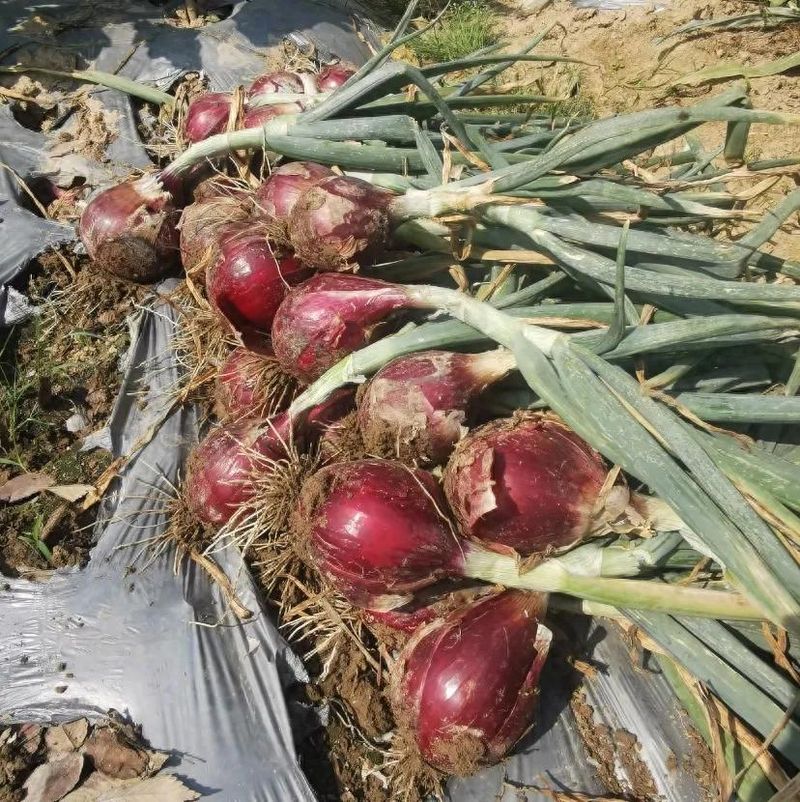
A number of farmers grow onions in the autumn, so that the seeds are spilled directly into the ground and water is waiting for them to come out. At the end of the day, the saplings were thin, small, flat, and some of them were flat, and they didn't grow full of onions。
Many do not know that onions are broadcast live and that the risks are high. Onions are grown by old farmers, and very few are grown directly in the field. This is a good step. The onions are big and productive, and the family can't eat for a year. Today, the whole set of onion onions is made known, so that they can be grown, planted, fertilized, managed, protected, and used in ordinary gardens and fields。
The same onion seeds, which are directly sowed and planted, show a significant gap. There are lots of weeds in the air, and the saplings are crowded together, fattening, and growing onions are small and large; seedlings can pick and grow, the seedlings are well organized, the onions grow evenly at a later stage, and there are few deformed balls。
I. Why don't the onions pour seeds directly to daejeon in the fall
1. Onion seed particles are particularly small, with field sprouting directly, soaking the saplings, soaking the saplings, working between them and wasting the seeds。
2. Daejeon's environment is changing and autumn rain is prone to rotten seed seed; when autumn tigers are tanned, their surfaces dry and their buds roast。
3. Live onion seedlings grow long, weeds grow with onions, onions grow slowly, and weeding is particularly problematic。
4. Saplings are unevenly distributed, some are small and large, and they expand at a later stage, with large numbers of small balls and no yield。
Real contrast:
(a) direct seed distribution in the field: the seedlings are mixed, with a large number of flatballs, and they can easily be pumped early, with low total production
(c) cultivation: selection of small, strong, full-sized, single-size, overall production doubling。
Not to say that there can be no live broadcasts, but that small family gardens can be barely aired, but to have high productivity and priority in breeding, this has been the experience of old vegetable farmers over the years。
Ii. Autumn onions grow in a whole set of steps
Onions are broadcast in the north in the autumn, and seedlings are generally present around whites, and temperatures above and below 20°c are most suitable for seedlings. The temperature is too high, the temperature is too low, the seedlings are not very long and are prone to freezing during the winter。
One, a whole nursery bed
The seedlings must be ploughed and the earth must be crushed. The seedlings are fatted with decomposition and not raw dung. Each acre produces 2,000 pounds of rotting lamb dung, less nitrogen fattening, and too much nitrogen fattening is weak。
The surface is flat, the bottom water is watered, and the water is soaked when it is fully permeable。
2. Simple seed processing to increase seedling rates
Onion seed shells are hard, water is slow to absorb, and direct dry seeds slow down. Prior to seeding, 12 hours of bathing with constant temperature water was used to leach the surface moisture and then dry it and then spread it。
Don't burn seeds with hot water。
3. Spreading dust
Seeds are spread evenly on seedbeds, with a thickness of 0. 8 centimetres to 1 centimetre, and not in the least. It's too thick, and it's not sprouts, and it's delayed。
Following the broadcast, a thin sheet of straw or sunnets can be built to keep the sun from tan sheeting。
4. Slender bed water management
The soil surface is humid until seedlings are released, so that the soil is so white that the water is so small that it cannot be soaking。
After seedlings are produced, water is reduced and wet to prevent the growth of small seedlings. The seedlings grow up to 2-3 leaves, which can easily chase the thin nitrogen fat once, prompting the seedling to grow thick and strong。
5. Key step: selecting seedlings and eliminating them
Saplings grow up to 4 to 5 real leaves, thick chopsticks are thick enough to move. Before planting:
Throwing away saplings, saplings, disease spots and rotting roots. Only saplings of strength。
Sapling sizes are planted separately, large seedlings are planted together and small seedlings are planted together. Small and small seedlings, which tend to smoke early, are small。
The focus is on the need not to grow too long over the winter, and if it is more than 0. 8 centimetres thick, the following spring will be particularly easy to draw, with only flowers and no onions, to work for a year. No fertilizing should be used to prevent the growth of the seedlings。
Iii. The key to the size of the onion is to move the field
1. The whole floor of daejeon
Onions are sulfur vegetables. To grow onions, bottom fat has to go down。
The whole land is under cultivation, with 2500 pounds of decomposed farm dung per acre and a combination of sulphur-based compound fertilizer。
It only uses pure nitrogen fat, like urea, and it's too long for leaves and not very long for onions。
The parcels must be drained, the onions must be afraid to accumulate, the floors must be sunk and the lowlands must grow。
2. Timing of planting
Autumn onions must be planted to ensure that, after the seedlings are planted, there is a time before winter, when the seedlings will take root, and the winter will not die; nor shall it be too late for it to enter the winter without taking root, and it is prone to freezing。
The depth of the plant is the highest of all. Many people grow small onions, all of them on the ground。
Depth of planting: best 2-3 centimetres buried in the base of the sap。
(b) too deep: the onions are growing up in part, the underground onions are so limited that they grow into flat ball
It is too shallow: the seedlings are rooting in instability, the onion swells easily, the sun breaks open and the quality deteriorates。
3. Plantation density
Lines range 15-18 cm and length 10-12 cm. It's too dense to grow onions; it's too rare to waste land. The family garden keeps its seedlings at this distance, so that they do not grow。
4. Water when planted
When it's done, water and water will be poured into it, and the seedlings will be fast and slow. The soil is kept moist during the break-off period, and the seedlings become alive, and water is properly managed and the roots are pushed down。
Iv. Autumn and winter field management, winter-freezing seedlings, and next year's expansion
1. Pre-winter management
Autumn onions don't chase fat until winter. Squid is good enough. Don't grow too big。
The soil is frozen once before it is frozen to improve its resistance. In the cold areas of the north, it is possible to break straws, break leaves and simply prevent cold seedlings。
Management of youth in the next year
The spring temperature rises back, and the onions begin to turn green. Refill the water, chase back the fat once, and promote the growth of the leaves, mainly with nitrogen sulfur。
The leaves are long enough to provide nutrients to expand underground onions。
Three. It's a big expansion period
Onion base starts drumming and enters a critical period of expansion. At this stage, potassium fat, sulphur fat, reduced nitrogen fat。
Nitrogen fattens, leaves are long, green and green, and onions swell。
The soil is wet and cannot dry or accumulate water. Once dry, the onions are small, dry and wet, and the onions are easy to crack。
Farmer's experience: the onions are so big that they can't dry, the water can't break, and the fat has to keep up so that they can move。
Five high-frequency pits of onions, many of them for a year
Pipe 1: autumn direct feed from daejeon
In return for low yields, mixed seedlings, weeds and late onions. Priority is given to family farming, which takes place on a priority basis。
Pipe 2: saplings grow too big, and in winter, the saps get warmer
Saplings are too thick, and in the spring they smoke and bloom, with a stick and no onions. Control the water at the nursery stage so that the seedlings don't grow mad。
Pipe 3: rotting deep, deep or shallow
It's deep, it's tanned. Remember 2-3 centimetres of buried base。
Pit 4: zero nitrogen fertilisation throughout
The long leaves do not grow up, and the swelling period focuses on the filling of potassium sulphur fertilizer。
Pocket 5: bulking and flooding
For some time there was a drought, and suddenly the water was pouring and the onion was full of cracks, which were sold differently and insufferably stored。
Vi. Small harvest techniques
The onion leaves start to turn yellow, and it's harvest time. Don't wait for all the leaves to dry。
After being pulled out, the leaves are laid in the ground, covered with onions, not tanned onions, then cut off the dead leaves, stored in a cold ventilated place, properly kept and eaten for six months。
Additional reminder that the climate is different from one region to another and that planting time is flexible. In the south, the winter is warm and the planting of seedlings can be properly delayed; in the north, the cold is early and the nursery is expected to reach the target before the winter。
Autumn planting onions, so don't spread seeds directly. The practices of old vegetable farmers: seedlings first, seedlings selected, graded, plant control depths, bottom fats used for subsistence farming, high-end emphasis on potassium sulfur fertilizer, water fertilization control, and the avoidance of winterization of large seedlings. Make it right, the onions are full, a pile of them, and the family can't finish it。









