


Many friends have a habit of rearing flowers at home, with many kinds of flowers, of which swordland is very popular and, if newly renovated at home, it can also serve to monitor pollution because of its sensitivity to hydrogen fluoride. Furthermore, the swordball tubers are drugged to treat tremors and tremors and to extract vitamin c from their leaves. Blade may be used as a cut flower, a flower jar or a plant.”
Swordland generally refers to a single-coloured or double-coloured variety of red, yellow, purple, white, blue etc. Cultivation is widespread around the world. The major producers are the united states, the netherlands, israel and japan. Tang yuen is an important cut flowers, which can be made of baskets, bouquets, bottles, etc. They can set flowers and special gardens. Shorty breeds can be viewed. It's a nectar root plant. It has been dubbed, along with the cut flowers, the carnations and the bouquets, as “the world's four big cut flowers”. Well, how do you keep it? We'll see。
♪ swordland's growing environment ♪
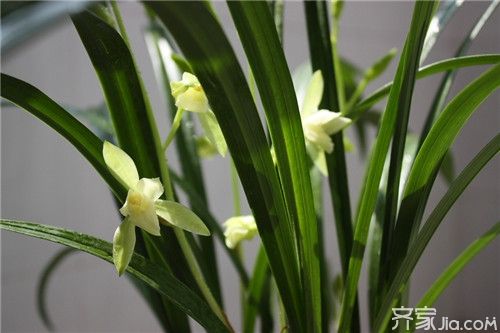
Tang yuen is a radiant, sun-lighting plant, chilled, summer-cooled, over-heated, with his penis moving at 4-5°c; 20-25°c grows best. Deep sandy soils, which are fertilized, require good drainage and are not suitable for planting in areas prone to flooding in adhesive soils. In the north-east and north-east china, growth was better in guangzhou and shanghai. In shanghai winter, it is safe to spend the winter in the open, while in the north, it is necessary to dig out the tubers for indoor winter。
How do you keep it
Soil selection in swordland farming
On the sandy sandy soil, which is deep, estranged and fertile microtacid (ph 5. 5 ~ 6. 5), growth is good and the fertility period requires soil humid。
2. Fertilization methods in swordland farming
Swordland is a fertilizing flower and should be grown in a timely manner. Perish manure is usually applied 3-4 times a month. Fertilizer should be applied in such a way that nitrogen is not too much fat, and in such a way that phosphorus and potassium fattens are applied at the discretion of the application, in order to increase the sprouts and tuber nutrition. Following flowering, the pursuit of fattening with calcium phosphate leaching can contribute to the growth and enrichment of the new tubing。
Swordland should be fertilized at least three times in the long term. For the first time, after the expansion of two leaves; for the second, after the fourth leaf; and for the third, after the flowers. Phosphorus and potassium fattening should be increased and nitrogen fatting should be reduced in order to avoid fallback. When the leaves are yellow in more than one third, the ball shall be laid out. They are then stored in cold, dry areas。
Water-watering methods for swordland farming
Swordland pours water once every 10 days before seeding, so that it does not dry, otherwise the tip of the leaf becomes yellow. When flowers appear, they are even less susceptible to drought, and the summer rain should be watered once in four days. After flowering, water should be stopped to extend the flowering period。
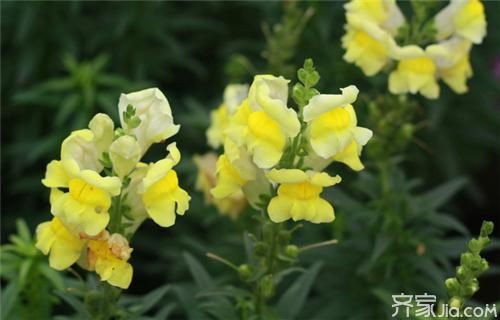
In order to measure the water, too much water can cause root to rot, and water scarcity often leads to acupuncture and failure to recover from the water, which is condensed into a “mutual” shape, affecting beauty。
4. Temperature requirements for swordland farming
The warm, wet climate, hot, cold, cold, the most suitable temperature to grow is 20-25°c. At early spring temperatures of 5 °c, the tubers are fertilized and growth is inhibited when summer temperatures are 35 °c higher。
The cultivation cycle is more affected by long-lived temperatures. The higher the temperature, the shorter the planting cycle. If the average temperature is 12°c, it takes between 110 and 120 days to plant and bloom; 90 to 100 days for the average temperature of 15°c; 70 to 80 days for the average temperature of 20°c; and 60 to 70 days for the planting cycle up to 25°c。
5. Light requirements for swordland farming
Swordland adapts to the sun and is fully luminous, and it is a typical long-sun-ray plant that can only divide its buds under conditions of light of more than 14 hours; after the luminous luminous luminous sprouts, short-day luminous light promotes their growth and early flowering. Generally, it takes about 70 to 75 days, depending on the variety of species, from seedling to flowering, and there are a small number of species over 80 days。
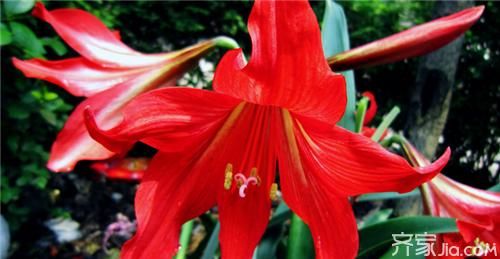
This is a short summary: i have given you an idea of how swordland was raised, and i hope it will help you。
End
The paper is provided by the micro-intelligence public, "quoted design impact maps " , which provides a daily selection of fit-out cases, space design beauty maps, home knowledge and skills









