


Cultivation of disease-free trees refers to the cultivation of trees free of diseases such as citrus yellow dragon disease, which requires breeding from the ears of motherless trees and beryllium wood, and which is important for combating diseases such as citrus yellow dragon disease。
I. Selection and identification of parent trees
The parent tree character of the poaching plant also requires a robust and healthy mother tree with the inherent productive properties of spring sweet oranges, typical castes, good integrated, disease-free and pest-free. In order to ensure that trees are free of disease, the parent trees that are used to cultivate non-pathic trees should be planted in the masonry and regularly identified. The identification of the virus can be done through the detoxification centre for fruit trees designated by the ministry of agriculture, such as the centre for detoxification of tropical fruit trees in china, which was established at the fruit tree institute of the guangdong academy of agricultural sciences. The management of parent tree cultivation is carried out in accordance with a no-disease procedure, with the timely phase-out of the variant plant. In general, in order to ensure that there is no variability in the remembracing, in principle, the matrilineal tree is taken for no more than three years。
Ii. Cultivation of disease-free trees
1. Feeding grounds
The nursery sites include a virus-free nursery, an instruction to plant identification and a virus-free nursery. Cultivation of disease-free seedlings is carried out mainly using facilities such as a veiled shed, which requires that no insects transmit the disease, and that the whole nursery process be carried out entirely within the closed shacks. In the case of field seedlings, good conditions of natural isolation are required, with natural barriers such as mountains, rivers and lakes, and with no aroma-like plants above 2 km。
2. Cultivation of disease-free trees
Patient-free trees generally use containers such as nutrient drums (bags) or field seedlings, which are more demanding than conventional fields。
(1) cultivation of beakwood
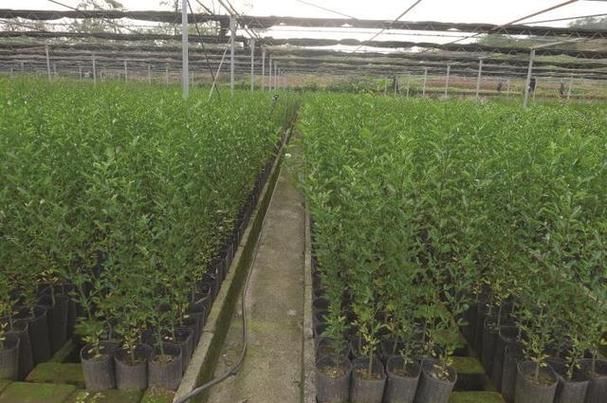
1 aluminum seed is collected and disinfected: aluminum seed is taken from good pure varieties or from good single strains, free of quarantine pests. Seeds are to be disinfected prior to distribution by pouring in hot water about 57°c in a thermostat, placing gill seeds in a veiled net bag, immersing them in hot water at 50°c ~ 52°c for 5 to 6 minutes, immediately after removal, into a thermostat for 50 minutes, with care to keep water temperature at 55°c ± 0. 3°c. Immediately after removal, it is distributed, dryed and placed in the greenhouse to be broadcast. Those who want access to disinfected seeds must wash their hands first with soap. The commonly used tools for the cascading virus-free nursery are specialized, with 1% sodium chlorate sodium sodium disinfection used prior to the use of each variety of materials。
Seeding: aluminum seeds are planted in the trophic soil of the seedbed, which is above 25°c and has a relative humidity of between 80% and 90%. When the temperature exceeds 30°c, the membrane and spray cooling is immediately removed. After seeding, microbicides are sprayed every 7 to 10 days (polyblybdenum or tobuzin, etc.) to prevent and treat adrenaline, charcoal and root diseases. The pursuit of thin liquid fertilizers such as 0. 1% - 0. 2% compound fat was initiated when the seed was 5 cm or higher。
(c) 3-timber tree seedlings: if the seedling is 15 cm or more。
Management of 4 saplings: one thin liquid fertilizer application after approximately 15 days and one per month thereafter. Insect control is done during the growth of the pelican seedlings。
(2) cultivation and poaching of the mother tree
The seedling tree should have been validated by an expert body appointed by the ministry of agriculture to confirm that it is not sick. The seedling tree is planted in a web room, signs are erected to enhance management of water fertilizers, and care is taken to promote nutritional growth in order to develop more strong and robust ears. Following the planting, the pick-up began in the second year and was limited to three years. Skinning tools should be disinfected. Operators should be dressed clean and wash their hands with soap。
(3) marriage
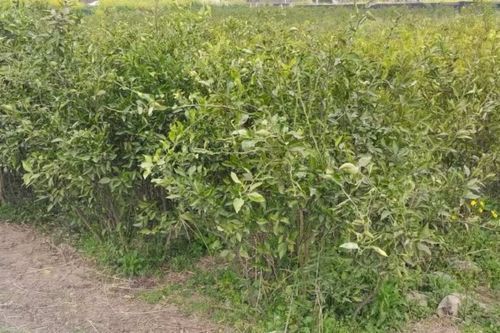
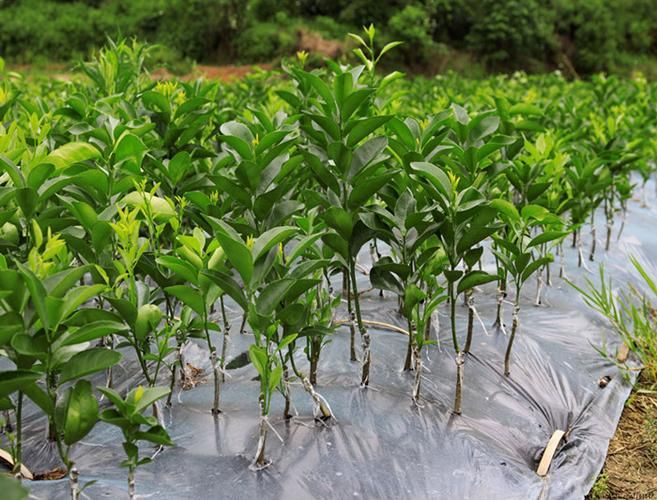
It can be contracted when the log is 35 cm or higher and the length of the trunk is 0. 7 cm at 10 cm height. Bridging tools must be washed with laundry powder, disinfected with 10-20 per cent bleach, and washed with water. Bridals wash their hands with soap and are dressed clean。
(4) out of the nursery
In accordance with the ministry of agriculture's industry standard " orange detoxification " , no-sick trees are given out at a height of more than 10 cm. When they leave, details of the species of the trees, the logs, the date of their marriage, the period of their release, and the destination of their planting are given。
3. Teenage detoxification
Teenage to detoxification is currently an advanced technique. Detoxification is achieved mainly through stalking in sterile conditions. This will be done by:
(1) preparation of lumber
Filled aluminum seeds are removed from the outer and inner skins, impregnated for 10 minutes in 0. 5% sodium chlorate solution plus 0. 1% thallium-20 solution, then washed with sterile water three times, in an sterile environment in a test tube containing 1% hull of ms plant cell culture (wilder) and then bred in darkness under 27°c § 1°c. The seedlings grow for 13 to 14 days to be used as saplings。
(2) tilt preparation
In the sarcophagus, the lumbers of the mother tree rise between 1 and 3 centimetres, remove the blades, cut the tip of the blades up to about 1 centimetre long, impregnate 0. 25% sodium chlorate solution with 0. 1% relief-20 for 5 minutes and wash them three times with sterile water. In a sterile environment, under a binocular anatomy lens, the lower leaves are removed with a knife, cutting off the tip of the stem of the growth point with two to three lobes, with a length of 0. 14 to 0. 18 mm。
(3) marriage method
In sterile conditions, aluminum seedlings are removed from the test tube, capped, 1. 5 cm long truncheon, 4 - 6 cm long, leaves and breech. Under a binary anatomy lens, an open square cut on the side of the gill near the top, i. E. A cross-cut, a vertical cut of two blades, or a “tangular” cut in the upper part of the truncheon, deep enough to form a layer, to remove a layer of three blades of cortex, to place the tip of the truncheon on the gill, and to match the tip of the dot with the cross-section of the gill, i. E. To complete the marriage。
(4) sapling management
In vitro growth will take place with a liquid culture base. A temperature of 27c with a light level of 000 for 16 hours per day。
(v) cultivation of a stem incarnation
It's usually a one-month sprouts that grow two to three leaves, and when the leaf turns to dark green, it moves out. Pyramid saplings, which are tested in the indicated plant or through the polymeric chain reaction (pcr), are free of disease and can be used as parent trees for the purpose of poaching and then breeding disease-free trees in good breeding grounds。









