


Pyramid is a dry and mature seed of the sankoh plant cannabis, which has the effect of irritating blood, intestines, and is mainly used to treat symptoms such as customary constipation, haematosis, etc. The following is a description of pyrochlor cultivation techniques and prices。
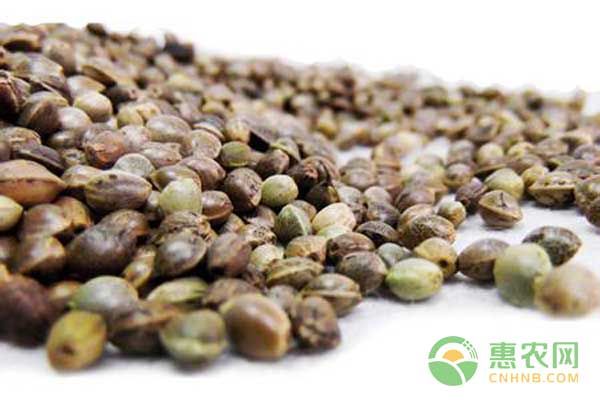
"title = "tytle = "type pyramid plantation technology and prices" /
Growing habits
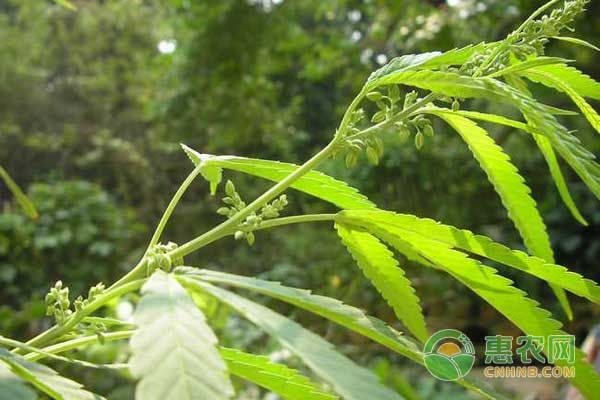
The radiant crops, drought-resistant atmospheres, insatiable soil droughts, insatiable flooding during their growth, and more stringent soil requirements are often justified by deep earth cover, strong water fertility protection and soft and fertile soil quality, organic quality and low groundwater tables。
Land selection
1. Land selection: soils with deep earth cover, strong water fertility and irrigation conditions. It cannot be associated with at least a season rotation of major crops on the ground。
2. Land cover: autumn deep tillage, winter or spring pouring, with a minimum of 4000-500 kg per acre applied, masons flatted, usually 120 cm wide, 30 cm wide and 15 cm deep, depending on the terrain, with a balconian back, with open drains around it, and can also be grown with wide-banded masts。
Reproduction methods
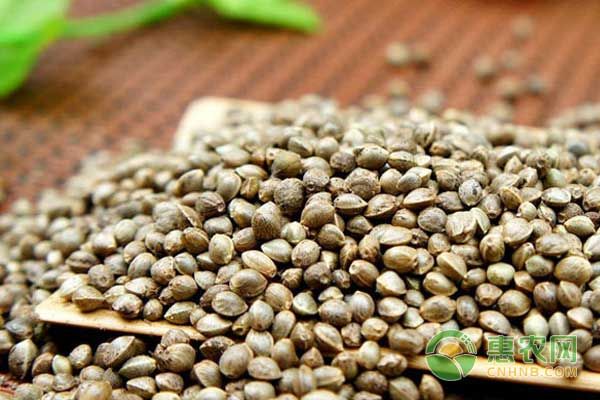
Pre-selection seeds: production practice has proven that the pre-selection seeds are an effective measure for the cultivation of early seedlings, seedlings and seedlings. Seeds for seeding are selected and screened, removing seed, seed, impurity, and selecting seeds of full abundance, thousands of heavy, even size, fresh colour and high seeding rates, in order to meet the requirements of increasing the rate of seedlings and all-breeding. According to the survey, seeding using poorly mature or thousands of low-yield seeds has resulted in a 20 per cent reduction in gestation rates, poor seedlings, weak young children, vulnerability to disease and high sterile rates. With the planting of the following year's seedlings (the skin is dark green), the gestation rate has been significantly reduced, which can cause serious seed deficiency。
2. Suitable planting period: pyramid seeds can sprout at low temperatures, and their seedlings have the capacity to withstand short-lived temperatures, resulting in a relatively large planting period in all the areas. Depending on the duration of the sowing period, there are wide variations due to climate, soil, variety and rotation systems. The sandy soil in the north of the river was sowed between late april and early may, while the cold, wet subtidal or adhesive soil extended until late may。
3. Sowing methods: pythroids are sowed in three ways: broadcast, broadcast and on-demand. Plantation is often on-demand and is broadcast and broadcast. Leaching is often broadcasted and broadcasted on both sides. Fibres are suitable for secret planting and large area cultivation should be carried on a strip. It has the advantage of even seeding, soaking at the same depths, producing well-sowning and facilitating field management. Mechanical strips are spread from 12. 5 cm to approximately 13 cm or approximately 5 cm and narrow strips from 7. 5 cm。
4 seeding and sowing depths: earlier and more sophisticated than later, higher than lower in thousands of species, higher in plaster extraction than cultivation, and more in broad bands than in air or air. There are significant regional differences, such as around 1. 5 kg per acre in zhejiangzhou, 4. 5 kg per acre in the wengjiang river in sichuan, 6kg per acre in anhui, 15kg in shanxi jie and 18kg in shandong. Cannabis seeds have a weak roof and should be sorely distributed. It is appropriate to sow a depth of 3 cm in the strip, with more than 7 cm severely affecting seedlings, and it is more appropriate to sow 2 cm in the general area。
Cultivation density: cannabis is more resistant to atmospheric drought than soil drought. In case of high soil moisture rapid growth and long-term soil moisture, and when soil moisture is insufficient, planting density is not too high, and sufficient moisture (including rainfall) is sufficient, and dense planting is desirable for the purpose of increasing production. Appropriate planting density varies somewhat from one region to another. For example, 240,000 units/acres are produced in shanxi and shaanxi, and the maximum production of 75,000 and 105,000 per acres is achieved in anhui, so that no rational planting is fixed。
Field management
An inter-sapling seedling: 10-15 days after seedlings occur, 7-10 cm heights require an inter-sapling, even seedlings must be evenly shared, with a suitable seedling at a height of 15-20 cm, a 60 cm or so high, and a leaching of a dwarf, weak (i. E., plums)。
2. Chinese tillage: a combination of seedlings and seedlings for the purpose of pine soil weeding. The seedlings are made to grow and grow, and one can be farmed before the vasectomy is sealed。
3. Fertilizer water management: per acre, 30-45 kg of ammonium sulphate (ammonium sulphate), 60-90 kg/acre of fertilizer, half of ammonium sulphate (ammonium sulphate) and calcium per phosphate (calcium per phosphate) are applied in a 40-50-day sapling water, increasing both the yield of soybean and the growth of seeds. The seedlings grow to around 30 cm, and the opening of hollows (opener period) on the upper part of the tubing marks the point where the seedlings are about to enter a fast-growing long-term life and should be followed up in a timely manner. Water holdings should be maintained at 70-80 per cent. Then watered twice until the fibre matured。
Pest control
1. Diseases: among the diseases that affect cannabis are albinism, adhesive disease, frosty disease, root worm disease, leopardism and plumes。
(1) white star disease: this disease occurs in the leaves. In the first instance, the surface of the sick leaves is covered by yellow or yellow spots, elliptical or triangles of approximately 1 mm long along the veins of the leaves. It was then expanded to form 4-8 mm x 3-5 mm of mass disease, with the centre turning to black or grey powder, with brown or yellow surroundings. In general, fertilized and humid mosaics have more serious disease, fall early in the event of severe injuries, and growth is inhibited, affecting yields. Methods of prevention and treatment: burning off sick leaves; attention to drainage; 2-3 spraying of bordeaux at the beginning of the disease。
(2) other diseases, such as leopardism, frost, root nematode disease, leopardism, and plume plume, are not widespread or serious。
2. Insect pests: the main pests that endanger cannabis are leachate, jatropha, etc。
(1) leaching armour: commonly known as fleas or fleas, dogs. For a brass green beetle. The worm is 1. 8 - 2. 6 mm long, has brown wings first, has well developed leg bands and is good at jumping. Methods of prevention and control: clean-up of gardens, disposal of debris; fall and winter tilling to eliminate some winter insects; 50 per cent of the pests are sprayed 500-1,000 times with west wettable powder。
(2) maltoxin: the insect is a dark brown cylindrical beetle with two white belts on its chest and shoulder; the larvae is winterized; the insect is transformed into a worm in june-july. Most occur on the old leaves, with dark brown spots on the first front of the leaves, which later expand into circulars or near circles, with light browns in the central part, yellow surroundings, and gray molds on the back. Method of control: 1000 times liquid spray of dichlorvos emulsion during pest occurrence。
Harvest processing
1. Harvesting: harvests are generally conducted in parts and harvests in stages are desirable for females and males. In the first case, the male plant was harvested, and in the second case, the female plant was harvested when the central seed of the female line matured. When the male plant is harvested, the water is warm and easy, while the field is well-lighted, the water and nutrients are concentrated to provide the female so that it can grow, such as once more when water is used to fatten, the increase in seed yields is significant, and the harvest is expected to take place in september, when most of the female seed is mature, the female field is fully harvested, the seed is cut down, the line is bound to the size of the line, the line is tied to the pool, the line is cut to the ground, the line is cut to the ground as low as possible, and the ground is dry for days。
2. Processing: thrust seed parts will be cut, and when the seed is struck, the sun will spread, the pellets removed, the impurities removed and the sun dry。
Price lines
With the normal movement of the source in march, there was little sign of a rebound in stability, and the price of the pyroper with shell is currently around $6; the price of the shell varies between $13 and $16。
This is the technology and price of chinese medicine. If you want to learn more about agricultural technology, focus on the hye farmer school!









