


After the age of 60, many people felt that they were growing up, retired with early and high-intensity cards, resulting in more pain in their knees and more blood pressure. Osteoporosis and cardiologists have repeatedly said that older persons are not trained as well as they are trained, but have lost their lives. These are the five most common actions, many of which are made every day by older people, but which are the most damaging。
The neck stretch is the most dangerous exercise of the elderly
In the last few years, in the district gym area and next to the porch, it is often observed that the aunt hangs around a bar and pulls her neck down and says she can cure the cervical vertebrae and pull her neck straight. However, data from the 2024 beijing conciliation and hospital osteo-clinic clinic show that there are over 200 cases of vertebrate abnormality and vertebrae damage among older persons due to self-trading. The vertebrae is too critical, with violent stretching without the guidance of a professional physician, and light increases the intervertebrae problem and weighs on the spinal cord。
The cervical vertebrae is not well, and the right thing to do is to turn its head slowly, with a soft stroke of the palm of the hand, and to stay ten seconds in each direction, two or three times a day. Don't pull the weight of the body, let alone tie it around the neck. If you have the energy to go to the hospital rehabilitation unit, you can have the doctor assess it and decide whether to pull it or not。
Climbing the stairs and the mountains are grinding off your knees
Many feel that climbing stairs and mountains, free of cost and space constraints, is the biggest burden of knee joints. Medical data indicate that the pressure on the knee joint is four to five times the weight of the upper and lower stairs, and that the cartilage of the 60-70-year-old has been thin, the fluidity of the joint has decreased significantly, and wears are accelerating every climb. The chances of fractures are high for elderly people who have fallen in balance by stepping into the air。
There's no need to climb the stairs to practice legs. Walking for 30 minutes every day on the block road, or crouching down with a little stool, almost in parallel to the thigh, without having to go through it. In 2025, the osteosat hospital in shanghai recommended that people over 60 years of age should walk at 80 to 10,000 paces per week, with the least impact on the joints and more effective than any climbing exercise。
Crushing down and crouching down will keep the spine and brain at the same time
Many of the older people used to bend their backs to their toes and do deep crouchs, and felt that they were getting better and better. But the vertebrae has been dehydrated since the age of 50, hardened, bending, and the reel of fibres can't withstand stress and can easily be drawn out to suppress nerves. At the same time, he bends too fast, and his blood pressure fluctuates at short notice, with dark hair and soft legs. In 2023, the emergency section of nanjing drum house hospital recorded that almost 40 per cent of the cases of the elderly who fell in the morning had fallen。
The stretcher remembers four words: slow, shallow, light, stop. When you bend, you hold your knee slowly, you get down to the calves and the thighs at 120 degrees, and you get up and hold your chair until you stand. Leaves a buffer of three to five seconds between actions, giving the time to adapt to the blood vessels and joints, and not to do it in one breath, much less to pursue。
It's a real risk to run backwards and crawl around and watch for a living
The internet used to say, "crawl over the back" and "crawl over the street" and many 50-60-year-olds believed it, walking backwards and crawling around empty areas every day. However, older persons are slow to see, slow to react, and fall back without seeing the steps, puddles and electric cars behind them. In 2024, an old-age community in guangzhou counted seven cases per month of older persons who had fallen. The climb is carried by shoulders, elbows and knees at the same time, and the joint is worn more than twice as fast as normal walking。
The two campaigns did not have any large samples of clinical data to support the claim of "remediation" but the risk was real. The movement of older persons gives priority to those who are open-minded, have steady feet and can stop at any time, such as walking along the river dyke and sitting in the living room. "can't you stop at any time" as the first standard, much better than chasing some magic trick。
High-intensity plaza dance is penetrating the elderly
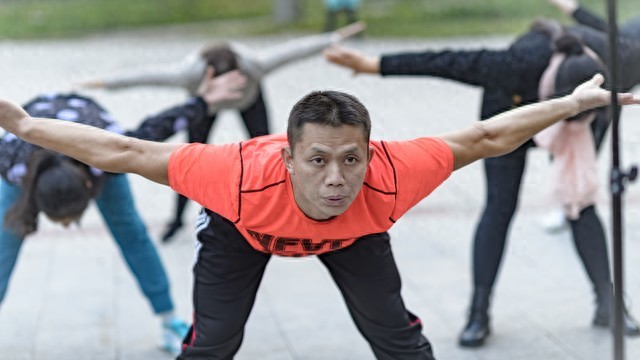
The plaza dance itself is not bad, but in the last two years many teams have moved the rhythm to more than one hundred and twenty-two minutes, adding a series of jumps, twists, crouchs and one jumps down for forty and fifty minutes. The capacity of older persons over 65 years of age to pump their heart has been reduced, and there has been a long period of high-intensity high-intensity beating, which has resulted in hysteria, panic and short-temporal activity. In 2025, the zhejiang family of cardiologists reported that a seventy-three-year-old aunt in hangzhou was taken to an emergency after an empty abdominal beating. The practice in the open abdomen is even more taboo, and blood sugar pressure is not stable and the risk is doubled。
Jump can jump, but pick a slow-paced, simple-action version, with a time of between 25 and 30 minutes, and then sweat. Don't be empty, drink half a glass of hot water before the exercise and eat a little cookie mat. In the course of the jump, if you cannot breathe the whole sentence, which means that the strength is too high, you will stop at once for a second and do not force yourself to follow the team。
That's the kind of sport that really suits the elderly
To be honest, the core of survival after the age of 60 is loss and loss and stability. These low-impact movements of 20 to 40 minutes a day are sufficient microheating and stretching. There is no need to pursue sweat, the heart rate is below 95 times a minute, and the next day's exercise is not sour, indicating the appropriate strength。
A few other red lines need to be kept in mind: intense motion without empty stomachs, no rushing before dawn, no unsustainably difficult moves without the wind, no more ass-sitting or cold water. When you feel dizzy, your joints sting and your chest suffocate, you stop and rest. Sport is conservation, not sprint, and holding the rhythm is much more important than seeking。
What's your old man doing every day? Are there any of those? It was welcome to say in the comment area that it would be useful to send it to the elders around them to help them avoid the wounds。









